How to Organize a Small Kitchen
Small kitchens can quickly feel crowded, with overflowing cabinets, cluttered countertops, and no clear place for everyday essentials. If you’re struggling to keep everything organized, you’re not alone—many people face the same challenge.
The good news is that these practical ideas for how to organize a small kitchen can help you make the most of every inch.
Declutter your small kitchen by removing expired, broken, duplicate, and rarely used items. Group dishes, cookware, pantry staples, baking supplies, and cleaning products by purpose, then create cooking, prep, and cleanup zones.
Assign each cabinet a clear function, using risers, dividers, pull-out baskets, hooks, and vertical racks to maximize space.
Keep countertops limited to everyday essentials, and store pots, pans, and lids efficiently.
With a few practical adjustments, you’ll uncover even more ways to keep everything accessible.
Key Takeaways
- Declutter cabinets, drawers, and countertops by removing expired, broken, duplicate, and rarely used items.
- Group similar items together, such as cookware, baking supplies, pantry staples, dishes, and cleaning products.
- Create functional zones for cooking, preparation, cleanup, and storage to improve workflow and accessibility.
- Maximize vertical space with risers, shelf dividers, pull-out baskets, wall racks, hooks, and stackable containers.
- Keep countertops clear by storing bulky appliances away and returning everyday items to designated spots.
Declutter Before You Organize
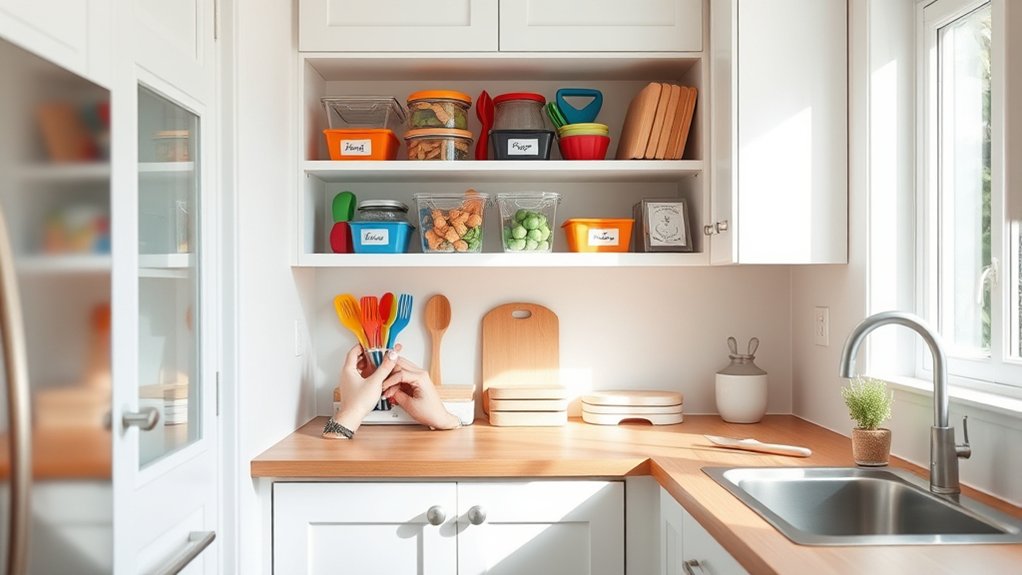
Before organizing your small kitchen, declutter it by removing anything you no longer use, need, or enjoy. Empty each cabinet, drawer, and shelf so you can see exactly what occupies your space.
> Declutter your kitchen by emptying every storage area and keeping only what you use, need, and enjoy.
Check expiration dates, discard damaged items, and donate duplicates, unused gadgets, and cookware you haven’t touched in a year. Keep only tools that support your current cooking habits and daily routines.
As you sort, question every item: Does it work? Do you use it? Would replacing it cost less than the space it occupies?
Recycle packaging, match food-storage containers with their lids, and remove anything missing a partner. Don’t let sentimental value crowd essential areas.
Pay special attention to drawer organization. Toss broken utensils and clear out miscellaneous objects that don’t belong.
Review appliance storage, too. Keep frequently used appliances accessible, and remove bulky machines you rarely operate.
Wipe empty surfaces before returning only your essentials. You’ll create room for an efficient system and make future organizing easier.
Group Kitchen Items by How You Use Them
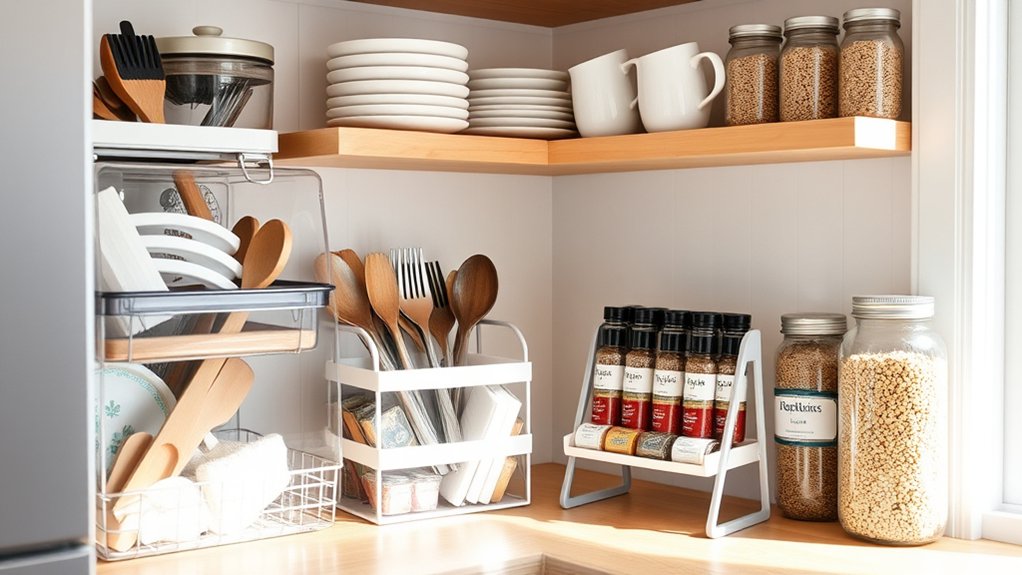
Once you’ve cleared out the excess, group the remaining kitchen items by how you use them. Keep everyday dishes, glasses, and utensils together so you can grab them without searching.
Store baking supplies near one another, and gather coffee or tea essentials in a single, easy-to-reach spot. Place occasional items higher or farther back, preserving valuable space for things you use daily.
- Keep your favorite mug where morning hands can find it.
- Gather measuring tools to make baking feel effortless.
- Store lunch containers together to simplify busy mornings.
- Pair serving pieces so hosting feels welcoming, not stressful.
- Keep snacks visible enough to encourage joyful choices.
Think about Appliance placement, too. Position frequently used appliances where you can access them quickly, while storing bulky or occasional machines out of the way.
Arrange groups in attractive containers or matching drawers to support Kitchen aesthetics without sacrificing convenience. Label opaque bins, and return each item to its group after use.
When every category has a clear home, your small kitchen feels calmer, works faster, and invites you to enjoy everyday routines.
Create Zones for Cooking, Prep, and Cleanup
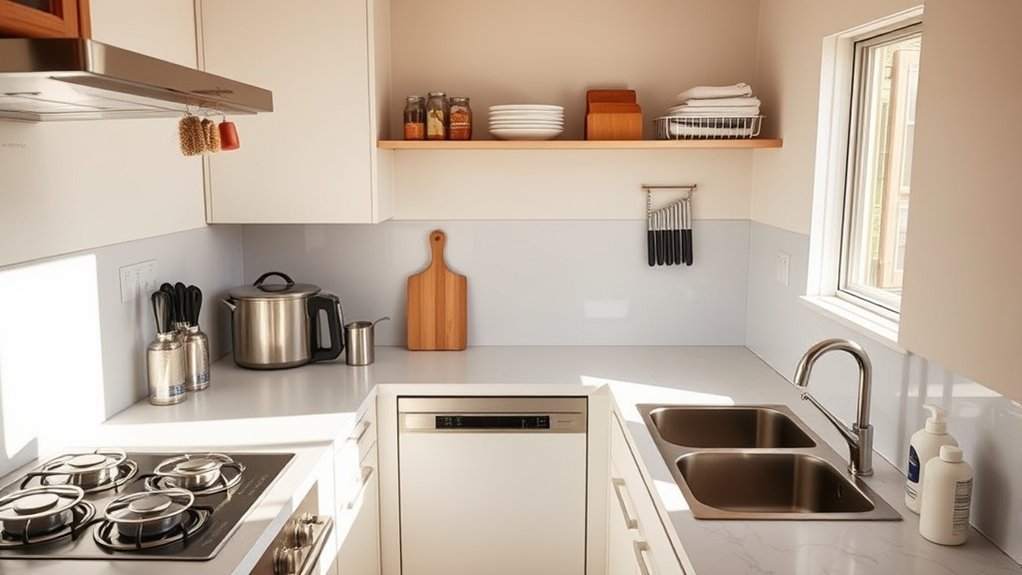
Create distinct zones for cooking, prep, and cleanup so each task flows naturally into the next. Keep frequently used pans, utensils, and seasonings near the cooktop, allowing you to work without crossing the kitchen repeatedly.
Set up your prep zone beside the refrigerator or sink, where you can quickly gather ingredients, wash produce, and chop comfortably. Reserve the area near the sink for cleanup, with dish soap, sponges, and towels within easy reach.
Use meal planning to guide each zone’s setup. When you know what you cook most often, you can position tools and ingredients around those routines rather than scattering them across the room.
Make appliance storage part of the workflow, too. Keep your toaster, blender, or mixer near the outlets where you use them, while storing rarely used appliances outside the main work path.
Even in a tight kitchen, clear visual boundaries and thoughtful placement can reduce congestion and make every meal easier.
Assign Every Cabinet a Clear Purpose
With your work zones in place, assign every cabinet a clear purpose so dishes, cookware, food, and supplies stay easy to find. Keep everyday plates and glasses near the dishwasher or serving area.
Place pots, pans, and cooking tools beside the range, while storing prep bowls and knives near your main work surface. Put pantry foods in one cabinet and cleaning supplies in a separate, clearly labeled spot under the sink.
Consider kitchen lighting when choosing locations: keep frequently used items in bright, visible areas, not shadowy corners. Let appliance placement guide your system, too; store accessories near the appliance they serve without blocking doors or outlets.
- You’ll stop hunting for essentials.
- Your counters will feel calmer.
- Cooking will become less frustrating.
- Cleanup will take fewer steps.
- Everyone will know where things belong.
Label shelves if others share your kitchen, and return each item to its assigned home. A consistent system saves time and makes your small kitchen feel reassuringly orderly.
Maximize Small Kitchen Cabinet Space
Maximize your cabinet space by making use of vertical areas that often go unused. Add organizers to keep items separated and easy to reach. Regularly declutter your cabinets so you’re only keeping what you need.
Use Vertical Space
- Give your kitchen room to breathe.
- Turn blank walls into useful storage.
- Display favorite dishes with pride.
- Reach essentials without digging.
- Create a calmer cooking routine.
Measure before drilling, and anchor shelves or racks securely into studs when possible. Match their finish to your kitchen for a polished look.
Leave enough clearance around doors, windows, and work areas so your new storage improves movement instead of creating obstacles.
Add Cabinet Organizers
Cabinet organizers help you use every inch of space without cramming items together. Install risers to create a second level for plates, bowls, or mugs.
Slide pull-out baskets into deep cabinets so you can reach items in back without unloading the front. Use cabinet shelf dividers to separate baking sheets, cutting boards, and serving trays vertically.
Choose adjustable storage containers for snacks, grains, or packets, and stack them neatly beneath shelves.
| Organizer | Best location | Main benefit |
|---|---|---|
| Shelf riser | Upper shelf | Doubles vertical space |
| Pull-out basket | Deep cabinet | Improves access |
| Shelf dividers | Wide cabinet | Keeps trays upright |
Measure each cabinet before buying accessories, and match organizers to your shelf height and depth. You’ll gain orderly, accessible storage while keeping counters clear.
Prefer adjustable designs so they’ll adapt as your needs change.
Declutter Cabinet Contents
Start by removing everything from the cabinets and grouping similar items together. Check expiration dates, discard duplicates, and donate tools you never use.
Keep daily essentials within easy reach, while moving seasonal or occasional items to higher shelves. Nest bowls, stack pans, and store lids vertically to reclaim valuable space.
Wipe each shelf before returning anything, and leave a little breathing room so you can see every item.
- You’ll feel calmer when clutter no longer greets you.
- You’ll save time by finding essentials immediately.
- You’ll protect your Kitchen aesthetics with orderly shelves.
- You’ll support appliance maintenance by clearing vents and cords.
- You’ll enjoy cooking more in a refreshed space.
Label containers when helpful, and choose uniform bins to create visual consistency. Review your cabinets monthly to prevent clutter from quietly returning and keep your small kitchen functional, inviting, and easy to maintain.
Make Every Drawer Work Harder
When drawer space is limited, assign each one a clear purpose and use organizers to keep items visible and separated. Start with drawer organization by measuring each drawer, then choose slim, adjustable dividers that fit snugly.
Reserve the top drawer for everyday tools, grouping forks, spoons, knives, and serving pieces by type. A shallow tray can improve utensil storage while keeping handles easy to grab.
Keep everyday utensils organized by type in a shallow top-drawer tray, keeping handles visible and easy to reach.
Use deeper drawers for cooking tools, arranging spatulas, tongs, whisks, and measuring cups horizontally rather than piling them. Store bulky items vertically with peg-style dividers, so you can lift one out without disturbing the rest.
Place rarely used gadgets toward the back, but don’t let them crowd daily essentials. Label sections if others share your kitchen, and return each item to its assigned spot after washing.
Review drawers every few months; remove duplicates, replace broken organizers, and adjust compartments as your routines change. You’ll gain capacity without adding furniture or creating clutter.
Build a Small Kitchen Pantry System
Build a small pantry system by grouping staples into clear categories, such as grains, canned goods, and baking supplies. Then, use stackable bins and shelf risers to make the most of your vertical space. This way, you’ll find items faster and use every inch more efficiently.
Categorize Pantry Staples
Group pantry staples by how you use them, such as grains, canned goods, baking supplies, snacks, and cooking essentials. This simple pantry organization method helps you find ingredients quickly and prevents duplicate purchases.
Keep everyday items together, while reserving separate areas for occasional ingredients. Use clear containers for loose foods, and choose labeling strategies that identify both the item and expiration date.
Arrange newer packages behind older ones so you’ll use food before it spoils.
Create categories that make cooking feel calmer:
- Grains for dependable meals
- Canned goods for quick comfort
- Baking supplies for joyful treats
- Snacks for easy energy
- Cooking essentials for flavorful finishes
Review each category weekly, remove stale products, and adjust groupings as your routines change.
When every staple has a clear home, you’ll waste less, shop smarter, and feel more confident preparing meals in your compact kitchen.
Maximize Vertical Storage
Use your pantry’s vertical space by adding stackable bins, tiered shelves, and slim risers. Place frequently used cans and jars at eye level, then reserve higher shelves for backup supplies you don’t need daily.
Install wall mounted racks on the pantry door or an empty side wall to hold spices, wraps, and cooking tools without consuming shelf space. Add hanging baskets beneath shelves for snack packets, produce, or lightweight bags.
Choose clear containers so you can spot ingredients quickly and prevent duplicate purchases. Label each bin by category, such as baking, breakfast, or grains, to keep your system easy to maintain.
Leave a little space between containers, and use a sturdy step stool to reach upper levels safely. Review your vertical storage monthly and adjust it as your needs change.
Add Risers, Hooks, and Wall Storage
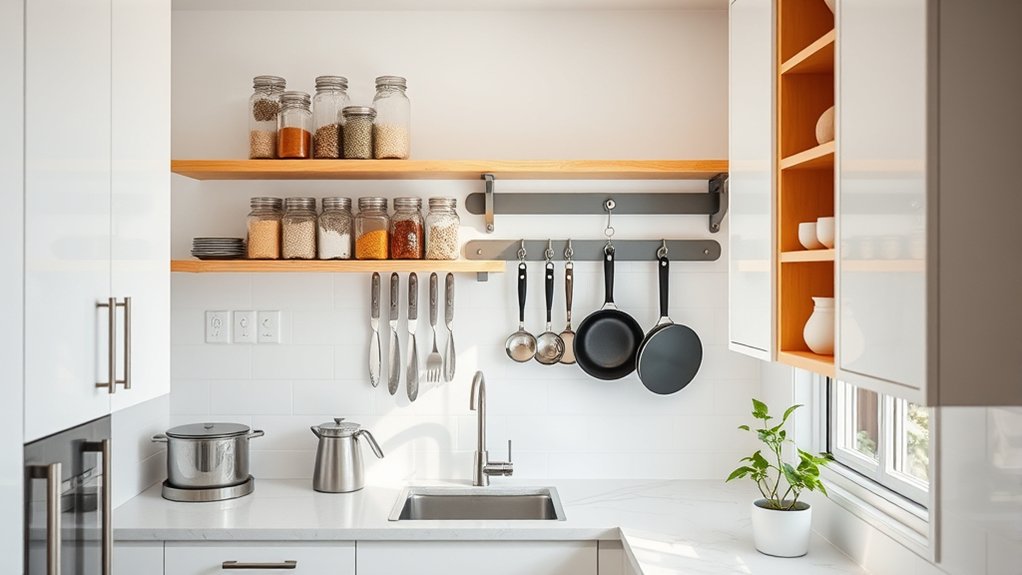
Make every inch work harder by adding shelf risers inside cabinets, adhesive hooks under shelves or on cabinet doors, and a wall-mounted rail for frequently used tools. Risers create a second level, so you can see plates, mugs, and cans without digging. Choose sturdy, narrow models that fit your cabinet depth and leave room for your hands.
Use hooks for utensils to hang measuring spoons, peelers, or lightweight pans from unused vertical space. Place them where you naturally reach, but keep them away from heat and splashes. A mounted rail with S-hooks can hold frequently used tools while giving your kitchen a tidy, intentional feel.
- You’ll find what you need faster.
- Your cabinets will feel wonderfully spacious.
- Daily cooking will seem less stressful.
- Forgotten tools will become useful again.
- Your kitchen will feel more like yours.
Measure before mounting, clean adhesive surfaces, and test weight limits. Removable options work well if you rent or rearrange often. Keep installations secure, accessible, and visually balanced.
Keep Countertops Clear and Useful
Keep your countertops clear so you can make the most of every inch of workspace. Store everyday essentials, like coffee supplies and cooking utensils, where they’re easy to reach—but don’t let them take over the counter. A quick reset each day will help keep your kitchen more useful and efficient.
Maximize Counter Space
To maximize counter space, give every item a designated home and leave only daily essentials within reach. Choose slim Countertop accessories, such as a narrow utensil holder or wall-mounted rail, to keep tools accessible without crowding your work area.
Use Appliance storage wisely: place bulky machines in a cabinet, pantry, or rolling cart when you’re not using them. Install shelves, hooks, or a magnetic strip to move supplies upward and free valuable workspace.
Group similar items together so cleanup feels quick instead of overwhelming.
- You’ll gain room to chop and prep.
- You’ll feel calmer while cooking.
- You’ll protect your counters from clutter.
- You’ll find tools faster.
- You’ll enjoy a kitchen that feels larger.
Before bed, return each item to its home. Your clear counters will welcome tomorrow’s meals and make your small kitchen feel invigoratingly open.
Store Daily Essentials
Store only the essentials you use every day, such as a coffee maker, knife block, or toaster, on the counter, and give each one a defined spot. Keep appliances near outlets, but leave enough room for food preparation. When you finish using an item, return it to its place immediately so clutter doesn’t accumulate.
Use a drawer divider for organizing utensils, grouping cooking tools by purpose and keeping frequently used pieces within reach. Store rarely needed gadgets in cabinets or a pantry instead of sacrificing valuable counter space.
For storing cleaning supplies, choose a slim caddy beneath the sink, and keep only your spray, sponge, and towel accessible. Hang dish towels on a hook rather than draping them over appliances.
Each evening, wipe the counters and reset your essentials, so your small kitchen stays functional, open, and ready for tomorrow.
Store Pots, Pans, and Lids Efficiently
When cabinet space is tight, stack pots and pans by size and place a lid organizer nearby to keep everything accessible. Choose nesting cookware with similar shapes, and protect nonstick surfaces with soft cloths.
These simple stacking methods prevent scratches while freeing valuable shelves. Store your most-used skillet and saucepan at the front, so you won’t need to unload everything during busy meals.
For smarter lid storage, use a vertical rack inside a cabinet door or stand lids beside their matching pots. Label shelves if several people share the kitchen, and return each piece immediately after washing.
- You’ll cook with less frustration.
- Your counters will feel calmer.
- Your cookware will stay in better condition.
- You’ll find every lid quickly.
- Your small kitchen will feel surprisingly spacious.
Skip unstable towers. Heavy pans belong on lower shelves. If a cabinet still feels crowded, move specialty cookware to a high shelf or a rolling cart.
Review your collection seasonally and donate duplicates you never use.
Frequently Asked Questions
How Often Should I Reorganize My Small Kitchen?
Reorganize your small kitchen every three to six months, or whenever clutter slows you down. Start sooner if you buy new appliances, change cooking habits, or struggle to find essentials.
Use this routine to review storage solutions, discard expired food, and return misplaced items. Apply simple decluttering tips, such as keeping counters clear and grouping similar tools.
A quick monthly check also prevents small messes from becoming overwhelming projects later.
What Are the Best Colors for Making a Small Kitchen Feel Larger?
Choose light, cool colors to make your kitchen feel larger. Soft white, pale blue, light gray, and gentle green reflect light and create an airy atmosphere.
Color psychology suggests that these shades feel calm and open, while visual illusions make walls appear farther apart. Paint cabinets and walls in similar tones to reduce visual breaks.
Add warm wood or colorful accessories for contrast, but avoid dark, heavy colors that can shrink the space.
How Can I Organize a Small Kitchen Without Spending Much Money?
How can you organize cheaply? Start by decluttering: donate duplicates, discard expired items, and keep daily essentials within reach.
Use jars, shoeboxes, and repurposed containers as storage solutions for spices, utensils, and pantry goods. Add hooks beneath cabinets, stackable bins, and a tension rod for cleaning supplies.
For space maximization, store cutting boards vertically and use cabinet doors. Label everything, group similar items, and regularly reset each area to maintain order.
Which Kitchen Appliances Are Worth Keeping in a Tiny Kitchen?
Keep appliances that perform several tasks and that you use weekly. A compact toaster oven can bake, toast, and reheat, while an immersion blender handles soups, sauces, and smoothies without taking much room.
Keep your coffee maker or kettle if you use it daily. Donate duplicates, single-purpose gadgets, and rarely used machines.
Improve appliance placement by storing heavier items at waist level and using compact storage for occasional appliances in cabinets.
How Do I Maintain an Organized Kitchen When Sharing It With Others?
Set clear zones for shared storage, and label shelves or bins so everyone knows where items belong. Agree on limits for crowded cabinets, and return appliances immediately after use.
Create a routine cleaning schedule that assigns quick daily tasks, such as wiping counters, washing dishes, and sweeping floors. Hold a brief weekly reset together to discard expired food, restock essentials, and address clutter.
You’ll keep the kitchen orderly when everyone follows the same simple system.
Conclusion
A small kitchen can feel either cramped or calm—it depends on what you keep and where you put it. Once you declutter, group items, and create purposeful zones, cooking becomes simpler instead of stressful.
Use cabinets, risers, hooks, and pantry bins to turn wasted space into working space. Keep counters clear, store cookware wisely, and let every item earn its place.
With a few thoughtful changes, you’ll trade daily clutter for a kitchen that feels open, efficient, and inviting. These simple tips can help you learn how to organize a small kitchen with ease.