How to Get Rid of Roaches in Your Kitchen in 10 Steps
Finding roaches in your kitchen can feel frustrating and overwhelming, especially when they seem to appear out of nowhere. You’re not alone—many people struggle to keep these unwanted pests away.
The good news is that the right products and habits can help you get rid of kitchen roaches and keep them from coming back.
To get rid of kitchen roaches in 10 steps, find their hiding spots, remove food, fix leaks, dry sinks, deep-clean crumbs and grease, seal cracks, and place sticky traps. Use labeled gel baits or bait stations safely, avoiding unnecessary sprays that scatter roaches.
Store food securely, remove trash, and maintain daily cleaning habits. Monitor activity for at least two weeks, and contact a pest professional if nymphs, egg cases, or persistent activity remain.
The steps below explain each measure.
Key Takeaways
- Inspect dark, warm, damp areas and use sticky traps to locate roaches, droppings, nymphs, and egg cases.
- Remove food and water sources by cleaning crumbs, sealing groceries, fixing leaks, drying sinks, and taking out trash.
- Seal cracks and gaps around pipes, cabinets, doors, windows, baseboards, and appliances with caulk or weatherstripping.
- Place labeled gel baits or enclosed bait stations near hiding spots, walls, plumbing, and appliances. Keep them away from children and pets.
- Contact a pest professional for persistent infestations, roaches in wall voids or appliances, egg cases, or household allergy symptoms.
Find Where Kitchen Roaches Hide
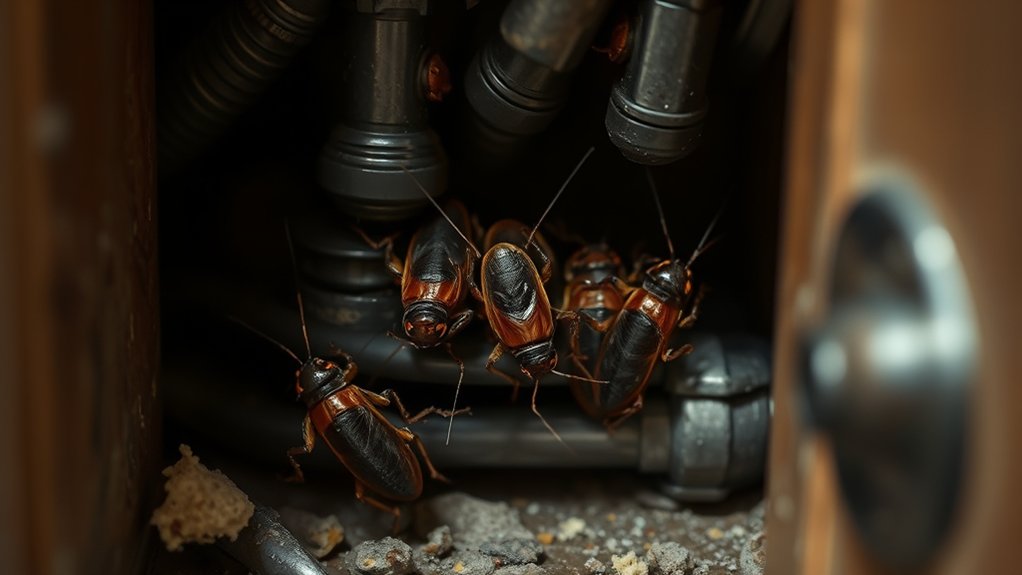
Start by checking dark, warm, and damp areas where roaches commonly hide, such as under the sink, behind appliances, inside cabinets, and around plumbing. Use a flashlight to inspect hidden corners, cabinet hinges, drawer tracks, and gaps where walls meet floors.
Inspect dark, warm, damp areas first, especially beneath sinks, behind appliances, inside cabinets, and around plumbing.
Look for live or dead roaches, shed skins, droppings resembling pepper or coffee grounds, and brown egg cases. Pay close attention to dark crevices around pipes, appliance motors, backsplash seams, and damaged caulk.
Move appliances carefully so you can examine the floor and wall behind them. Check cardboard boxes, paper bags, and rarely used equipment, since roaches may shelter inside these items.
At night, enter the kitchen quietly and scan with a flashlight. Roaches often emerge when the room stays dark.
Mark each spot where you find evidence, then inspect nearby cracks and openings. Mapping these locations helps you target treatment and monitor activity without disturbing potential hiding places.
Keep notes so you can compare findings over several nights.
Remove Food Sources From the Kitchen
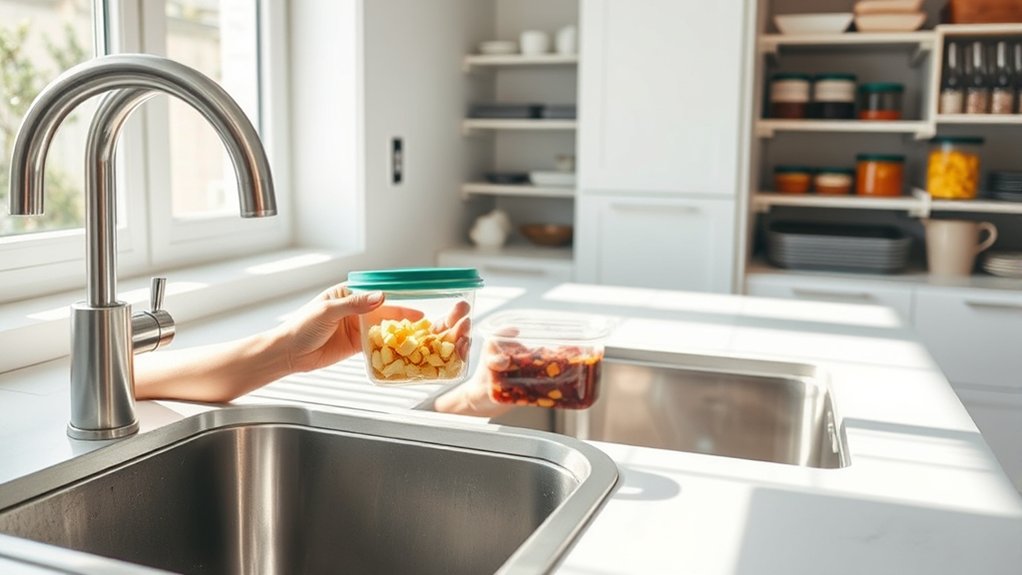
Why give roaches an easy meal? Remove every accessible food source from your kitchen, and you’ll make the space far less inviting. Wipe counters, stovetops, and tables after preparing food, clearing away crumbs, grease, and spills.
Sweep the floor daily, especially beneath appliances and cabinets, where scraps can remain unnoticed.
Improve your Food storage habits by keeping cereal, flour, rice, pet food, and snacks in tightly sealed containers instead of opened bags or cardboard boxes. Don’t leave dirty dishes, cooking utensils, or food in the sink overnight.
Rinse recyclable containers before placing them in the bin, and clean crumbs from toaster trays and microwaves regularly.
Effective Waste management also matters. Use a lidded trash can, tie off garbage bags each evening, and take them outside promptly. Wash the bin occasionally and clean around it to remove residue.
Feed pets on a schedule, pick up uneaten food, and store their supplies securely. Consistent routines will help starve roaches and support long-term control.
Fix Leaks and Remove Moisture

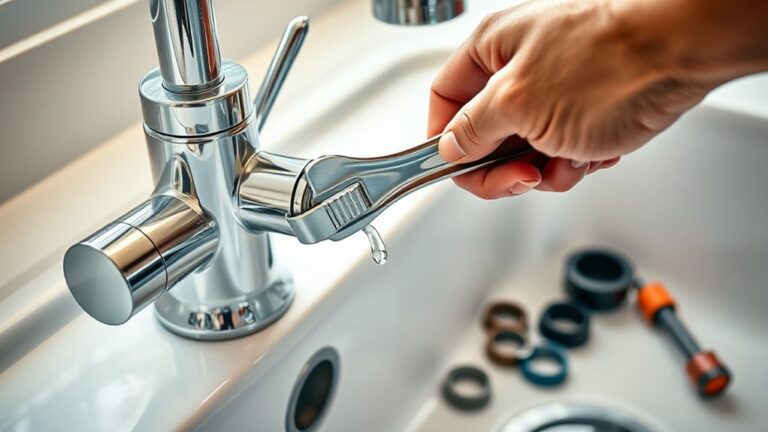
Roaches need water to survive, so fix dripping faucets, leaky pipes, and loose connections as soon as you notice them. Check beneath your sink, around the dishwasher, and behind the refrigerator for dampness or pooled water.
Fix leaks promptly and check hidden areas for moisture to remove the water sources roaches need to survive.
Complete prompt leak repair, or call a licensed plumber if you can’t safely reach the problem. Wipe up spills immediately, and don’t leave wet sponges, dishcloths, or mop heads in the kitchen overnight.
Improve moisture control by drying your sink and counters after use. Empty your dish drainer regularly, and repair damaged cabinet floors that absorb water.
Run an exhaust fan or dehumidifier when humidity remains high, especially in poorly ventilated spaces. Keep plumbing access areas open so you can spot moisture quickly.
At night, remove your pet’s water bowl if possible, and dry any nearby splashes. These steps eliminate the water sources that help roaches survive and make your kitchen less inviting without relying on chemical treatments.
Deep-Clean Roach-Prone Areas
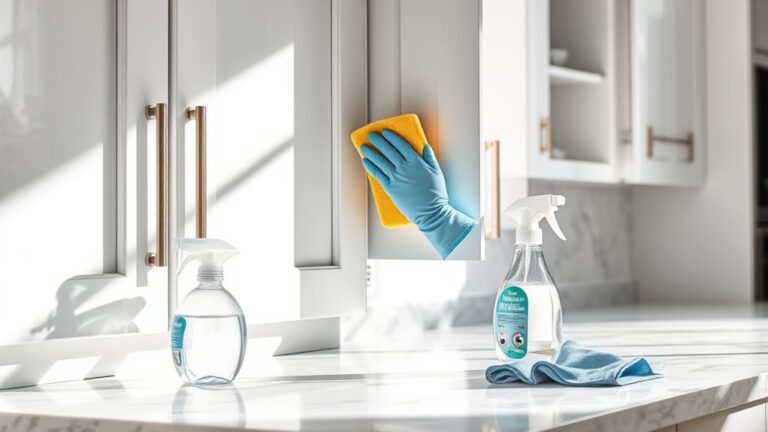
Clean up crumbs and spills promptly to remove easy food sources for roaches. Scrub grease buildup from stovetops, counters, and cabinet surfaces. Don’t forget to sanitize hidden corners, crevices, and the spaces beneath appliances where pests may hide.
Clean Crumbs and Spills
Even tiny crumbs and sticky spills can give roaches a steady food source, so wipe kitchen surfaces and sweep floors as soon as messes happen. Focus on crumb cleanup beneath appliances, tables, cabinets, and drawers, where food particles can collect unnoticed.
Use a handheld vacuum or crevice attachment to reach edges and corners, then empty the vacuum outdoors. For spill management, blot liquids immediately and wash the area with warm, soapy water.
Check around pet bowls, trash containers, and pantry shelves each evening. Store snacks, flour, cereal, and other dry goods in sealed containers rather than open bags.
Don’t leave dirty dishes, used sponges, or damp towels overnight. Regular attention removes easy meals and helps you spot droppings or other signs of roach activity quickly.
Scrub Grease Buildup
Grease and cooking residue can build up behind stoves, beneath range hoods, and along cabinet edges, creating a food source and hiding place for roaches. Begin grease removal by turning off appliances and letting surfaces cool.
Apply a degreasing cleaner to a cloth rather than spraying near burners, then scrub stuck-on film. Use a plastic scraper on thick deposits to avoid scratching finishes.
For stain cleaning, choose a gentle product suited to each surface and test it in an inconspicuous spot.
- Pull out the stove carefully and wipe its sides, floor edges, and backsplash.
- Remove and wash range-hood filters according to the manufacturer’s directions.
- Clean cabinet seams, handles, and undersides where residue collects.
- Replace greasy shelf liners and launder reusable cloths promptly.
Dry every cleaned area completely, and discard oily paper towels in a sealed bag.
Sanitize Hidden Corners
Once grease is gone, sanitize the hidden corners where crumbs, moisture, and roach droppings may remain. Pull out appliances and clean beneath them, then wipe baseboards, cabinet hinges, drawer tracks, and pipe openings with warm, soapy water.
Use a narrow brush or vacuum crevice tool to reach tight gaps where food particles collect. Empty your vacuum outdoors immediately, and seal its bag if applicable.
Follow safe sanitation practices: wear gloves, ventilate the room, and never mix bleach with ammonia or other cleaners. After washing, dry every surface thoroughly because lingering moisture attracts roaches.
Clean around drains, trash containers, and refrigerator drip pans regularly. Inspect caulk and repair cracks around walls, cabinets, and plumbing.
Keep these hidden corners dry and clutter-free so you’ll remove food sources, discourage nesting, and make future infestations easier to detect.
Seal Cracks and Kitchen Entry Points
Check around pipes, cabinets, windows, doors, and vents for gaps where roaches could get in. Seal any cracks with caulk, and add weatherstripping around doors and windows. These simple fixes can block entry points and help keep your kitchen roach-free.
Inspect Common Entry Points
Where do roaches enter your kitchen? Inspect likely entry points before you address them. Roaches can squeeze through tiny gaps, follow plumbing, and hide near warm appliances. Use a flashlight to examine these common locations:
- Gaps around sink and dishwasher pipes
- Cracks along walls, floors, and cabinet edges
- Openings around utility lines and outlets
- Spaces beneath doors and behind appliances
Check at night, when roaches are most active, and look for droppings, shed skins, grease marks, or live insects. Trace trails from food storage areas toward walls, drains, windows, and neighboring rooms.
Don’t overlook loose floor tiles, damaged cabinet backs, or gaps around vents. Record every opening you find, then inspect adjoining rooms for connected entry points.
This careful survey shows where pests travel and helps you prioritize the areas needing attention.
Apply Caulk and Weatherstripping
After you’ve identified the entry points, seal them with caulk to block roaches from reaching your kitchen. Clean each crack, remove loose debris, and let the area dry before you begin.
During caulk application, run a continuous bead along gaps around cabinets, countertops, pipes, baseboards, and wall joints. Smooth the bead with a damp finger or tool, then allow it to cure according to the label.
Replace cracked or shrinking caulk promptly.
Check doors and windows for visible gaps, damaged seals, or light passing underneath. Complete weatherstripping installation around door frames and window sashes, choosing materials that fit tightly without preventing closure.
Add a door sweep if space remains beneath the kitchen door. Reinspect your work after a few days, especially near plumbing penetrations.
Sealing these routes helps keep roaches, moisture, and drafts outside.
Place Roach Baits Near Hiding Spots
Place roach baits near cracks, cabinet hinges, appliances, and other hiding spots where roaches travel or feed. Choose enclosed bait stations or gel labeled for indoor kitchen use, and follow the package directions carefully.
Place roach bait near cracks, hinges, appliances, and other hiding spots where roaches commonly travel or feed.
Position several small placements throughout the roach habitat rather than relying on one large amount. Keep bait away from countertops, food, dishes, children, and pets.
- Set bait beside plumbing openings, under the sink, and behind the refrigerator.
- Place stations along cabinet edges, near baseboards, and inside dark corners.
- Remove competing crumbs, grease, and standing water so roaches seek the bait.
- Don’t spray insecticide directly around bait, because repellents can discourage feeding.
Replace or refresh bait according to the label, especially if it dries out, disappears, or becomes contaminated. Avoid moving stations frequently because roaches need time to encounter and consume the product.
Seal food in containers, clean spills promptly, and keep surfaces dry while the bait works. Wear gloves when handling gel, and wash your hands afterward. Keep every placement inaccessible to pets and children.
Monitor Roach Activity With Traps
Once you’ve placed the bait, use sticky traps to track where roaches remain active and whether their numbers are declining. Set traps along walls, beneath appliances, inside cabinets, and near plumbing, since roaches usually travel along edges.
Careful trap placement helps you identify busy routes and hidden harborage areas. Keep traps away from moisture, food debris, and locations where children or pets can reach them.
Check each trap daily for the first week. Record the number of roaches, their sizes, and the locations where you catch them.
Empty traps don’t necessarily mean the problem has ended. Roaches may have shifted to another area. Replace dusty, wet, or full traps so they continue working properly.
Compare your notes every few days. Fewer captures suggest that your bait stations are reducing activity, while steady or rising numbers indicate that you should reassess sanitation, entry points, and bait locations.
Continue monitoring for at least two weeks after sightings decrease to confirm lasting improvement.
Use Roach Insecticides Safely
Choose targeted roach baits to address infestations without unnecessary chemical exposure. Follow all label directions carefully, and never use more product than recommended. Keep children and pets away from treated areas until the label says it’s safe.
Choose Targeted Baits
Targeted gel baits and bait stations can eliminate roaches more effectively than broad sprays because they draw pests out and deliver insecticide where they feed. Choose products designed for kitchen roaches, and focus your bait placement near hiding and travel areas rather than spraying every surface. Keep baits away from food-preparation spaces, children, and pets.
Remove competing crumbs and moisture so roaches find the bait first, and avoid placing pest deterrents, such as strong-smelling cleaners, nearby.
- Place small gel dots in cracks, cabinet corners, and beneath appliances.
- Set bait stations beside walls, under sinks, and near plumbing openings.
- Replace dried, consumed, or contaminated bait promptly.
- Monitor activity and move stations toward fresh droppings or sightings.
Use several small placements instead of one large mound, since roaches often follow edges. Don’t combine bait with repellent sprays, which can drive roaches away from treated areas. Rotate placement as activity changes.
Follow Label Directions
If bait alone doesn’t control the infestation, use a roach insecticide exactly as the label directs. Read all Label instructions before opening the container, and choose a product approved for indoor kitchen use.
Check the active ingredient, mixing requirements, application sites, and maximum amount. Don’t increase the dose or combine products; more chemicals won’t improve results and may create dangerous fumes.
Wear the protective equipment listed on the label, such as gloves or eye protection, and provide ventilation when required.
Keep food, dishes, utensils, and food-preparation surfaces away from spray or dust. Cover or remove them first, then wash surfaces according to the product directions.
Follow chemical safety guidance during storage, use, and disposal. Never pour leftover insecticide down a drain or transfer it to another container. Wash your hands thoroughly afterward.
Keep Children Away
Keep children and pets out of the kitchen while you apply roach insecticides and until the label says it’s safe to return. Child safety starts with storing products in locked cabinets, never on counters or beneath sinks that children can reach. Pet protection also requires removing food bowls, toys, and bedding before treatment.
Ventilate the room as directed, and don’t let anyone touch treated surfaces prematurely.
- Read the label for reentry times and warnings.
- Keep sprays, baits, and concentrates in original containers.
- Wipe food-preparation surfaces before using them again.
- Wash your hands after handling insecticides, even if you wore gloves.
If a child or pet contacts the product, follow the label’s first-aid instructions and call poison control or a veterinarian.
Don’t use foggers or sprays near toys, dishes, or exposed food. Rotate products only when labels permit it.
Prevent Roaches With Daily Habits
Daily habits can make your kitchen far less inviting to roaches. Wipe counters after meals, sweep crumbs, and wash dishes instead of leaving them overnight.
Store food in sealed containers, empty pet bowls, and fix dripping faucets promptly. Good pantry organization limits hiding places and keeps packages from becoming food sources.
During nighttime inspections, check under appliances and along cabinet edges. Then clean any droppings or spills you find.
| Habit | Best time | Roach deterrent |
|---|---|---|
| Wipe counters | After meals | Removes food residue |
| Seal food | After opening | Blocks access |
| Empty trash | Each evening | Reduces odors |
| Dry sinks | Before bed | Eliminates water |
Keep garbage in a covered bin and take it outside regularly. Don’t leave cardboard boxes or paper bags stacked on the floor; recycle them promptly.
Run your range hood when cooking to reduce grease buildup, and clean filters as directed. Consistency matters: a tidy, dry kitchen gives roaches fewer reasons to stay.
Make these steps part of your morning and evening routine.
Know When Kitchen Roaches Need Professional Help
Even with consistent cleaning and food storage, a roach problem may require professional help. If you see roaches during daylight, find droppings in several areas, or spot egg cases, the infestation may be larger than it appears.
A persistent odor, repeated sightings after treatment, or roaches returning through walls and plumbing also signals a deeper problem.
Contact licensed pest control services when:
- You’ve tried traps and baits without reducing activity.
- Roaches appear in appliances, cabinets, or wall voids.
- You find nymphs, egg cases, or numerous droppings.
- Someone in your home has asthma or allergy symptoms.
A trained technician can identify the species, locate hiding places, and create a targeted treatment plan.
Professional extermination may combine baiting, crack sealing, monitoring, and carefully chosen products. Ask about preparation, follow-up visits, pet safety, and prevention steps before treatment begins.
Don’t rely on repeated over-the-counter sprays. They can scatter roaches and leave hidden colonies untouched.
Act quickly, because established infestations spread rapidly throughout your kitchen and adjoining rooms.
Frequently Asked Questions
Can Roaches Enter the Kitchen Through Drains or Plumbing Pipes?
Yes, roaches can enter your kitchen through drains or plumbing pipes, especially when traps dry out, pipes leak, or openings lack tight seals. Drain entry often occurs through sink, floor, or garbage-disposal drains.
Plumbing access also includes gaps around supply lines and wall penetrations. Keep traps filled with water, use fitted drain covers, repair leaks, and seal pipe openings with caulk or mesh.
Don’t pour insecticide into drains. Use targeted bait instead.
How Quickly Can a Roach Infestation Spread Throughout Your Home?
A roach infestation can spread throughout your home within days to weeks, especially when food, water, and hiding places remain available. You might notice roaches moving from the kitchen into bathrooms, pantries, bedrooms, and wall voids.
Improve Food storage by sealing containers and cleaning spills promptly. Strengthen Pest prevention by fixing leaks, sealing cracks, removing clutter, and setting traps.
If sightings continue, contact a licensed pest professional quickly for treatment.
Are Kitchen Roaches Dangerous to Children, Pets, or People With Allergies?
Roaches can endanger children, pets, and people with allergies by spreading germs and triggering reactions. Their droppings, saliva, and shed skins may worsen asthma, sneezing, coughing, or skin irritation; curious children and pets might also contact contaminated surfaces.
You’ll reduce these Health risks by sealing food, cleaning crumbs, fixing leaks, and keeping roach bait inaccessible. If activity continues, contact a licensed Pest control professional, especially when anyone develops breathing problems or persistent symptoms.
How Can You Identify Which Species of Roach Is Infesting Your Kitchen?
Roach species identification starts with size, color, markings, and location. German cockroaches are small, tan, and show two dark stripes behind the head; American cockroaches are larger, reddish-brown, and have a pale figure-eight pattern.
Brown-banded roaches display light bands across their wings, while Oriental roaches look shiny black and prefer damp areas. Capture a clear photo or specimen, then contact a pest professional to confirm the species and assess infestation impact.
Can Landlords or Tenants Be Responsible for Treating a Kitchen Roach Infestation?
Responsibility depends on local law, your lease, and the infestation’s cause.
Landlord responsibilities typically include maintaining habitable conditions, sealing structural entry points, and arranging pest treatment when roaches result from building-wide problems or poor maintenance.
Tenant obligations usually include keeping the kitchen sanitary, reporting pests promptly, allowing access, and paying if neglect caused the infestation.
Review your lease, document evidence, and contact your housing authority if the landlord won’t respond.
Conclusion
By following these steps, you’ll make your kitchen far less inviting to roaches. Find their hiding places, remove food and moisture, clean thoroughly, seal entry points, and monitor activity with traps.
Use insecticides carefully, and keep up daily habits so roaches can’t return. If signs persist, don’t wait to call a pest professional.
After all, a clean, dry, sealed kitchen isn’t just healthier; it’s your strongest defense against unwanted invaders. Start today and take back your kitchen with these tips for how to get rid of roaches in your kitchen.