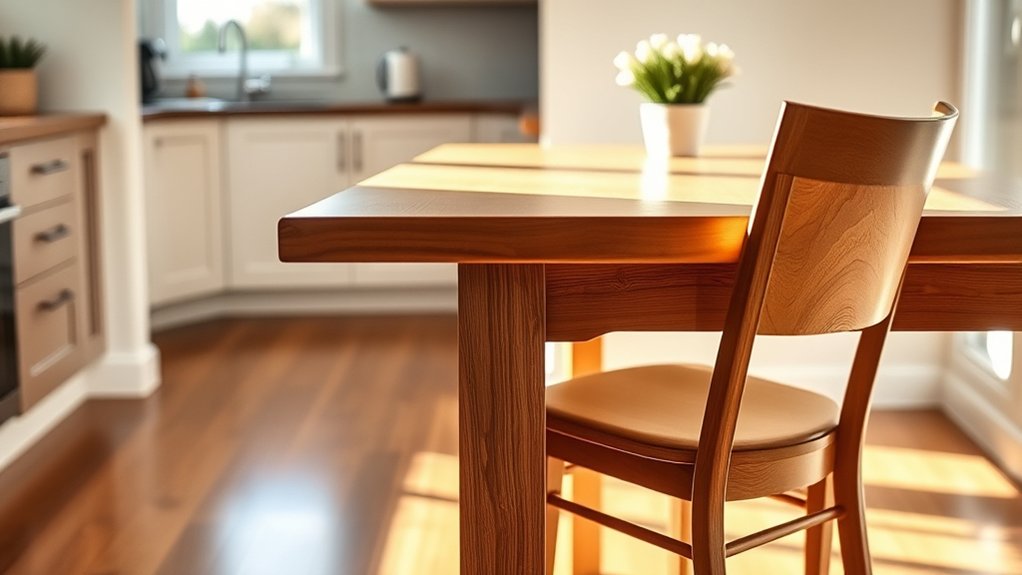
How Tall Is a Kitchen Table?
Finding the right kitchen table height can be surprisingly tricky. You’re not alone—many people struggle with tables that feel too low, too tall, or uncomfortable for everyday meals.
So, how tall is a kitchen table?
A standard kitchen table is typically 28 to 30 inches tall, making it comfortable with dining chairs around 18 inches high. You’ll usually have about 10 to 12 inches between the seat and tabletop, with enough legroom for relaxed dining.
If you prefer a raised surface, choose a counter-height table measuring 34 to 36 inches or a bar-height table measuring 40 to 42 inches.
Your room, seating, and activities can help determine the best height, as you’ll find out below.
Key Takeaways
- A standard kitchen or dining table is typically 28–30 inches tall.
- Standard dining chairs are about 18 inches high, leaving roughly 10–12 inches between the seat and tabletop.
- Counter-height tables measure approximately 34–36 inches and pair with 24–26-inch stools.
- Bar-height tables are usually 40–42 inches tall and pair with 28–30-inch stools.
- Choose a height that lets your feet rest flat, knees fit comfortably, and elbows reach the tabletop naturally.
How Tall Is a Standard Kitchen Table?
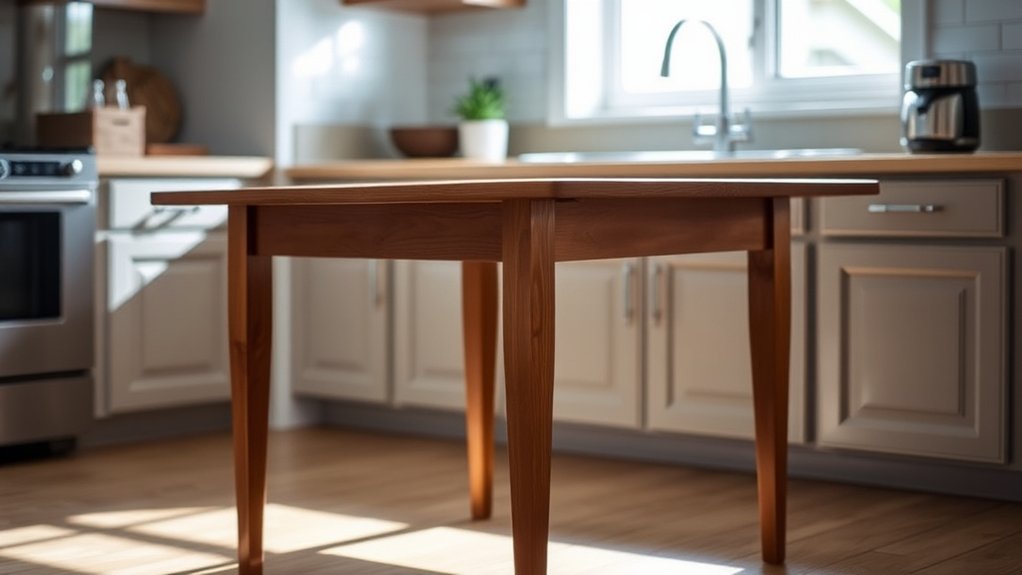
A standard kitchen table is typically about 28 to 30 inches tall, which gives most people a comfortable height for sitting and eating. You’ll find this size works well with ordinary dining chairs, allowing your knees to fit beneath the tabletop while keeping your elbows at a natural angle.
Your ideal table may vary slightly depending on your height, chair dimensions, and preferred posture. Measure your chair’s seat height before choosing a table, and leave enough space for comfortable leg movement.
Choose a table height that suits your chairs, posture, and legroom needs for comfortable everyday dining.
A tabletop thickness of roughly one to two inches can affect the usable clearance beneath it, so consider the underside design, too. Material options, including wood, glass, metal, and composite surfaces, can influence the table’s appearance, durability, and maintenance needs.
You can also choose a shape and finish that suits your decorating styles, whether you prefer farmhouse warmth, minimalist simplicity, or traditional character. Focus on proportions, comfort, and everyday usability when selecting your table.
Standard, Counter, and Bar Table Heights
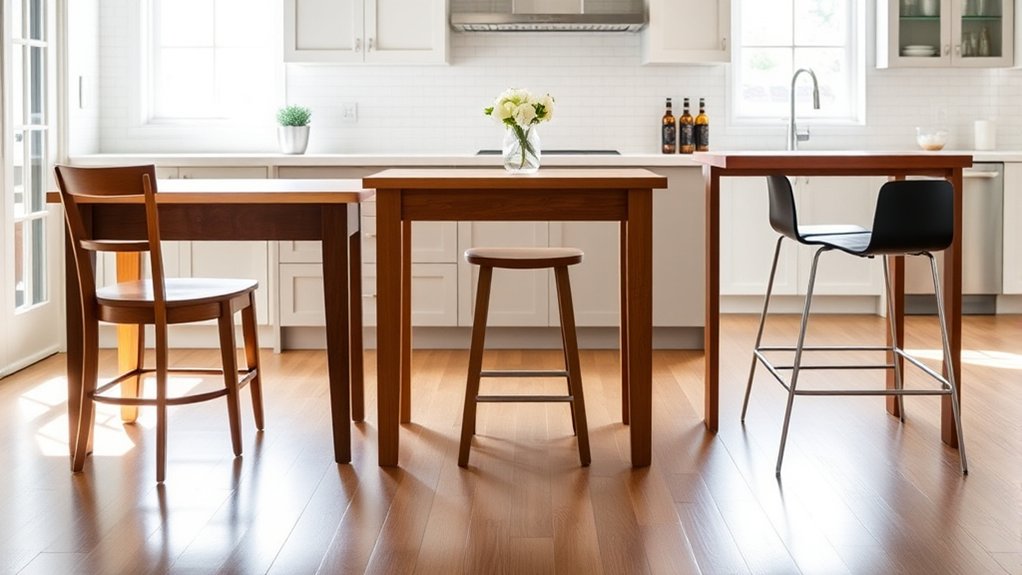
Standard tables are typically about 28–30 inches high. Counter-height tables usually measure 34–36 inches, while bar-height tables are around 40–42 inches. Knowing these ranges makes it easier to choose seating that fits comfortably.
Standard Table Height
Standard kitchen tables are typically 28 to 30 inches tall, giving you a comfortable surface for everyday meals, homework, and other seated tasks. This standard suits most dining chairs, so your knees fit beneath the tabletop while your feet rest comfortably on the floor.
Before choosing a table, measure your chairs and consider who’ll use it most. Historical dining styles often favored this proportion because it supports relaxed, face-to-face meals. Today, kitchen interior design uses the same height for practical, balanced dining spaces.
| Feature | Standard table height |
|---|---|
| Typical range | 28–30 inches |
| Best seating | Standard dining chairs |
| Main benefit | Comfortable seated posture |
A slightly lower or higher table may work if you have unusual chairs or specific accessibility needs. Check the complete setup before purchasing.
Counter and Bar Heights
Counter-height tables are typically 34 to 36 inches tall, while bar-height tables usually measure 40 to 42 inches. Choose your height based on seating, comfort, and how you’ll use the surface.
Counter tables pair with stools about 24 to 26 inches high, making them practical for meals, homework, and food preparation. Bar tables require taller stools, generally 28 to 30 inches high, and create a more casual, raised setting.
- Measure your available space before choosing a table, allowing room for chairs and movement.
- Match the finish and silhouette to your kitchen decor for a cohesive appearance.
- Check appliance integration, especially if the table sits beside an island, dishwasher, or refrigerator.
You’ll also want enough legroom beneath the tabletop. If you’re short or have children, counter height may feel more accessible than bar height.
Why Are Kitchen Tables 28–30 Inches Tall?
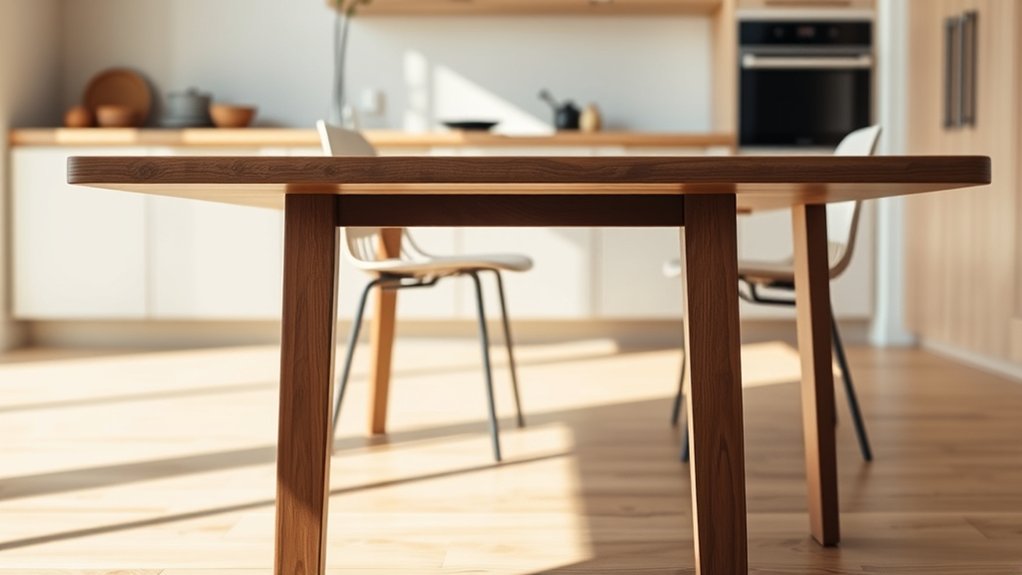
Kitchen tables are typically 28–30 inches tall because that height fits the average dining chair and lets you sit comfortably with your feet on the floor and your elbows near the tabletop. This familiar proportion supports relaxed meals, homework, conversations, and everyday tasks without straining your shoulders or wrists.
Manufacturers also use this range because standard dining chairs pair with it easily, giving you many affordable seating choices.
| Feature | What it offers | Why you’ll notice |
|---|---|---|
| Chair fit | Natural leg clearance | Easier sitting |
| Elbow position | Comfortable tabletop reach | Better posture |
| Table height | Flexible daily use | Simple decorating |
You can build your Kitchen decor around this dependable scale, whether you prefer farmhouse wood, sleek laminate, or a compact drop-leaf design.
For Cooking tips, the generous surface gives you room to prep ingredients while seated, sort recipes, or organize serving dishes.
Measure your chair seat and personal comfort before buying, since cushions, apron thickness, and your height can slightly change the ideal fit.
How Tall Is a Counter-Height Table?
A counter-height table is usually 34–36 inches tall, placing its surface above a standard kitchen table and below a bar-height table. This height gives you a comfortable, slightly raised dining and work surface without feeling too formal. Choose stools with seats about 24–26 inches high, leaving enough room for your legs beneath the tabletop.
When selecting your table, consider these factors:
- Room layout: Measure walkways and allow adequate space to pull out stools comfortably.
- Tabletop design: Pick a durable material that suits your style and daily use.
- Lighting: Hang a pendant or fixture high enough to illuminate the surface without obstructing your view.
For Decorating tips, coordinate the table’s finish with nearby cabinets, flooring, or upholstery. Cushioned stools can add color and comfort.
For Maintenance tips, wipe spills promptly, use coasters, and follow the manufacturer’s cleaning instructions. You’ll also want to check the legs and hardware occasionally, tightening anything that becomes loose.
This versatile height works especially well in compact kitchens, casual dining areas, and open-plan homes.
How Tall Is a Bar-Height Table?
Bar-height tables typically stand 40–42 inches tall, making them the tallest common dining tables and pairing well with 28–30-inch bar stools. You’ll often find these tables in entertaining spaces, game rooms, open kitchens, and covered patios.
Bar-height tables create a casual, social setting for entertaining, dining, and enjoying drinks in open kitchens or covered patios.
Their raised surface creates a casual, social atmosphere while keeping food and drinks at a comfortable standing or seated level.
Before buying, measure your room’s ceiling height and available floor space. You’ll need enough clearance around the table for easy movement, especially in busy areas.
Consider the table’s width, length, and leg placement, since these details affect usable surface area and stability.
Decorative table styles range from sleek, modern pub tables to rustic farmhouse designs and sculptural pedestal models. Material options include solid wood, metal, glass, engineered wood, and combinations of these materials.
Choose a finish that complements your décor and resists everyday spills. Sturdy construction matters, particularly if you’ll use the table frequently for meals, drinks, or gatherings.
Which Chairs Fit a Kitchen Table?
The right chairs for a kitchen table should leave about 10–12 inches between the seat and tabletop, giving you enough legroom to sit comfortably. For most standard tables, choose chairs with seats about 17–19 inches high. Measure from the floor to the underside of the table, especially if an apron reduces clearance.
Consider these three factors:
- Seat style: Upholstered seats add comfort, while slim wooden or molded chairs create a lighter look.
- Back height: Low backs keep a small kitchen feeling open; taller backs provide more visual presence and support.
- Design and durability: Match your Kitchen decor without requiring identical finishes. Coordinate colors, shapes, and textures instead.
Table materials also influence your choice. Pair a solid wood table with wood, leather, or woven chairs for warmth.
With glass or metal, consider upholstered seating to soften the room. Armless chairs slide neatly under the table, while arms require extra width.
Test each chair before buying, and confirm its feet won’t scratch your flooring.
How Much Legroom Do Diners Need?
You’ll need standard legroom measurements to sit comfortably at your kitchen table. Make sure there’s enough knee clearance so your legs don’t press against the tabletop or table frame. You’ll also want to leave enough room for dining chairs to pull out and move around easily.
Standard Legroom Measurements
Allow about 24 inches of knee-to-table clearance so diners can sit comfortably without bumping the tabletop or apron. Measure from the floor to the underside of the table, then account for the chair seat height and any structural supports. Use these standard guidelines:
- Provide 18 inches between the floor and the chair seat for typical dining chairs.
- Leave roughly 10 to 12 inches between the seat and tabletop underside.
- Keep table aprons, drawers, and crossbars at least 24 inches above the floor.
Check these dimensions before choosing Kitchen table materials, since thick tops or reinforcing frames can reduce usable space. Decorative table accents, such as skirts or trim, may also occupy legroom.
You’ll create a practical dining setup by measuring every obstruction, rather than relying on the tabletop height alone. Don’t forget to verify clearance along each seating position.
Comfortable Knee Clearance
Comfortable knee clearance starts with about 24 inches from the floor to the underside of the tabletop. This gives your knees enough room to move without hitting the apron or supports.
For kitchen ergonomics, check the apron’s thickness, leg placement, and any drawers beneath the surface. Taller diners may prefer 25 to 27 inches, while a slim support structure preserves usable space.
Your measurements should balance comfort with design aesthetics.
| Clearance | Best For | Key Check |
|---|---|---|
| 24 inches | Most adults | Knees fit comfortably |
| 25 inches | Taller diners | More vertical freedom |
| 26–27 inches | Extra comfort | Confirm tabletop height |
| Under 24 inches | Rarely suitable | Avoid restricted movement |
Measure from the floor to the lowest obstruction, not merely to the tabletop. Rounded edges and recessed supports can improve comfort, while bulky aprons may reduce it.
Test the table before committing.
Space for Dining Chairs
Leave about 24 inches of width per dining chair so each diner can sit, rise, and move their elbows without crowding the person beside them. Allow at least 36 inches behind each chair for comfortable passage; 42 to 48 inches works better in busy kitchens. For legroom, provide roughly 9 to 12 inches between the seat and tabletop, depending on chair height and the table’s apron.
- Measure the chair’s full depth, not just its seat, before setting clearance.
- Keep table legs from blocking knees, especially with benches or pedestal designs.
- Match proportions to your Kitchen decor without sacrificing everyday comfort.
Consider Table materials, too: thick aprons, reinforcing bars, or bulky supports can reduce usable space. Pull-out leaves may change chair placement, so test every configuration before guests arrive.
How to Measure Kitchen Table Height
To measure your kitchen table’s height, place the table on a level floor and extend a tape measure from the floor straight up to the tabletop’s highest surface. Keep the tape vertical, and don’t follow the table leg’s angle. Record the measurement in inches or centimeters, depending on your project.
If the tabletop has a thick edge, measure to the surface where you’ll set dishes, not the underside. For a table with an uneven or textured top, take measurements at several points and use the highest consistent reading. Remove placemats, centerpieces, or other items first.
Check your tape’s starting point and keep it flush against the floor for accuracy. You can also measure from the floor to the apron separately if you need construction details. These measurements help you document the table’s dimensions, plan repairs, and compare Decorating styles. Keep your notes with your Maintenance tips so future updates remain consistent.
How to Choose the Right Table Height
Choosing the right table height starts with how you plan to use the table. For everyday meals, choose a table that lets you sit comfortably with your feet flat and your elbows relaxed.
Choose a table height that keeps everyday meals comfortable, with feet flat and elbows relaxed.
Most standard kitchen tables work well with regular dining chairs, but your household’s height and seating preferences matter.
Consider these factors before buying:
- Seating: Measure your chair’s seat height and leave enough space for your thighs beneath the tabletop.
- Activities: Choose a comfortable height for dining, homework, crafting, or food preparation.
- Room style: Match the table’s proportions to your kitchen decor, including nearby counters, stools, and lighting.
Sit at a similar-height table before you commit. Check that you can pull chairs in easily and reach the surface without hunching.
Also consider maintenance tips, such as selecting a finish that suits your cleaning routine and household habits.
A practical height should support comfort, movement, and visual balance, so you’ll use the table confidently every day.
Can You Adjust a Kitchen Table’s Height?
Yes, you can adjust a kitchen table’s height, but the method depends on its design. If your table has adjustable legs, turn each foot or loosen its locking mechanism to raise or lower the surface.
Measure from the floor to the tabletop as you work, and adjust every leg evenly to prevent wobbling.
You can also add or remove leg extensions, replace fixed legs, or install adjustable furniture glides. These options work well when you want a table to suit different chairs, activities, or household members.
Before making changes, check the manufacturer’s instructions and confirm that the hardware can support the table’s weight.
For a temporary increase, use sturdy risers beneath the legs, but avoid unstable household items. Afterward, test the table by applying gentle pressure from several sides.
Include any new hardware in your regular Table maintenance routine, and choose finishes that complement your Kitchen decor. If the frame is damaged or difficult to modify, ask a professional for help.
Frequently Asked Questions
What Materials Are Kitchen Tables Commonly Made From?
You’ll commonly find kitchen tables made from solid wood, engineered wood, glass, metal, or combinations of these materials. Wood gives you warmth, durability, and a classic appearance, while a protective Wood finish helps resist stains and moisture.
A sturdy Metal frame can support a wood, glass, or composite tabletop and creates a modern look. You might also choose laminate, stone, or recycled materials for easier maintenance, distinctive style, and added resilience in your kitchen.
How Many People Can Comfortably Sit at a Kitchen Table?
You’ll usually seat four people comfortably at a standard kitchen table, like fitting four friendly chapters around one shared story. A six-person table works well for larger families, while eight requires generous space and careful planning.
Leave enough elbowroom for everyone, especially when you add decorative table settings. Choose ergonomic seating options that let you sit upright and move freely. Your table’s shape, size, and leg placement also affect comfort considerably.
How Much Does a Typical Kitchen Table Cost?
You’ll typically pay $150–$600 for a kitchen table, depending on its size, materials, construction, and brand. Budget models often use laminate or engineered wood, while solid-wood tables commonly cost $300–$1,200 or more.
Your preferred kitchen table styles, such as farmhouse, pedestal, or extendable designs, also affect pricing. Table height standards usually don’t change cost much, but custom-height or handcrafted options can increase your total considerably.
How Do You Clean and Maintain a Kitchen Table?
Treat your kitchen table like a trusted shield: wipe it clean after every meal with a soft, damp cloth and mild dish soap. Dry it promptly to prevent water damage.
For effective table maintenance, use coasters, placemats, and trivets, and avoid harsh chemicals or abrasive scrubbers. Your cleaning tips should include polishing wood occasionally with manufacturer-approved products.
Tighten loose hardware, address stains quickly, and reseal wooden surfaces when needed.
Can a Kitchen Table Be Used as a Dining Table?
Yes, you can use a kitchen table as a dining table. You’ll enjoy a practical, comfortable surface for everyday meals, especially when its height and size suit your chairs and household.
Add decorative table settings, such as placemats, candles, or a centerpiece, to create a welcoming atmosphere. Kitchen table accessories, including serving bowls, napkin holders, and trivets, can improve convenience.
Protect the tabletop with coasters and wipe spills promptly.
Conclusion
Choosing the right kitchen table height comes down to comfort, seating, and available legroom. Most standard tables stand 28–30 inches high, while counter and bar tables reach about 34–36 and 40–42 inches, respectively.
Since people spend hours eating, working, and talking at the table, even a few inches can affect posture and ease. Measure your chairs first, then choose a height that lets you sit comfortably.
You can also adjust the legs or add risers when needed. In conclusion, the ideal kitchen table height is the one that provides comfortable seating, proper legroom, and easy everyday use.