How to Clean a Kitchen Drain in 7 Steps
A clogged or slow kitchen drain can quickly turn everyday cleanup into a frustrating chore. You’re not alone—many people struggle with grease, food debris, and lingering odors. The right drain-cleaning tools can make the job easier and help keep your sink flowing smoothly.
To clean a kitchen drain in seven steps, gather gloves, a bucket, a sponge, dish soap, baking soda, vinegar, and a plunger. Clear the sink, remove visible debris, and scrub the strainer.
Flush grease with controlled hot water and dish soap. Plunge the drain to loosen clogs, then add baking soda and vinegar for remaining buildup.
Clean the P-trap beneath the sink, rinse it thoroughly, and reassemble it. Keep strainers in place and avoid grease as you uncover more helpful maintenance tips.
Key Takeaways
- Remove dishes and visible debris, then scrub the drain strainer with hot, soapy water.
- Flush grease using controlled hot water and a small amount of dish soap.
- Clear minor clogs by plunging the drain with a properly sealed plunger.
- Pour baking soda followed by vinegar, cover the drain, then rinse after fizzing.
- Clean the P-trap if necessary, and contact a plumber for persistent clogs or leaks.
Gather Supplies and Clear the Sink
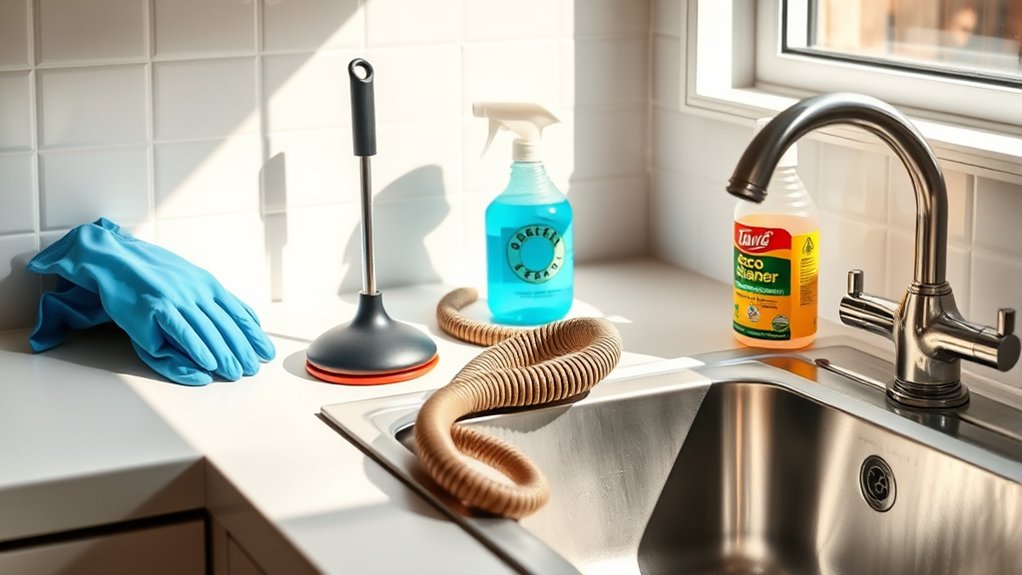
Before you begin, gather rubber gloves, a bucket, a sponge, dish soap, baking soda, white vinegar, and a drain strainer or plunger. Place everything within reach so you won’t leave a wet sink unattended.
Remove dishes, utensils, and food containers from the basin, then load them into the dishwasher or wash them separately. Clear the countertop around the sink, too, giving yourself room to work safely.
Clear the sink and surrounding counters first, creating a tidy, spacious, and safer area for cleaning.
Wipe the faucet, handles, and sink rim with a damp sponge and a little dish soap. Rinse the basin with warm water to loosen surface residue, but don’t pour grease, coffee grounds, or scraps into the drain.
Set the bucket beneath the cabinet in case you need it later, and keep cleaning products away from children and pets. These simple Kitchen organization habits make the task easier.
As a useful Cooking tips reminder, scrape plates into the trash or compost before rinsing them, helping you prevent future buildup and unpleasant odors.
Remove Debris From the Kitchen Drain
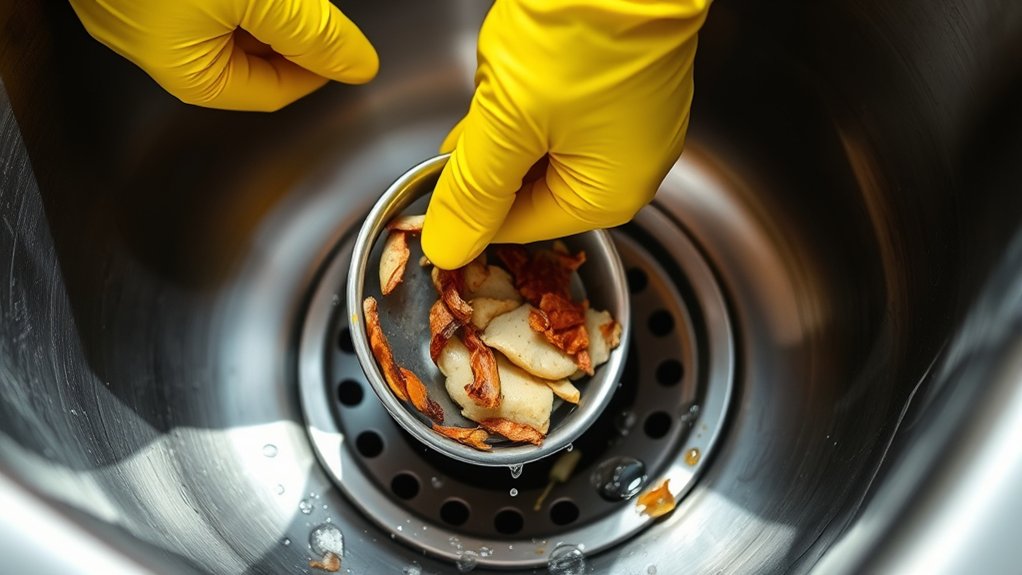
Gather gloves, a flashlight, and needle-nose pliers before you begin. Then, remove the drain cover and use the pliers to pull out any visible food scraps, hair, or other debris. Dispose of the waste, and wipe the drain opening clean.
Gather Necessary Tools
To remove debris from your kitchen drain, you’ll need rubber gloves, a flashlight, pliers, a bucket, and a small brush or old toothbrush. Gather everything before you begin, so you won’t stop midway to search for supplies. Protect your counter with an old towel, and keep a trash bag nearby for anything you collect.
- Protective gear: Wear gloves and consider safety glasses to shield your hands and eyes.
- Inspection tools: Use a flashlight to see into the drain and beneath the sink.
- Removal tools: Keep pliers, a brush, and a drain snake ready for different blockages.
- Cleaning supplies: Set out baking soda, vinegar, and hot water for later cleaning.
Don’t use chemical drain cleaners while preparing. They can create hazardous fumes and damage tools. Check that your bucket fits beneath the trap before proceeding.
Remove Visible Debris
With your gloves on, shine the flashlight into the drain and lift out any food scraps, grease buildup, or other debris you can reach. Use tweezers or needle-nose pliers to grab small particles without pushing them deeper into the pipe.
Place everything in the trash rather than rinsing it away, since solid waste can cause another clog. If the drain has a removable strainer, take it out and scrub both sides with hot, soapy water.
Wipe the surrounding rim and stopper to remove hidden residue. Don’t use your bare hands, and avoid mixing cleaning chemicals with leftover products in the drain.
Removing visible waste improves Kitchen hygiene and supports regular Drain maintenance. Once the opening looks clear, inspect it again with your flashlight before moving to the next cleaning step.
Flush Grease Buildup With Hot Water
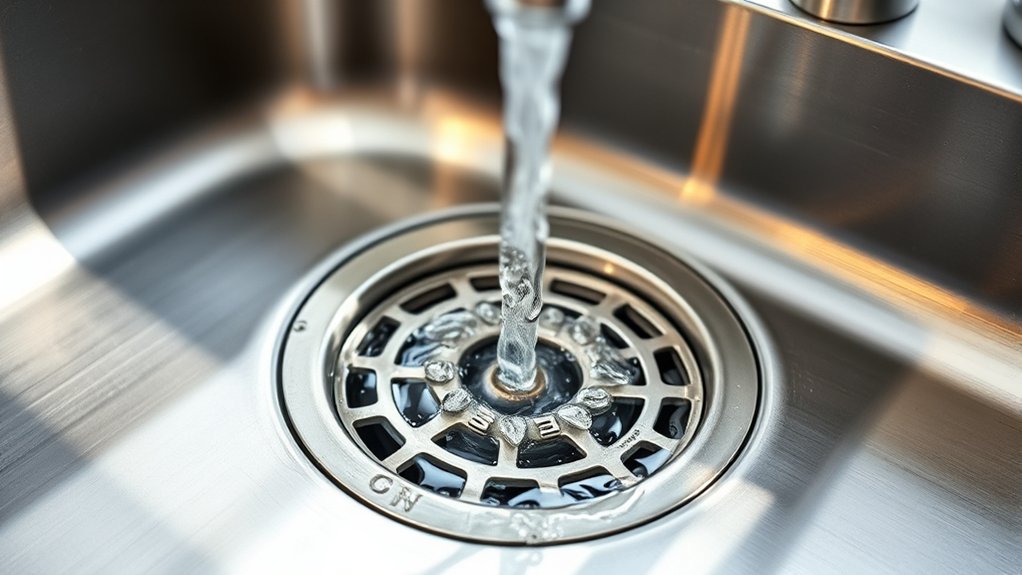
Flush a grease-coated drain with hot water to soften and carry away residue before it hardens. Grease softening works best when you use a controlled flow rather than dumping boiling water into a cold, fragile sink. Heat water until it’s very hot, but not violently boiling, especially if your plumbing contains PVC.
Flush grease-coated drains with very hot, controlled water to soften residue safely, especially when PVC plumbing is involved.
- Remove standing water from the basin so the heat reaches the drain opening.
- Pour the hot water slowly in two or three batches, pausing briefly between pours.
- Add a small squirt of grease-cutting dish soap between batches to help loosen oily film.
- Run hot tap water for several minutes afterward to complete the hot water flushing process.
Watch for splashing, and protect your hands with heat-resistant gloves. If the drain remains slow, stop adding water and inspect the situation rather than forcing more grease deeper into the pipe.
Repeat this treatment periodically after cooking fatty foods to help prevent buildup, odors, and future drainage problems. Never mix hot water with chemical drain cleaners.
Plunge the Kitchen Drain Safely
When hot water doesn’t clear the blockage, plunge the kitchen drain to dislodge trapped food and grease. Remove the drain stopper, then fill the basin with enough water to cover the plunger’s rubber cup.
If you have a double-bowl sink, seal the second drain with a stopper or wet cloth. These drain accessories help direct pressure toward the clog.
Choose a flat-bottomed sink plunger, not a toilet plunger. Center it over the drain, press firmly to create a seal, and pump vigorously 10 to 15 times without lifting the cup.
Pull the plunger away and check whether water drains. Repeat the process several times if necessary.
Follow essential safety precautions: wear rubber gloves, keep your face away from splashing water, and don’t plunge if you’ve poured chemical drain cleaner into the sink.
Avoid excessive force, which can loosen pipe connections. Once the water flows freely, rinse the drain with clean water and replace the stopper.
Treat Remaining Buildup With Vinegar
After plunging, use vinegar to loosen any grease or mineral buildup left inside the drain. Remove the stopper, then pour one-half cup of baking soda into the opening. Follow it with one cup of white vinegar, and cover the drain quickly with a stopper or cloth. The fizzing action helps break up residue along the pipe walls.
After plunging, use baking soda and white vinegar to loosen residue, then cover the drain and let the fizzing action work.
- Let the mixture work for 15–30 minutes.
- Heat a kettle of water, but don’t use boiling water on PVC pipes.
- Pour the hot water slowly into the drain to flush loosened debris.
- Repeat once if the flow remains sluggish.
Vinegar potency matters: use fresh, undiluted white vinegar for stubborn buildup, and avoid mixing it with commercial drain cleaners. Never combine vinegar with bleach, because the reaction can release dangerous gas.
For buildup prevention, flush the drain weekly with hot water and wipe greasy dishes before washing them. If the drain still drains slowly, stop adding treatments and consider professional service.
Clean the P-Trap and Remove Odors
If the drain still smells or drains slowly, clean the P-trap beneath the sink to remove trapped food, grease, and standing water. Place a bucket beneath the curved pipe, then loosen both slip nuts by hand or with adjustable pliers.
Lower the trap carefully because it may contain dirty water. Empty its contents into the bucket and scrub the inside with a bottle brush and warm, soapy water.
Rinse the trap thoroughly and inspect its washers for cracks or wear. Replace damaged washers before reinstalling the trap.
Tighten the slip nuts firmly, but don’t overtighten them. Run warm water through the drain and check every connection for leaks.
For odor elimination, flush the drain with a mixture of baking soda and warm water after reassembly. Regular P-trap maintenance keeps residue from accumulating and helps restore proper flow.
If the smell remains, check the drain opening and nearby connections for additional buildup or leaks.
Prevent Future Kitchen Drain Clogs
Prevent future kitchen drain clogs by scraping food scraps into the trash or compost before washing dishes. Use a sink strainer to catch particles, and empty it after each meal.
Don’t pour grease, oil, coffee grounds, flour, or paint down the drain. Let grease cool, then discard it in a sealed container. Run hot tap water for 30 seconds after washing dishes to help move residue through the pipes.
- Rinse wisely: Flush small amounts of food only after removing solids.
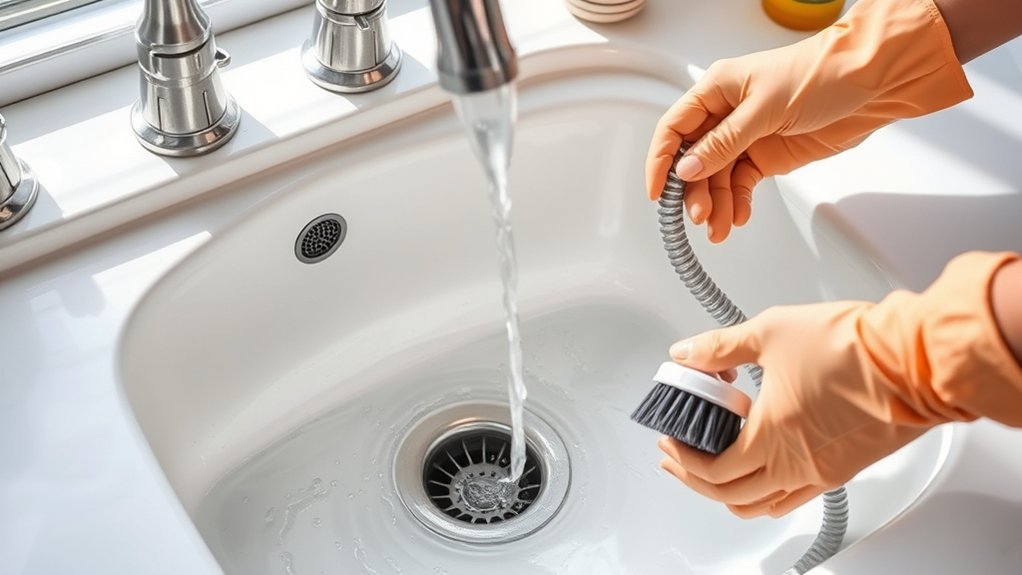
- Clean weekly: Wash the strainer and scrub away buildup with soap and a brush.
- Flush monthly: Pour boiling water slowly down the drain, unless your plumbing manufacturer advises against it.
- Check early: Monitor the drain regularly for slow flow, gurgling, or unpleasant odors.
Address warning signs promptly instead of waiting for a complete blockage. A small clog can cause backups, stains, and cabinet leaks, so these habits help prevent water damage.
If plunging doesn’t restore drainage, contact a licensed plumber before the problem worsens.
Frequently Asked Questions
Can I Use Commercial Chemical Drain Cleaners in My Kitchen Sink?
You can use commercial chemical drain cleaners, but you shouldn’t make them your first choice. Chemical reactions may damage pipes, seals, or garbage disposals, especially if you mix products.
Wear gloves and eye protection, follow the label exactly, and never combine cleaners. Try a plunger or drain snake first.
Consider the environmental impact: these chemicals can harm waterways. If the clog persists, call a plumber instead of repeating treatments.
How Often Should I Professionally Inspect or Clean My Kitchen Drain?
Schedule a professional kitchen-drain inspection every one to two years, or sooner if you notice recurring clogs, slow drainage, leaks, or persistent drain odor. A plumber can remove buildup, check connections, and identify pipe corrosion before it causes serious damage.
If you’ve used chemical cleaners, arrange an inspection sooner because they may weaken pipes or hide developing problems. Older homes, heavy usage, and frequent grease disposal also justify annual professional cleaning and inspection.
What Should I Do if Water Backs up Into My Dishwasher?
When water backs up into your dishwasher, stop using the sink and dishwasher immediately. Your plumbing’s warning bell is ringing. Check and clean the dishwasher’s filter, drain hose, and air gap for food or grease.
If the hose loops too low, secure it properly beneath the countertop. Try clearing the sink drain with a plunger, but don’t use chemical cleaners.
For persistent backups, call a plumber. Regular Dishwasher maintenance supports Kitchen clog prevention and protects your appliance.
When Should I Replace a Damaged or Leaking Kitchen Drainpipe?
Replace a damaged or leaking kitchen drainpipe when cracks, corrosion, sagging, or repeated leaks persist after basic repairs. You should also replace it if water backs up, joints loosen, or the pipe causes cabinet or flooring damage.
Consider the drain pipe materials: corroded metal usually warrants replacement, while PVC may only need a fitting. Try leak repair techniques such as tightening connections or replacing washers first, but call a plumber for hidden or extensive damage.
Are Kitchen Drain Cleaning Methods Safe for Septic Systems?
Yes, your kitchen drain cleaning methods can be safe for septic systems, but the wrong product may quietly damage beneficial bacteria. Start with hot water, a plunger, or a drain snake.
Choose biological treatments containing enzymes or bacteria, and consider eco-friendly solutions such as baking soda and vinegar. Avoid harsh chemical cleaners, especially bleach, acids, and solvents.
If clogs persist, call a professional. Recurring backups could signal deeper pipe or septic problems.
Conclusion
With these seven steps, you’ll leave your kitchen drain clean, fresh, and flowing freely. Clear debris, flush grease with hot water, plunge carefully, and use vinegar to tackle stubborn buildup.
If odors linger, clean the P-trap before rinsing everything thoroughly. Then, prevent future clogs by keeping grease, coffee grounds, and food scraps out of the drain.
Like a trusty medieval moat, your kitchen drain will stay ready for daily use, with no plumber’s invoice or foul surprises waiting below.