How Wide Is a Kitchen Sink?
Choosing the right sink size can be frustrating, especially when you’re unsure what will fit your cabinets or meet your kitchen’s needs. You’re not alone—many people struggle to balance available space with enough room for washing dishes and cookware.
When asking, “How wide is a kitchen sink?” you’ll typically find models measuring 22 to 36 inches wide, with 30 inches being the most common choice. Compact 24-inch sinks work well in small kitchens, while 33- to 36-inch models offer more room for cookware and dishes.
Double-bowl and farmhouse sinks can range from 30 to 48 inches, whereas bar and prep sinks usually measure 15 to 25 inches.
Before buying, measure your cabinet interior and countertop opening carefully. You’ll find helpful sizing and measuring tips below.
Key Takeaways
- Kitchen sinks commonly measure 22–36 inches wide, with 30 inches being a popular standard size.
- Single-bowl sinks typically range from 18–36 inches, while double-bowl models generally measure 30–48 inches.
- Compact kitchens often use 24-inch sinks, whereas larger kitchens may accommodate 33-, 36-, or 42-inch models.
- Choose a sink several inches narrower than the cabinet’s interior width to allow proper installation and support.
- Always verify cabinet dimensions, countertop cutout, plumbing clearance, faucet placement, and manufacturer requirements before purchasing.
What Is the Standard Kitchen Sink Width?

Most standard kitchen sinks are 22 to 33 inches wide, with 30 inches being a common choice for many homes. This range gives you enough basin space for everyday washing without overwhelming your countertop.
Your ideal width depends on cabinet dimensions, available counter space, and how you use the sink.
Before choosing a model, measure the cabinet opening beneath your countertop, not just the visible surface. You’ll need room for the sink rim, mounting hardware, faucets, and drainage components.
Kitchen design also matters: a wider sink can become a strong focal point, while a narrower one preserves workspace in compact areas.
Consider plumbing considerations early in your planning. Existing drain locations, supply lines, and disposal connections can affect installation requirements and costs.
You shouldn’t assume every sink will fit your current setup. Check the manufacturer’s cutout specifications and confirm that your cabinet can support the sink’s weight, especially with heavier materials such as fireclay or cast iron.
What Are the Most Common Sink Sizes?
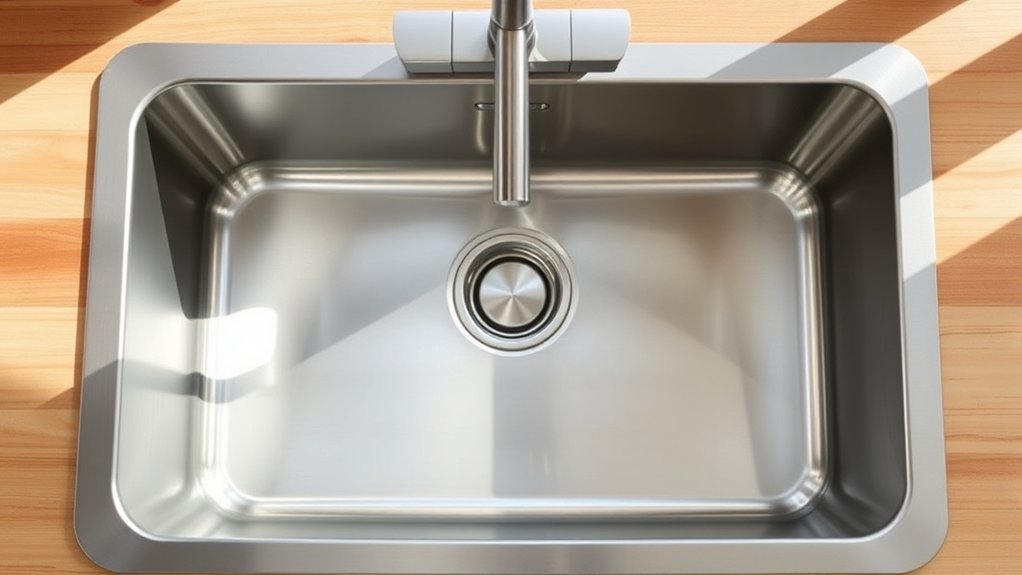
Common kitchen sink sizes range from compact 24-inch models to spacious 36-inch designs, with 30- and 33-inch sinks among the most popular choices. You’ll also find 25-, 27-, and 32-inch options, giving you flexibility when matching your cabinet layout and daily needs.
A 24-inch sink can suit a small kitchen, apartment, or limited counter run, while a 30-inch model offers a practical balance for everyday washing. A 33-inch sink provides extra room for large cookware without overwhelming many standard layouts.
Choose a 36-inch design only when you have sufficient cabinet support, counter space, and installation clearance. Consider basin depth, faucet placement, and surrounding workspace alongside width.
These details affect water flow, cleaning comfort, and splashing. Your kitchen aesthetics matter, too: coordinate the sink’s scale and finish with your counters, cabinets, and appliances.
Measure the available cabinet opening carefully before selecting a size, and confirm the manufacturer’s cutout requirements to avoid installation surprises.
What Widths Do Single-Bowl Sinks Come In?

Single-bowl sinks typically range from 18 to 36 inches wide. Popular sizes include 24, 30, and 33 inches, but the best choice depends on your cabinet space and kitchen needs. Compare these options to find the right fit for your layout.
Standard Width Ranges
Single-bowl kitchen sinks typically range from 18 to 33 inches wide, with 24, 30, and 33 inches being especially common choices. You’ll find narrower models for compact kitchens and wider designs for more workspace, but your cabinet’s interior width sets the practical limit.
Measure carefully before choosing, allowing room for mounting hardware and plumbing connections.
| Sink width | Typical use |
|---|---|
| 18–21 in. | Compact spaces |
| 22–25 in. | Small kitchens |
| 26–29 in. | General flexibility |
| 30–33 in. | Larger cabinets |
Check the manufacturer’s cutout dimensions rather than relying only on the stated width. Your countertop material may also affect compatibility, especially with undermount installation.
Review installation tips, including cabinet support, faucet clearance, and drain placement. Color options won’t change fit, but selecting a finish that complements your counters can help the sink look intentional.
Popular Size Options
Popular single-bowl sink widths include 18, 21, 24, 30, and 33 inches, giving you options for compact, standard, and spacious kitchen layouts. Choose based on your cabinet dimensions, cooking habits, and available counter space.
An 18- or 21-inch sink suits a small kitchen, while 24 inches offers balanced capacity. Select 30 or 33 inches when you regularly wash large cookware or need extra workspace.
- 18–21 inches: Best for apartments and narrow counters
- 24 inches: A versatile choice for everyday tasks
- 30 inches: Accommodates baking sheets and stockpots
- 33 inches: Provides maximum bowl space for busy kitchens
Before buying, confirm the sink’s minimum cabinet size and installation style. Consider color options to coordinate with your design, then compare material durability.
Stainless steel, fireclay, and granite composite each offer distinct appearances, maintenance needs, and resistance to stains, scratches, or heat.
What Widths Do Double-Bowl Sinks Come In?
Double-bowl kitchen sinks typically range from 30 to 48 inches wide, with 33-, 36-, and 42-inch models among the most common options. You’ll usually find equal bowls, offset bowls, or one larger basin paired with a smaller prep bowl.
Your cabinet size, countertop layout, and preferred washing style should guide your choice.
| Width | Typical Configuration | Best Use |
|---|---|---|
| 30–33 in. | Compact equal bowls | Everyday washing |
| 36–42 in. | Equal or offset bowls | Family kitchens |
| 44–48 in. | Spacious divided basins | Heavy-duty prep |
When comparing models, check each bowl’s depth and divider height, not just the outside measurement. You’ll also want to confirm the sink fits your cabinet and plumbing before purchasing.
Look for durable finishes, including stainless steel, composite granite, or other Eco friendly materials. Review Installation techniques with your contractor, since undermount, top-mount, and farmhouse designs require different support and countertop preparation.
A carefully measured sink gives you practical separation without sacrificing workspace.
What Sink Widths Work in Small Kitchens?
For a small kitchen, a sink about 24 to 30 inches wide usually provides useful washing space without overwhelming the counter. Choose a 24-inch model when you need maximum workspace, or select a 27- to 30-inch basin for easier cleaning and larger cookware.
Measure your cabinet’s interior, not just the countertop, before you shop. You’ll also need clearance for faucets, backsplash, doors, and nearby appliances.
Measure cabinet space carefully and account for surrounding fixtures, doors, backsplash, and appliances before choosing your sink.
Keep these priorities in mind:
- Match the sink to your cabinet width and available landing space.
- Choose one bowl if you wash large pans frequently.
- Consider a shallow basin to preserve comfortable reach.
- Confirm drain and faucet locations before ordering.
Your Kitchen decor can guide the finish and shape, but function should lead your decision.
During Plumbing installation, check that the drain, supply lines, and garbage disposal fit the cabinet below.
A compact sink can work beautifully when you balance washing capacity with preparation space and maintain clear paths around it.
What Widths Do Farmhouse Sinks Come In?
Farmhouse sinks typically range from 24 to 36 inches wide, with 30- and 33-inch models being especially popular. To find the right fit, measure your cabinet carefully and consider how much space you have in your kitchen. Also, keep the sink’s depth and installation requirements in mind.
Common Farmhouse Sink Widths
Most farmhouse sinks range from 30 to 36 inches wide, although compact models start around 24 inches and oversized options can reach 40 inches or more. You’ll also find widths in several standard increments, making it easier to compare models across brands.
Vintage styles often feature broad, deep basins, while modern designs may offer slimmer profiles. Material options, including fireclay, porcelain, stainless steel, and copper, appear across many sizes.
Common width categories include:
- 24 to 27 inches: compact farmhouse sinks
- 30 inches: space-saving standard models
- 33 to 36 inches: popular full-size designs
- 40 inches and wider: oversized statement sinks
Manufacturers may list exterior width, while the usable basin width can be smaller. Double-basin farmhouse sinks commonly occupy the wider end of the range, whereas single-basin models appear in nearly every width.
You’ll also see custom sizes from specialty makers.
Choosing the Right Width
Choosing the right farmhouse sink width starts with your kitchen’s available cabinet space and your daily washing needs. Measure the cabinet opening, not just the countertop, and confirm the sink’s installation requirements.
A 30-inch model suits smaller kitchens and moderate dish loads, while a 33-inch sink offers more room without overwhelming most layouts. Choose a 36-inch basin if you regularly wash large cookware, bakeware, or multiple dishes at once.
Before buying, check the sink’s interior dimensions, apron clearance, faucet placement, and plumbing connections. Your cabinet may need reinforcement or modification to support a wider, heavier basin.
Also consider how the sink will balance your kitchen decor and countertop space. Leave enough room for prep areas, landing zones, and comfortable movement.
The best width handles your routine while fitting securely and naturally into your kitchen.
How Wide Are Bar and Prep Sinks?
Bar and prep sinks are typically 15 to 25 inches wide, giving you a compact basin for rinsing glassware, washing produce, or preparing ingredients. Their smaller footprint works well in islands, beverage stations, butler’s pantries, and secondary prep areas.
Choose a width based on how you’ll use the sink and how much counter space you want to preserve.
Consider these practical benefits:
- A 15-inch model suits light rinsing and entertaining.
- An 18- to 20-inch sink handles everyday produce preparation.
- A 22- to 25-inch basin offers more washing room.
- A deeper bowl can increase capacity without adding width.
Your kitchen design should balance the sink’s size with nearby landing areas and workspace. Before choosing a model, review plumbing considerations, including drain placement, supply lines, faucet-hole requirements, and disposal compatibility.
You’ll also want to compare bowl depth and shape, since those features affect usable capacity. A compact sink can improve workflow, but it shouldn’t crowd appliances or interrupt movement through the kitchen.
What Cabinet Size Fits Each Sink Width?
Before choosing a sink, check your cabinet’s minimum width to make sure it can accommodate the installation. Match the sink width to the cabinet’s interior dimensions, and leave enough room for mounting hardware and plumbing. You’ll find the required cabinet size in the sink’s specifications.
Minimum Cabinet Width
Your sink’s minimum cabinet width must be several inches wider than the sink itself so the cabinet can support the rim and accommodate the plumbing. Measure the sink’s outside width, then check the manufacturer’s minimum cabinet requirement before purchasing.
Your kitchen layout may limit available space, so confirm nearby drawers, doors, and appliances won’t interfere with installation. Plumbing considerations also matter: leave enough room beneath the basin for the drain, trap, supply lines, and disposal if you’ll install one.
Use these general planning guidelines:
- 24-inch sink: choose a 27-inch cabinet.
- 30-inch sink: choose a 33-inch cabinet.
- 33-inch sink: choose a 36-inch cabinet.
- 36-inch sink: choose a 39-inch cabinet.
Don’t rely on nominal measurements alone. Cabinet construction, sink style, and mounting requirements can change the needed clearance, so verify the specification sheet first.
Sink Width Compatibility
Sink width compatibility depends on more than the sink’s nominal size: you’ll need a base cabinet that’s typically about 3 inches wider than the sink to support the rim and provide installation clearance. Use this guide when matching common sink widths to cabinet sizes:
| Sink width | Minimum cabinet | Best fit |
|---|---|---|
| 18 inches | 21 inches | Bar or prep sink |
| 24 inches | 27 inches | Compact kitchen |
| 30 inches | 33 inches | Standard single bowl |
| 33 inches | 36 inches | Large single or double bowl |
Measure the cabinet’s inside width, not its exterior measurement. You’ll also need to check plumbing considerations, including drain placement, supply lines, garbage-disposal space, and drawer interference.
For farmhouse sinks, confirm apron clearance and support requirements. Finally, coordinate the sink size with your countertop layout and Kitchen decor so the installation looks balanced and functions comfortably.
How Do You Measure for a Sink?
To measure for a sink, determine the cabinet’s available width, depth, and height, then compare those dimensions with the sink’s specifications. Open the cabinet and measure its interior, accounting for supports, plumbing, drawers, and doors.
For a replacement, measure the existing cutout rather than relying only on the countertop’s outside dimensions. Measure front to back and side to side at several points, since walls and cabinets aren’t always perfectly square.
Confirm the installation type before measuring the opening. A drop-in sink needs enough rim space, while an undermount model requires precise cutout dimensions. Check the manufacturer’s template and minimum cabinet requirement.
Record these details:
- Interior cabinet width
- Countertop depth
- Existing cutout length and width
- Plumbing clearance below
Also note faucet-hole placement, drain position, and countertop thickness. After confirming the fit, review Color options and material durability. Appearance and construction matter, but accurate measurements prevent installation problems.
Leave room for clips, sealant, and connections, and verify every measurement before ordering.
Which Sink Width Fits Your Kitchen?
Most kitchens work well with a sink that leaves several inches of countertop on each side, but the right width depends on your cabinet size, cooking habits, and available counter space.
For a compact kitchen, a 24-inch sink can provide practical washing space without overwhelming a narrow cabinet. A 30-inch model suits many standard kitchens, offering room for dishes while preserving useful workspace.
If you cook frequently or wash large pans, consider a 33- or 36-inch sink, provided your base cabinet and counters can support it. Check the sink’s minimum cabinet size before buying; the listed width doesn’t always match the interior space required.
You’ll also want enough clearance for faucets, backsplashes, and nearby appliances. Match the sink’s finish and shape to your Kitchen decor, but don’t sacrifice function for appearance.
Finally, confirm measurements with your contractor before Plumbing installation, especially when replacing an existing sink or altering cabinetry.
Frequently Asked Questions
How Deep Should a Kitchen Sink Be?
Choose a kitchen sink 8 to 10 inches deep for everyday versatility. You’ll gain enough space for washing pots without straining your back or creating awkward splashes.
Deeper models, around 10 to 12 inches, suit large cookware but may challenge shorter users and require more cabinet clearance.
Check your cabinet size, faucet reach, and plumbing before buying. These sink dimensions and installation tips help you select a comfortable, practical fit.
What Materials Are Kitchen Sinks Made From?
You’ll find kitchen sinks crafted from stainless steel, cast iron, fireclay, composite granite, copper, porcelain, and solid surface materials. Each offers distinct durability and aesthetic options.
Stainless steel resists stains and suits modern kitchens, while cast iron and fireclay provide substantial, timeless appeal. Composite granite handles scratches and heat gracefully.
Copper brings warmth and character, though it needs care. Solid surface sinks blend seamlessly with countertops, offering a polished, understated finish for refined spaces.
How Much Does a Kitchen Sink Typically Cost?
You’ll typically pay $100–$1,000 for a kitchen sink, though premium models can exceed $2,000. A basic stainless-steel sink often costs $100–$300, while fireclay, granite composite, copper, and designer options usually range from $300–$1,500.
Your cost comparison should include installation, faucets, accessories, and plumbing changes. Key price factors include material, size, mounting style, brand, finish, and durability.
Labor may add another $200–$600 to your total.
Can You Install a Kitchen Sink Without Replacing Countertops?
Yes, you can install a kitchen sink without replacing your countertops, and, conveniently, many sinks fit existing cutouts. First, check countertop compatibility by matching the new sink’s dimensions, mounting style, and faucet holes to your current opening.
Your sink installation options include drop-in, undermount, or farmhouse models, though each may require different modifications. A professional can adjust the cutout, plumbing, and support structure while preserving the countertop.
How Do You Clean and Maintain a Kitchen Sink?
You can keep your kitchen sink clean by rinsing it after each use, removing food debris, and wiping surfaces with dish soap and a soft sponge. For effective Cleaning techniques, sprinkle baking soda, scrub gently, then rinse with warm water and vinegar when appropriate.
Follow these Maintenance tips: dry the basin to prevent water spots, clean the drain weekly, avoid harsh abrasives, and fix leaks promptly. You’ll prevent odors, stains, and damage.
Conclusion
Choosing a sink width isn’t exactly thrilling, but it can save you from countertop chaos and plumbing drama. Measure your cabinet, account for the sink’s rim, and leave room for installation, because even stainless steel needs personal space.
A 24- to 36-inch sink suits most kitchens, while smaller prep sinks work beautifully in tight corners. Pick the widest option your layout comfortably allows, and you’ll wash dishes without turning your kitchen into an Olympic event.
In the end, the best kitchen sink width is the one that fits your cabinet, counter space, and daily routine.