How to Dispose of Kitchen Knives in 3 Safe Steps
Old kitchen knives can be awkward and even dangerous to get rid of. You’re not alone—many people struggle to find a safe, responsible disposal option without risking cuts or harm to others.
In this guide, we’ll explain how to dispose of kitchen knives in three safe steps, whether you plan to donate, recycle, or throw them away.
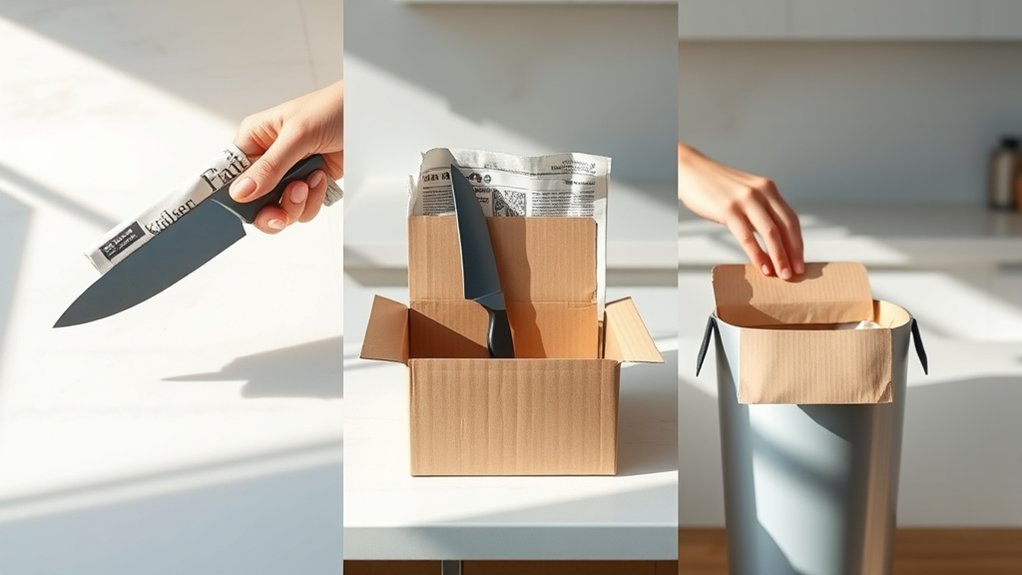
To dispose of kitchen knives safely, first wrap each blade in thick cardboard or newspaper, secure it with strong tape, and label it “Sharp.”
Next, donate clean, intact knives to a local kitchen, shelter, thrift store, or nonprofit, or check whether a recycling program accepts them.
Finally, place unusable knives in a sturdy sealed container and follow your waste facility’s instructions.
Keep packages away from children and pets, and you’ll find additional safe handling details below.
Key Takeaways
- Inspect knives for damage, wear safety gloves, and handle each by the handle with the blade pointed away.
- Wrap the entire blade in thick cardboard or newspaper, secure it with strong tape, and label it “Sharp.”
- Place the wrapped knife inside a sturdy, sealed container to prevent accidental exposure during storage or transport.
- Donate clean, intact, functional knives by contacting local kitchens, shelters, culinary schools, thrift stores, or nonprofits.
- Confirm recycling or waste-facility requirements beforehand, transport knives separately, and never leave them loose beside trash containers.
How to Dispose of Kitchen Knives Safely
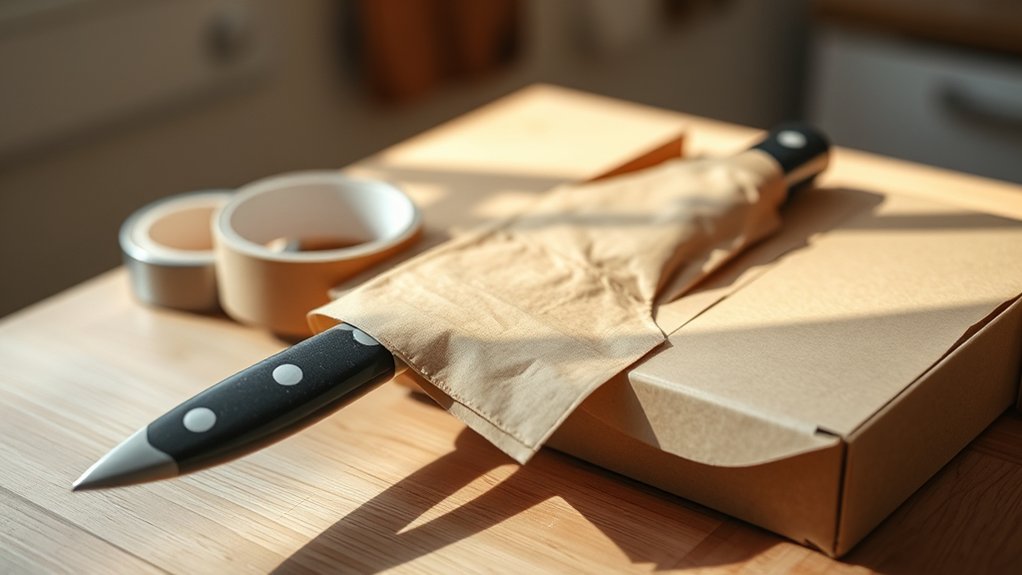
How do you dispose of kitchen knives safely? Start by inspecting each knife and planning a secure handoff to your local waste service. Don’t place loose blades in a trash bag, where they can cut you, sanitation workers, or anyone handling the waste.
Put on safety gloves before handling the knife. Hold the handle, keep the blade pointed away from your body, and avoid touching the edge.
Wrap the entire blade in several layers of thick cardboard or newspaper, then secure the wrapping tightly with strong tape. Add a clear label such as “Sharp: Handle With Care” so others recognize the hazard.
For extra protection, place the wrapped knife inside a sturdy container, such as a small box or plastic tub, and seal it closed. Check your municipality’s instructions before setting it out, because collection rules vary.
Don’t attempt unnecessary blade maintenance, sharpening, or dismantling before disposal. Wash your hands after you finish, and store the sealed package away from children and pets.
Donate or Recycle Usable Kitchen Knives
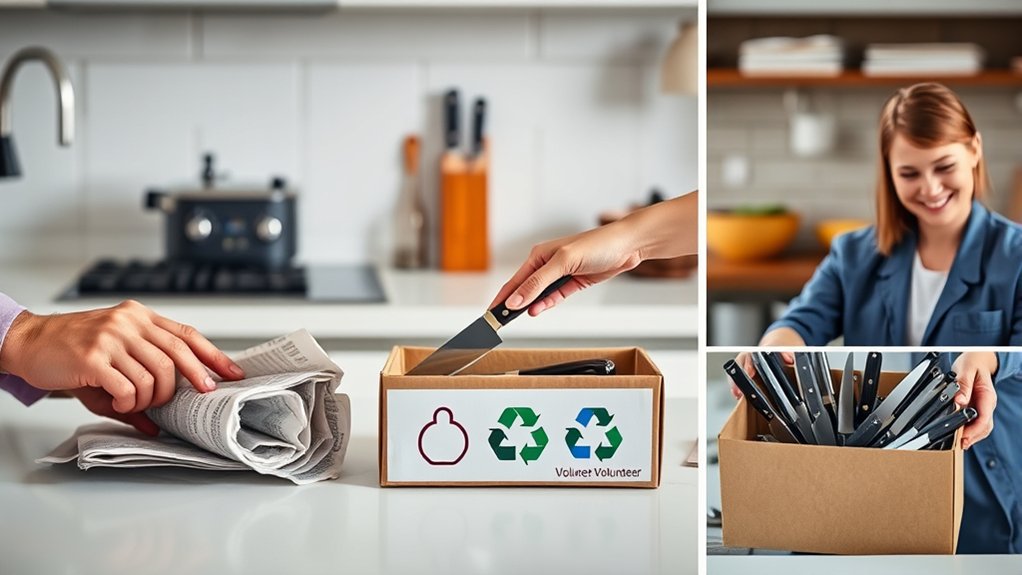
If your kitchen knives are clean, intact, and still useful, consider donating them instead of throwing them away. Check with local culinary schools, community kitchens, shelters, thrift stores, or nonprofit organizations to learn whether they accept kitchen tools.
Donate usable kitchen knives to local culinary schools, community kitchens, shelters, thrift stores, or nonprofit organizations.
Contact each organization first, since some have rules about blade length, condition, or packaging.
Before donating, wash and dry every knife thoroughly. Remove rust when possible, and consider professional knife sharpening if the edges have become dull.
Don’t donate knives with cracked handles, loose blades, severe corrosion, or other safety problems.
Wrap each knife securely in cardboard or another puncture-resistant material, and label the package clearly so staff can handle it safely.
If you can’t find a suitable recipient, look for a local recycling program that accepts metal kitchen tools. Ask whether it requires separated materials or specific preparation.
You’ll keep usable steel in circulation while helping someone else cook safely. Store knives using protective blade storage until you can deliver them.
Choose a Safe Trash or Drop-Off Option
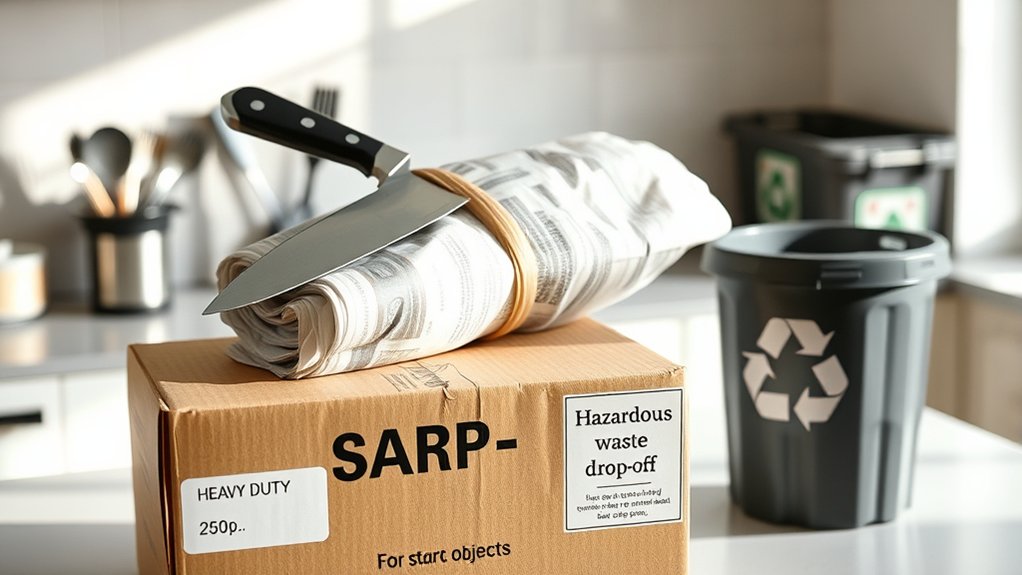
When donation or recycling isn’t available, choose a trash service or drop-off site that accepts sharp metal items. Call your waste provider first, because local rules may require a designated facility or collection event.
Don’t place an exposed knife in a curbside bin, even if you think the handle makes it safe.
- Confirm acceptance: Ask whether the site handles kitchen knives, blades, or scrap metal.
- Prepare the knife: Wrap the blade in cardboard, secure it with strong tape, and label the package “Sharp.”
- Protect yourself: Wear safety gloves while handling the knife, and keep the point away from your body.
- Deliver carefully: Transport it in a sturdy box or container, separate from loose recyclables.
If the knife needs knife sharpening before donation, complete that task only when you’ll reuse it. Sharpening won’t make disposal safer.
Follow facility instructions when you arrive, and tell staff that the package contains a knife. Never burn, bury, or leave a wrapped knife beside a full trash container.
Frequently Asked Questions
Can Kitchen Knives Be Mailed to Recycling Facilities?
Yes, you can sometimes mail kitchen knives to recycling facilities, but you must confirm their acceptance and follow their mailing guidelines first. Wrap each blade securely in cardboard, seal it inside a sturdy box, and label the package according to carrier rules.
Don’t mail knives without approval, since facilities and postal services may restrict sharp objects. Ask about local recycling options, including drop-off programs, scrap-metal centers, or household hazardous-waste events, before shipping.
How Should Children Be Taught About Kitchen Knife Disposal Safety?
Teach children that knife disposal requires adult supervision and careful handling. For example, you can show your child how to wrap an old knife in cardboard, secure it with tape, and tell an adult before placing it in a designated container.
Explain that they must never touch loose blades or put knives in household recycling. Use simple demonstrations, reminders, and role-play as educational strategies.
Reinforce Child safety by praising cautious choices and reporting hazards.
Are Ceramic Knives Disposed of Differently Than Stainless-Steel Knives?
You can usually dispose of ceramic and stainless-steel knives in the same way, but check your local recycling rules first. Ceramic disposal often requires household trash because recycling facilities may not accept brittle ceramic blades.
Wrap either blade securely in cardboard, tape it closed, and label the package clearly. For stainless steel, consider a scrap-metal program.
Practice Blade separation by removing detachable handles only if you can do so safely. Otherwise, keep the knife intact.
Can Knife Handles Be Separated From Blades Before Disposal?
Yes, you can separate a knife handle from its blade, but you usually shouldn’t. Removing the handle creates extra handling risks, especially if you expose sharp tangs or damage the blade.
Instead, wrap the complete knife securely in thick cardboard, tape it closed, and label it clearly before placing it in an appropriate disposal container. Check your local recycling or waste rules, since facilities may accept metal blades only when handles remain attached.
What Should Restaurants Do With Large Quantities of Old Knives?
Treat a mountain of old restaurant knives as a safety priority: inventory them, remove damaged pieces from service, and store everything in a locked, labeled container. Don’t toss loose blades into trash or recycling.
Contact a commercial metal recycler, scrap dealer, or local waste authority for accepted procedures. Arrange professional pickup when possible.
Consider knife sharpening for usable knives, but discard those with severe blade corrosion, cracks, or loose handles through approved channels.
Conclusion
By following these three steps for how to dispose of kitchen knives, you’ll keep yourself, sanitation workers, and the environment safer. If a knife still works, donate or recycle it; otherwise, wrap and secure it before using an approved drop-off or trash option.
Don’t forget that the average American throws away about 4.9 pounds of municipal solid waste daily, so responsible disposal matters. A few careful minutes can prevent injuries and help reduce unnecessary waste.