How to Fix a Clogged Kitchen Sink in 5 Steps
A clogged kitchen sink can bring meal prep and cleanup to a frustrating halt. You’re not alone—many homeowners struggle with slow or blocked drains and want a quick, reliable solution. The right tools can make clearing the blockage much easier.
To fix a clogged kitchen sink, first remove debris from the strainer and check the disposal, trap, and drain opening. Seal the second basin, add enough water to cover a sink plunger, and pump firmly several times.
If the clog remains, place a bucket beneath the P-trap, remove it, and clean out debris. Reassemble it securely, then flush the drain with hot water and check for leaks.
You’ll find more tips below to prevent future clogs.
Key Takeaways
- Inspect the drain, strainer, garbage disposal, and trap to identify visible debris or blockages.
- Seal the second basin, add water, and plunge the clogged drain vigorously 10–15 times.
- Remove and clean the P-trap, checking for debris, cracks, corrosion, or damaged washers.
- Flush the drain with hot water, then test flow and inspect connections for leaks.
- Prevent future clogs by using a strainer and keeping grease, grounds, scraps, and fibrous foods out.
Check What’s Causing the Clog

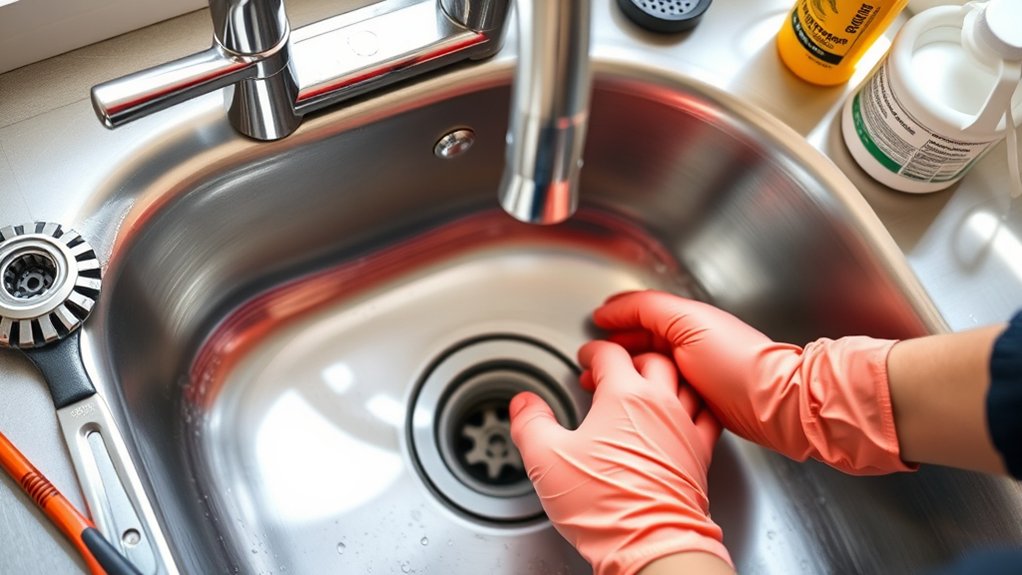
Before reaching for a drain cleaner, check what’s causing the clog. Start by removing visible food scraps, grease, or soap buildup from the strainer. Shine a flashlight into the drain and look for anything sitting near the opening.
If both sink basins drain slowly, the blockage may sit farther along the shared pipe. Notice whether water backs up when you run the dishwasher. That clue can point to a connection or drainage issue rather than a surface obstruction.
Check your garbage disposal, if you have one. A jammed or poorly running unit can restrict flow, while an overfilled trap may indicate accumulated debris.
Don’t pour harsh chemicals into standing water, especially if you’ll need to inspect the plumbing later. Instead, note the clog’s timing, location, and symptoms before choosing a solution.
This careful diagnosis supports effective drain maintenance and strengthens clog prevention by showing which habits or materials caused the problem.
Plunge the Clogged Kitchen Sink
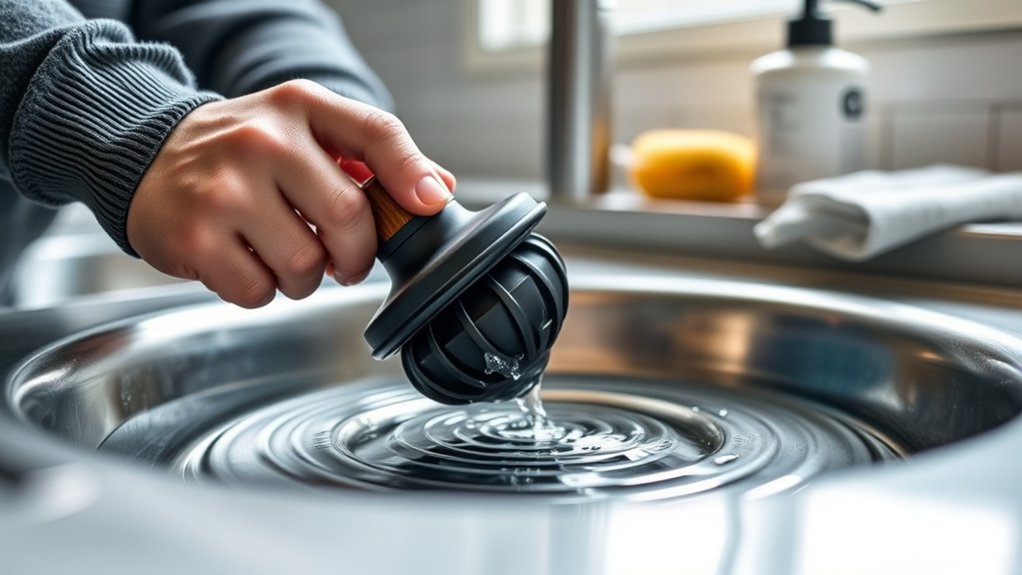
Place a sink plunger over the drain opening, making sure it seals completely. If your sink has two basins, cover the second drain with a wet cloth or stopper to concentrate pressure. Add enough water to cover the plunger’s rubber cup, if the basin is empty.
Grip the handle firmly and push down gently at first to remove trapped air. Then pump vigorously 10 to 15 times without breaking the seal.
Pull the plunger up sharply and check whether water drains. Repeat several cycles as needed, adding more water if necessary. Don’t use excessive force, which could damage connections beneath the sink.
If plunging doesn’t clear the blockage, stop and try another method. You can flush the drain with hot water after removing standing water, or use baking soda followed by vinegar for a mild buildup.
Drain snakes can handle deeper obstructions, but follow the tool’s instructions carefully. Never combine chemical drain cleaners with other treatments.
Clean the Kitchen Sink’s P-Trap
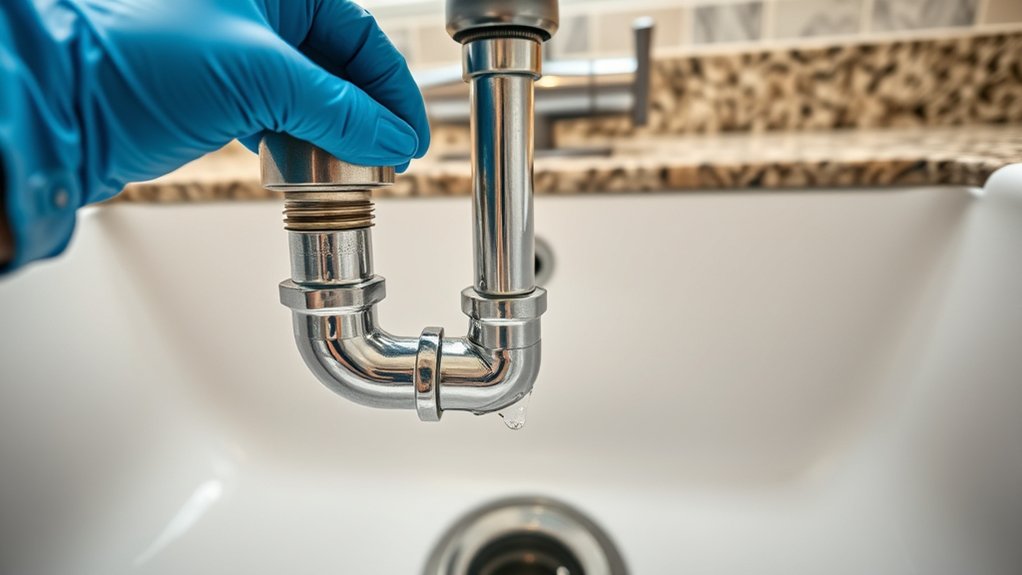
If plunging hasn’t cleared the clog, clean the sink’s P-trap—the curved pipe beneath the drain that often collects food particles and grease. Place a bucket beneath the trap to catch standing water, then put on gloves and loosen the slip nuts by hand or with adjustable pliers. Keep the washers nearby so you can reinstall them correctly.
Lower the curved section carefully and empty its contents into the bucket. Scrub the inside with an old bottle brush, removing grease, food scraps, and sludge.
For thorough P trap maintenance, inspect the trap for cracks, corrosion, or damaged washers. Complete a careful Pipe inspection of the visible drainpipe and tailpiece, checking for buildup or objects lodged inside.
Remove debris with a flexible brush or cloth, but don’t force anything deeper into the plumbing. Clean the washers and threads before reassembling the trap, tightening the slip nuts firmly without overtightening them.
Keep the bucket underneath until you’ve confirmed every connection sits securely.
Flush the Drain and Test the Flow
Run hot water down the drain for several minutes to flush away loosened grease and debris. Watch the basin as it drains. If water disappears quickly without rising, the clog has likely cleared.
Turn on both faucet handles and let the water run together, then separately, to check whether the flow remains steady.
Fill the sink halfway, pull the stopper, and observe how fast the water empties. A slow swirl or standing water signals a remaining blockage.
Check beneath the sink for leaks around the P-trap and connections you opened. Sniff near the drain, too. Persistent Drain odors may indicate trapped buildup or a deeper obstruction.
If the sink still drains slowly, don’t pour more chemicals into it. Shut off the water and consider a Pipe inspection with a drain camera or a plumber’s assessment.
Test the disposal, if present, only after confirming water drains freely and no unusual sounds or leaks occur.
Prevent Future Kitchen Sink Clogs
Prevent future kitchen sink clogs by keeping grease, coffee grounds, food scraps, and fibrous peels out of the drain. Let grease cool, then scrape it into the trash instead of rinsing it away. Collect grounds and scraps in your compost or garbage, and peel fibrous vegetables over a bin.
Use your Garbage disposal correctly. Run cold water before, during, and after grinding small amounts of soft food. Don’t put bones, eggshells, pasta, rice, oil, or stringy produce inside it.
Clean the disposal regularly with a brush and mild dish soap. Avoid harsh chemical cleaners that can damage components.
Install a sink strainer to catch particles before they enter the pipes, and empty it often. Once a month, flush the drain with hot water and dish soap to loosen residue.
Don’t rely on chemical drain openers for routine maintenance. Schedule a professional Pipe inspection if you notice slow drainage, recurring backups, leaks, or unusual odors, because early repairs can prevent serious blockages.
Frequently Asked Questions
Can Chemical Drain Cleaners Damage My Kitchen Sink’s Pipes?
Yes, chemical drain cleaners can damage your kitchen sink’s pipes. Their harsh ingredients trigger chemical reactions that generate heat, potentially weakening seals, softening plastic, or warping older PVC.
Repeated use may cause pipe corrosion, especially in metal plumbing, leading to leaks and expensive repairs. Don’t mix products, and avoid using them in a completely blocked drain.
Instead, try a plunger or drain snake, then call a plumber if the clog persists or returns frequently.
When Should I Call a Professional Plumber for a Clogged Kitchen Sink?
Call a professional plumber when your sink stays clogged after basic DIY tips, backs up repeatedly, drains multiple fixtures slowly, or leaks beneath the cabinet. Don’t wait if wastewater smells foul, contains sewage, or threatens to damage cabinets.
A plumber can locate deeper blockages and protect your pipes, especially after chemical cleaners. Ask for Plumber costs upfront, including diagnosis and possible repairs. That quick call may prevent a far more expensive surprise later.
Are Garbage Disposals Safe to Use With Septic Systems?
Yes, you can usually use a garbage disposal with a septic system, but you’ll need proper septic compatibility.
A disposal safety routine helps: run plenty of cold water, avoid grease, coffee grounds, fibrous scraps, and harsh chemicals, and use the disposal sparingly.
Consider a septic-safe enzyme treatment and schedule regular tank pumping. If your system’s manufacturer discourages disposals or your drain field struggles, skip the unit and ask a professional for advice.
How Much Does Professional Kitchen Sink Clog Removal Typically Cost?
Professional kitchen sink clog removal typically costs $100–$300, though you’ll pay more for severe blockages, after-hours service, or pipe repairs. Like a hidden river dam, a stubborn clog can quietly raise the bill as water backs up.
You can try DIY solutions first with basic plumbing tools, such as a plunger or drain snake. If those fail, ask for an upfront estimate and confirm whether the service includes inspection, clearing, and cleanup before approving work.
Can a Clogged Sink Indicate a Larger Plumbing Problem?
Yes, a clogged sink can indicate a larger plumbing problem. If plunging or cleaning the trap doesn’t restore drainage, you might have a deeper blockage, damaged pipe, tree-root intrusion, or sewer-line issue.
Watch for recurring clogs, multiple slow drains, gurgling sounds, foul odors, leaks, or water backing up elsewhere. Schedule a professional plumbing inspection to identify hidden damage.
Regular drain maintenance can help prevent buildup and catch problems before they worsen.
Conclusion
With these five steps, you can clear most kitchen sink clogs without calling a plumber. Start by identifying the cause, then plunge, clean the P-trap, flush the drain, and test the flow.
You’ll also help prevent repeat blockages by keeping grease, coffee grounds, and food scraps out of your pipes. In fact, the average American household wastes nearly 10,000 gallons of water annually from leaks, so fixing a clogged kitchen sink promptly can protect both your plumbing and your wallet.