How Much Does It Cost to Paint Kitchen Cabinets?
Worn, outdated cabinets can make your entire kitchen feel tired, but replacing them is expensive. You’re not alone—many homeowners want a fresh look without the cost and disruption of a full remodel. So, how much does it cost to paint kitchen cabinets?
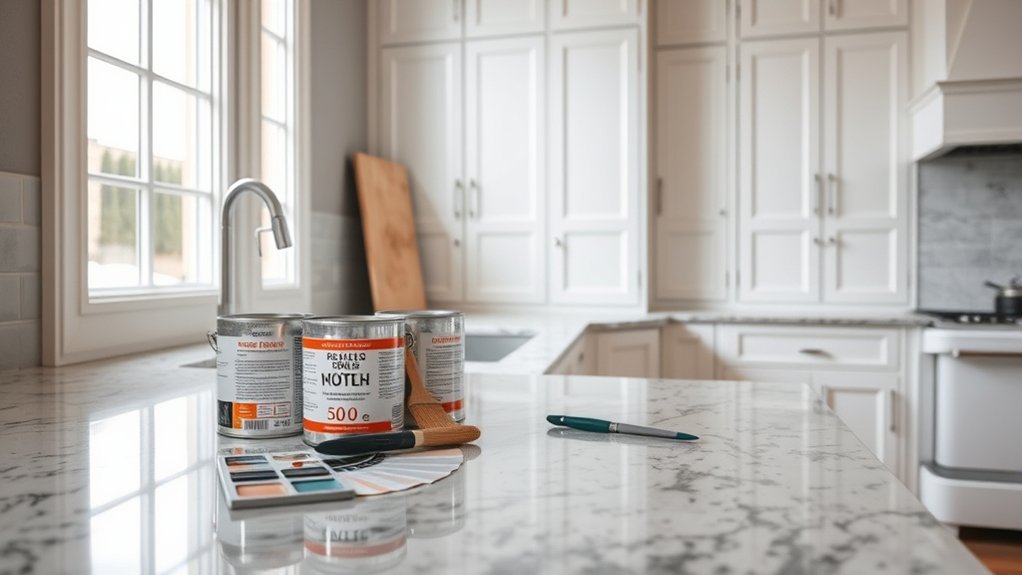
You’ll typically pay $1,500 to $6,000 to have your kitchen cabinets professionally painted, while a DIY project usually costs $200 to $600. Your total depends on kitchen size, cabinet condition, preparation needs, paint quality, finish complexity, and features such as islands or tall units.
Repairs, specialty coatings, hardware removal, and difficult access can raise the price. If your cabinets are structurally sound, painting often costs less than replacement.
The sections below explain what shapes your estimate.
Key Takeaways
- Professional kitchen cabinet painting typically costs $2,000–$6,500, while DIY projects usually cost $200–$600.
- Overall pricing depends on kitchen size, cabinet condition, layout complexity, preparation needs, materials, and finish selection.
- Extensive cleaning, repairs, sanding, priming, masking, hardware removal, or difficult access can significantly increase costs.
- Durable cabinet enamel and urethane-modified enamel cost more than acrylic but provide better wear resistance.
- Request itemized quotes covering preparation, materials, painting, cleanup, touch-ups, reassembly, and warranty coverage.
How Much Does It Cost to Paint Kitchen Cabinets?
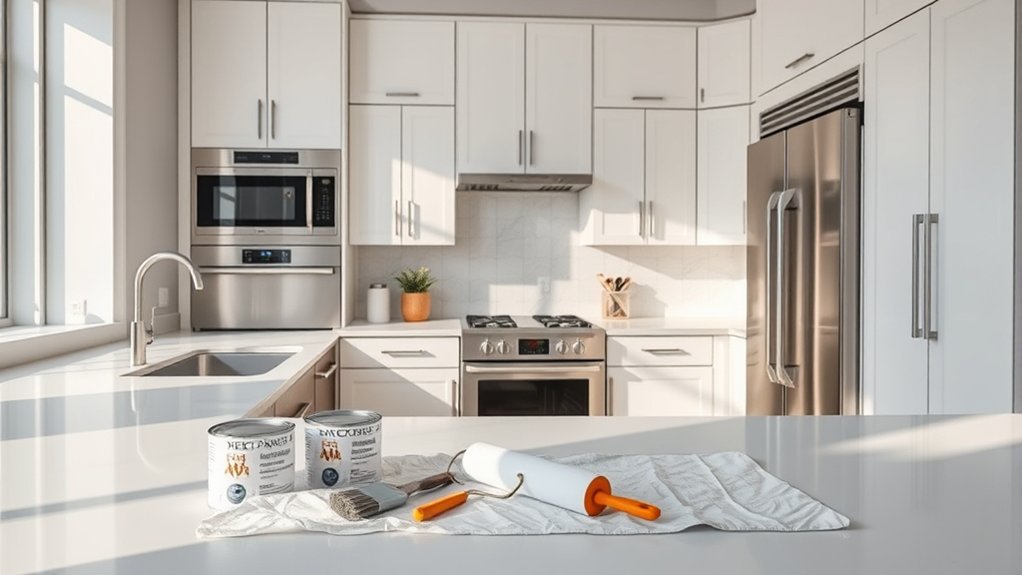
Painting kitchen cabinets typically costs $1,500 to $6,000, depending on your kitchen’s size, cabinet condition, paint type, and labor rates in your area. For a small kitchen with sound, simple doors, you may spend near the lower end.
Painting kitchen cabinets typically costs $1,500 to $6,000, with smaller kitchens generally falling near the lower end.
Larger kitchens, intricate details, damaged surfaces, and specialty finishes can push the price higher.
Your cabinet material and layout affect preparation time. Solid wood often accepts paint readily, while laminate may require extra cleaning, sanding, and primer.
Door profiles, hardware removal, and the number of coats also influence the overall estimate. You’ll usually pay more for durable enamel or custom color matching than for standard interior paint.
Current color trends can affect your choice and resale appeal. Soft whites, muted greens, and deep blues remain popular, while two-tone designs add contrast.
Different cabinet styles, such as Shaker, raised-panel, or flat-front doors, require varying preparation and application time. Measure your cabinetry and count the doors before requesting accurate estimates.
How Much Does Professional Cabinet Painting Cost?
Professional cabinet painting costs include both labor and materials. Your price covers preparation, paint, equipment, and skilled workmanship. The final cost can also vary depending on your cabinet size, condition, design, location, and chosen finish.
Labor And Material Costs
When you hire a professional to paint your kitchen cabinets, expect to pay about $2,000 to $6,500, depending on the cabinet size, condition, paint type, and local labor rates. Labor typically covers cleaning, sanding, priming, spraying or brushing, reassembly, and site protection.
Materials may include primer, cabinet-grade paint, caulk, sandpaper, masking supplies, and replacement hardware if needed. Your estimate might also reflect finish quality, coats required, and whether the crew paints doors off-site.
Ask for a written breakdown so you can compare labor and material allowances accurately. Discuss color selection before work begins, since specialty finishes or custom-mixed shades may cost more.
Professional tool maintenance helps painters deliver smooth, consistent results without charging you for equipment upkeep. Confirm whether cleanup, touch-ups, and warranty coverage are included.
Factors Affecting Pricing
Several factors affect how much you’ll pay to have your kitchen cabinets painted, including their size, layout, condition, and the finish you choose. Larger kitchens require more paint and labor, while intricate layouts, islands, and detailed trim increase preparation time.
If your cabinets have grease, peeling paint, water damage, or deep scratches, you’ll pay more for repairs and thorough cleaning before painting begins. Your choice of finish also affects pricing, since durable, high-end coatings typically cost more than basic options.
Color trends may influence your budget if you need extra coats to cover dark cabinets with lighter shades. You might also choose eco-friendly paints, which can cost slightly more but reduce odors and contain fewer harmful chemicals.
Finally, regional labor rates, accessibility, and project timing can change your total.
How Much Does DIY Cabinet Painting Cost?
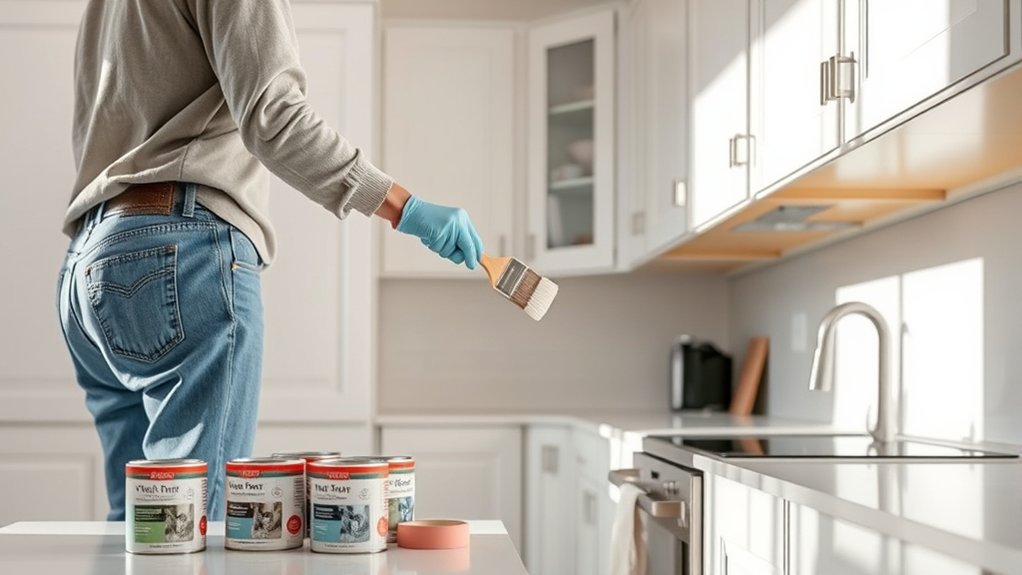
DIY cabinet painting typically costs about $200 to $600, depending on your kitchen’s size, the paint system you choose, and the tools you already own. You’ll usually spend money on cleaner, sandpaper, primer, cabinet paint, brushes, rollers, and protective supplies.
Renting a sprayer can add to the budget, while using existing tools keeps costs lower.
| Expense | Typical cost | Purpose |
|---|---|---|
| Preparation supplies | $30–$75 | Cleaner, sanding materials, and tape |
| Paint system | $100–$300 | Primer, cabinet paint, and sealer |
| Tools and protection | $70–$225 | Brushes, sprayer rental, plastic, and drop cloths |
You can reduce expenses by choosing durable, eco friendly paints and reusing drop cloths or quality brushes. Decorative techniques, such as glazing or distressing, may require specialty products and extra time.
Although DIY painting saves labor charges, you’ll invest several days in cleaning, sanding, priming, painting, and curing. Follow the product instructions carefully to achieve a smooth, lasting finish.
How Do You Estimate Cabinet Painting Costs?
Estimate cabinet painting costs by measuring the cabinet surface area, counting doors and drawer fronts, and choosing the finish you want. Record each measurement in a spreadsheet, then total the square footage.
Measure both visible sides of doors and drawer fronts if you’ll paint them, and include exposed cabinet ends.
Next, request itemized quotes from several professional painters. Provide the same measurements, cabinet count, desired color, and finish to each company so you can compare estimates accurately.
Ask whether their price includes materials, priming, sanding, painting, and cleanup. You can also estimate materials separately by listing primer, paint, brushes, rollers, tape, and protective coverings.
Review current Cabinet color trends before selecting a shade, because specialty colors may require custom mixing. If sustainability matters, ask about Eco friendly paints and compare their prices with standard products.
Add a small allowance for measurement errors or extra supplies, then compare the complete projected total with your available budget.
What Affects Cabinet Painting Costs?
Cabinet painting costs depend on cabinet size, condition, layout, paint type, labor rates, and preparation needs. You’ll pay more when doors need repairs, surfaces require extensive cleaning, or access is difficult.
Removing hardware, sanding, priming, and applying multiple coats also increase labor time.
| Cost factor | What raises costs | What you can do |
|---|---|---|
| Condition | Repairs, grease, peeling finish | Clean and fix early |
| Materials | Premium paint brands, primer | Compare coverage and durability |
| Finish | Detailed techniques, extra coats | Choose a practical finish |
Your color options can affect the price when specialty pigments or custom matching require additional coats.
Paint brands also vary in durability, coverage, and cost. A cheaper product might require more labor or touch-ups.
Local labor rates influence the final quote. Spray application may cost more than brushing, but it can create a smoother result.
Ask contractors whether estimates include preparation, hardware removal, repairs, primer, and cleanup. This makes it easier to compare quotes and avoid surprise charges.
Accessibility, ventilation, and drying time may also affect scheduling and labor totals.
How Does Cabinet Size Affect the Price?
How Does Cabinet Size Affect the Price?
Larger kitchens usually cost more to paint because they have more doors, drawer fronts, and surface area to prepare and coat. If you have a spacious layout, expect labor and material costs to rise with each additional cabinet section.
Tall pantry units, islands, and built-in storage can also increase the total, since painters must cover more visible and hard-to-reach areas.
A smaller kitchen may cost less overall, but minimum service charges can still apply. Your cabinet count matters more than the room’s square footage, so ask contractors to price the project by door, drawer, or cabinet box.
This approach makes estimates easier to compare. Your chosen Cabinet color can affect the number of coats needed, especially when you’re making a dramatic change, which may increase the price.
Removing and reinstalling cabinet hardware may also add labor, particularly when you have many knobs, pulls, or hinges. Request an itemized estimate so you can see how size influences each charge.
How Does Cabinet Condition Affect the Estimate?
Your cabinet condition can raise the estimate if the surfaces need repairs, such as filling dents, fixing cracks, or replacing damaged areas. You may also pay for cleaning and preparation to remove grease, grime, and old finishes before painting.
Surface Damage Repairs
Surface damage repairs can increase your cabinet painting estimate because dents, scratches, peeling finish, and water damage require extra preparation before painting.
Your contractor may fill, sand, seal, or replace damaged sections before applying paint. The extent and location of the cabinet damage affect repair costs, especially when doors or panels need replacement.
| Damage | Possible added cost |
|---|---|
| Minor scratches | Low |
| Small dents | Low to moderate |
| Peeling finish | Moderate |
| Water swelling | Moderate to high |
Ask for a detailed estimate that separates repairs from painting, so you’ll know exactly what you’re paying for.
Minor flaws may need only spot repairs, while warped fiberboard or rotted edges can require new components.
If your cabinets have widespread damage, replacement might offer better value than painting. Discuss these options before approving the project.
Cleaning And Preparation
Cleaning and preparation can considerably affect your cabinet painting estimate because grease, dust, and built-up residue require extra labor to remove. If your cabinets have years of cooking grime, a painter may need stronger cleaners, repeated washing, and additional drying time before applying primer.
Neglected surfaces can also contain wax, silicone, or peeling finishes that demand careful sanding and bonding products. You’ll usually pay less when you clean accessible areas, remove hardware, and empty the cabinets beforehand, though professionals should handle stubborn contamination.
Your chosen Cabinet color can influence preparation, too. Dramatic changes may require extra primer or coats for even coverage. Likewise, your desired paint sheen affects the finish work; glossy surfaces reveal imperfections, so they may require more smoothing.
Ask for a detailed preparation allowance in the estimate.
Which Cabinet Paint and Finish Fit Your Budget?
When choosing cabinet paint, balance upfront cost with durability, coverage, and the finish you want. A basic acrylic option costs less, but premium cabinet enamel usually levels better and resists scuffs, making its higher price worthwhile in busy kitchens. Consider paint durability alongside color and sheen.
| Option | Budget guidance |
|---|---|
| Acrylic | Lowest cost; suitable for light use |
| Cabinet enamel | Mid-range; tougher, smoother finish |
| Urethane-modified enamel | Highest cost; excellent wear resistance |
Choose satin or semi-gloss if you want washable surfaces without highlighting every imperfection. Satin typically offers the best value, while semi-gloss brightens darker kitchens and handles frequent cleaning.
High-gloss paint creates a dramatic look, but it reveals dents and brush marks and may require more careful application.
Your cabinet hardware can influence the overall appearance. Simple hardware pairs well with bold color, while ornate pulls suit classic neutrals.
Match the finish to your kitchen’s traffic, cleaning habits, and style. Spending more on quality paint often reduces touch-ups and preserves the finish longer.
Also, compare coverage rates before buying. A cheaper gallon may require additional coats.
What Additional Cabinet Painting Costs Should You Expect?
Beyond paint and labor, you may need to budget for prep work, repairs, hardware removal, replacement parts, and protective finishes. Your contractor might charge extra to clean grease, sand glossy surfaces, fill dents, or repair cracked doors before painting.
If hinges, knobs, or pulls require removal and reinstallation, ask whether that work appears in the estimate. Replacing outdated cabinet hardware adds another line item, especially if you choose premium metal finishes or need new holes drilled.
You may also pay for replacement doors, drawer fronts, hinges, or shelf components if existing pieces won’t hold paint. Specialty coatings, primers, glazing, distressing, and durable topcoats can increase material costs.
Paint color options may affect the price when you select custom-mixed shades, deep colors requiring additional coats, or specialty finishes. Your kitchen’s layout can add costs, too, if cabinets are difficult to access or require extensive masking.
Request an itemized quote so you can compare estimates and identify optional upgrades before work begins.
Is Painting Kitchen Cabinets Worth the Cost?
Is painting your kitchen cabinets worth the cost? For many homeowners, it is, especially when your cabinet boxes remain sturdy and functional.
Painting costs less than replacing cabinets, refreshes your kitchen’s appearance, and can help you avoid demolition, disposal, and installation expenses.
You’ll also gain more flexibility with color options, from crisp white to deep green or warm neutral tones, without committing to a full remodel.
However, painting isn’t always the best investment. If your cabinets have water damage, warped doors, broken frames, or poor layouts, replacement may provide better long-term value.
You should also consider your timeline and finish expectations. Professional preparation, spraying, and curing can increase the price, but they usually deliver a smoother, more durable result than a rushed DIY project.
New hardware choices can complete the update affordably. Compare the painting quote with replacement costs, expected durability, and your home’s value before deciding.
If the structure works, painting often offers excellent visual impact for your budget.
Frequently Asked Questions
How Long Does Painted Cabinet Work Typically Take to Complete?
Painted cabinet work typically takes three to seven days to complete, depending on your kitchen’s size, cabinet condition, and chosen finish. You’ll spend the first day on cleaning, repairs, sanding, and priming.
Painting usually takes another two or three days, allowing each coat to dry properly. Your Color options and Paint types can affect drying time.
Add extra time for doors, drawers, detailed trim, or unexpected repairs. Plan to avoid using your kitchen during the process.
Can Kitchen Cabinets Be Painted Without Removing Them?
Yes, you can paint kitchen cabinets without removing them, but preparation makes or breaks the finish. As the saying goes, “measure twice, cut once”: clean, sand, and prime every surface, then protect hinges, counters, and floors.
You’ll save time, though removal often produces smoother edges and better access. Consider Cabinet durability when choosing primer and paint, and examine Paint color options that suit your kitchen’s light, style, and daily use.
How Should You Prepare Your Kitchen Before Cabinet Painting Begins?
Prepare your kitchen by clearing countertops, removing dishes, appliances, hardware, and cabinet contents. Cover floors, countertops, and nearby furniture with drop cloths or plastic, then seal adjacent areas to control dust and overspray.
Clean cabinet surfaces thoroughly to remove grease, and repair dents or cracks. Lightly sand glossy finishes, vacuum dust, and apply primer.
Discuss Color options and paint types with your painter before work begins, so you’ll achieve durable, consistent results.
How Long Will Freshly Painted Kitchen Cabinets Last?
Freshly painted kitchen cabinets typically last 8–10 years when you prepare surfaces properly and use quality products. You’ll extend their life by choosing durable, cabinet-specific paint, applying thin, even coats, and allowing adequate curing time.
Daily cleaning, gentle handling, and quick spill removal also protect the finish. Your color options won’t determine longevity, but paint durability will.
Heavy-use kitchens may need touch-ups sooner, while careful maintenance keeps cabinets looking fresh longer.
What Maintenance Keeps Painted Kitchen Cabinets Looking Their Best?
You’ll keep painted kitchen cabinets looking their best by wiping spills promptly with a soft, damp cloth and mild soap—no harsh abrasives. Dry surfaces afterward, especially around sinks and dishwashers.
Check Cabinet hardware regularly, tightening loose screws and cleaning handles gently. Avoid slamming doors and protect finishes from excessive moisture, heat, and sunlight.
For lasting Paint durability, touch up chips quickly and deep-clean cabinets seasonally, as your trusty feather duster once did.
Conclusion
Painting your kitchen cabinets can refresh your space without the price of a full remodel. You’ll typically spend less with DIY work, while professional painting delivers faster, smoother, and more durable results.
Before deciding, compare labor, materials, cabinet condition, paint quality, and possible repairs. If your cabinets are structurally sound, painting can provide excellent value.
Plan your budget carefully and choose the right finish. Understanding how much it costs to paint kitchen cabinets can help you create a brighter, better-looking kitchen that lasts for years.