How to Choose Kitchen Cabinets: a Practical Guide †’ How to Choose Kitchen Cabinets
Choosing kitchen cabinets can feel overwhelming, especially when you’re balancing style, storage, budget, and measurements. You’re not alone—many people struggle to know where to start.
This practical guide to how to choose kitchen cabinets will help you compare your options and create a kitchen that works for your everyday life.
Choose kitchen cabinets by first measuring your walls, ceiling, doorways, windows, utilities, and appliance clearances.
Assess how you cook, entertain, and store cookware to plan practical features such as drawers, pullouts, and corner solutions.
Set a realistic budget, including installation and a 10–20% contingency.
Compare framed or frameless construction, materials, finishes, and stock, semi-custom, or custom options.
Finally, choose a suitable layout and installation method, then inspect samples, warranties, deliveries, and hardware carefully for quality.
Key Takeaways
- Measure your kitchen carefully, noting walls, ceiling height, doors, windows, utilities, appliances, clearances, and irregular angles.
- Choose a cabinet layout that supports efficient workflow, adequate circulation, balanced storage, and convenient access to frequently used items.
- Select cabinet materials and finishes based on durability, moisture resistance, maintenance, appearance, and your kitchen’s lighting conditions.
- Compare stock, semi-custom, and custom cabinets according to budget, dimensions, design flexibility, lead times, and storage requirements.
- Inspect construction, hardware, samples, warranties, installation responsibilities, and itemized quotes before placing your cabinet order.
Measure Your Kitchen Cabinets and Available Space
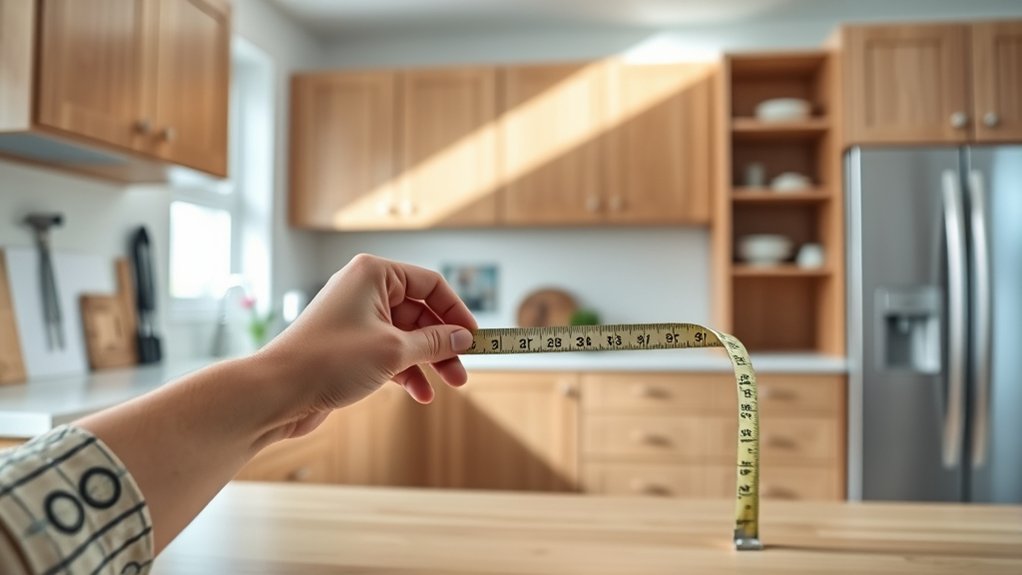
Before choosing cabinets, measure your kitchen’s available space carefully. Record each wall’s length, ceiling height, and the distance between corners. Note windows, doors, trim, vents, outlets, switches, and pipes, including how far each feature extends from the wall. Measure twice to reduce costly errors.
Create a scaled floor plan, marking fixed elements and their exact locations. Check whether walls meet at true right angles; uneven corners can affect cabinet installation.
Measure around appliances you already own, but focus only on their positions and required clearances, not storage or cooking preferences.
Include floor and ceiling irregularities in your notes. If you’ll add crown molding, fillers, or panels, account for their dimensions before selecting cabinet sizes.
Also evaluate color coordination with nearby walls, flooring, countertops, and appliances, since samples can look different across surfaces.
Finally, consider lighting. Natural light changes throughout the day, while under-cabinet and overhead fixtures can alter cabinet colors.
Bring accurate measurements and photos when consulting a designer or cabinet professional.
Define Your Storage and Cooking Needs
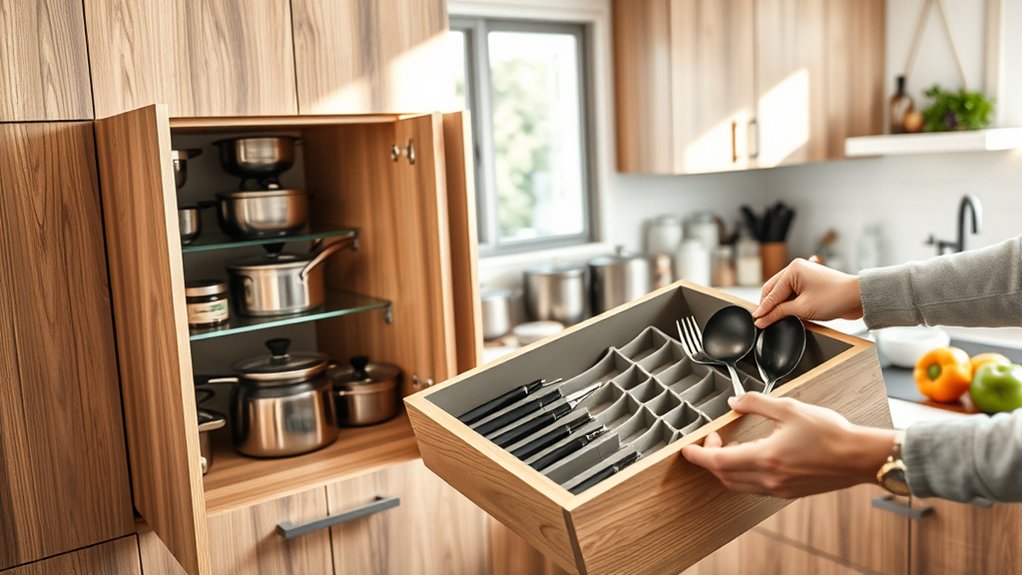
Assess how you use your kitchen each day so your cabinets support your cooking habits and storage needs. Note whether you prepare quick meals, bake often, entertain guests, or cook with specialized tools. Your routine should guide each cabinet’s purpose.
Your daily cooking habits should determine how each cabinet functions, from quick meals to baking and entertaining.
Inventory your cookware, dishes, pantry goods, appliances, and cleaning supplies. Group similar items, then identify what you reach for most.
Store everyday plates and glasses near the dishwasher, keep pans close to the cooktop, and place baking supplies near your work area. Deep drawers can hold pots, while tall cabinets accommodate trays, brooms, or small appliances.
Consider accessibility, too. Pullout shelves, drawer organizers, lazy Susans, and adjustable shelves can make awkward corners easier to use.
Plan dedicated spaces for recycling, spices, knives, and trash to keep counters clear.
Finally, decide which items should remain visible. Open shelving can display attractive dishes and decorative accents, while closed doors reduce visual clutter.
Use color coordination thoughtfully so displayed pieces complement your cabinet finish without sacrificing practical storage.
Set Your Kitchen Cabinet Budget

Set a realistic cabinet budget by considering your total kitchen renovation costs, including installation, hardware, delivery, and any needed plumbing or electrical work. Then decide how much of that total you can comfortably allocate to cabinets without draining your emergency savings. Include a contingency fund of 10% to 20% for unexpected expenses.
Start your budget planning by listing essential features, such as drawer storage, specialty organizers, finishes, and trim. Request itemized quotes from several suppliers so you can make an accurate cost comparison.
Check whether quotes include measurements, design services, delivery, assembly, and installation. Ask about warranties, payment schedules, and potential price increases before you commit.
Set a firm spending ceiling, but keep a small amount of flexibility for features that improve daily use. If your preferred options exceed the limit, adjust door styles, accessories, or cabinet quantities rather than sacrificing quality or essential storage.
Track every decision to keep your project financially manageable.
Compare Framed and Frameless Cabinets
How much storage access and visual style do you want from your cabinets? Your answer can guide you toward framed or frameless construction.
Cabinet framing adds a face frame across the front of each cabinet box. You’ll get a traditional appearance, sturdy door support, and slightly smaller openings. The frame can also help conceal small installation variations.
Frameless cabinets, sometimes called European-style cabinets, omit that front frame. Doors attach directly to the cabinet box, creating wider openings and a clean, contemporary look.
You’ll gain easier access to interior space, especially in wide drawers and lower cabinets. However, precise installation matters because the cabinet edges remain visible and alignment affects the finished appearance.
Compare both options with your kitchen’s layout, storage priorities, and preferred design styles. Framed construction suits classic or transitional rooms, while frameless construction complements modern spaces.
Review door clearances and hardware placement, too, so your choice supports comfortable daily use.
Choose Cabinet Materials and Finishes
Choose cabinet materials by considering appearance, cost, maintenance, and moisture resistance. Compare options like solid wood, plywood, MDF, and laminate to find the best fit for your kitchen. Once you’ve chosen a material, select a durable finish that protects the cabinets while complementing your overall design.
Compare Cabinet Materials
Cabinet materials affect your kitchen’s durability, maintenance, appearance, and cost, so compare options before settling on a style. Solid wood offers natural character, repairability, and strong wood durability, but it typically costs more and can expand with humidity.
Plywood provides a sturdy, stable alternative with attractive veneer surfaces, while medium-density fiberboard (MDF) delivers a smooth, uniform base for painted doors at a lower price.
Particleboard costs less, though it’s more vulnerable to moisture and damage if water reaches its core. Thermofoil resists simple spills and cleans easily, but heat can affect its bonded surface.
As you compare, consider your budget, cooking habits, humidity levels, and expected lifespan. Think about material maintenance, too: choose materials you’ll realistically clean, protect, and repair over time.
Weigh appearance against performance before deciding.
Select Durable Finishes
After comparing cabinet materials, consider the finish that will protect the surface and shape its everyday appearance. Choose a catalyzed varnish or conversion coating for strong resistance to moisture, stains, heat, and daily scrubbing.
Painted finishes offer broad color palettes, while stains highlight natural grain. Compare surface textures, too: smooth doors wipe clean easily, whereas distressed or matte finishes can disguise fingerprints but may require gentler care.
Match the finish’s durability to your cooking habits and cleaning routine.
| Finish | Best quality | Care note |
|---|---|---|
| Catalyzed varnish | Moisture resistance | Wipe spills promptly |
| Painted conversion coating | Consistent color | Avoid abrasive cleaners |
| Natural oil | Rich wood feel | Reapply periodically |
| Laminate | Easy maintenance | Protect edges from heat |
Request sample doors before ordering. Test them under your lighting, inspect edges, and confirm the manufacturer’s warranty and cleaning instructions.
Match Cabinet Style to Your Home
Your kitchen cabinets should complement your home’s overall architecture and design rather than compete with it. Start by identifying your Decor style, then choose door profiles, materials, and colors that reinforce it.
Choose cabinet profiles, materials, and colors that complement your home’s architectural style for a cohesive, enduring kitchen design.
Traditional homes often suit raised-panel doors, warm wood, and decorative details. Modern spaces pair well with slab fronts, sleek hardware, and restrained finishes.
Farmhouse kitchens can balance painted cabinets with natural textures, while transitional designs blend classic framing with contemporary colors.
For Architectural harmony, consider the features already shaping your home:
- Match cabinet proportions to existing moldings and trim.
- Echo flooring, beams, or built-ins through complementary wood tones.
- Select hardware that relates to nearby lighting and plumbing fixtures.
- Repeat one accent color for a connected, intentional look.
You don’t need to copy every detail. Instead, create a consistent visual language that makes the kitchen feel original to your home.
Request finish samples, view them beside surrounding surfaces, and check them in different lighting before committing. A coordinated style will remain appealing longer than a trend-driven choice.
Choose a Kitchen Cabinet Layout
Before choosing cabinet finishes, plan a layout that fits your kitchen’s dimensions, workflow, and storage needs. Start by measuring every wall, doorway, window, and utility connection.
Mark appliances, then arrange cabinets to create an efficient work triangle between the refrigerator, sink, and cooktop. Keep frequently used items near the areas where you’ll use them.
Leave enough clearance for doors, drawers, and walkways.
Choose a configuration that suits your space. A single-wall layout works well in compact kitchens, while galley kitchens maximize efficiency along parallel walls.
L-shaped layouts open the room and support a dining area. U-shaped designs provide abundant storage but need generous aisle space.
Consider an island only if you can maintain comfortable circulation around it.
Plan drawer stacks for cookware, tall cabinets for pantry goods, and corner solutions for awkward spaces.
Before finalizing your plan, check how the cabinet color and hardware will work with the layout’s visual balance, lighting, and focal points.
Choose Between Stock, Semi-Custom, and Custom Cabinets
Stock cabinets are affordable and typically install faster. If you want more design options, semi-custom cabinets offer a wider range of styles and configurations. Custom cabinets provide the most precise fit and personalized features. Compare all three options to find the best match for your budget, style, and kitchen needs.
Stock Cabinet Advantages
Stock cabinets offer the quickest, most budget-friendly path to a finished kitchen. You’ll find them in standard sizes, popular finishes, and readily available configurations, so you can often complete your project without lengthy production waits.
Modern manufacturing keeps quality consistent while supporting impressive cost efficiency.
Choose stock cabinets when you value simplicity and predictable pricing:
- Faster installation: Your contractor can usually begin sooner.
- Lower material costs: You’ll preserve more of your renovation budget.
- Proven styles: You can select familiar door profiles and finishes.
- Easy replacement: Retailers often carry matching components and accessories.
Before ordering, measure every wall, opening, and appliance location carefully. Stock dimensions may limit how neatly cabinets fit around corners or unusual spaces, so confirm the layout with your installer.
You’ll also want to inspect samples in your kitchen’s lighting. Colors and textures can appear different at home than in a showroom.
Semi-Custom Design Options
Semi-custom cabinets give you more flexibility than stock options without the cost and lead time of fully custom work. You can typically choose from several cabinet sizes, finishes, color options, and door styles, helping you coordinate your kitchen’s look without starting from scratch.
Adjustments to drawer configurations, hardware, shelving, and interior accessories can also improve how you store cookware and food. Before ordering, confirm which modifications the manufacturer allows and whether they affect pricing or delivery.
Measure your space carefully, then compare the cabinet dimensions with your layout and appliance requirements. Semi-custom choices work well when standard cabinets almost fit but need targeted changes.
Ask your dealer for finish samples, product specifications, and a detailed quote so you’ll know exactly what you’re getting and avoid surprises.
Custom Cabinet Benefits
When standard sizes and semi-custom adjustments still don’t suit your layout, custom cabinets let you tailor every detail to your kitchen. You’ll choose dimensions, materials, finishes, hardware, and interior features that support how you cook and organize.
Custom craftsmanship can also solve awkward corners, sloped ceilings, narrow walls, or unusual appliance placements.
Consider these advantages:
- Personalized storage: Add deep drawers, tray dividers, spice racks, or appliance garages where you need them.
- Exact fit: Use every inch, reducing filler panels and wasted space.
- Unified style: Coordinate wood tones, doors, and details throughout your kitchen.
- Long-term value: Select durable construction and repairable components for lasting performance.
Custom cabinets typically cost more and require longer lead times, so confirm your budget and schedule first.
If your layout is straightforward, stock or semi-custom options may deliver similar function faster and more affordably.
Choose DIY or Professional Cabinet Installation
Decide whether you’ll install the cabinets yourself or hire a professional based on your skill level, available time, and project complexity. Choose DIY installation if you’re comfortable measuring, leveling, drilling, and working with basic tools. You’ll potentially save money, but budget time for preparation, adjustments, cleanup, and unexpected challenges.
Follow DIY safety practices, including wearing eye protection, securing cabinets properly, and keeping electrical or plumbing hazards in mind.
Hire a professional when your kitchen has uneven walls, complex layouts, heavy materials, or extensive modifications. An experienced installer can work efficiently, coordinate related trades, and reduce the risk of costly mistakes.
Before hiring, request detailed estimates, check references, confirm insurance, and verify professional licensing requirements for your area. Clarify who’ll handle permits, delivery, disposal, and final adjustments.
You might also split the work: complete simple preparation yourself, then bring in an installer for secure mounting and precise alignment. Choose the approach that protects your budget, schedule, and confidence.
Inspect Cabinet Boxes, Doors, and Hardware
Whether you install the cabinets yourself or hire a professional, inspect every cabinet box, door, drawer, and piece of hardware before installation begins. Look for damage, warped panels, split edges, poor joints, and inconsistent finishes.
Compare each item with your order and approved samples, checking sizes, colors, grain direction, and quantities.
Test moving parts before they reach the wall:
- Open and close each door to confirm alignment and smooth motion.
- Examine every cabinet hinge for secure mounting, adjustment range, and corrosion.
- Pull each drawer fully forward, checking that the drawer slide operates quietly and locks properly.
- Verify handles, knobs, screws, mounting brackets, and filler pieces match your specifications.
Photograph defects immediately, then record missing or damaged components by cabinet number. Don’t allow installation to hide problems; replacement becomes harder once boxes are secured.
Ask your supplier about return deadlines, and keep the packaging until you’ve accepted the entire shipment. A careful inspection protects your budget, prevents delays, and helps you achieve a clean, professional result.
Frequently Asked Questions
How Long Do Kitchen Cabinets Typically Last?
Kitchen cabinets typically last 15 to 20 years, though quality construction and careful maintenance can extend their lifespan to 30 years or more. You’ll get better durability from solid wood, plywood, or high-quality laminate than from inexpensive particleboard.
Watch for sagging doors, damaged finishes, and failing hardware when deciding whether to repair or replace them. Consider current design trends, but choose cabinet materials that suit your budget, lifestyle, and kitchen’s daily demands.
How Should Kitchen Cabinets Be Cleaned and Maintained?
Clean your kitchen cabinets like you’d care for polished furniture: gently and consistently. For effective Cabinet cleaning, wipe spills promptly with a soft, damp cloth and mild dish soap, then dry every surface. Don’t use abrasive pads, bleach, or excess water, which can damage finishes and seams.
Follow these Maintenance tips: dust weekly, clean handles often, tighten loose hardware, and avoid hanging wet towels on doors. You’ll preserve appearance, function, and durability.
Can Existing Kitchen Cabinets Be Refaced Instead of Replaced?
Yes, you can reface existing kitchen cabinets instead of replacing them if their boxes remain sturdy, level, and free from water damage.
Cabinet refacing replaces doors, drawer fronts, and exterior surfaces while keeping the underlying structure. You’ll usually spend less and finish faster than with new cabinets, but compare costs carefully.
A cost comparison should include hardware, labor, veneers, and any needed repairs. Choose refacing when your layout and storage already work well.
What Cabinet Features Improve Accessibility for People With Disabilities?
Choose cabinets that make daily tasks easier, safer, and less tiring. Install accessible handles, such as D-shaped pulls, so you can open doors with limited grip strength.
Add adjustable shelving to position items within your reach, and consider pull-down or pull-out shelves for overhead and base cabinets.
Choose drawers with full-extension slides, soft-close hardware, and clear knee space beneath work areas. Lower countertops, contrasting edges, and easy-gliding mechanisms can further support independent use.
How Can Kitchen Cabinets Be Made More Environmentally Friendly?
You can make kitchen cabinets greener by choosing sustainable materials, though “wood” shouldn’t automatically mean your forest paid the bill. Select FSC-certified timber, bamboo, reclaimed wood, or recycled-content panels with low formaldehyde emissions.
Request eco friendly finishes, such as water-based stains and low-VOC paints, to reduce indoor pollution. Choose durable construction and repairable hardware, so you won’t replace cabinets quickly.
Finally, measure carefully and donate usable old cabinets to minimize waste.
Conclusion
Choosing kitchen cabinets gets easier when you measure carefully, define your needs, set a realistic budget, and compare construction, materials, layouts, and customization.
Don’t overlook installation or a final inspection of the cabinet boxes, doors, and hardware. Since cabinets typically account for about 40% of a kitchen remodel budget, thoughtful decisions can protect your investment and improve daily use.
Take your time, compare your options, and choose cabinets that balance durability, storage, style, and value for your home. This practical guide on how to choose kitchen cabinets can help you make a confident decision.