How Much Does It Cost to Replace Kitchen Countertops?
Replacing kitchen countertops can feel overwhelming, especially when you’re trying to balance style, durability, and a realistic budget. You’re not alone—many homeowners struggle to estimate the total cost and compare materials confidently.
You’ll typically pay $1,500 to $4,500 to replace kitchen countertops, including materials and installation. Your final price depends on the countertop material, square footage, layout complexity, edge details, sink cutouts, and whether you need demolition, cabinet repairs, or plumbing changes.
Laminate offers the lowest cost, while quartz, granite, marble, and quartzite cost more.
Get several written estimates covering fabrication, delivery, installation, cleanup, warranties, and permits to compare your options and plan confidently.
Key Takeaways
- Replacing kitchen countertops typically costs $1,500–$4,500, including materials and installation.
- Materials generally cost $15–$150 per square foot, while installation adds approximately $10–$40 per square foot.
- Laminate is the most budget-friendly option. Quartz, granite, marble, and quartzite cost more but offer increased durability or distinctive appearances.
- Complex layouts, larger islands, seams, custom edges, sink cutouts, plumbing changes, and surface removal can significantly increase the final price.
- Save money by comparing written estimates, using remnants, selecting standard finishes, simplifying edges, and handling demolition or disposal yourself.
What Does Kitchen Countertop Replacement Cost?

Kitchen countertop replacement typically costs $1,500 to $4,500, including materials and installation, although large kitchens or premium surfaces can push the price higher. Your final price depends on the countertop material, project complexity, edge details, sink cutouts, backsplash work, and removal of the existing surface.
Countertop replacement costs $1,500 to $4,500, with material, layout, edge details, and installation complexity affecting the final price.
Laminate usually offers the lowest upfront cost, while quartz, granite, solid surface, and other premium options require a larger budget. You’ll also pay more when installers must repair damaged cabinets, adjust plumbing, or work around unusual layouts.
Before choosing, compare samples in your kitchen’s lighting and consider how each surface handles heat, stains, and daily wear. Good countertop maintenance can extend the life of your investment and reduce future repair expenses.
Current design trends may favor bold veining, matte finishes, or waterfall edges, but choose a style you’ll enjoy long-term. Request several written estimates, confirm what installation includes, and reserve funds for unexpected preparation work.
Kitchen Countertop Costs Per Square Foot

Kitchen countertop prices per square foot vary by material, ranging from budget-friendly laminate to premium stone. Installation costs may increase if you choose custom edges, sinks, backsplashes, or have a complex layout.
To estimate the total cost, measure the length and width of each countertop section, calculate the square footage, and add the sections together.
Material Cost Ranges
Countertop materials typically cost $15 to $150 per square foot, depending on whether you choose laminate, tile, solid surface, quartz, granite, or another option. Laminate usually sits at the low end, offering many color options and patterns for budget-conscious updates.
Tile can cost more or less depending on the style, but grout may increase your maintenance requirements. Solid surface provides a midrange choice with seamless designs and consistent color.
Quartz generally costs more because it delivers durability, uniform appearance, and low maintenance requirements. Granite prices vary by rarity, thickness, and finish, while premium natural stones can exceed $150 per square foot.
When comparing samples, consider how each material’s color options complement your cabinets and flooring. You’ll also want to weigh stain resistance, heat tolerance, longevity, and cleaning needs against the upfront material price.
Installation Cost Factors
Installation typically adds $10 to $40 per square foot, depending on the material, layout, and project complexity. You’ll usually pay more for granite, quartz, or intricate Countertop design features than for laminate.
Corner seams, sink cutouts, backsplashes, and difficult access can also increase labor charges. Ask whether removal, disposal, plumbing disconnection, and sealing appear in the quote.
| Cost factor | Typical impact | What you should ask |
|---|---|---|
| Material weight | Higher labor | Does reinforcement cost extra? |
| Cutouts | $50–$150 each | Are sink openings included? |
| Seams | Variable | How many seams are planned? |
| Removal | $100–$500 | Is disposal included? |
Your installer may charge a minimum service fee, especially for small kitchens. Confirm warranty coverage and the schedule before work begins.
After installation, follow the manufacturer’s maintenance tips to protect the surface and avoid unexpected repair costs. Comparing itemized bids helps you choose confidently.
Measuring Square Footage
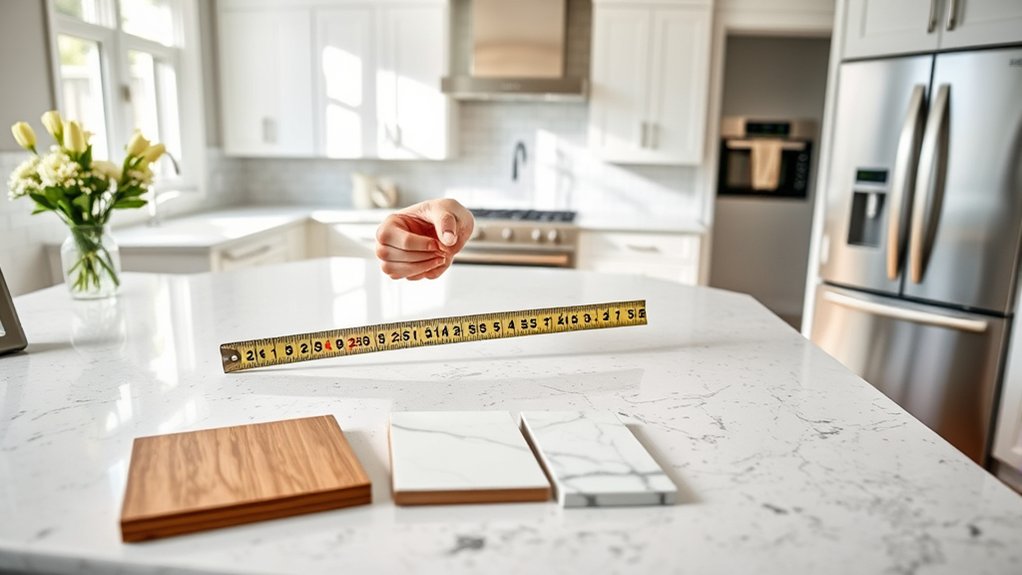
Once you’ve compared installation quotes, measure your kitchen carefully to estimate countertop costs per square foot. Divide long, straight sections into rectangles, then multiply each section’s length by its depth in inches. Add the results and divide by 144 to convert square inches into square feet.
Measure islands separately, including any overhang you want for seating. For L-shaped counters, measure each leg independently, but don’t count the shared corner twice.
Add extra material for backsplashes, seams, cutouts, and mistakes. Installers often recommend 10% to 20% waste.
Your final area helps you compare material prices accurately, though edges, sink openings, and complex layouts may add labor charges.
When choosing samples, consider color coordination and surface texture, since lighting can change how each finish looks throughout your kitchen. Keep your measurements for accurate contractor estimates.
Countertop Prices By Material
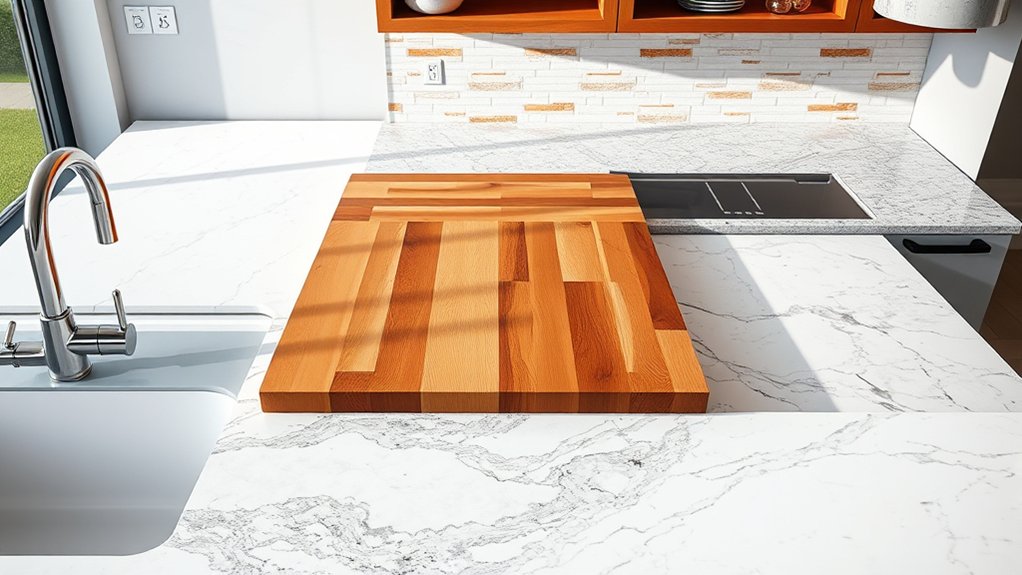
Material is the biggest factor affecting countertop prices, with options ranging from budget-friendly laminate to premium quartzite, marble, and solid-surface products. You’ll usually compare costs by square foot, but installation, edge profiles, sink cutouts, delivery, and removal can raise your total.
Countertop costs depend on material, installation, edge details, sink cutouts, delivery, and removal.
- Quartz: You’ll typically pay a midrange to premium price for durable, low-maintenance surfaces with consistent patterns.
- Granite: Natural stone costs vary by color and rarity, while sealing adds to long-term material maintenance.
- Marble: You’ll get distinctive veining, but higher prices and greater susceptibility to stains and scratches require careful upkeep.
- Quartzite: You’ll often pay the most for this hard, natural stone, especially with dramatic patterns or difficult fabrication.
Your countertop design also affects the estimate. Larger islands, multiple seams, waterfall edges, and custom shapes require more fabrication.
Ask contractors for itemized quotes so you can compare material, labor, and finishing charges accurately. Choosing a surface that fits your budget, cooking habits, and maintenance expectations helps you avoid costly surprises.
Laminate Countertops: The Budget Option
Laminate countertops help keep material costs down, making them a budget-friendly option. They’re also quick and easy to install. You’ll find plenty of styles to choose from, and maintenance is simple, but laminate isn’t as durable as stone.
Affordable Material Costs
Laminate countertops offer one of the most affordable ways to refresh your kitchen without sacrificing style. You can choose from patterns that mimic granite, marble, or wood while keeping material costs manageable.
Most options cost less per square foot than natural stone, leaving room in your budget for other Kitchen design priorities, including appliance upgrades.
Consider these cost advantages:
- Lower material prices reduce your overall replacement budget.
- Numerous colors and patterns help you match existing cabinets.
- Durable surfaces resist everyday stains and simplify maintenance.
- Custom edge profiles let you add personality without premium-stone pricing.
Your final price will depend on thickness, finish, color, and countertop size. Standard laminate typically costs less than premium textured styles, so compare samples before choosing.
Easy Installation Process
A straightforward installation process can help keep labor costs low and shorten your kitchen’s renovation timeline. Laminate countertops often arrive ready for cutting and fitting, so your installer can complete the project without specialized equipment or lengthy fabrication.
After removing your old surface, the installer measures the cabinets, cuts the laminate, and secures it with adhesive and fasteners. You’ll typically spend less on labor because the material weighs less and installs faster than many alternatives.
Ask for a detailed estimate covering removal, disposal, sink cutouts, backsplash work, and plumbing reconnection to avoid surprise charges. Proper installation also supports easier Countertop maintenance by creating tight seams and stable edges.
Although Design customization options can affect the price, standard sizes and prefabricated sections usually keep installation simple and affordable.
Style and Durability Tradeoffs
Beyond an easy installation, laminate countertops offer a practical balance of style and durability for budget-conscious homeowners. You’ll find broad Color options, realistic stone patterns, wood looks, and customizable edge profiles, so you can match your kitchen without paying for premium materials.
Modern laminate resists stains, moisture, and everyday scratches, but it won’t handle intense heat or deep cuts as well as quartz or granite. Use trivets and cutting boards to protect the surface and extend its life.
Consider these tradeoffs before choosing laminate:
- Low purchase and installation costs preserve your renovation budget.
- Numerous designs help you achieve a high-end appearance.
- Routine care keeps the finish attractive for years.
- Damage can require replacing an entire section.
If you value affordability and visual flexibility, laminate makes sense. Choose another material if maximum heat resistance or long-term resale appeal matters most.
Quartz, Granite, And Stone Countertop Costs
Quartz, granite, and other stone countertops typically cost more than laminate because you’re paying for durable materials, professional fabrication, and installation. Quartz usually costs about $50 to $100 per square foot, while granite often costs $40 to $100.
Marble, soapstone, and other premium stones may range from $60 to $150 or more per square foot, depending on rarity, thickness, edge details, and finish.
Quartz offers consistent patterns and doesn’t require sealing, making countertop maintenance simple. Granite provides natural variation and strong heat resistance, but it needs periodic sealing to protect its surface.
Marble creates a distinctive, luxurious look, yet it can scratch, etch, and stain more easily. Compare samples in your kitchen’s lighting, and ask suppliers about slab availability, color matching, and waste allowances.
Although stone costs more initially, its longevity can make it a worthwhile investment when you want a surface that remains attractive and functional for many years. Consider your budget, cooking habits, and care preferences before choosing.
How Much Does Installation Cost?
Countertop installation typically costs $10 to $30 per square foot, or about $300 to $1,500 for a standard kitchen. The final price depends on the material, layout, and labor involved.
Countertop installation costs depend on material, kitchen layout, and labor, typically ranging from $10 to $30 per square foot.
You’ll usually pay for removal, surface preparation, delivery, and professional fitting separately or within one project quote. Labor costs rise when your kitchen has tight corners, uneven walls, difficult access, or extensive cutting.
Before hiring an installer, ask whether the estimate includes:
- Measuring and templating
- Old countertop removal and disposal
- Delivery and material handling
- Surface leveling and final cleanup
Get at least three written estimates so you can compare labor rates and included services. A low bid might exclude preparation or disposal, creating surprise charges later.
Confirm the installer’s insurance, warranty, timeline, and payment schedule. Professional fitting helps protect your investment and gives you a clean, stable result.
Coordinate the installation with cabinet work, plumbing scheduling, and appliance coordination. Thoughtful planning also helps your new countertop support your kitchen decor without unnecessary delays.
Sink, Edge, And Backsplash Upgrades
Sink, edge, and backsplash upgrades can add $200 to $2,000 or more to your countertop project, depending on the materials and installation work involved. You’ll pay more for an undermount sink, custom faucet holes, or a deeper basin.
A simple eased edge costs less than a decorative ogee or waterfall profile. Backsplash pricing depends on height, tile choice, and whether it matches your slab.
| Upgrade | Typical Cost | What You Get |
|---|---|---|
| Undermount sink | $200–$600 | Cleaner, integrated appearance |
| Edge profile | $10–$40/linear foot | Customized countertop detail |
| Tile backsplash | $15–$40/sq. ft. | Color and wall protection |
| Slab backsplash | $50–$150/sq. ft. | Seamless, premium finish |
Coordinate sink placement with each Kitchen appliance so doors and drawers open comfortably. During cabinet remodeling, confirm cabinet support and clearances before ordering the countertop.
Your installer can measure these details, recommend compatible materials, and explain how each choice affects labor without expanding the project’s overall scope.
Changes That Increase Countertop Costs
Changes that alter the original layout or require extra fabrication can increase countertop costs quickly. You’ll likely pay more for unusual angles, added seams, or materials that require specialized cutting.
Moving plumbing or appliances can also expand the work beyond a simple replacement.
Watch for these cost-raising changes:
- Larger surfaces: Extending an island or adding a work area requires more material and installation time.
- Complex shapes: Curves, corners, and irregular walls demand precise templates and fabrication.
- Thicker slabs: A thicker edge profile uses more stone and may require added cabinet support.
- New openings: Extra sinks, cooktops, outlets, or faucets require additional cuts and careful placement.
Current design trends, such as waterfall islands and integrated sinks, can look polished but often involve premium fabrication.
You’ll also need to consider long-term countertop maintenance. Porous or delicate surfaces may cost more to seal, repair, or protect.
Simplifying the layout and choosing practical details can help you control the replacement budget without sacrificing function.
How To Compare Countertop Estimates
When you compare countertop estimates, look beyond the total price and review what each contractor includes. Confirm that every quote covers material, templating, fabrication, delivery, installation, sink and cooktop cutouts, edge details, backsplash work, plumbing disconnection, and debris removal.
Ask whether the contractor measured your kitchen personally. Verify the material’s thickness, grade, color, and finish. Check the estimated timeline, payment schedule, warranty, permits, and insurance coverage.
Confirm personal measurements, material specifications, timelines, payment terms, warranties, permits, and insurance before accepting any countertop estimate.
A lower bid may exclude essential services or use a thinner slab, so request an itemized breakdown before choosing.
Consider how the proposed layout supports kitchen storage, especially around corners, peninsulas, and frequently used work areas. Also confirm appliance compatibility so your refrigerator, range, dishwasher, sink, and fixtures fit the new countertop dimensions and clearances.
Compare references, reviews, and communication quality, not just dollars. Ask each contractor to explain assumptions and potential change-order charges in writing.
Once you’ve reviewed equivalent scopes, select the estimate that offers clear terms, dependable workmanship, and a realistic total cost.
Ways To Lower Countertop Replacement Costs
You can lower countertop replacement costs by choosing a budget-friendly material, keeping the existing layout, and comparing itemized estimates. Avoid moving plumbing, appliances, or electrical connections because changing the kitchen’s footprint can quickly increase labor charges.
Ask your contractor whether remnants suit your project. Leftover slabs often cost less while still providing a quality finish.
Use these strategies to protect your budget:
- Compare quartz, laminate, granite, and solid-surface prices, including installation and edge fees.
- Choose simple edge profiles and standard sink cutouts instead of customized details.
- Schedule work during slower seasons, when some contractors may offer better availability or pricing.
- Handle demolition and disposal yourself only if you can do so safely and legally.
Thoughtful color choices can also reduce costs. Select a widely stocked shade rather than a special-order pattern.
Finally, request maintenance tips before choosing a material. Easy-care surfaces may save you money over time by reducing repairs, sealing, and replacement needs.
Always verify warranty terms before signing.
Frequently Asked Questions
Can I Replace Kitchen Countertops Without Replacing My Cabinets?
Yes, you can replace kitchen countertops without replacing your cabinets. First, confirm cabinet compatibility by checking that your existing boxes remain sturdy, level, and properly supported.
Then remove the old counters carefully and complete thorough surface preparation, including cleaning, leveling, and repairing damage. Your installer can measure the layout and create new countertops to fit.
You’ll save money by keeping the cabinets, though plumbing, backsplashes, and appliances may need temporary removal during installation.
How Long Does a Typical Kitchen Countertop Replacement Take?
You can usually replace kitchen countertops in one to three days, depending on your kitchen’s size, layout, and material. It’s often a short sprint, not a marathon: installers remove the old surfaces, prepare cabinets, create templates, and fit the new counters.
Complex seams, plumbing changes, or custom stone can extend the timeline. A thoughtful material comparison also helps you balance installation speed, countertop durability, appearance, and maintenance before scheduling your project with confidence.
Do I Need to Remove Everything From My Kitchen Before Installation?
Yes, you’ll need to clear everything from your countertops, including small appliances, dishes, décor, and food. Empty drawers and cabinets near the work area, too, so installers can work safely.
Your contractor may handle sink disconnects, but confirm whether appliance removal is included or requires separate arrangements. Plumbing adjustments might be necessary when reconnecting the sink or changing its location.
Protect nearby rooms by removing fragile items and creating a clear path for materials.
Can I Install New Countertops Over Existing Countertops?
You can install new countertops over existing ones, but you’ll need to weigh the pros and cons first. This approach may save time, yet it can create installation challenges, including added height, poor cabinet clearance, and uneven surfaces.
Check whether your current countertop is firmly attached, level, and free from water damage. For better countertop durability, choose lightweight materials and confirm your cabinets and backsplash can accommodate the extra layer safely.
What Maintenance Do Different Countertop Materials Require?
You’ll maintain each countertop material differently. Wipe laminate daily with mild soap, avoid heat, and prevent cuts. Seal granite and marble periodically, clean spills quickly, and use cutting boards to prevent stains.
Quartz needs simple daily cleaning but no sealing, although you should avoid extreme heat. Wood requires regular oiling and prompt drying. Stainless steel resists stains but shows scratches.
Your countertop’s durability depends on care, while maintenance frequency varies by material and use.
Conclusion
Replacing your kitchen countertops can cost a few thousand dollars, depending on square footage, material, installation, and upgrades. You’ll save with laminate, while quartz, granite, and other stones offer greater durability at a higher price.
Compare detailed estimates, confirm what’s included, and consider simpler edges, sinks, or backsplashes to control spending. With thoughtful choices, you won’t just refresh your kitchen; you’ll invest in a surface where everyday meals and memories take shape for years to come.
Understanding how much it costs to replace kitchen countertops can help you plan wisely and create a beautiful, lasting kitchen.