
Where to Buy Kitchen Cabinets: 3 Best Places
Choosing where to buy kitchen cabinets can feel overwhelming, especially when you’re balancing style, quality, budget, and installation needs. You’re not alone—many homeowners struggle to find cabinets that fit both their kitchen and their expectations.
This guide highlights the best places to shop so you can compare your options with confidence.
You’ll find the best kitchen cabinets at home improvement stores, specialty showrooms, and reputable online custom retailers.
Home improvement stores let you compare popular styles, test construction, and discuss installation.
Specialty showrooms provide personalized guidance, luxury options, and hands-on access to hardware and finishes.
Online custom retailers offer tailored dimensions, design previews, and flexible storage solutions.
Wherever you shop, verify measurements, samples, warranties, delivery, and installation costs.
Keep exploring to see how each option fits your kitchen project best.
Key Takeaways
- Home improvement stores offer accessible cabinet displays, popular styles, hardware, installation advice, and opportunities to compare construction in person.
- Specialty showrooms provide broader selections, expert guidance, luxury craftsmanship, and personalized help matching cabinets to your kitchen’s architecture.
- Online custom cabinet retailers support tailored dimensions, finishes, storage solutions, design previews, and convenient comparison of prices, warranties, and reviews.
- Before buying, verify measurements, appliance clearances, door swings, finishes, hardware, shipping policies, installation support, and warranties.
- Compare detailed estimates, request physical samples, and confirm whether trim, fillers, accessories, delivery, and installation are included.
Buy Kitchen Cabinets at Home Improvement Stores
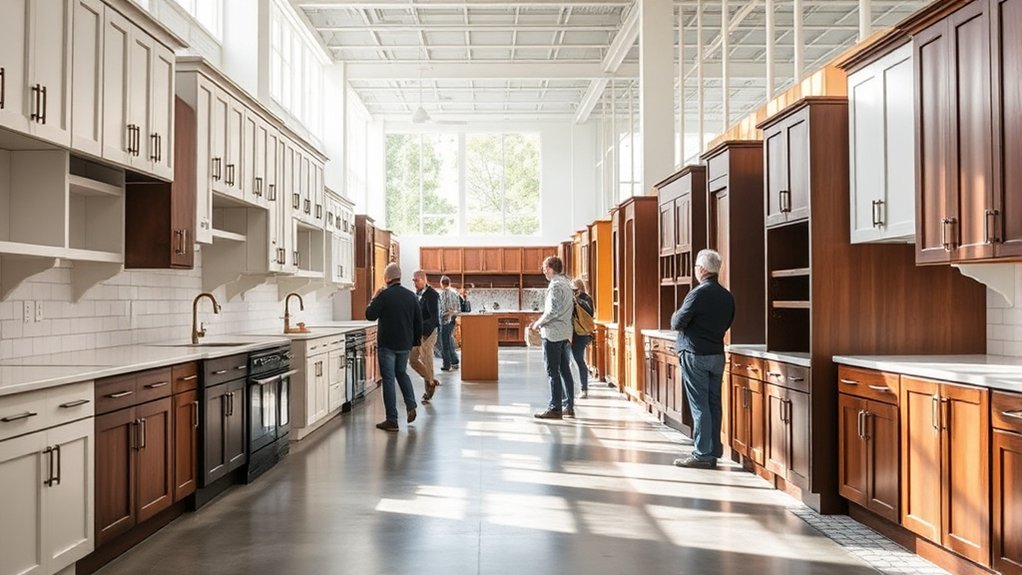
Home improvement stores make it easy to compare kitchen cabinets in person, check materials and finishes, and discuss layout options with staff. You can open doors, test drawer slides, and inspect construction before you buy.
Many stores display popular cabinet styles, including shaker, raised-panel, flat-panel, and unfinished options for painting.
Ask an associate about available sizes, installation services, delivery timelines, and warranty coverage. Bring your kitchen measurements, appliance dimensions, and photos so staff can help you avoid ordering mistakes.
They may also suggest ways to improve your kitchen layout, such as adding a pantry cabinet or adjusting corner storage.
You’ll find cabinet hardware, organizers, sinks, countertops, and lighting in the same location, which can simplify your project.
Compare prices carefully, since displayed cabinets may exclude trim, fillers, panels, or installation. Request a detailed estimate before placing your order, and confirm the return policy for special-order pieces.
Store financing may help you manage costs, but review interest terms first.
Compare Kitchen Cabinets at Specialty Showrooms
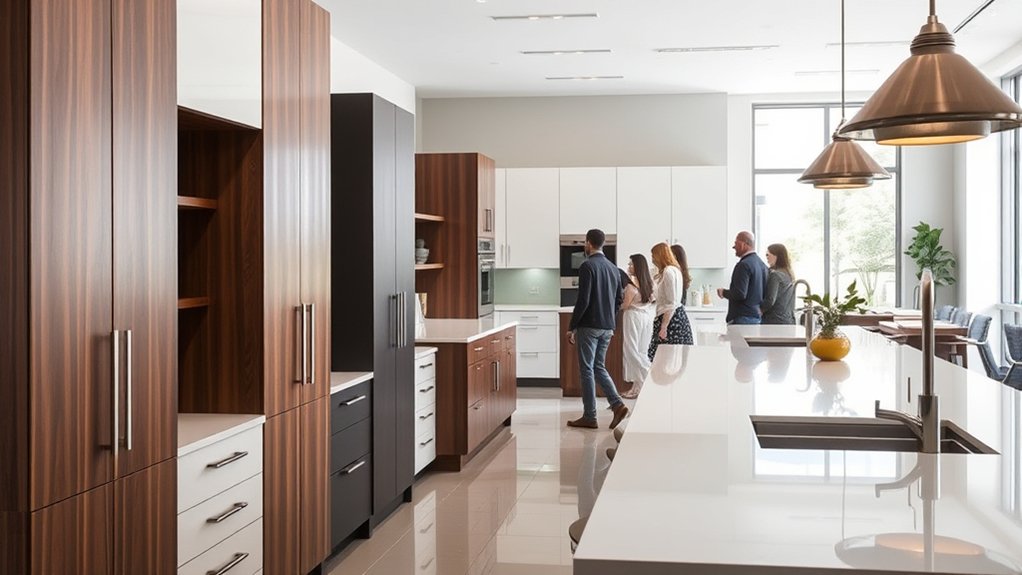
For a broader selection and more personalized guidance, compare kitchen cabinets at specialty showrooms. You’ll find displays that reveal how different door styles, finishes, hardware, and storage features look together.
Instead of relying on small samples, you can open drawers, test hinges, and assess construction firsthand.
Experience cabinet quality firsthand by opening drawers, testing hinges, and examining construction beyond small samples.
Showroom consultants can help you match cabinet proportions, colors, and layouts to your kitchen’s architecture. Ask about plywood boxes, solid-wood doors, dovetail drawers, and durable finishes.
You can also explore luxury brands known for refined craftsmanship, distinctive details, and extensive design options. If sustainability matters, ask which lines use eco friendly materials, low-emission finishes, recycled content, or responsibly sourced wood.
Bring your room measurements, appliance specifications, and inspiration photos so you can compare suitable options efficiently.
Request detailed estimates that separate cabinetry, accessories, delivery, and installation. Before choosing, review warranties, lead times, maintenance requirements, and sample policies.
A specialty showroom gives you expert insight while helping you evaluate quality beyond appearance.
Shop Custom Kitchen Cabinets Online
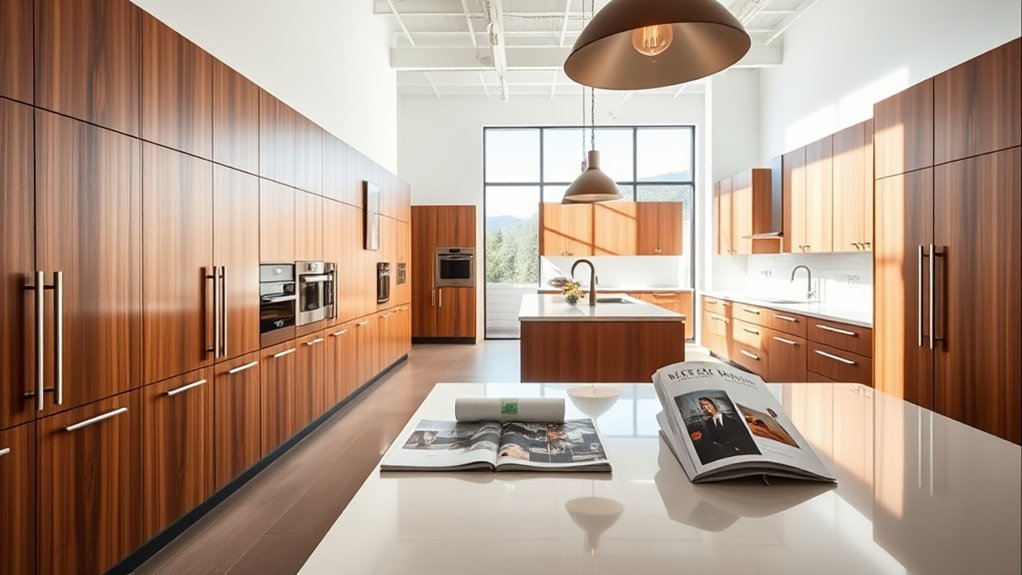
Shop custom kitchen cabinets online when you want tailored dimensions, finishes, and storage without visiting multiple showrooms. You can enter your room measurements, choose a layout, and request a design preview before placing an order.
Compare construction details, warranties, samples, and customer reviews rather than relying on attractive photos alone.
Before you buy, check these essentials:
- Confirm measurements, door swings, appliance clearances, and filler requirements.
- Review color options, finish samples, wood species, and interior configurations.
- Select cabinet hardware, including hinges, pulls, knobs, and soft-close upgrades.
- Ask about shipping, assembly, installation support, damage claims, and return policies.
A reputable online cabinet company should provide responsive design assistance and clear pricing. Order physical samples because screens can distort color and texture.
You’ll also want to verify lead times, especially if your renovation follows a strict schedule. Online shopping can reduce showroom visits, but careful planning helps guarantee your custom cabinets fit correctly, match your style, and arrive ready for installation.
Save every quote and specification for easy comparison.
Frequently Asked Questions
How Much Should I Budget for Kitchen Cabinet Installation?
You should budget $2,000–$8,000 for professional kitchen cabinet installation, depending on your kitchen’s size, cabinet weight, layout, and local labor rates.
Expect installers to charge roughly $50–$450 per linear foot, or 10%–20% of your cabinet cost. Add extra for demolition, electrical changes, plumbing, trim, or difficult access.
Before hiring, request several itemized quotes, verify insurance, and confirm whether finishing, hardware, and cleanup are included in the estimate.
What Cabinet Materials Offer the Best Durability and Value?
You’ll get the best durability and value from plywood cabinets with solid-wood doors. Plywood resists moisture and warping better than particleboard while keeping costs manageable.
Medium-density fiberboard (MDF) offers smooth painted finishes and good stability, though it’s less moisture resistant. Avoid low-density particleboard for long-term performance.
Compare cabinet styles, finishes, hardware, and construction quality before buying. Custom options can improve storage and fit, but standard sizes usually reduce your overall project cost.
How Can I Measure My Kitchen Accurately for New Cabinets?
Measure carefully unless you’d like cabinets designed for a kitchen’s imaginary walls. Sketch the room, then record each wall’s length, ceiling height, and corner angles.
Measure doors, windows, appliances, outlets, plumbing, and soffits. Note their distances from the floors and corners.
Check whether the floors and walls are level. Mark clearances for doors and walkways.
Photograph everything and verify your measurements twice. Then compare cabinet styles and color options confidently before ordering.
What Warranties Typically Come With Kitchen Cabinets?
Kitchen cabinet warranties typically cover manufacturing defects, construction, hardware, and finish problems for one to five years, while premium brands may offer limited lifetime coverage. You should check whether the warranty includes labor, replacement parts, shipping, and installation damage.
Custom finishes may carry separate terms or exclusions. Eco-friendly options can have specific care requirements that affect coverage.
Always read registration deadlines, maintenance instructions, exclusions, and transfer rules before purchasing, and keep your receipt.
How Long Does the Cabinet Ordering and Installation Process Take?
You’ll typically spend two to six weeks ordering cabinets, depending on whether you choose stock, semi-custom, or custom options. Measure your kitchen, finalize the layout, and review Design trends early to prevent delays.
If you want eco friendly options, confirm materials and certifications before placing your order. After delivery, installation usually takes two to five days.
Custom designs, backorders, permitting, or unexpected wall and plumbing issues can extend the timeline.
Conclusion
Choosing where to buy kitchen cabinets depends on your budget, timeline, and design goals. Home improvement stores offer convenience, specialty showrooms provide expert guidance, and online sellers can deliver customization at competitive prices.
Think of your kitchen like a puzzle: each cabinet must fit your space and lifestyle perfectly. Before ordering, compare materials, warranties, measurements, and installation costs.
When you do, you’ll avoid expensive surprises and create a kitchen that looks and works beautifully for years. With the right choice, knowing where to buy kitchen cabinets becomes the first step toward a functional, stylish space.