How to Get Rid of Gnats in Your Kitchen
Gnats in the kitchen can be frustrating, especially when they keep appearing no matter how often you clean. You’re not alone—many people struggle with these persistent pests and want a simple way to get rid of gnats in the kitchen.
To get rid of gnats in your kitchen, identify whether you have fruit flies, drain flies, or fungus gnats. Remove overripe produce, food scraps, and standing water, then clean counters, trash bins, and drains thoroughly.
Store food in sealed containers, dry damp areas, and avoid overwatering plants. Set apple-cider-vinegar traps or yellow sticky traps to catch adults.
If gnats persist after repeated cleaning, contact pest control. The steps below explain how to stop the infestation at its source.
Key Takeaways
- Identify the gnat type and locate breeding sources near fruit, drains, trash, houseplants, or damp areas.
- Remove spoiled produce, seal food and scraps, rinse recyclables, and clean sticky spills and surfaces promptly.
- Scrub drains and stoppers, flush with boiling water, repair leaks, and keep sinks and surrounding areas dry.
- Set apple-cider-vinegar traps with dish soap or yellow sticky traps to reduce and monitor adult gnats.
- If gnats persist, inspect hidden moisture sources and contact a licensed pest professional for identification and treatment.
Identify the Gnats in Your Kitchen
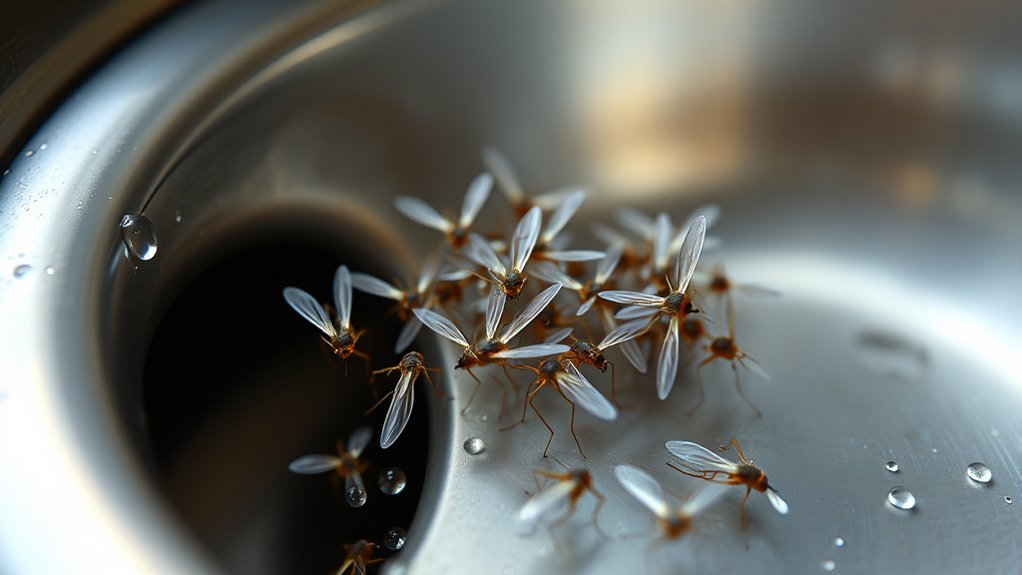
Before you choose a treatment, identify which type of gnat is invading your kitchen. Start by observing its size, color, flight pattern, and preferred locations.
Fruit flies are tiny, tan or brown insects with red or dark eyes, and they often hover around food areas. Fungus gnats look slimmer, darker, and mosquito-like, with long legs and delicate wings.
Fruit flies hover around food, while darker, slender fungus gnats resemble tiny mosquitoes with long legs and delicate wings.
Drain flies have fuzzy, mothlike bodies and weak, fluttering flight. These common gnat species can look similar, so use a phone photo or magnifying glass for a closer inspection.
Consider the gnat lifecycle as you investigate. Adults may reveal only part of the problem, while eggs, larvae, or pupae indicate continued development nearby.
Fruit fly larvae appear pale and wormlike, while fungus gnat larvae have translucent bodies and dark heads. Drain fly larvae look slender and pale.
Note when activity peaks and where you see adults, then match those clues to a species before selecting a targeted treatment. Correct identification helps you avoid ineffective solutions and prepares you for the next step.
Remove Gnat Breeding Sources
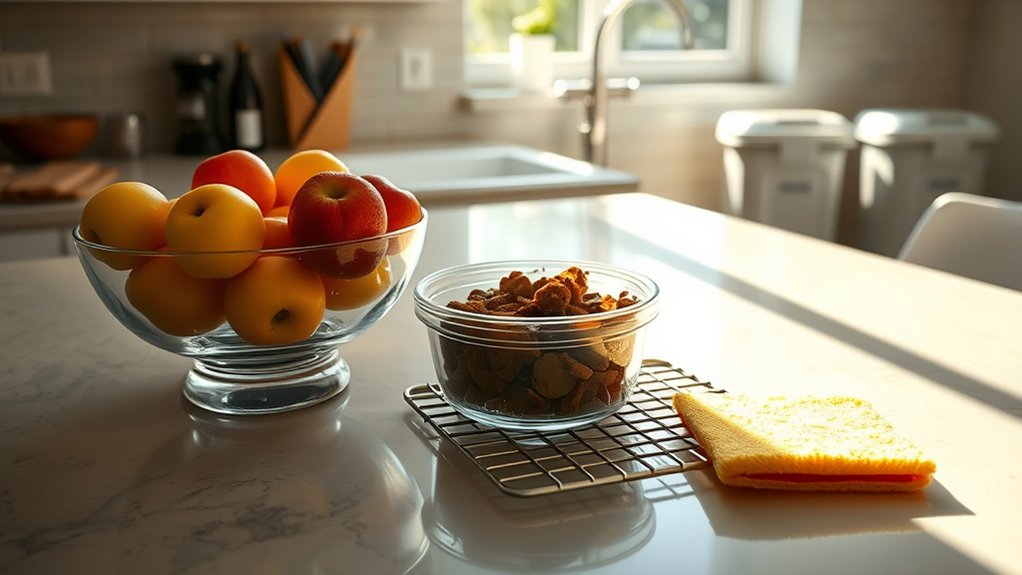
Remove breeding sources by throwing out overripe produce and thoroughly cleaning your drains. Look for hidden fruit scraps, too, and rinse away any buildup where gnats might lay eggs. These simple steps can help prevent new gnats from appearing.
Dispose of Overripe Produce
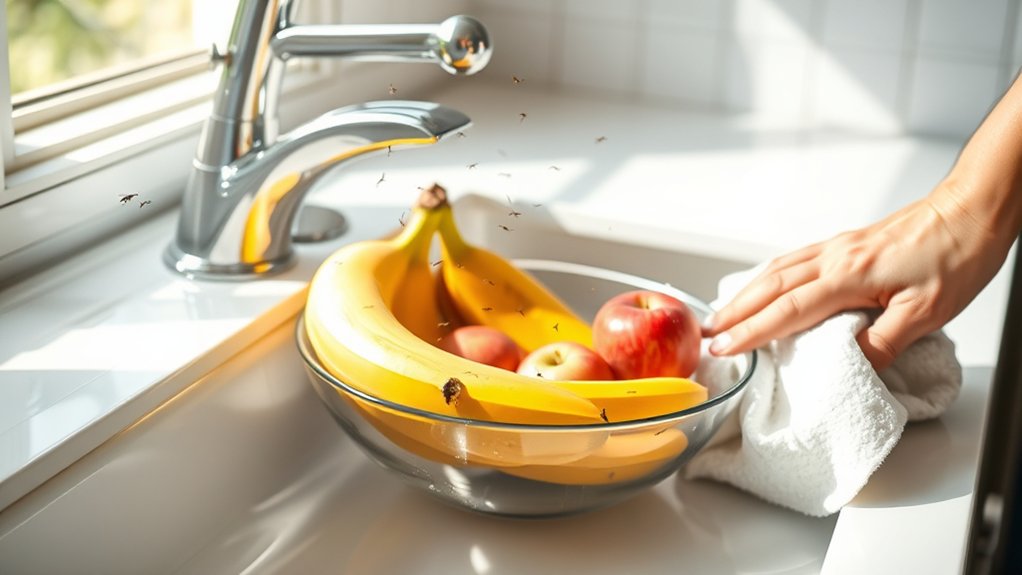
Overripe fruits and vegetables can attract gnats and provide a place for them to breed, so discard any soft, leaking, or moldy produce promptly. Check your counter, fruit bowl, pantry, and refrigerator daily, especially during warm weather.
Use these habits to prevent new infestations:
- Separate bruised items before they affect nearby produce.
- Keep bananas, tomatoes, and other fruit under observation as they finish fruit ripening.
- Move sound produce into sealed containers or the refrigerator for safer produce storage.
- Tie discarded scraps in a bag and place them in an outdoor bin.
Don’t leave peels, cores, or damaged pieces on countertops. Wash reusable produce containers after removing spoiled food, then dry them completely.
Regular checks help you catch problems early, limit available food, and make your kitchen less inviting to gnats. Rotate older items forward so you’ll use them first.
Clean Drains Thoroughly
Gnats can breed in the organic buildup inside drains, so scrub your kitchen sink drain and garbage disposal regularly. Remove the stopper, brush away residue, and rinse the opening with hot water.
Clean the disposal’s splash guard, where food particles and moisture collect. For stubborn grime, apply an enzyme-based drain cleaner according to its label; it breaks down organic matter without harsh fumes.
Don’t rely on bleach alone, because it may sanitize surfaces without removing the sludge that attracts gnats. Flush the drain afterward, and keep it as dry as possible between uses.
Good drain maintenance targets gnat biology by eliminating the damp, nutrient-rich film where adults lay eggs and larvae develop. If flies persist, inspect nearby floor drains and pipe joints for leaks, then repair or clean them promptly.
Clean Produce, Counters, and Spills
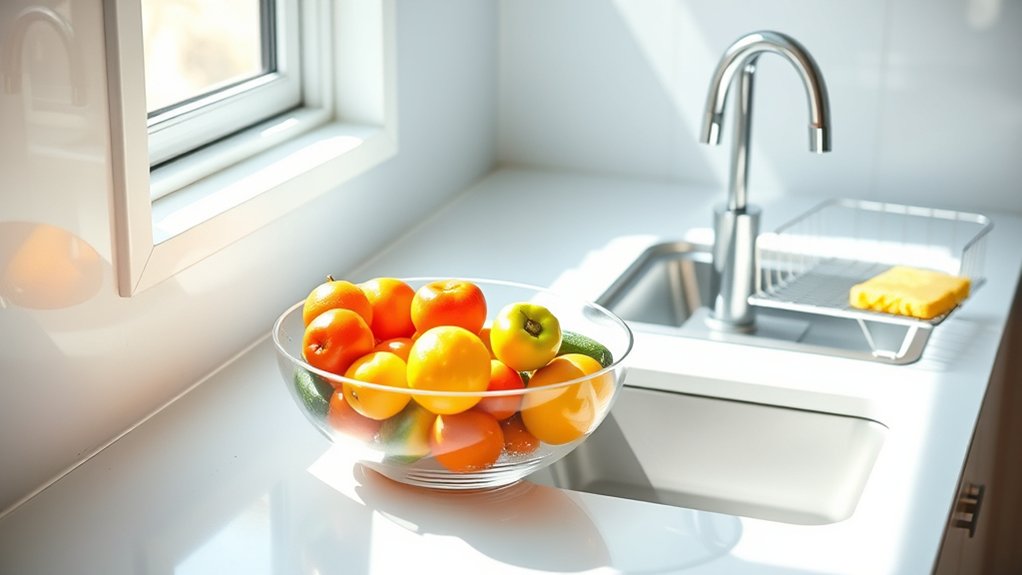
Because gnats are attracted to moisture and fermenting food, wash produce as soon as you bring it home and store it in the refrigerator when appropriate. Dry fruits and vegetables thoroughly before placing them in bowls or drawers, since damp surfaces invite pests.
Check Fresh produce daily, and discard anything bruised, overripe, or leaking. Keep cut fruit sealed, and don’t leave scraps on the counter.
Check fresh produce daily, discard bruised or leaking items, seal cut fruit, and clear scraps promptly to discourage gnats.
Make cleanup a quick daily habit:
- Wipe counters after preparing meals, paying special attention to sticky areas.
- Clean cutting boards, knife handles, and appliance surfaces with warm, soapy water.
- Address kitchen spills immediately, including juice, wine, soda, and cooking liquids.
- Empty food scraps into a covered container, and rinse reusable containers before storing them.
Also wipe beneath fruit bowls, toaster ovens, and small appliances, where unnoticed residue can remain. Keep towels dry and replace damp sponges regularly.
These simple steps remove food odors and moisture that attract gnats, helping your kitchen stay clean and less inviting to them.
Clean Gnat-Infested Drains
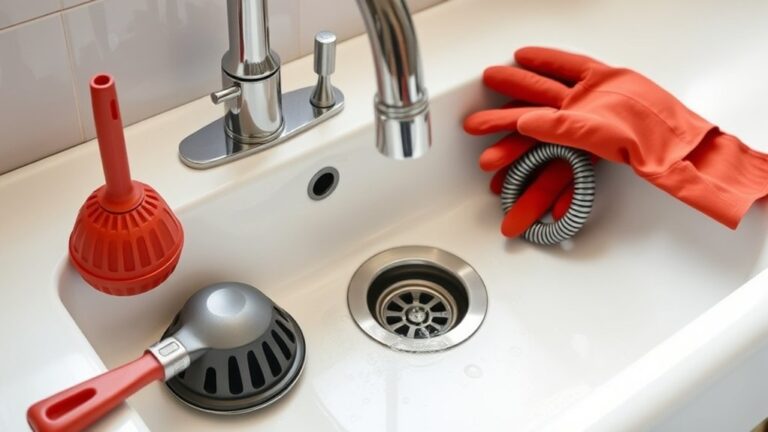
Clean gnat-infested drains to remove the organic buildup where gnats breed. Start by scrubbing the inside of the drain with a stiff brush and cleaner. Then, flush the drain with boiling water to wash away any loosened debris.
Scrub Drain Interiors
How can you eliminate gnats hiding in your kitchen drain? Start with careful Gnat identification: inspect the drain opening, stopper, and nearby residue for larvae or tiny flies. Then scrub away the organic film that supports them.
Put on gloves and follow these steps:
- Remove the stopper, strainer, or drain cover.
- Scrub their undersides and the drain’s inner walls with a stiff brush and degreasing dish soap.
- Work the brush several inches into the pipe, reaching slimy buildup where eggs may cling.
- Rinse the brush, wipe surrounding surfaces, and clean the removed parts before replacing them.
Repeat this cleaning daily for several days if activity continues. Include this task in regular Drain maintenance, and check for leaks, food particles, or standing grime that could attract gnats again.
Flush With Boiling Water
After scrubbing the drain, flush it with boiling water to loosen and wash away remaining organic buildup where gnats may breed. Pour the water slowly into the drain, allowing heat and pressure to reach the trap and sidewalls.
Check the Water temperature first if your pipes are older or made from vulnerable materials; very high heat can damage some plumbing. Wear gloves, keep your face away from rising steam, and avoid splashing.
Repeat this treatment once daily for several days if you still notice adult gnats nearby. Understanding Gnat behavior helps you stay consistent: larvae hide in moist, decaying film, while adults return to the same damp drain.
After flushing, run clean tap water briefly, then dry the sink and surrounding area to remove moisture that could support another infestation.
Dry Out Overwatered Kitchen Plants
Let overwatered kitchen plants dry out between waterings, since soggy soil attracts fungus gnats and gives their larvae an ideal place to thrive. Adjust your plant watering routine to match each plant’s needs, pot size, and sunlight.
Before watering, press your finger about an inch into the soil. If it feels damp, wait several days and check again.
- Move pots near a bright window to speed evaporation, but avoid scorching leaves.
- Empty saucers and decorative containers so roots never sit in standing water.
- Improve moisture control by using pots with drainage holes and a fast-draining potting mix.
- Remove dead leaves and other damp debris from the soil surface, where pests can hide.
When the top layer feels dry, water slowly until a little drains from the bottom. Then discard excess water.
Don’t fertilize stressed, waterlogged plants until they recover. Consistent drying intervals can interrupt gnat development and help your kitchen plants regain healthy roots.
Trap Adult Gnats With Vinegar
A vinegar trap can help reduce adult gnats while you address their breeding sites. Pour about half an inch of apple cider vinegar into a shallow bowl or jar.
Add a few drops of dish soap, which breaks the liquid’s surface tension and prevents gnats from escaping after they land.
Cover the container with plastic wrap, secure it with a rubber band, and poke several small holes across the top. Gnats will follow the vinegar’s fermented scent through the openings and fall into the solution.
Alternatively, leave the container uncovered if you prefer a simpler setup. Place the trap near your sink, fruit bowl, trash can, or other areas where you notice activity.
Refresh the mixture every few days, or sooner if it collects debris. These natural remedies offer inexpensive DIY solutions, but they won’t eliminate eggs or larvae.
Clean spills, remove overripe produce, and empty the trap regularly to support lasting control.
Catch Flying Gnats With Sticky Traps
Yellow sticky traps catch flying gnats without pesticides by holding them on a glue-coated surface. Place these bright yellow cards near your sink, fruit bowl, trash can, or houseplants to intercept adults as they fly.
Keep traps away from food and choose enclosed placements if children or pets can reach them.
- Position strategically: Hang cards at gnat eye level near suspected activity, but don’t block cabinet doors or walkways.
- Refresh regularly: Replace each trap when it becomes covered with insects, dust, or kitchen debris.
- Monitor results: Check the cards daily so you can see where flying gnats gather and adjust placement.
- Use support: Combine traps with cleaning and Natural repellents, such as citrus peels, to make your kitchen less appealing.
Sticky traps reduce adult numbers, but they won’t address every stage of the Gnat lifecycle. They work best as a simple monitoring and capture tool while you keep surfaces tidy.
Choose traps labeled for indoor use, and wash your hands after handling them.
Break the Gnat Breeding Cycle
Break the gnat breeding cycle by removing the damp, decaying material where they lay eggs. Check produce bowls, recycling containers, compost pails, and trash cans for forgotten scraps, spills, or residue. Discard overripe fruit, vegetables, and anything with fermentation or mold.
Remove damp, decaying scraps from produce bowls, recycling bins, compost pails, and trash cans to stop gnats from breeding.
Rinse containers before placing them in your recycling bin, and wash removable trash and compost components with hot, soapy water.
Understanding the gnat life cycle helps you target every stage. Adult gnats lay eggs in moist organic matter; larvae feed there before developing into flying adults. Remove the material, and you eliminate their food and nursery at once.
Repeat your inspection daily for several days, since hidden larvae may continue emerging after your first cleanup.
Look beneath appliances and inside cabinet corners for damp crumbs or leaks that create breeding habitats. Wipe away residue thoroughly, dry cleaned surfaces, and replace heavily contaminated sponges or cloths.
Keep checking until you see no new adults around your kitchen.
Seal Food, Drains, and Moisture Sources
Seal ripe produce, leftovers, and pantry items in airtight containers so gnats can’t get to them. Wipe down your sink, counters, and other damp surfaces as soon as they get wet. Also, keep your drains dry between uses to eliminate another source of moisture.
Store Food Airtight
Keep ripe fruit, grains, and other food in airtight containers, since exposed scraps and sugary spills can attract gnats. Smart food storage limits odors and prevents insects from reaching what they need to multiply. Choose containers with tight-fitting lids rather than folded bags or loose covers.
- Transfer cereal, flour, rice, and sugar into sealed jars or bins.
- Refrigerate cut fruit, leftovers, and opened beverages whenever possible.
- Wipe sticky residue from packages before returning them to cabinets.
- Empty compost and trash containing food scraps frequently, then close their lids securely.
Check pet food, snack bowls, and produce baskets each day. Don’t leave uncovered portions on counters overnight. Keep pantry shelves organized so you can spot torn packaging quickly.
Replace damaged bags, and store bulk ingredients in airtight containers. These habits make your kitchen less inviting to gnats.
Dry Drains And Surfaces
Food storage helps remove what gnats eat, but moisture can still draw them in. Wipe counters, sinks, and spills immediately, then let surfaces dry completely.
Flush drains with boiling water, scrub their openings, and cover them overnight to block breeding sites. Check for leaks beneath the sink and around your refrigerator.
| Moisture source | Quick action |
|---|---|
| Sink drain | Scrub and cover |
| Damp sponge | Wring and dry |
| Leaky pipe | Repair promptly |
Don’t let attractive kitchen decor, such as plant saucers or vases, collect standing water. Empty them daily, and keep mop heads, dish towels, and sponges dry between uses.
During appliance maintenance, inspect drip pans, ice makers, and dishwasher seals for hidden moisture. If gnats persist, clean drains with an enzyme treatment and repeat the drying routine until the area stays clean and dry.
Check trash-can rims and recycling containers for sticky residue, too.
Call Pest Control for Persistent Gnats
If gnats persist after you remove breeding sources and clean your kitchen, contact a licensed pest control professional. A trained technician can determine whether you’re dealing with fruit flies, drain flies, fungus gnats, or another gnat species.
Accurate pest identification helps you choose a safe, effective treatment instead of guessing with repeated sprays.
Correct identification leads to safer, more effective treatment than relying on repeated sprays.
Before the visit, you can make the inspection more useful:
- Save a few insects in a sealed container or take clear photos.
- Note where you see gnats, such as near sinks, plants, trash, or produce.
- Record when activity increases and which cleaning steps you’ve tried.
- Ask about treatment options, safety precautions, follow-up visits, and prevention.
A professional can inspect hidden plumbing, wall voids, leaks, or outdoor entry points that you can’t easily access.
Follow the technician’s instructions, keep food covered, and leave treated areas undisturbed as directed. If you rent, notify your landlord, since building-wide sources may require coordinated control.
Frequently Asked Questions
Are Gnats Harmful to People or Pets?
Gnats usually aren’t harmful to you or your pets, though they can become a nuisance. Most kitchen gnats don’t bite, sting, or spread serious disease.
Their gnat behavior mainly involves hovering around moisture, food, and decaying organic matter. Understanding the gnat lifecycle helps you control them: adults lay eggs in damp material, larvae develop there, and new adults emerge.
Avoid touching swarms, clean spills, and contact a veterinarian if your pet shows unusual symptoms.
How Can I Distinguish Gnats From Fruit Flies?
You can distinguish gnats from fruit flies by comparing their size, shape, color, and behavior. For fruit fly identification, look for tiny, tan-to-brown flies with rounded bodies and prominent red eyes; they hover around ripe produce, spills, and fermented liquids.
Gnats typically have slender, mosquito-like bodies, long legs, and darker coloring. Fungus gnats often crawl near houseplant soil. Observing where they gather helps you with distinguishing gnat species.
Can Gnats Infest Kitchen Appliances?
Yes, gnats can infest kitchen appliances, especially when food residue, moisture, or organic buildup collects inside or beneath them. Check coffee makers, garbage disposals, dishwashers, and refrigerator drip trays.
Clean spills promptly, empty crumb trays, and scrub removable parts. Inspect nearby Indoor plants, where damp soil can support fungus gnats.
Also flush Kitchen drainage with hot water and cleaner to remove breeding material. Don’t spray insecticide inside appliances; use traps around them instead.
Why Do Gnats Keep Returning After Cleaning?
Gnats keep returning because eggs or larvae remain in hidden moisture, drains, trash containers, damp sponges, plant soil, or appliance crevices. Cleaning visible surfaces won’t stop the life cycle if you miss these breeding sites.
Focus on thorough breeding site removal: scrub drains, empty trash, dry sinks, and clean beneath appliances. Seal produce, repair leaks, and replace overwatered soil.
You can also use natural repellents, such as vinegar traps, to catch adults while eliminating sources.
How Long Does a Gnat Infestation Typically Last?
A gnat infestation typically lasts one to three weeks after you remove breeding sources, though untreated problems can continue for months. You’ll shorten that time by eliminating damp soil, overripe produce, standing water, and residue around drains.
Understanding the Gnats lifecycle helps you target eggs, larvae, and adults; repeat cleaning and trapping as needed. For lasting Infestation prevention, keep surfaces dry, store food securely, empty trash regularly, and inspect houseplants for moisture.
Conclusion
With consistent cleaning and moisture control, you can usually get rid of kitchen gnats before they multiply. Remember, a single fruit fly can lay up to 500 eggs, so one overlooked spill or drain can quickly become an infestation.
Remove ripe produce, scrub breeding sites, dry plant soil, and use sticky traps to catch adults. If gnats persist after a week, contact pest control to locate hidden sources and stop the cycle for good.