How Much Does It Cost to Fit a Kitchen?
Planning a new kitchen can be exciting, but working out how much you’ll spend is often stressful. You’re not alone—many homeowners struggle to budget for fitting costs, especially when unexpected plumbing, electrical, or structural work appears.
You’ll typically pay around £3,000 to fit a kitchen in the UK, although costs can range from £1,500 to £5,000 or more. Your final price depends on the room’s size, layout, cabinet quality, worktops, appliances, and any plumbing or electrical changes.
Labour often costs £1,500–£4,000, while flooring, decorating, and structural work can increase the total. Keeping the existing layout and comparing itemised quotes can help you save money.
The sections below explain each kitchen fitting cost in more detail.
Key Takeaways
- Fitting a kitchen in the UK typically costs around £3,000, with common prices ranging from £1,500 to £5,000.
- Installation labour usually costs £1,500–£4,000, covering removal, fitting, preparation, and finishing work.
- Cabinets, worktops, handles, finishes, and storage solutions significantly affect the overall kitchen fitting price.
- Plumbing, electrical work, flooring, wall alterations, and structural changes can increase installation costs.
- Appliances typically add several hundred to several thousand pounds, depending on specifications, brand, and energy efficiency.
What Is the Average Kitchen Fitting Cost?

The average cost to fit a kitchen in the UK is around £3,000, although you could pay anywhere from £1,500 to £5,000 depending on the kitchen’s size, layout and installation requirements. This price typically covers removing your old units, assembling and installing cabinets, fitting worktops, and connecting standard services.
Your final quote may change according to the kitchen layout, cabinet specification, worktop material, and finishing details you choose. Labour often forms a substantial part of the total, particularly when your installer must alter plumbing, electrics, flooring, or walls.
Appliance integration can also increase the bill if you need built-in ovens, hobs, extractors, or dishwashers fitted and connected.
To control costs, request itemised quotes from several reputable fitters and confirm exactly what each includes. Check whether waste removal, service connections, decorating, and making-good work are included.
You’ll then compare like-for-like prices and avoid unexpected charges while planning your kitchen installation with greater confidence from the outset.
How Kitchen Size Affects Fitting Costs
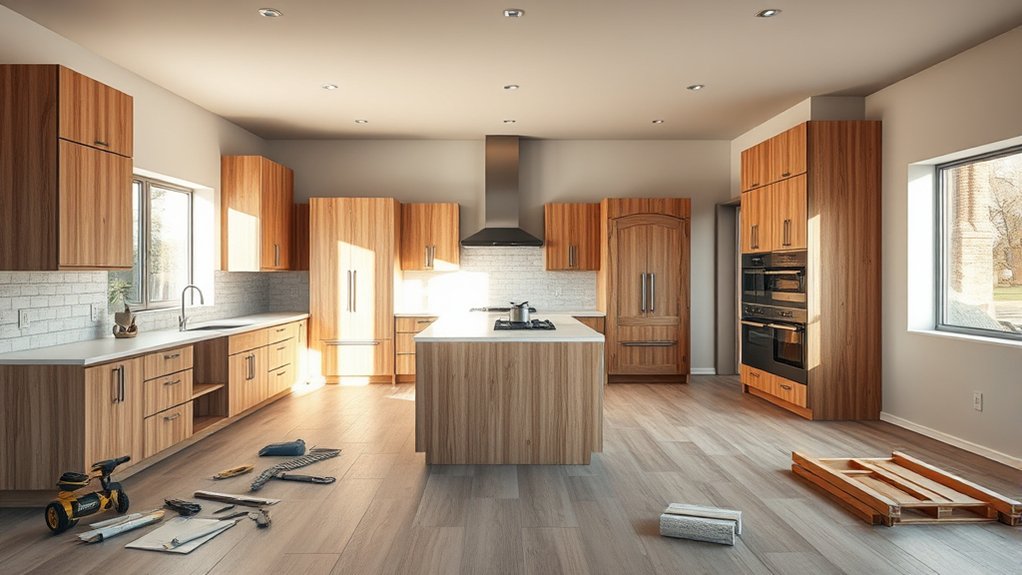
Kitchen size directly affects fitting costs because larger rooms usually require more cabinets, longer worktops, and additional installation time. If you’re fitting a compact kitchen, your installer may complete the work quickly, with fewer units and shorter runs to assemble.
A larger space usually increases labour hours, delivery requirements, and the amount of flooring or wall preparation needed around the installation.
Your kitchen layout also influences how efficiently the space can be fitted. A straightforward single-wall design generally costs less to install than a large U-shaped or island layout, which involves more joins, corners, and precise measurements.
Appliance placement matters too. Keeping appliances close to existing plumbing and electrical points can reduce adjustment work, while relocating them may increase fitting costs.
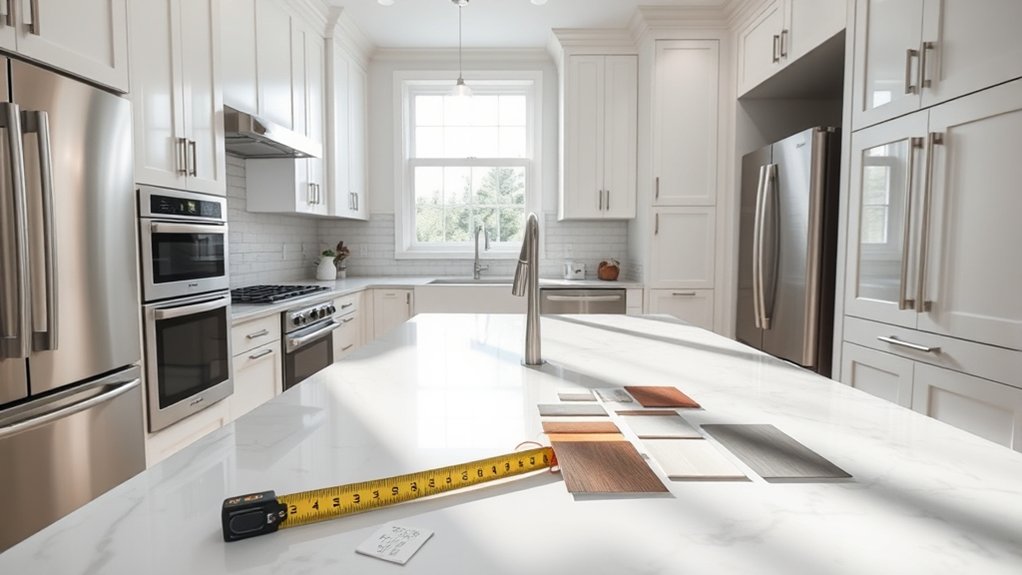
Before requesting quotes, measure the room accurately and identify doors, windows, and service connections. Ask each installer to price the same cabinet quantity, worktop length, and installation tasks, so you can compare estimates fairly and avoid unexpected charges.
How Kitchen Quality Changes Fitting Costs

Your choice of kitchen quality directly affects how much you’ll pay for fitting. Budget materials usually help keep costs down, while mid-range features offer a good balance of durability, style, and installation needs. Premium designs and high-quality craftsmanship cost more because they often require specialist work and extra attention to detail.
Budget Kitchen Materials
Choosing budget kitchen materials can reduce fitting costs, but the cheapest options may require more preparation, careful handling, or replacement sooner. You’ll often save on doors, worktops, flooring, and splashbacks, yet installers may spend longer cutting, levelling, or adapting uneven components.
Ask for a full labour estimate before choosing products, because a low purchase price doesn’t always mean a low total cost.
- Cabinet doors: Laminate or foil finishes cost less than solid wood, but check edges for durability.
- Worktops: Compact laminate is affordable and easier to fit than stone, though it needs careful sealing.
- Kitchen accessories: Choose simple handles, hinges, and storage fittings to control installation time.
You can also consider eco friendly materials, such as recycled boards, when prices remain competitive. Confirm measurements and product compatibility early to prevent delays, waste, and extra fitting charges.
Mid-Range Fitting Features
Mid-range kitchens typically cost more to fit because they use sturdier cabinets, thicker worktops, and better-quality hardware that requires precise installation. You’ll usually pay more for careful levelling, stronger fixings, and adjustments around heavier surfaces.
Cabinet styles also affect labour. Framed, shaker, or handleless designs may require different fitting methods, alignment, and finishing.
Appliance upgrades can increase costs when integrated ovens, induction hobs, dishwashers, or built-in refrigeration need accurate measurements and coordinated connections.
Your installer may also spend longer fitting soft-close hinges, pull-out storage, internal drawers, and reinforced units designed for frequent use. These features improve everyday performance without requiring bespoke construction.
Before work begins, ask for an itemised fitting quote so you can compare labour, installation materials, plumbing, electrical work, and any preparation needed for your chosen mid-range specification.
Premium Design And Craftsmanship
Premium kitchen designs usually cost more to fit because they demand greater precision, specialist skills, and closer attention to detail.
If you choose bespoke cabinetry, your installer may need to scribe units around uneven walls, coordinate integrated appliances, and create complex storage solutions.
These tasks take longer than fitting standard, factory-made units, increasing labour costs.
Your choice of materials also affects the price. Luxury finishes, including natural stone, hand-painted doors, and specialist hardware, require careful handling and accurate installation to prevent expensive damage.
- Detailed planning: You’ll often need measured surveys and specialist drawings.
- Skilled installation: Experienced tradespeople can achieve cleaner joints and seamless finishes.
- Extra finishing work: Complex designs may require adjustments, polishing, or on-site modifications.
Although premium craftsmanship costs more upfront, it can deliver greater durability, functionality, and visual impact.
Ask for an itemised quotation so you can understand exactly where your budget goes.
How Much Do Units and Worktops Cost?
Units and worktops usually account for the largest share of your kitchen budget, with costs varying according to the materials, style, size and supplier you choose. Stock units offer the most affordable route, while made-to-measure cabinetry costs more because it’s designed around your room and needs. Your choice of doors, finishes, handles and internal fittings also affects the final price.
When planning kitchen storage, consider how many cupboards, drawers and specialist features you need. Tall cabinets, pull-out larders and corner solutions can improve usability, but they’ll increase your spend.
Worktops range from budget laminate to mid-range timber, solid-surface and premium stone. Comparing countertop materials helps you balance appearance, durability and maintenance.
Laminate keeps costs down, whereas quartz, granite and porcelain usually require a larger investment. You’ll also need to allow for upstands, splashbacks, cut-outs, joins and installation.
Ask suppliers for itemised quotes, so you can compare specifications accurately and avoid unexpected fitting charges. Be sure to confirm whether delivery, templating and disposal are included.
How Much Do Kitchen Appliances Cost?
Kitchen appliances can cost anywhere from a few hundred pounds for basic models to several thousand for a fully equipped, high-spec kitchen. Your final price depends on the number, brand, size and features you choose.
A budget cooker might cost £250, while premium ovens, refrigeration and integrated appliances can each exceed £1,000.
Typical appliance costs include:
- Freestanding cooker: £250–£1,200.
- Built-in oven and hob: £500–£2,500.
- Fridge-freezer, dishwasher and extractor: £700–£3,500 combined.
You’ll usually pay more for smart controls, quieter operation, specialised cooking functions and seamless integrated designs.
However, don’t judge value by the purchase price alone. Energy efficiency can reduce your household bills, so check the appliance’s energy rating and estimated annual consumption before buying.
You should also consider appliance maintenance, including filter replacement, cleaning and potential repairs, when comparing models.
Measure your available space carefully and confirm door clearances, ventilation requirements and electrical needs.
Choosing reliable appliances that suit how you cook will help you avoid paying for features you’ll rarely use.
What Does Kitchen Installation Labour Cost?
When budgeting for a kitchen installation, you’ll usually pay a daily or hourly labour rate. Costs can vary depending on the tradespeople involved and where you live. Your final bill may also depend on the kitchen’s size, design complexity, preparation work, and any plumbing or electrical changes needed. Understanding these factors can help you estimate your labour costs more accurately.
Average Labour Rates
Labour typically accounts for around £1,500–£4,000 of a kitchen installation, although your total will depend on the room’s size, the design’s complexity and the trades required.
You’ll usually pay for several stages of work:
- Removal and preparation: £300–£800 for clearing your old kitchen and preparing surfaces.
- Cabinet and worktop fitting: £800–£2,000, depending on your kitchen layout and the amount of cutting needed.
- Services and finishing: £400–£1,200 for plumbing, electrics, decorating and appliance integration.
Some installers charge a daily rate, commonly £200–£300 per fitter, while others provide a fixed project price.
Get an itemised quotation before work starts, confirming labour, waste removal and finishing tasks. You should also check whether specialist electricians, plumbers or gas engineers are included.
Comparing at least three written quotes helps you judge the average rate and avoid unexpected labour charges.
Factors Affecting Installation Costs
Your installation cost can vary considerably based on the kitchen’s size, layout and condition. A larger room usually requires more units, worktops and labour hours, while an awkward kitchen layout may involve extra carpentry, plumbing or electrical work.
The condition of your walls, floors and existing services also matters. If installers must remove an old kitchen, repair surfaces or relocate pipes, your bill will rise.
Appliance integration can add markedly to labour costs, particularly when you’re fitting built-in ovens, dishwashers, extractor fans or refrigeration.
Bespoke cabinets, islands and specialist worktops demand greater precision and may require multiple trades.
Access affects pricing too. Narrow entrances, upper-floor rooms or limited parking can slow delivery and installation.
Ask for a detailed quotation that separates labour, preparation, disposal and any possible extras.
What Do Plumbing and Electrical Changes Cost?
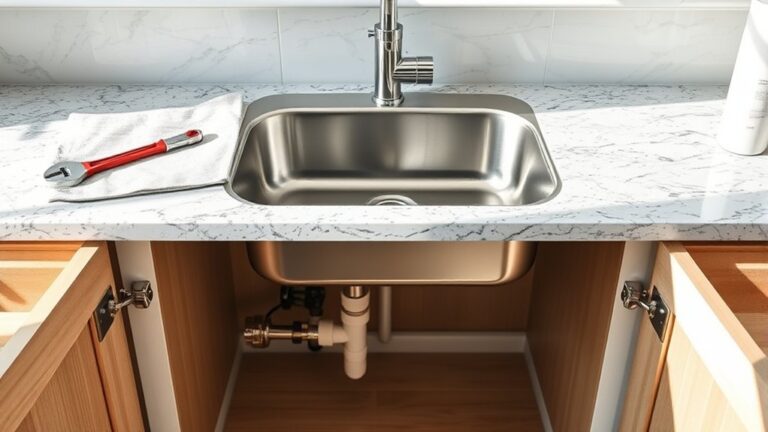
Plumbing and electrical changes can add markedly to your kitchen fitting costs, especially if you move sinks, appliances, sockets or lighting points. You’ll usually pay more when work involves opening walls, lifting floors or upgrading old systems.
Moving plumbing, electrical points or appliances can significantly increase kitchen fitting costs, especially when walls or floors need opening.
Typical costs depend on access, labour rates and the distance between existing connections and your new layout:
- Plumbing upgrades: Relocating a sink or dishwasher may cost £300–£800, while new pipework, waste connections or radiator changes can increase the bill.
- Electrical wiring: Adding sockets, circuits or appliance points commonly costs £400–£1,200, depending on your electrician’s rates and the condition of your consumer unit.
- Gas and ventilation: Moving a gas hob or installing suitable extraction can add £300–£1,000, and qualified professionals must complete gas work.
Ask your installer for a written quote that separates materials, labour, testing and certification. You’ll also need to budget for electrical inspection and building-control requirements where applicable.
Keeping your sink and appliances near existing services can markedly reduce costs and disruption during fitting.
What Do Flooring and Decorating Cost?
Flooring and decorating can add £500–£3,000 to your kitchen fitting costs, depending on the floor area, materials, preparation and finish you choose. Vinyl and laminate offer budget-friendly, practical surfaces, while porcelain tiles, engineered wood and natural stone usually cost more.
Allow extra for removing old flooring, repairing uneven subfloors and fitting skirting boards, as preparation affects the final result and labour bill.
For walls, washable paint provides an economical refresh. You might spend more on a tiled Kitchen backsplash, especially if you choose intricate patterns, premium materials or extensive cutting around sockets and units.
Tiling labour commonly depends on the wall’s condition and the design’s complexity.
Plan your colour scheme before ordering materials, and consider how natural light affects your choices. Replacing Lighting fixtures can improve the finished look, although installation may require a qualified electrician.
Get itemised quotes covering materials, preparation and fitting, and order a little extra flooring or tile to allow for cuts and future repairs.
What Extra Kitchen Fitting Costs Apply?
Extra kitchen fitting costs can include appliance installation, waste removal, electrical upgrades, structural changes and final connections. You’ll need to budget for work that falls outside your basic cabinet and worktop quote, particularly if your existing services require alteration.
- Appliance installation: You may pay extra to connect built-in ovens, hobs, dishwashers, washing machines, extractors and refrigerators. Gas work must be completed by a qualified professional.
- Electrical and plumbing work: New sockets, circuit upgrades, pipework, isolation valves and kitchen lighting can increase labour and material costs. Your electrician may also need to install certification-required safety equipment.
- Finishing and disposal: Allow for old-unit removal, skip hire, plaster repairs, splashback fitting, sealing and final connection checks. Appliance maintenance requirements may also affect placement, ventilation and access, especially for integrated models.
Structural changes, such as removing walls or relocating doors, can cost considerably more because they may require design approval, specialist trades and additional building work.
Ask your installer for an itemised quote so you can identify every extra charge before work begins.
How to Lower Your Kitchen Fitting Costs
Once you’ve identified the extra charges, you can reduce your kitchen fitting costs by making practical choices before work starts. Keep your existing kitchen layout where possible, because moving plumbing, gas lines, or electrical points can quickly increase labour costs.
Keep your existing kitchen layout where possible to avoid costly changes to plumbing, gas lines, and electrical points.
Choose standard cabinet sizes and readily available materials rather than bespoke options, which often require extra manufacturing time and installation work.
Compare several written quotes, checking whether each includes delivery, waste removal, appliances, and finishing work. A detailed quote helps you avoid unexpected charges and negotiate confidently.
You can also save by buying handles, taps, or appliances during sales, provided they meet your fitter’s specifications.
Plan storage solutions carefully before ordering units. Efficient internal drawers, shelves, and corner fittings can improve usability without adding unnecessary cabinets.
Handle simple preparation tasks yourself, such as clearing the room and removing loose décor, but leave plumbing, electrics, and structural work to qualified professionals. Careful planning reduces changes, delays, and costly mistakes.
Frequently Asked Questions
Can I Stay at Home While My Kitchen Is Being Fitted?
Yes, you can usually stay at home while your kitchen is being fitted, but expect disruption, noise, dust, and limited access to essential facilities. Discuss the schedule with your installer and create a temporary cooking and washing area elsewhere.
During this home renovation, follow all safety precautions, especially around tools, wiring, plumbing, and children. If the work becomes too disruptive or hazardous, arrange alternative accommodation until your new kitchen is ready for use.
How Long Does a Typical Kitchen Fitting Project Take?
A typical kitchen fitting project takes around one to three weeks, depending on your kitchen layout, room size, and material choices. You’ll usually need a few days for removal and preparation, followed by installation of cabinets, worktops, appliances, plumbing, and electrics.
Complex designs, structural changes, or bespoke units can extend the schedule to four weeks or more. Confirm your installer’s timeline before work begins, and allow extra time for unexpected issues.
Do I Need Planning Permission for My New Kitchen?
Usually, you won’t need planning permission for a straightforward kitchen replacement where you keep the same layout, windows, and services.
However, you may need approval if you extend your home, alter its structure, or live in a listed building or conservation area.
Check your local council’s building permit requirements and zoning regulations before work begins.
Building regulations may still apply to electrical, plumbing, ventilation, and structural changes, so ask a qualified professional to confirm everything.
What Should I Do With My Old Kitchen Units and Appliances?
You should reuse, donate, sell, or recycle your old kitchen units and appliances before arranging disposal. Contact local charities, community reuse schemes, or online marketplaces for items in good condition.
Check your council’s recycling options for wood, metal, glass, and electrical appliances, and use certified waste carriers for larger loads. Suitable disposal methods include a council collection, recycling centre drop-off, or installer removal.
Never leave appliances on the pavement or fly-tip.
How Can I Prepare My Home Before Kitchen Installation Begins?
Before installation begins, clear the kitchen completely, remove fragile items, and arrange temporary cooking and washing facilities. Disconnect utilities through qualified professionals, protect nearby rooms with dust sheets, and confirm delivery access and parking.
Decide where you’ll store materials, check walls and floors for repairs, and finalise Kitchen lighting positions and Flooring options beforehand. Keep pets and children away from the work area, and confirm the installation schedule with your fitter.
Conclusion
A kitchen fitting quote can seem high, but the theory that size alone determines cost isn’t true. Your choices matter just as much: cabinet quality, worktops, appliances, plumbing, electrics and finishing work can quickly reshape your budget.
To keep spending under control, compare itemised quotes, reuse services where possible and prioritise upgrades you’ll notice daily. Plan carefully before work begins, and you’ll create a kitchen that suits your needs without paying for features you don’t value.
Understanding how much it costs to fit a kitchen can help you set a realistic budget and make confident choices.