
How to Get Rid of Kitchen Ants for Good
Kitchen ants can be frustrating, especially when they keep coming back after you’ve cleaned and sprayed. You’re not alone—many people struggle to keep these tiny pests out of their homes.
The good news is that learning how to get rid of kitchen ants for good starts with a few practical steps.
To get rid of kitchen ants for good, wipe away crumbs, spills, and scent trails with soapy water. Store food in airtight containers, dry sinks, fix leaks, and empty trash regularly.
Follow ants to locate entry points, then seal cracks around windows, doors, pipes, and cabinets. Place fresh bait along active trails, and don’t spray near it.
If ants persist, contact a licensed pest professional. The steps below explain how to identify and prevent recurring infestations.
Key Takeaways
- Identify ant trails and entry points, then seal cracks, gaps, window screens, plumbing openings, and wall penetrations.
- Eliminate attractants by cleaning crumbs, sealing food, emptying trash, washing pet bowls, and repairing leaks or standing water.
- Erase pheromone trails with warm soapy water or diluted vinegar, focusing on counters, floors, cabinets, and entry routes.
- Place fresh, species-appropriate bait stations along active trails, and avoid sprays that may prevent ants from carrying bait to the colony.
- Monitor activity regularly and reseal new entry points. Contact pest-control professionals if colonies persist or identification is uncertain.
Identify What’s Attracting Kitchen Ants
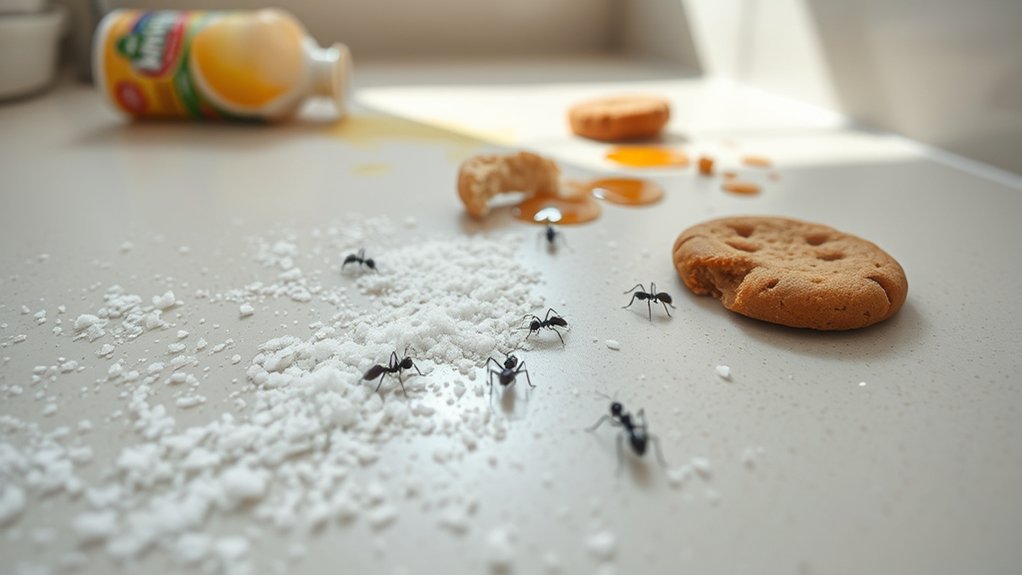
Before treating the ants, identify what’s drawing them into your kitchen. Watch their movement instead of disturbing the trail immediately. Ant behavior often reveals the source.
Workers may travel along walls, cabinet edges, or plumbing lines while following a scent path back to a nest. Note where they appear first and when activity increases, such as after rain or overnight.
Food preferences can also help you identify the species and attraction. Some ants seek sweet substances, while others target protein or grease.
Observe whether they gather near pet bowls, recycling containers, houseplants, or pantry shelves, but don’t remove the source yet. You’re trying to understand the pattern.
Check for entry points around windows, doors, pipes, and cracks. Look for winged ants, sawdust-like debris, or a steady stream, which may indicate a nearby nest.
Accurate observations help you choose an effective treatment and prevent you from applying products randomly or chasing isolated ants.
Remove Kitchen Ant Food and Water
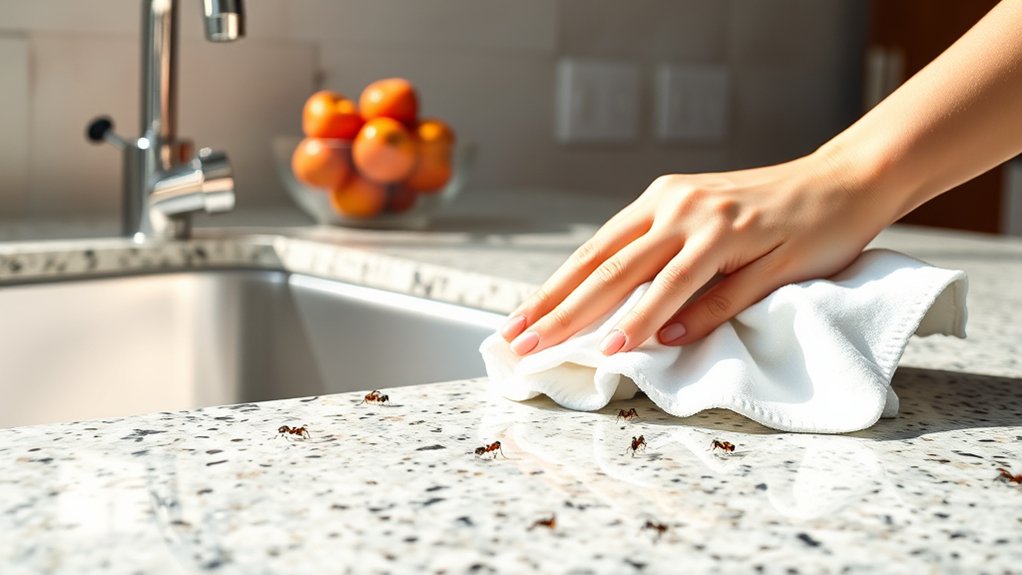
Once you’ve identified what’s attracting the ants, remove their access to food and water. Wipe counters, tables, and floors after meals, especially around crumbs, grease, and spilled drinks.
Rinse sticky containers before placing them in the recycling bin, and take out trash regularly. Don’t leave pet food in bowls overnight; store it in a sealed container instead.
Improve food storage by keeping sugar, flour, cereal, snacks, and other dry goods in airtight containers. Seal opened packages, clean pantry shelves, and promptly address spills.
Keep fruit covered or refrigerated, and check produce for leaks or overripening. Ant behavior often leads workers along consistent trails, so clean the entire route rather than only the visible cluster.
Eliminate water sources, too. Dry sinks, wipe faucets, repair leaks, and empty standing water from trays or appliances.
Use a tight lid on your trash can, and clean its interior frequently. These habits remove the resources that keep ants returning and make your kitchen less inviting.
Identify the Ant Species in Your Kitchen
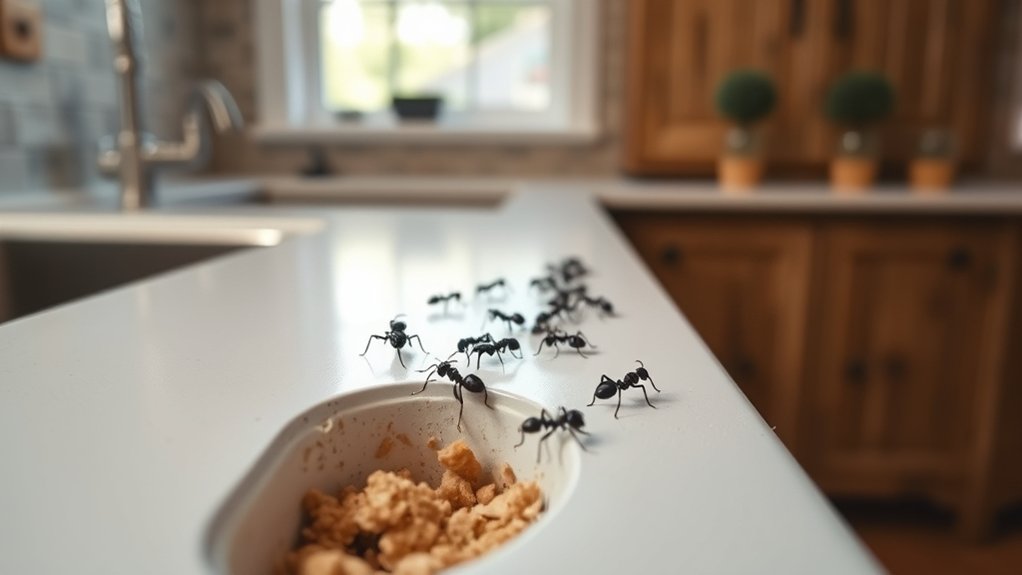
Identifying the ant species in your kitchen can reveal where the colony nests and which control methods will work best. Start by photographing an ant beside a coin for scale, then compare its size, color, body shape, and nesting habits with reliable extension-service guides.
Tiny, pale-yellow ants may be odorous house ants, while larger black ants could be carpenter ants, which sometimes signal damp, damaged wood. Reddish pavement ants often forage near foundations and entry points.
Don’t rely on color alone; workers within one species can vary, and winged ants may indicate a mature colony.
Watch their behavior without disturbing them. Note whether they travel singly or in steady lines, appear mostly at night, or carry food toward cracks, cabinets, or wall voids.
This information can clarify Ant communication and colony structure, helping you choose between bait, exclusion, or professional treatment.
If identification remains uncertain, collect a few specimens in a sealed container and ask a pest professional for confirmation.
Clean Away Ant Trails and Scent
Clean ant trails promptly because ants follow pheromone scents back to reliable food sources. Start ant trail removal by wiping every visible path with warm, soapy water.
Pay close attention to counters, cabinet edges, floors, and spots near pet bowls. Don’t simply sweep; sweeping may leave scent traces that guide more ants inside.
- Mix equal parts white vinegar and water in a spray bottle.
- Apply the solution to trails, then wipe the surface thoroughly.
- Wash sticky spills with dish soap and hot water.
- Dry cleaned areas completely to remove moisture that can attract ants.
For scent elimination, repeat this cleaning routine daily while activity continues. Launder reusable cloths immediately, or use disposable towels so you don’t spread pheromones elsewhere.
Empty crumbs from toaster trays, clean under appliances, and rinse recycling containers. Store food in sealed containers, and wipe jars before returning them to shelves.
Avoid relying on strong fragrances alone; air fresheners may mask trails without removing them. Consistent cleaning breaks the ants’ navigation system and makes your kitchen less rewarding.
Seal Kitchen Ant Entry Points
To keep ants out, inspect your windows, doors, pipes, and other common entry points. Seal any cracks or gaps with caulk, and repair damaged screens. These simple fixes can block the routes ants use to get into your kitchen.
Inspect Common Entryways
Ants often enter through tiny gaps around windows, doors, pipes, and cabinets. Start your inspection where food, moisture, and warmth attract trails.
Watch workers for several minutes, then trace their route toward the likely entryway. Check these locations carefully:
- Window frames and screens, especially near sinks.
- Door thresholds, hinges, and weather stripping.
- Pipe openings beneath sinks and behind appliances.
- Cabinet backs, corners, and wall junctions.
Use a flashlight to spot movement, dust trails, or faint soil near openings. Kitchen cabinet organization helps you move stored items and inspect hidden corners without disturbing the trail.
Maintain countertop cleanliness so crumbs don’t conceal activity or encourage returning ants. Photograph suspicious routes and mark their locations with removable tape.
Note the time and weather, since activity may increase after rain or during warm evenings. This evidence guides targeted sealing later.
Seal Cracks And Gaps
Once you’ve mapped the trail, seal every gap ants use to enter your kitchen. Check where walls meet floors, cabinets, pipes, and backsplashes.
Fill narrow cracks with paintable caulk, and use expanding foam sparingly for larger openings around plumbing. Wipe surfaces clean first so sealants adhere properly.
Pay special attention beneath your Kitchen countertop, where crumbs and moisture can attract scouts. Inspect cabinet corners, baseboards, and the spaces behind appliances, then close gaps with an appropriate filler.
Improve pantry organization by storing food in airtight containers and keeping shelves crumb-free. This makes sealed entry points more effective.
After the material cures, watch the former trail for renewed activity. If ants reappear, follow their path and seal any overlooked opening.
Recheck these areas regularly, especially after renovations or seasonal temperature changes.
Repair Damaged Screens
Damaged window, door, and vent screens can give kitchen ants an easy route indoors, so inspect them for tears, loose edges, and gaps around their frames. Prompt screen repair blocks trails before scouts recruit more ants.
- Remove each screen and brush away dirt so you can see every opening.
- Patch small holes with screen-repair mesh, pressing it firmly over the damage.
- Replace badly torn panels, bent frames, or brittle seals instead of relying on temporary tape.
- Reattach window screens tightly, then check that doors and vents close without gaps.
Seal loose corners with weather-resistant adhesive or fresh spline. Don’t overlook pet doors, exhaust vents, or removable screens near sinks and pantries.
After repairs, wipe surrounding surfaces with soapy water to erase scent trails. Reinspect monthly, especially after storms, renovations, or seasonal temperature changes. Replace damaged screening promptly.
Place Baits to Eliminate the Colony
Place slow-acting ant baits so workers have time to carry the poison back to the colony. Put them near ant trails, entry points, and other areas where you’ve noticed activity.
Avoid spraying ants near the bait. Doing so can disrupt their feeding and make the bait less effective.
Choose Slow-Acting Baits
Choose a slow-acting ant bait that workers can carry back to the nest before it kills them. Slow-acting baits work with ant behavior, allowing foraging ants to share the food with queens and developing ants.
Select a formula that matches the species and their preferences, such as sweet liquid bait for sugar-loving ants or protein-based bait for ants seeking grease.
- Read the label and choose a product designed for indoor ant control.
- Avoid fast-killing sprays near the bait, since they can stop workers from returning home.
- Use fresh bait, because stale or contaminated food may lose its appeal.
- Replace dried bait according to the manufacturer’s instructions.
Give the bait time to work. You may see continued activity at first, but that doesn’t mean it has failed.
Don’t disturb feeding ants or combine bait with household pesticides.
Position Baits Strategically
Once you’ve selected a slow-acting bait, put it where ants already travel so workers can find it and carry it back to the nest. Focus on trails along baseboards, beneath sinks, near pantry shelves, and beside entry points.
For effective bait placement, use small amounts instead of covering large areas, and keep stations close to walls, where ants naturally move. Don’t place bait directly on food-preparation surfaces, where children or pets can reach it, or beside sprays and cleaners.
Avoid disturbing the trail while workers feed. Killing them can prevent the bait from reaching the colony. Ant species vary in their preferences, so offer the labeled bait consistently and observe activity.
If ants ignore one station, relocate it along a busier route rather than adding more bait randomly.
Compare Sprays and Natural Ant Treatments
Sprays kill ants on contact, but natural treatments such as bait stations, diatomaceous earth, and vinegar solutions can offer safer, longer-lasting control when used correctly. Choose based on your goal, household needs, and the size of the infestation.
Sprays act fast, while natural treatments can provide safer, longer-lasting control when matched to your household’s needs.
- Sprays: Commercial products work quickly on visible ants, making them useful for immediate relief. However, they may not reach the colony and can leave chemical residue.
- Bait stations: Ants carry bait back to the nest, so this option targets the source rather than only foragers.
- Diatomaceous earth: This powder damages ants’ exoskeletons when dry, but you’ll need to apply it sparingly in cracks and other protected areas.
- Vinegar solutions: A diluted mixture can erase scent trails and discourage returning ants, though it won’t eliminate a colony.
DIY remedies often cost less, while commercial products offer standardized formulas and directions. Keep children and pets away from treated areas, and follow every label.
Compare speed, safety, and colony control before choosing.
Fix Common Kitchen Ant Treatment Mistakes
Fix common kitchen ant treatment mistakes by identifying and removing food sources first. Place ant baits along active trails, and avoid spraying ants near the bait, since this can prevent them from carrying it back to the colony. Finally, seal entry points to keep new ants from getting inside.
Identify Food Sources
Where are the ants finding food? Start by observing their trail instead of treating the visible insects. Ant behavior often reveals hidden crumbs, spills, or a reliable water source.
Follow the path to its endpoint, then inspect nearby cabinets, appliances, and containers.
- Wipe counters, floors, and table edges to remove sugar, grease, and protein residue.
- Check pet bowls, recycling bins, compost, and damp areas for overlooked attractants.
- Inspect packages for tears, sticky leaks, or ant activity around seams.
- Improve food storage by sealing sweets, grains, and snacks in airtight containers.
Clean beneath the refrigerator, toaster, and microwave, where particles collect unnoticed. Repair dripping faucets and dry wet sponges promptly.
Keep a brief observation log so you can identify patterns, especially when ants appear at night. Don’t assume spotless surfaces mean the source is gone; inspect cracks, drawers, and pantry corners regularly.
Place Baits Correctly
Once you’ve identified the ants’ food source, place bait stations directly along their active trails, near entry points, or beside cracks they use. Choose slow-acting bait, so workers have time to carry it back to the colony.
Don’t spray insecticide near the bait; repellent chemicals can stop ants from feeding. Use enough stations to cover busy areas, but keep them away from countertops, dishes, children, and pets.
Replace dried, empty, or contaminated bait promptly, following the product label. Check stations daily at first, then reduce inspections as activity declines.
Indoor humidity can affect some bait formulas, so keep stations dry and use fresh replacements when needed. For durability, select containers made with Pest resistant materials that won’t crack or leak.
Never mix bait products, and don’t disturb feeding ants while treatment works.
Seal Entry Points
After placing bait, seal the routes ants use to enter your kitchen. Watch returning ants to locate gaps around windows, doors, pipes, and cabinets. Don’t seal active trails before bait has time to work, or you may drive ants elsewhere.
- Caulk cracks along baseboards, countertops, and backsplashes.
- Add weatherstripping beneath exterior doors and repair torn screens.
- Fill pipe openings with expandable foam or suitable sealant.
- Patch wall gaps, then wipe nearby surfaces clean.
Choose clear or paintable caulk so repairs blend with your kitchen decor. Keep sealants away from food-preparation areas until they cure completely, and follow label directions.
As a practical cooking tip, store sugar, flour, and pet food in airtight containers. Check sealed areas weekly for fresh activity, moisture damage, or new openings.
Replace damaged seals promptly. Even tiny gaps can give persistent ants another entry route.
Call Pest Control for Persistent Infestations
If kitchen ants keep returning despite thorough cleaning and home treatments, call a licensed pest control professional. A technician can identify the species, trace hidden trails, locate nests, and recommend targeted treatment.
Share where and when you see ants, which products you’ve used, and whether anyone in your home has allergies or pets. Ask about ingredients, application methods, ventilation needs, and how long you should stay away.
Compare Pest control options, including baits, targeted sprays, and integrated treatments, rather than choosing solely by price. Follow every instruction, and don’t combine store-bought chemicals with professional products unless your technician approves.
| Warning sign | Professional response |
|---|---|
| Large trails | Trace activity |
| Winged ants | Inspect for nests |
| Repeated sightings | Reassess treatment |
| Ants in walls | Use targeted control |
A professional can also explain Ant prevention strategies without shifting focus to long-term prevention. If activity continues after treatment, report it promptly so the technician can adjust the plan.
Avoid disturbing bait placements, cleaning treated areas, or moving appliances until you receive specific guidance.
Prevent Kitchen Ants From Returning
Keep ants from returning by sealing entry points, storing food in airtight containers, wiping up spills promptly, and repairing leaks that provide moisture. Make prevention part of your daily routine, especially after preparing sweet or greasy foods.
Use these practical steps:
- Inspect windows, doors, baseboards, and plumbing openings weekly, then caulk any cracks you find.
- Sweep crumbs from floors and wipe countertops, cabinet shelves, and appliance surfaces each evening.
- Empty indoor trash regularly, rinse recyclables, and keep pet-food bowls clean between meals.
- Trim plants near windows, remove standing water, and check for damp wood or hidden leaks.
Choose sealed glass or plastic containers that complement your Kitchen decor, so safe storage stays convenient instead of becoming an eyesore.
As useful cooking tips, measure ingredients over a tray to catch spills and clean sticky utensils immediately. Replace damaged weather stripping, and keep pantry goods off the floor.
Finally, monitor previous trails for several weeks. If ants reappear, locate their entry point quickly and refresh your barriers before the infestation grows.
Frequently Asked Questions
Can Kitchen Ants Damage Appliances or Electrical Wiring?
Yes, kitchen ants can damage appliances or electrical wiring, though serious incidents remain uncommon. Certain ant species, especially fire ants, may swarm inside devices, cause short circuits, trigger overheating, or interrupt connections.
You typically won’t see major structural damage to walls or cabinets, but nesting can weaken insulation and contaminate components. If you notice buzzing, heat, flickering, or ants near outlets, unplug the appliance safely and contact a qualified electrician and pest professional.
Are Kitchen Ants Dangerous to Children or Pets?
Kitchen ants usually aren’t dangerous to children or pets, but their tiny presence can still create big concerns. Most species don’t bite, sting, or spread serious disease; however, they may contaminate food and surfaces as they forage.
Watch your child or pet for allergic reactions, especially after contact with ants or bait. Understand ant behavior, then practice pest prevention: seal food, clean trails, block entry points, and keep insecticides inaccessible.
How Quickly Can I Expect Kitchen Ant Treatments to Work?
You can often see fewer ants within 24–48 hours, but complete control may take one to two weeks. Treatment timing depends on the product and infestation size.
Baits may work slowly because workers carry them back to the nest, while sprays can kill visible ants immediately without eliminating colonies.
Ant behavior can make activity appear worse at first as ants gather around bait. Keep treatments in place and follow label directions for lasting results.
Why Do Ants Suddenly Appear in My Kitchen After Rain?
Rain gives ants a surprisingly strong reason to invade your kitchen—because nothing says “stay dry” like marching indoors. Heavy moisture can flood nests, disturb tunnels, and wash away food trails, prompting ants to find shelter and new resources.
Rain can also increase indoor humidity and reveal crumbs or sweet spills. You’ll often notice activity shortly afterward, especially near windows, doors, pipes, and foundation cracks where ants can enter.
Can I Use Kitchen Ant Remedies Safely Around Food Preparation Areas?
Yes, you can use kitchen ant remedies safely around food preparation areas if you choose carefully. Keep natural repellents, such as vinegar or citrus peels, away from food, rinse surfaces afterward, and never mix cleaning products.
Place DIY traps inside sealed containers or beneath cabinets, not beside ingredients or utensils. Follow product labels, remove exposed food, wash your hands, and store all treatments where children and pets can’t reach them.
Conclusion
Getting rid of kitchen ants for good takes more than declaring war with a paper towel. Remove food and water, identify the species, erase scent trails, and seal entry points.
Choose treatments carefully, avoid common mistakes, and call pest control if the tiny invaders refuse to negotiate. Finally, keep counters clean and crumbs contained.
With consistent prevention, you’ll reclaim your kitchen and stop hosting an all-you-can-eat buffet for ants. These steps can help you get rid of kitchen ants for good.