How to Clean Kitchen Sink Drain Smell in 3 Steps
A smelly kitchen sink drain can make your entire kitchen feel unpleasant, even after you’ve cleaned the counters. You’re not alone—many people struggle with lingering odors caused by food scraps, grease, and buildup.
Fortunately, learning how to clean a kitchen sink drain smell is simple with these easy steps.
To clean a smelly kitchen sink drain in three steps, first remove visible scraps and flush the drain with hot water for several minutes.
Next, pour in half a cup of baking soda, followed by one cup of white vinegar. Cover the opening for 10–15 minutes, then rinse thoroughly with hot water.
Finally, prevent new odors by scraping plates, avoiding grease, cleaning the stopper weekly, and running hot water after use.
Keep going for additional odor-control tips.
Key Takeaways
- Remove the stopper and visible debris, then flush the kitchen sink drain with hot water for several minutes.
- Pour half a cup of baking soda into the drain, followed by one cup of white vinegar.
- Cover the drain for 10–15 minutes, then rinse thoroughly with hot water to remove buildup and odors.
- Clean the drain stopper weekly and scrape food scraps into the trash before washing dishes.
- Avoid pouring grease or harsh chemicals down the drain, and inspect the trap if odors persist.
Flush Out Food and Grease From the Drain
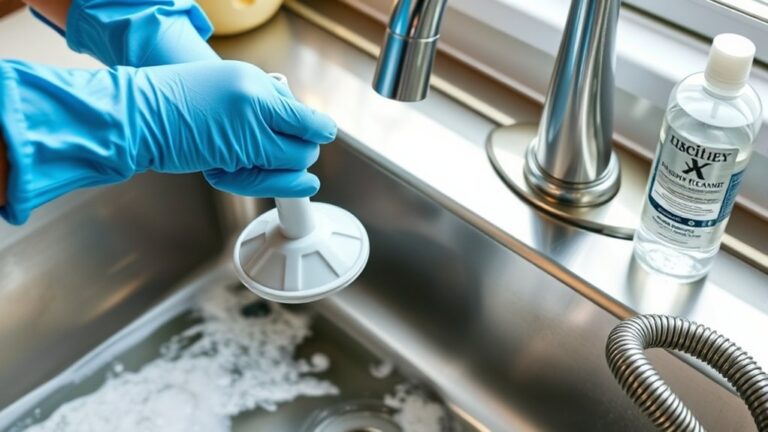
Start by flushing the drain with hot water to loosen and carry away food particles and grease. Let the water run for several minutes, then check whether the odor decreases.
Hot water helps soften residue clinging to the pipe walls, while steady flow pushes loose debris toward the main drain.
If your sink has a garbage disposal, turn it on while running cold water. Feed small pieces of citrus peel or ice cubes only if your disposal’s instructions permit them, and never place your hands inside the chamber.
These Garbage disposal tips can help clear light residue, but they won’t replace routine cleaning or professional service.
For basic Drain clog removal, remove visible scraps from the strainer and use tongs or pliers for anything within reach.
Don’t pour chemical drain cleaners into the sink. They can damage pipes and create hazardous fumes.
Run water after washing dishes, and scrape plates into the trash or compost first to prevent buildup and recurring smells.
Clean the Kitchen Sink Drain With Baking Soda
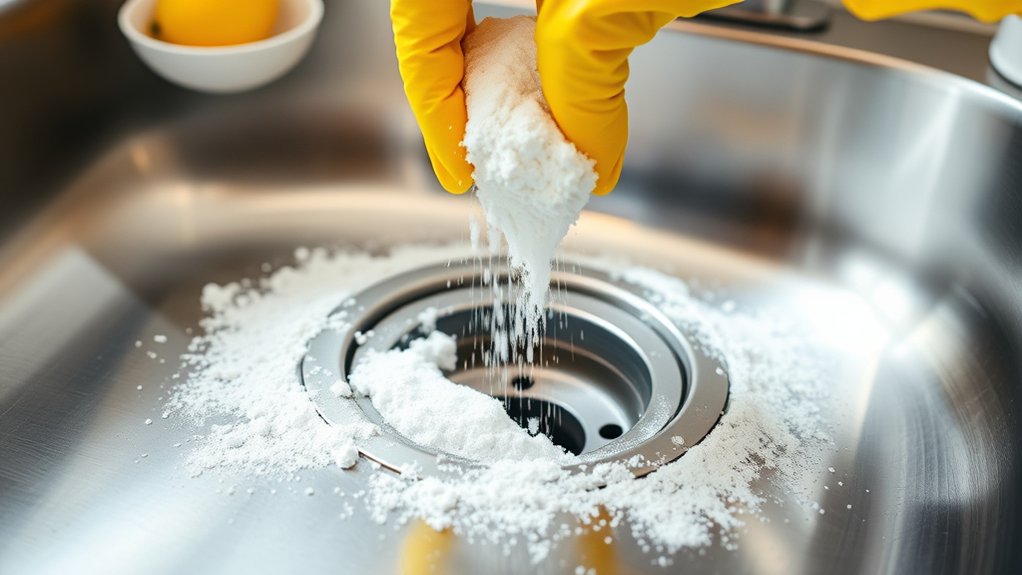
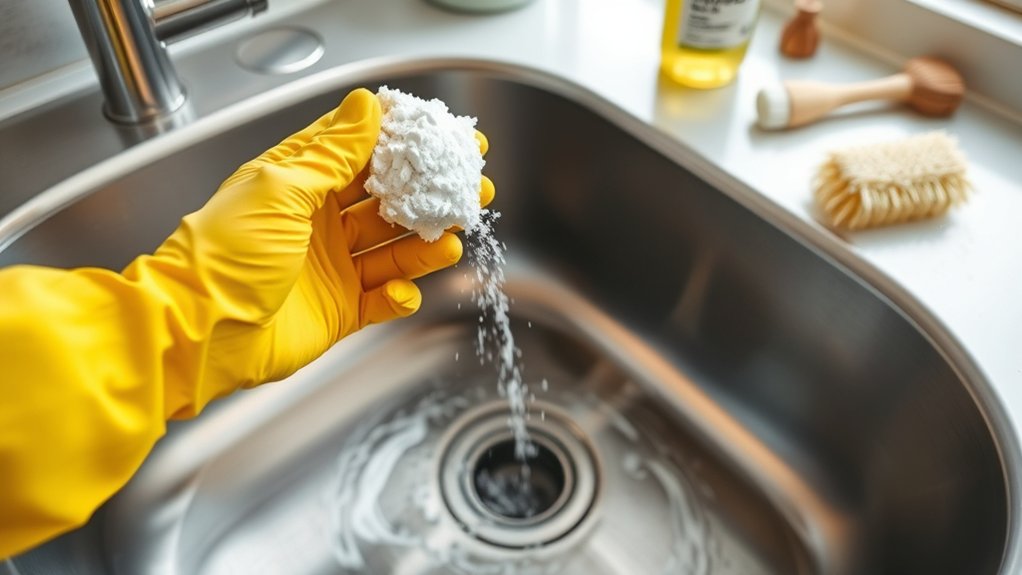
If hot water hasn’t removed the odor, baking soda can help neutralize smells and loosen light residue inside the drain. Remove the drain stopper and clear away any visible debris.
Pour half a cup of baking soda directly into the opening, making sure it reaches the drain walls. Follow it with one cup of white vinegar.
Pour baking soda into the drain, follow with white vinegar, and let the fizzing action loosen residue and neutralize odors.
The mixture will fizz, helping break down greasy film and odor-causing buildup. Cover the opening with the stopper or a damp cloth, then let it work for 10 to 15 minutes.
Flush the drain thoroughly with hot water.
This simple treatment works as a gentle drain deodorizer, especially when the smell comes from mild organic residue. Baking soda benefits include odor absorption and light scouring without harsh fumes.
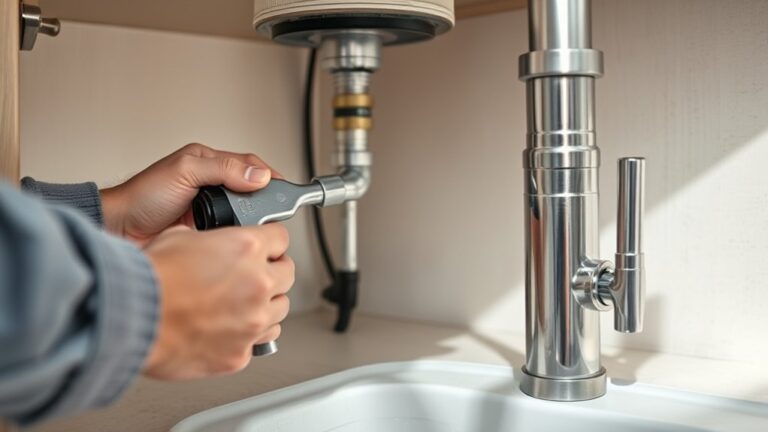
Don’t use this method immediately after applying commercial drain cleaner, because the ingredients may react. If the odor remains after one treatment, repeat the process once, then inspect the trap for deeper buildup.
Prevent Future Kitchen Sink Drain Odors
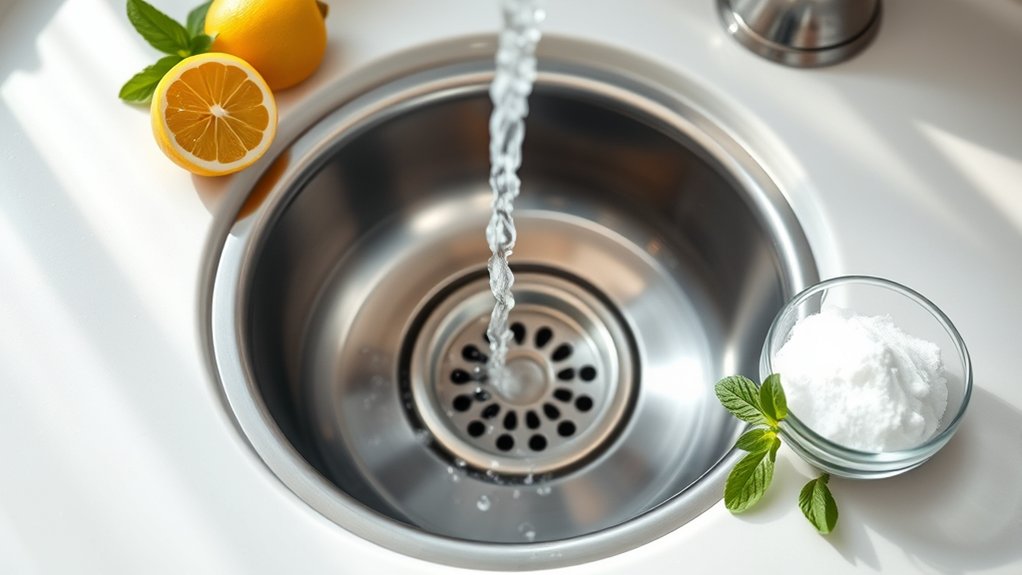
Prevent future kitchen sink drain odors by rinsing away food particles, grease, and soap residue after each use. Run hot water for 30 seconds after washing dishes to help flush buildup through the pipes. Scrape plates into the trash or compost before rinsing them, and wipe greasy pans with a paper towel first.
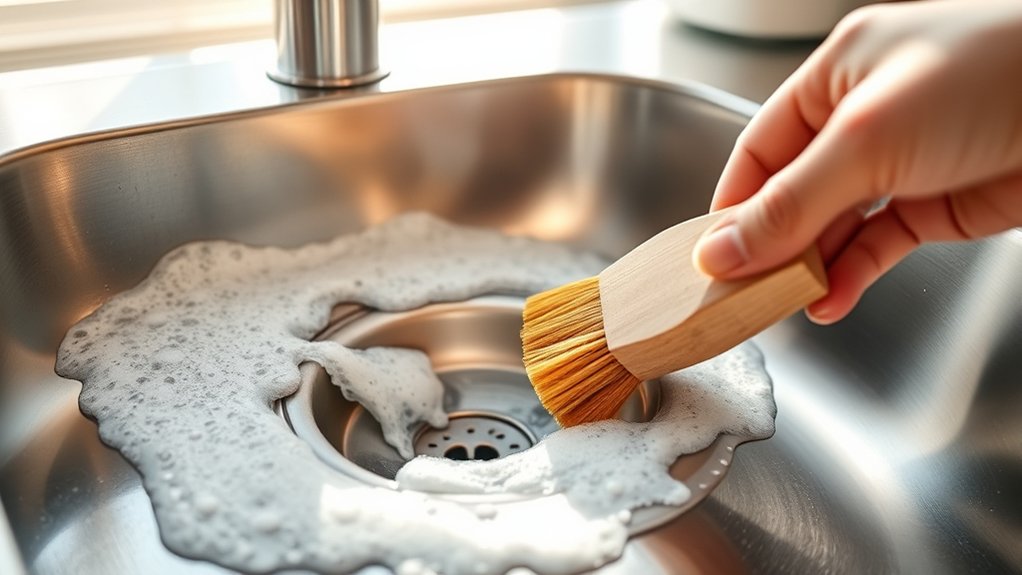
Clean your drain stopper weekly, since trapped debris can quickly smell. Remove it, scrub both sides with dish soap, and rinse it thoroughly. You can also pour a kettle of hot water down the drain occasionally, unless your plumbing manufacturer advises against it.
Use drain covers to catch scraps, but empty and wash them daily so they don’t harbor bacteria. Avoid pouring cooking oil, coffee grounds, flour, or fibrous peels into the drain.
Finally, improve air circulation by keeping the cabinet doors open occasionally and ventilating the kitchen. If odors return despite regular care, check for a clogged or leaking trap.
Frequently Asked Questions
Can a Garbage Disposal Cause Kitchen Sink Drain Odors?
Yes, your garbage disposal can cause kitchen sink drain odors when food scraps, grease, and bacteria collect beneath its blades or inside the splash guard. You’ll often notice a sour or rotten smell, especially after running water.
For odor prevention, turn off the disposal, clean the splash guard, and flush the chamber with cold water. You can also grind citrus peels occasionally, but avoid relying on them to remove buildup or replace regular cleaning.
When Should I Call a Plumber About a Persistent Sink Drain Smell?
Call a plumber when your sink smell persists after cleaning the trap, disposal, and drain, especially if you notice slow drainage, gurgling, backups, or sewage-like odors. A professional can locate a hidden drain blockage, damaged pipe, or ventilation issue that household methods won’t fix.
Contact one promptly if wastewater backs up, multiple fixtures smell, or you suspect a sewer gas leak. Don’t ignore recurring odors because they can signal plumbing damage or health risks.
Are Commercial Drain Cleaners Safe for Kitchen Plumbing?
Better safe than sorry: Commercial drain cleaners aren’t always safe for kitchen plumbing. Chemical reactions can damage older pipes, corrode seals, or create dangerous fumes, especially if you mix products.
They may also harm septic systems and increase your Environmental impact when flushed into waterways. Try boiling water, dish soap, or a baking-soda-and-vinegar treatment first.
If odors persist, stop using chemicals and call a plumber, who can identify deeper blockages safely.
Can Sewer Gas From the Drain Pose Health Risks?
Yes, sewer gas from a drain can pose health risks, especially with prolonged or concentrated exposure. You may notice headaches, dizziness, nausea, eye irritation, or breathing problems.
Hydrogen sulfide can become dangerous at high levels, while methane creates fire and explosion hazards. Improve air quality by ventilating the room and avoiding flames.
Leave if you smell strong gas or feel ill. Treat suspected gas exposure seriously, and contact a plumber or emergency services.
How Much Does Professional Kitchen Sink Drain Cleaning Cost?
Professional kitchen sink drain cleaning typically costs $100–$300, though you may pay more for severe clogs, camera inspections, or after-hours service. Your location, pipe accessibility, and the plumber’s pricing also affect the total.
Ask for an itemized estimate before work begins, and confirm whether labor, disposal, and follow-up visits are included. Regular drain maintenance and odor prevention can reduce repeat problems and help you avoid expensive emergency calls later.
Conclusion
A smelly kitchen sink drain doesn’t have to disrupt your routine. Flush away food and grease, freshen the drain with baking soda, and prevent future odors by using a strainer and rinsing regularly.
These simple habits help keep your kitchen cleaner and more inviting. Consider this: household food waste makes up about 30% of the food supply in many countries.
By stopping scraps from entering your drain, you’ll reduce unpleasant smells and make every meal and cleanup feel better. These steps are a simple way to clean kitchen sink drain smell and keep odors from returning.