How to Remove Smell From a Kitchen Sink in 10 Steps
Kitchen sink smells can make an otherwise clean home feel unpleasant, and you’re not alone in dealing with them. Many people struggle with lingering odors caused by food scraps, buildup, dampness, or hidden leaks.
If you’re wondering how to remove smell from a kitchen sink, these simple steps can help freshen your drain and prevent the odor from coming back.
To remove a kitchen sink smell, check beneath the sink for leaks, mold, or dampness. Remove food scraps, scrub the strainer, stopper, splash guard, and drain opening, then flush the drain slowly with hot water.
Add baking soda and vinegar, cover for 10–15 minutes, and rinse.
Clean the overflow and faucet area, then wash the P-trap if odors persist.
Prevent recurrence with a strainer and weekly cleaning. If smells continue, the remaining steps can help you decide when to call a plumber.
Key Takeaways
- Remove food debris, scrub the strainer and stopper, and clean the disposal splash guard and overflow opening.
- Flush the drain slowly with hot water, then use baking soda and vinegar before rinsing thoroughly.
- Clean the garbage disposal with cold water, ice cubes, and permitted citrus peels. Avoid grease and fibrous scraps.
- Inspect and clean the P-trap, confirming its water seal and checking connections for leaks, dampness, or mold.
- Prevent recurring odors with weekly cleaning. Call a plumber for persistent smells, slow drainage, gurgling, leaks, or sewage odors.
Find the Cause of the Sink Smell
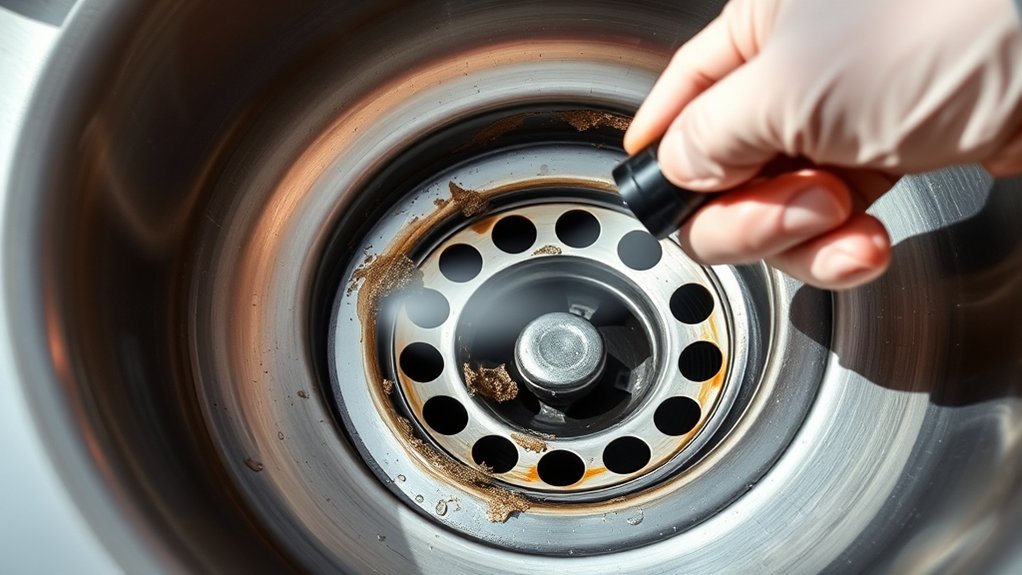
Before you treat the odor, find its source, since different problems require different solutions. First, check whether the smell comes from the drain opening, beneath the sink, or nearby plumbing.
Sniff carefully around the cabinet and inspect connections for leaks, dampness, or mold. A musty odor often points to trapped moisture, while a sewage-like smell may signal a dry P-trap, damaged vent, or sewer gas entering through a faulty seal.
If the drain smells sour or rotten, odor-causing bacteria may thrive inside the pipe’s residue or standing water. Slow drainage, gurgling, or water backing up suggests plumbing blockages deeper in the line.
Don’t ignore persistent smells after cleaning the surrounding area. They can indicate a cracked pipe or failing garbage disposal seal. Run water briefly and observe drainage, but don’t dismantle plumbing unless you know what you’re doing.
Identifying the source first helps you choose the right remedy and avoid worsening the problem.
Remove Food Debris From the Drain
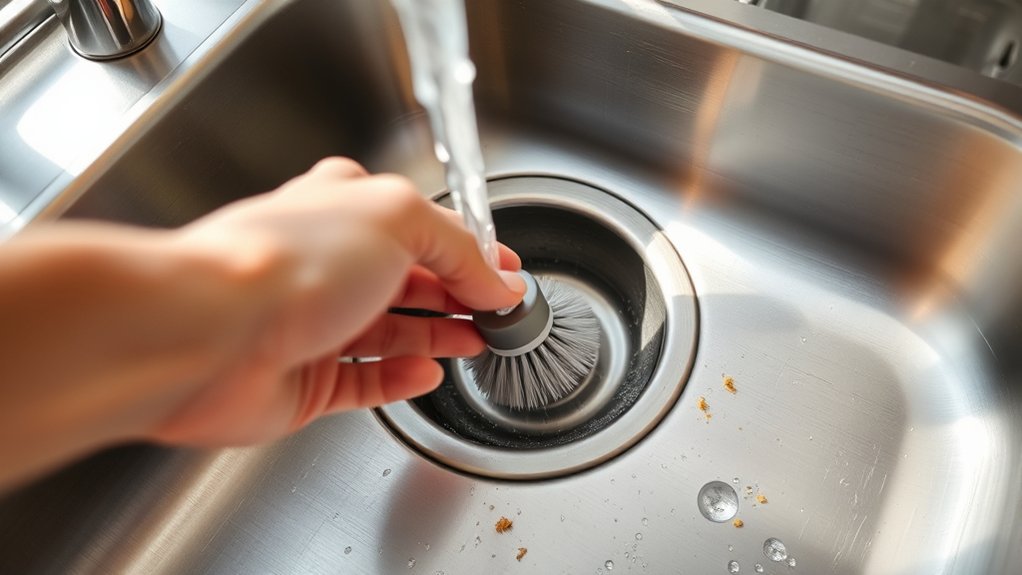
Start by removing visible food scraps from the drain opening and strainer, then discard them in the trash rather than rinsing them farther into the pipes. Put on gloves, lift out the strainer, and inspect its underside for greasy residue, trapped crumbs, or slimy buildup.
Scrub the strainer with a small brush and dish soap, paying attention to every slot where food waste can hide. Wipe the drain’s rim and inner walls as far as you can reach safely with a paper towel or old toothbrush.
If your sink has a removable stopper, take it out and clean around its edges, where particles often collect and begin to smell. Check the disposal splash guard, if present, and remove stuck pieces from beneath its flaps.
Don’t push debris deeper into the plumbing, since compacted scraps can create a drain blockage and worsen odors. Replace cleaned parts securely when you’re finished.
Flush the Drain With Hot Water
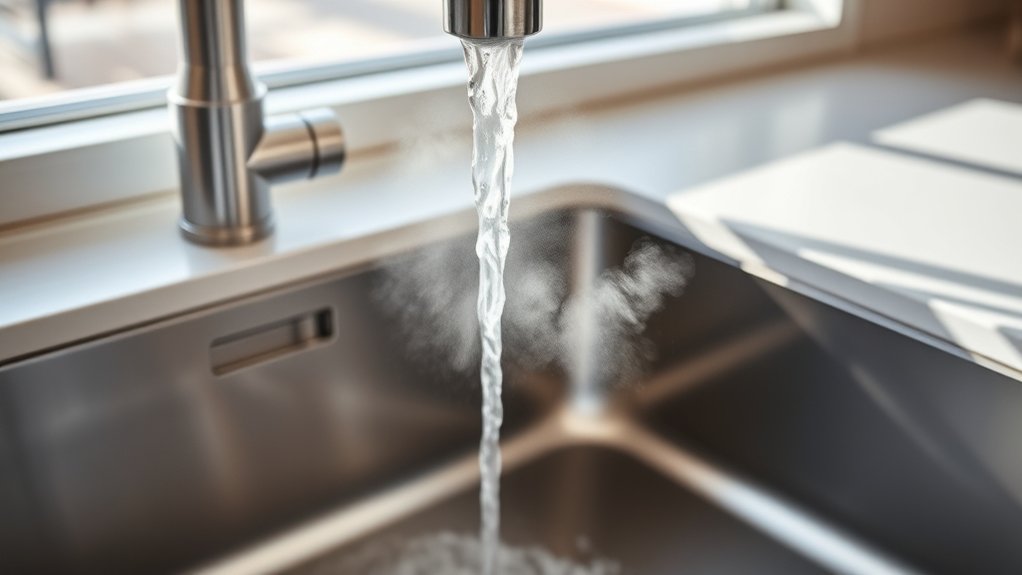
Boil a pot of water to help loosen grease and residue inside the drain. Once it’s ready, slowly pour the hot water down the drain in stages. This steady flush can help reduce lingering odors without overwhelming your pipes.
Boil Water First
Hot water can loosen grease, food particles, and other residue that cause sink odors. To begin, boil water in a kettle or saucepan.
Choose enough to cover the drain opening and reach buildup inside the pipe, but handle it carefully to prevent burns. Remove standing water from the basin first, if possible, so the heat can contact the drain more effectively.
Check your sink’s material and plumbing before using boiling water. Older or delicate pipes may require very hot tap water instead.
This simple step supports regular drain maintenance by breaking down odor-producing residue before it accumulates.
Keep children and pets away while you work, and wear heat-resistant gloves when carrying the container.
Boil water whenever your sink develops a mild smell, then repeat this treatment as needed.
Flush the Drain Slowly
Once the water is ready, pour it into the drain slowly and steadily to carry loosened grease and debris through the pipe. A gradual flush gives hot water time to soften residue without overwhelming the trap or causing splashes.
Keep the faucet running briefly afterward to move remaining particles deeper into the line.
For reliable drain maintenance, make this part of your weekly cleaning routine. Slow flushing also supports odor prevention by reducing the buildup that feeds unpleasant smells.
- Pour steadily rather than dumping all the water at once.
- Use a funnel if the drain opening is narrow.
- Follow with cool tap water for several seconds.
- Stop immediately if water backs up or drains unusually slowly.
Never combine hot water with chemical drain cleaners, as the reaction may release harmful fumes or damage plumbing.
If odors persist, inspect the stopper, trap, and overflow opening for hidden grime.
Scrub the Strainer and Drain Opening
Begin by scrubbing the strainer and drain opening with a stiff brush and a paste of baking soda and water. Remove the sink strainer, if possible, and clean both sides to loosen trapped food, grease, and slimy residue.
Scrub the strainer and drain opening with baking soda paste to remove trapped food, grease, and slimy residue.
Work the brush into the holes, edges, and underside, where buildup often remains hidden. Next, scrub the drain opening, focusing on its rim and the area just inside the pipe.
Use an old toothbrush for narrow grooves and difficult corners. Rinse the brush frequently so you don’t spread grime across clean surfaces.
Wipe away loosened debris with a paper towel, then wash the strainer with hot water and dish soap before replacing it. Inspect the surrounding sink surface, too, and clean any residue that could contribute to an unpleasant odor.
Repeat this scrubbing routine regularly, especially when you notice visible buildup or food particles collecting around the drain.
Deodorize With Baking Soda and Vinegar
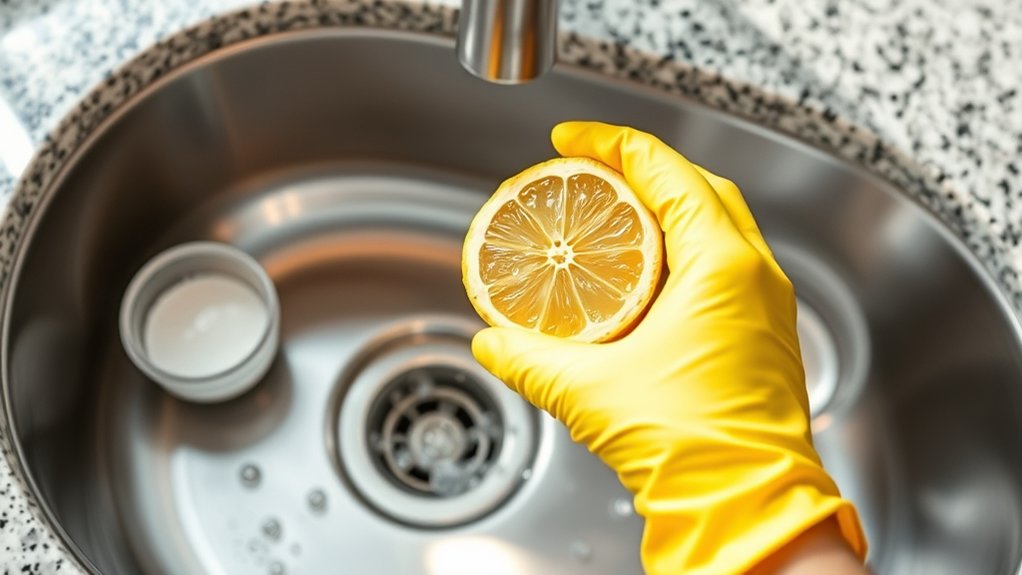
After scrubbing away surface buildup, deodorize the drain with baking soda and vinegar to loosen residue and neutralize lingering odors. These Natural remedies work together through gentle fizzing, which helps lift organic grime clinging inside the drain.
Pour one-half cup of baking soda into the drain, then follow with one cup of white vinegar. Cover the opening with a stopper or inverted cup, and let the mixture react for 10 to 15 minutes. Flush with a kettle of hot water, using care to avoid splashes.
For better results:
- Measure each ingredient accurately for balanced action.
- Apply the treatment when you won’t need the sink immediately.
- Repeat weekly if odors return frequently.
- Keep the surrounding area dry afterward.
Open a nearby window or run your exhaust fan to improve air circulation while the vinegar works. Don’t combine vinegar with bleach or commercial drain cleaners, since dangerous fumes can result.
If the smell persists after several treatments, inspect the drain trap for trapped water or buildup, rather than adding stronger chemicals. This simple routine freshens the sink without masking odors with fragrance.
Clean the Kitchen Sink Disposal
If your kitchen sink has a disposal, food particles trapped beneath its splash guard may cause unpleasant odors. Turn off the disposal and unplug it, or switch off its circuit breaker, before cleaning. Never place your hands inside the chamber.
Lift the splash guard carefully and scrub both sides with an old toothbrush, dish soap, and warm water. Use a flashlight to check for stuck scraps, then remove them with tongs.
Restore power, run cold water, and turn on the disposal for 30 seconds. Add a few ice cubes to help dislodge residue, but don’t use your fingers.
You can grind citrus peels briefly afterward to freshen the Kitchen scent, provided your manufacturer allows them.
For routine Disposal maintenance, clean the splash guard weekly and run cold water during every cycle. Avoid grease, fibrous scraps, coffee grounds, and large bones, which can cling to components or cause blockages.
If the odor remains, inspect the drain connection or call a plumber.
Wash the Overflow and Faucet Area
Grime and moisture can collect around the faucet base and overflow opening, creating odors even after you clean the basin. Regular Overflow maintenance removes hidden residue before it turns sour.
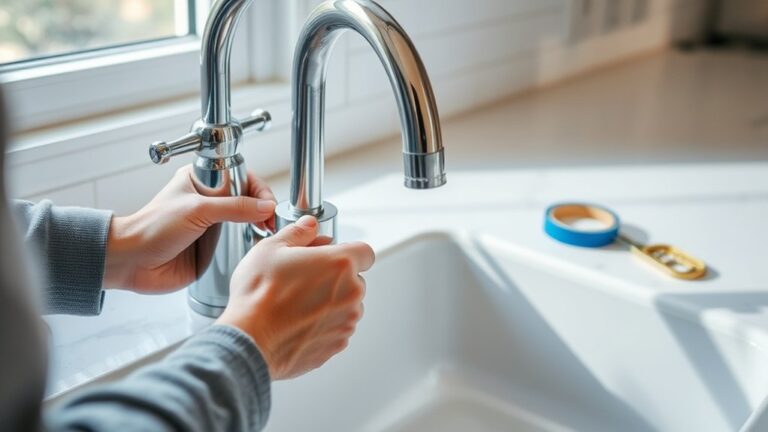
First, wipe the faucet, handles, seams, and base with warm, soapy water. Use an old toothbrush to loosen buildup around joints and crevices, then rinse with a damp cloth.
For thorough Faucet cleaning, spray a mild vinegar-and-water solution onto a cloth rather than directly into fittings. Let it sit briefly, scrub gently, and dry every surface to discourage mildew.
Clean the overflow opening with a small brush or flexible pipe cleaner, working carefully without forcing debris deeper.
- Remove the drain stopper and wash it separately.
- Wipe beneath the faucet base with a folded cloth.
- Rinse cleaning tools after each use.
- Dry the surrounding counter and backsplash.
Check the area weekly, especially if water splashes often. If mineral scale remains, apply a manufacturer-approved descaler, rinse thoroughly, and avoid abrasive pads that can damage the finish.
Clean the P-Trap If Smells Persist
If the smell persists, grab a bucket, gloves, and adjustable pliers to clean the P-trap. Carefully remove the trap and clear out any debris.
Rinse it thoroughly, then reinstall it. Run water through the sink and check the connections for leaks.
Gather Necessary Tools
When the smell persists after cleaning the drain, gather a bucket, adjustable wrench, rubber gloves, an old toothbrush, and a rag to clean the P-trap. Your tools checklist should also include a flashlight, a shallow pan, and a replacement washer in case the existing seal looks worn. Choose cleaning supplies that won’t damage plumbing or irritate your skin.
- Bucket or shallow pan to catch residual water
- Adjustable wrench for loosening slip nuts
- Rubber gloves to protect your hands
- Toothbrush and rag for controlled wiping
Set everything within reach before you begin, and clear the cabinet beneath the sink. Keep paper towels nearby for small spills, and place the flashlight where it can illuminate fittings.
Don’t use chemical drain cleaners during this preparation. They may remain in the trap and create hazardous splashes when disturbed.
Remove And Clean Trap
With your tools ready and the cabinet cleared, place the bucket or shallow pan beneath the P-trap to catch trapped water. Loosen the slip nuts by hand, using pliers only if they’re tight.
Lower the curved pipe carefully, then empty its contents into the bucket. Inspect the trap for grease, food particles, slime, or standing debris that may cause odors.
Scrub its interior with a bottle brush and hot, soapy water. Rinse it thoroughly until water runs clear.
During this piping inspection, check the nearby drain openings for buildup, but don’t remove components beyond the trap.
Wipe the slip nuts and washers clean, and examine them for damage. If the trap is cracked or heavily corroded, replace it rather than cleaning it.
Also check whether poor ventilation system performance may be contributing to persistent smells.
Reinstall And Check Leaks
Reinstall the cleaned P-trap by aligning it with the drainpipe and tailpiece, then hand-tighten both slip nuts over the washers. Make certain each washer sits flat before tightening the nuts with pliers, but don’t overtighten them. Reinstalling fixtures carefully prevents cracked fittings and future odors.
Place a bowl beneath the trap, then run warm water for one minute. Check every connection for drips, dampness, or sewer-gas smells. If you find a leak, loosen the nut, realign the washer, and retighten it. For persistent problems, inspect the surrounding plumbing.
- Look for mineral buildup around joints.
- Practice checking for corrosion on metal threads.
- Replace damaged washers immediately.
- Confirm the trap maintains its water seal.
Dry the pipes completely and recheck them after several minutes. If leaks continue, replace worn components or call a licensed plumber.
Prevent Kitchen Sink Smells From Returning
Prevent kitchen sink smells from returning by keeping food scraps, grease, and soap residue out of the drain. Scrape plates into the trash, wipe greasy cookware with a paper towel, and use a sink strainer to catch particles before they wash away. Empty the strainer after each meal, then rinse it with hot water.
Keep food scraps and grease out of the drain, use a sink strainer, and rinse it with hot water after every meal.
During regular Kitchen cleaning, flush the drain with hot water for several minutes to move away residue. Once a week, sprinkle baking soda into the drain, add a small amount of vinegar, let the fizzing finish, and rinse thoroughly.
Clean the stopper, drain opening, and overflow area, where buildup can hide and create odors. Don’t pour cooking oil, coffee grounds, or harsh chemicals down the drain; dispose of them properly instead.
For ongoing odor prevention, keep the sink dry between uses, wash dishes promptly, and run your garbage disposal with cold water and citrus peels when appropriate. These simple habits help maintain a fresher drain and reduce recurring smells.
Know When to Call a Plumber
If cleaning and odor-prevention habits don’t eliminate the smell, you may have a deeper plumbing problem. Persistent odors can signal trapped food, a damaged trap, blocked ventilation, or sewer gas entering your kitchen.
Don’t ignore warning signs, especially when the smell returns quickly after cleaning.
Call a licensed plumber if you notice:
- Gurgling sounds when water drains
- Slow drainage or recurring clogs
- Sewage-like odors near the sink
- Leaks, mold, or damp cabinet walls
A plumber can inspect the P-trap, drain line, garbage disposal, and vent system to locate the source safely.
Avoid using harsh chemical drain cleaners, which can damage pipes and create dangerous fumes. Professional Plumbing maintenance helps prevent major repairs and keeps your drainage system working properly.
If you rent your home, report persistent odors to your landlord promptly.
Continue basic Odor prevention by removing food debris, flushing drains with hot water, and cleaning the disposal. Schedule expert service when these steps don’t solve the problem.
Acting early protects your health, plumbing, and kitchen from costly damage.
Frequently Asked Questions
Can Sink Odors Indicate a Dangerous Gas Leak?
Yes, sink odors can occasionally indicate a dangerous gas leak, but sewer or food odors cause most sink smells. Natural gas usually smells like rotten eggs, while sewer gas may cause headaches, dizziness, nausea, or breathing irritation.
Don’t ignore these odor symptoms. If you smell gas, avoid flames, switches, and phones near the odor; leave immediately, then call emergency services or your gas company from outside.
Have a professional inspect the plumbing and appliances.
Are Commercial Drain Cleaners Safe for Kitchen Sinks?
Commercial drain cleaners can turn your sink into a chemical battlefield, so use them cautiously. They may damage pipes, harm septic systems, and cause dangerous Chemical reactions if mixed with bleach, vinegar, or other products.
Protect your skin and eyes, ventilate the area, and follow the label precisely. Consider safer options, such as a plunger, boiling water, or enzyme cleaners. Their Environmental impact is also lower.
Never use cleaners after removing the drain trap.
How Often Should I Replace a Smelly Sink Drain?
You usually don’t need to replace a smelly sink drain on a schedule. First, clean the stopper, trap, and drain opening, then check for leaks, corrosion, cracks, or persistent odors.
Replace the drain assembly when damage remains or cleaning doesn’t solve the smell, typically after 10–15 years, depending on use and materials.
For better drain maintenance and odor prevention, flush with hot water, remove debris, and avoid harsh chemical cleaners.
Can Sink Smells Affect Drinking Water Quality?
Yes, sink smells can signal odor causes that affect nearby drinking-water quality, though the drain itself usually doesn’t contaminate your supply. Noticing a rotten-egg smell while filling your glass deserves attention.
You should check whether the odor comes from the faucet, pipes, or drain. Try cleaning methods such as flushing the drain and disinfecting the aerator.
If water tastes unusual, looks cloudy, or smells persistently, stop drinking it and contact your water utility or plumber.
Is Professional Odor Testing Available for Persistent Sink Odors?
Yes, you can hire professionals for persistent sink odors. Certified inspectors offer odor detection services and use specialized testing methods, including air sampling, smoke testing, moisture measurements, and drain inspections.
They can identify sewer gas, bacterial buildup, plumbing leaks, mold, or ventilation problems that household cleaning might miss. Ask for a written report detailing findings and recommendations.
If you notice headaches, dizziness, or strong gas smells, leave immediately and contact emergency services.
Conclusion
A smelly kitchen sink can make your whole kitchen feel unclean, but you don’t need harsh chemicals or complicated tools to fix it. Remove debris, flush the drain, scrub buildup, and deodorize naturally with baking soda and vinegar.
Clean overlooked areas, then inspect the P-trap if odors remain. A few minutes of care today can prevent bigger plumbing problems tomorrow. If the smell persists, call a plumber instead of masking it with air freshener.
These steps can help you remove smell from a kitchen sink and keep your kitchen fresher.