How to Decorate Above Kitchen Cabinets
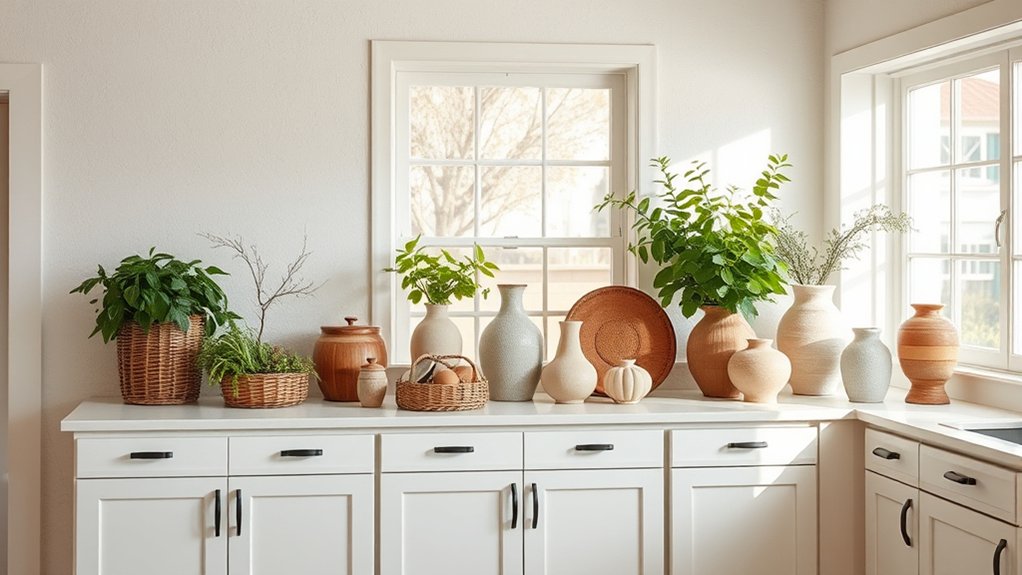
That empty space above your kitchen cabinets can be surprisingly difficult to decorate. You’re not alone—many people struggle to make it look intentional without creating clutter. This roundup shares stylish, practical ideas for how to decorate above kitchen cabinets with confidence.
To decorate above kitchen cabinets, first measure the height, depth, and available clearance, including molding, vents, and lighting. Choose shallow pieces that match your kitchen’s colors, materials, and style.
Create a focal point with art or a tall accessory, then layer smaller objects at varied heights. Add low-maintenance faux greenery or seasonal accents sparingly.
Leave breathing room, avoid overfilling, and use warm lighting to highlight the display. The sections below share more ways to create a polished, practical arrangement.
Key Takeaways
- Measure the cabinet-to-ceiling space, accounting for molding, lighting, vents, doors, and enough clearance for cleaning.
- Choose décor that complements your kitchen’s style by repeating colors, materials, shapes, or finishes found elsewhere in the room.
- Create a focal point with artwork, a sign, sculpture, or tall accessory, then arrange simpler pieces around it.
- Layer varied heights and textures with vases, bowls, baskets, ceramics, wood, and greenery while preserving open space.
- Keep displays shallow, lightweight, and uncluttered. Rotate seasonal pieces and use warm lighting to enhance the arrangement.
Measure the Space Above Your Cabinets
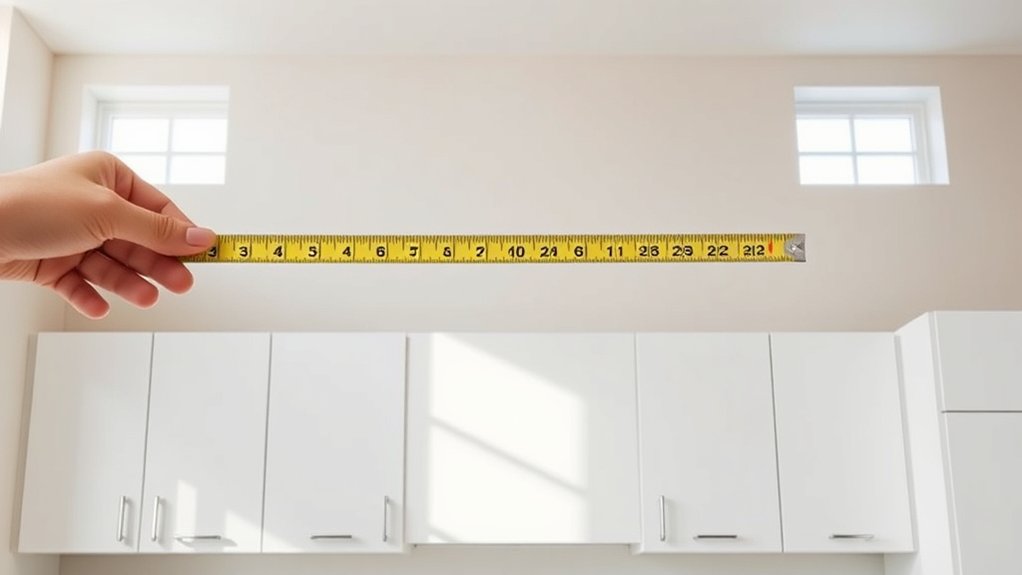
Before choosing décor, measure the space above your kitchen cabinets to determine what will fit comfortably. Use a tape measure to record the distance from the cabinet top to the ceiling.
Check this measurement at several points, since uneven ceilings or cabinets can change the available height.
Note your cabinet height as well as the width and depth of the ledge. These dimensions help you choose items that won’t overhang, wobble, or appear cramped.
Allow enough ceiling clearance to lift, remove, and clean each piece without difficulty. If you plan to group objects, measure the total arrangement rather than relying on individual item sizes.
Account for crown molding, trim, doors, lighting, and nearby vents. Mark the usable area with painter’s tape so you can visualize its boundaries.
You can also make cardboard templates of potential décor and test their proportions before shopping. Keep your measurements handy when comparing containers, baskets, artwork, or other accessories.
Match Decor to Your Kitchen Style
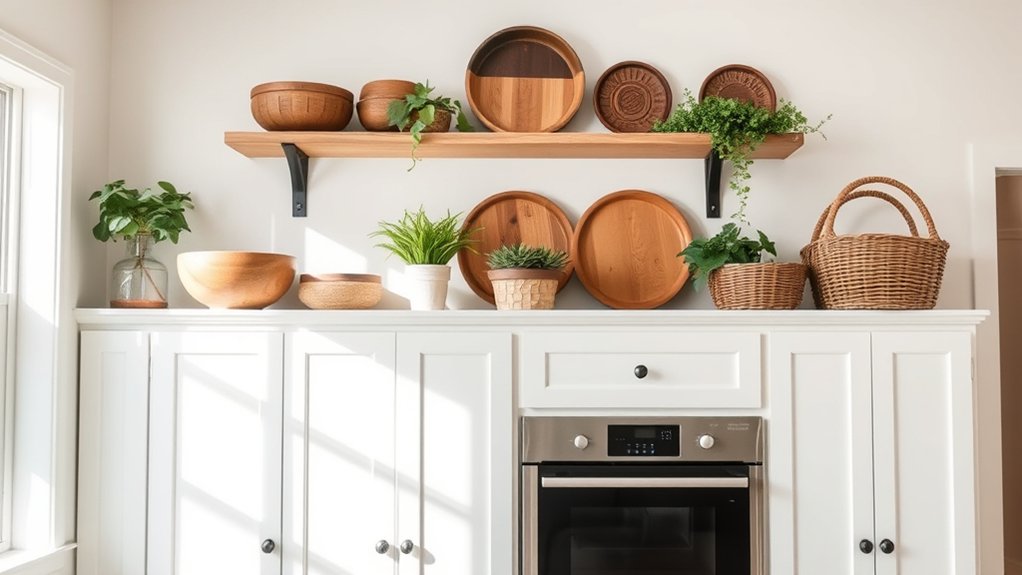
Choose décor that complements your kitchen’s existing style instead of competing with it. For matching style, repeat materials, shapes, or finishes already found below.
In a farmhouse kitchen, try woven baskets, weathered wood, or simple pottery. Sleek kitchens suit streamlined ceramics, glass, and metal accents, while traditional spaces welcome classic vessels and framed details.
Color coordination keeps the arrangement connected. Pull shades from your backsplash, cabinetry, countertops, or hardware rather than introducing unrelated tones.
| Kitchen style | Suitable décor | Best finishes |
|---|---|---|
| Farmhouse | Baskets and pottery | Wood, wicker |
| Modern | Ceramics and glass | Black, chrome |
| Traditional | Vessels and frames | Brass, porcelain |
Choose pieces with similar visual weight so the area feels intentional without appearing crowded. If your cabinets feature ornate trim, select understated accessories; if their design is plain, textured materials can add character.
You don’t need an exact match. Repeat one or two elements to create harmony. Keep your choices practical, washable, and proportionate to the available space.
Rotate seasonal items only when they suit the kitchen’s established palette and personality.
Start With a Focal Point
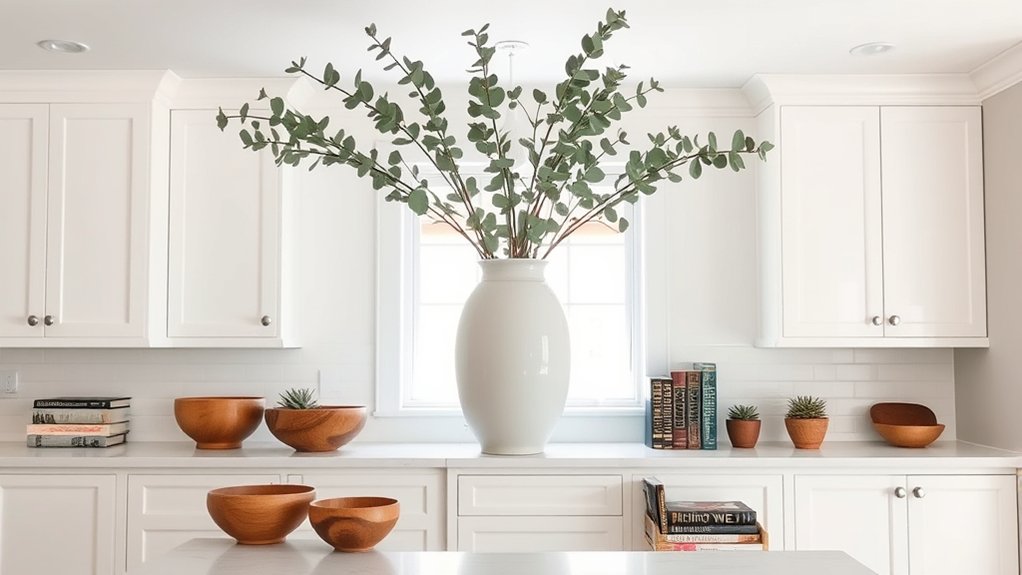
A focal point gives your above-cabinet arrangement a clear direction and keeps the display from feeling scattered. Choose one standout feature that reflects your kitchen’s style, such as a framed print, decorative platter, vintage sign, or sculptural object.
Choose one standout piece to anchor your above-cabinet display and reflect your kitchen’s unique style.
Place it where your eye naturally lands, then arrange supporting pieces around it without competing for attention.
Think about visual hierarchy as you build the display. Your focal point should attract attention first, while smaller or quieter items guide the eye outward.
Repeat a color, finish, or shape from the main piece to create connections among the surrounding decor. Leave enough space between objects so each one remains recognizable, and avoid filling every gap simply because it’s available.
Step back often and view the arrangement from the kitchen entrance and nearby seating areas. If several items demand equal attention, remove one or simplify the group until the focal point feels intentional.
This approach creates balance without making the space look overly styled.
Add Height With Art and Tall Decor
Use artwork and tall decor to draw the eye upward and give the space above your cabinets more presence. Choose one striking piece that reflects your kitchen’s colors, style, or personality.
A large framed print, canvas, or slim vintage sign can create a strong vertical statement without making the area feel crowded.
Consider art placement carefully. Center your piece over a cabinet run, or position it slightly off-center if architectural features call for flexibility.
Leave enough breathing room around the frame so it remains easy to see from across the room. For open stretches, lean a tall piece against the wall rather than drilling into it, but secure it if children or pets could reach it.
Tall accessories can add another lift. Try a narrow vase filled with branches, a sculptural bottle, or a slender ceramic vessel.
Select items with varied heights, but keep each piece visually distinct and avoid filling every inch.
Layer Decor for a Balanced Display
Layer decor at different heights to create movement, and mix smooth, woven, and ceramic textures to add interest. Balance bold colors with neutral tones so the display feels cohesive. Vary the scale of each piece, using smaller accents to balance larger items.
Mix Heights and Textures
Create visual balance by combining décor at different heights, such as tall vases, medium-sized bowls, and low baskets. Use height variation to guide your eye across the cabinet tops without making the arrangement feel rigid.
Place a tall vase beside shorter pottery, then add a low basket to anchor the grouping. Choose mixed textures to create depth and interest by pairing smooth ceramics with woven fibers, carved wood, ribbed glass, or matte metal.
Repeat a texture occasionally so the display feels connected, but avoid placing identical materials together in one cluster. Leave small gaps between objects to keep each piece visible and prevent a crowded appearance.
Step back as you arrange and check that the layers flow naturally. Your display should feel collected, tactile, and thoughtfully varied while remaining easy to dust.
Balance Color and Scale
A balanced display needs both color contrast and proportional scale, so pair a few coordinating shades with objects that suit the cabinet length. Choose two or three accent colors from your kitchen’s palette, then repeat them across vases, artwork, baskets, or books.
This creates color harmony without making the arrangement look overly matched. Keep larger pieces near the center or at cabinet ends, and fill gaps with smaller accents to guide the eye across the space.
Varying heights adds interest, but avoid placing several tall objects together, which can make one section feel heavy. Step back regularly to check spatial balance from across the room.
If the display feels crowded, remove an item. If it looks sparse, add one substantial piece rather than several tiny decorations.
Display Baskets, Trays, and Boards
Baskets, trays, and cutting boards add texture and practical charm above kitchen cabinets without making the space feel cluttered. Choose decorative baskets in varied sizes to create height and conceal small, seldom-used kitchen items.
Keep their shapes coordinated, but mix woven patterns for visual interest. Arrange wooden trays against the wall as a backdrop, then layer smaller boards in front for a relaxed, collected look.
Select cutting boards with attractive grain, handles, or gently worn edges, and turn them slightly so each piece remains visible. Use one or two trays to group accessories, giving the display a defined boundary instead of scattering objects across the cabinet tops.
Leave a little breathing room around each arrangement, especially near corners and ceiling lines. Before styling, measure the available depth and check that every item sits securely.
You’ll create a warm, useful display that feels intentional while keeping the focus on texture, shape, and craftsmanship rather than unnecessary decoration.
Add Low-Maintenance Greenery Above Cabinets
Add hardy plants above your cabinets if you want a touch of natural color without much upkeep. If lighting or watering is a concern, go with faux greenery instead. Keep the arrangements sparse so the space still feels clean and uncluttered.
Choose Hardy Plants
Choose hardy plants that can handle warm, dry air and indirect light, such as pothos, snake plants, or faux greenery. Before choosing, check your cabinet’s light levels and measure the available space.
Select compact varieties that won’t crowd the ceiling or interfere with doors, lighting, and ventilation. A thoughtful succulent selection works well if the area receives brighter indirect light; choose sturdy types in coordinating pots for a tidy display.
If you prefer color, flowering plants can add seasonal interest, but confirm they’ll tolerate the kitchen’s heat and inconsistent humidity.
Water plants according to their specific needs, and use saucers to protect cabinet surfaces from moisture. Rotate containers occasionally so growth stays even.
Wipe leaves regularly to remove grease and dust, keeping your greenery fresh and healthy with minimal effort.
Use Faux Greenery
Faux greenery adds color and texture above kitchen cabinets without watering, pruning, or worrying about heat and low light. Choose artificial plants that mimic varieties you love, such as eucalyptus, olive branches, ferns, or trailing vines.
Look for realistic leaves, varied tones, and natural-looking stems rather than shiny plastic surfaces. Place greenery in a favorite basket, ceramic pot, or woven container to complement your kitchen’s finishes.
You can also tuck faux branches into a garland or arrange them in a long planter that fits the cabinet length. Dust the leaves regularly with a soft cloth or use a gentle vacuum attachment to keep them fresh.
Select UV-resistant pieces if sunlight reaches the area, since they’ll resist fading and maintain their color longer. Refresh the display seasonally with different textures or shades.
Keep Arrangements Sparse
Keep arrangements above your cabinets sparse so the space feels intentional rather than crowded. Choose one or two low-maintenance plants, such as faux eucalyptus, preserved branches, or drought-tolerant succulents in simple pots.
Leave open gaps between pieces to create spacious arrangements, maintain sightlines, and prevent dust-prone minimal clutter. Vary heights slightly, but keep colors and containers coordinated with your kitchen.
| Greenery | Container | Placement |
|---|---|---|
| Faux eucalyptus | Matte ceramic pot | Center |
| Preserved branches | Woven basket | One side |
| Faux succulents | Small metal planter | Open gap |
Before you style, measure the cabinet length and group items loosely rather than lining them up. Select lightweight pieces you can remove easily for cleaning.
If your cabinets already feature detailed trim or busy finishes, use fewer decorations. You’ll create a calmer display that complements the room without competing with its functional surfaces. Rotate accents seasonally if desired.
Use Seasonal Above-Cabinet Decor
Seasonal decor can invigorate the space above your kitchen cabinets without requiring a permanent redesign. Swap lightweight items throughout the year to keep your kitchen feeling current.
In spring, arrange faux greenery, ceramic birds, or pastel vases in a balanced grouping. For summer, use woven baskets, citrus-colored pottery, or coastal details that complement your existing palette.
When autumn arrives, add small pumpkins, amber bottles, or textured wheat bundles. During winter, choose evergreen sprigs, wood accents, or simple ornaments for warmth.
Seasonal accents work best when you repeat one or two colors already present in the room. Keep each display sparse, and leave breathing room between pieces so the cabinet top never looks crowded.
Choose festive themes thoughtfully rather than mixing every holiday symbol. Use removable items and sturdy containers, especially if you change displays often.
Store each collection together in labeled boxes, so revitalizing your arrangement stays quick and easy. Replace damaged or faded pieces before the next season begins.
Light Your Above-Cabinet Display
Thoughtful lighting can make the space above your kitchen cabinets feel intentional while highlighting seasonal displays. Choose warm-white LED strips to create soft ambient lighting that washes the wall without overpowering your kitchen’s main fixtures.
Install them along the cabinet tops, facing the backsplash, so the glow gently outlines baskets, pottery, or seasonal greenery. Battery-powered puck lights offer an easy option when you can’t access an outlet, while plug-in models provide reliable brightness for everyday use.
For decorative illumination, try a short strand of micro lights tucked behind a favorite arrangement. Their subtle sparkle adds charm during holidays or gatherings, and you can switch them off when you want a calmer look.
Use a dimmer or smart plug to adjust the mood and schedule automatic evening illumination. Coordinate the light’s color temperature with nearby fixtures for a cohesive effect.
Before installing anything, test the placement at night to ensure the display receives an even, inviting glow.
Avoid Clutter, Dust, and Poorly Sized Decor
Keep your display simple so it doesn’t overwhelm the kitchen. Choose easy-to-clean pieces that won’t collect much dust, and leave enough space between them. Make sure each item fits the size of the cabinet and the room for a balanced look.
Control Visual Clutter
Control visual clutter by giving each item enough breathing room and choosing decor that suits the cabinet’s scale. Start with a simple plan instead of filling every open space.
Group related pieces, such as pottery, framed art, or cookbooks, to create intentional arrangements rather than scattered displays. Vary heights slightly, but avoid stacking too many objects or using pieces that disappear against the wall.
Decorative storage, such as attractive baskets or lidded boxes, can hide small kitchen essentials while keeping the area polished. Step back and check the arrangement from across the room. Visual balance matters more than symmetry.
If the cabinets already feature ornate details, choose understated accessories. Edit regularly, removing anything that feels repetitive, undersized, or unrelated to your kitchen’s style.
Let a few standout pieces lead the display.
Minimize Dust Collection
Choose fewer, well-sized pieces to minimize dust collection above your kitchen cabinets. Avoid filling every gap with small objects, baskets, or layered decorations.
Each extra item creates another surface for grease and dust, making cleaning harder. For effective Dust prevention, select smooth, washable materials and leave enough space to wipe around each piece.
Use removable liners or felt pads for surface protection, especially beneath ceramics, metal, or wood that could scratch cabinetry.
| Choice | Benefit |
|---|---|
| Smooth finishes | Wipe clean quickly |
| Minimal groupings | Reduce dust traps |
| Washable materials | Simplify maintenance |
| Removable liners | Protect cabinet tops |
Keep decorations stable, and skip items with intricate details, fabric, or deep grooves. Check the cabinet tops regularly, then remove each piece before wiping.
A restrained display stays fresher, protects your finishes, and keeps routine cleaning manageable.
Choose Proportional Decor
Once you’ve limited dust-catching pieces, focus on scale so the display feels intentional rather than crowded. Choose objects that relate to your cabinet height, ceiling, and nearby features.
A single oversized piece can anchor the arrangement, while smaller accents should support it without disappearing or creating visual noise. Aim for proportional balance by grouping items in varied heights, not filling every inch.
Step back often to check visual harmony from the room’s main viewpoints.
- Place one substantial basket, vase, or artwork as an anchor.
- Combine medium and small pieces in uneven, relaxed groupings.
- Leave breathing room between objects and cabinet edges.
Keep decor shallow enough to avoid awkward overhangs, and avoid items that make the cabinets look top-heavy. If an arrangement feels busy, remove one piece.
Your display should frame the kitchen, not compete with it or create another surface to clean.
Frequently Asked Questions
Can I Decorate Above Cabinets in a Kitchen With Low Ceilings?
Yes, you can decorate above cabinets in a kitchen with low ceilings—just keep everything slim and intentional. Choose a few low-profile pieces, such as framed prints, shallow baskets, or a single trailing plant, rather than bulky objects.
Use decorative lighting, like discreet LED strips, to add warmth without consuming headroom. For practical storage solutions, select matching baskets that fit neatly above the cabinets. Keep colors light to maintain an open, airy feeling.
How Do I Safely Secure Decor Above Kitchen Cabinets?
Anchor your decor like a ship in calm waters: use museum putty, removable mounting strips, or discreet brackets to prevent shifting. Keep each piece lightweight, stable, and positioned away from cabinet edges, heat sources, and stove splatter.
Consider decor height considerations carefully, leaving enough clearance for doors, ventilation, and cleaning. For stronger decor safety, secure taller items to the wall, avoid breakables, and check every attachment regularly for loosening or damage.
What Materials Are Easiest to Clean in Greasy Kitchen Environments?
Choose glass, glazed ceramic, stainless steel, sealed wood, or washable plastic for decor in greasy kitchen environments. These grease-resistant materials have smooth, nonporous surfaces that won’t trap residue, so you can wipe them quickly.
Avoid unfinished wood, fabric, wicker, and porous stone, which absorb oil and require deeper cleaning. For practical cleaning tips, place items away from the cooktop, use removable pieces, and wipe surfaces weekly with warm, soapy water.
Should I Decorate Above Cabinets in a Rental Kitchen?
Yes—you can decorate above cabinets in a rental kitchen, but keep your choices light, removable, and landlord-friendly. Think of the space as a blank canvas, not a permanent renovation.
Use freestanding baskets, framed prints, faux greenery, or other Decorative accents that won’t require nails or adhesive. Rotate Seasonal displays in lightweight containers, and avoid clutter that traps grease.
Before starting, check your lease and protect surfaces with washable liners.
How Much Does Professional Above-Cabinet Decorating Typically Cost?
Professional above-cabinet decorating typically costs $200–$800 for a small kitchen, while larger or more customized projects may reach $1,500 or more. Your total depends on design complexity, materials, access, and local labor rates.
For accurate cost estimation, request quotes from several providers. Professional services may charge hourly, by project, or as a percentage of purchased décor.
You’ll often save money by supplying approved accessories yourself, especially in a rental.
Conclusion
Decorating above your kitchen cabinets doesn’t have to feel fussy or expensive. Measure first, then choose pieces that suit your style and create a focal point.
Build a layered display with varied heights, low-maintenance greenery, seasonal accents, or subtle lighting for extra warmth.
Worried the space will become a dust-catching clutter zone? Keep your arrangement edited, easy to reach, and intentionally simple.
With a thoughtful mix of decor, you’ll turn that overlooked ledge into a polished feature with these kitchen cabinet decorating ideas.