How to Kill Ants in the Kitchen in 7 Easy Steps
Seeing ants march across your kitchen can be frustrating, especially when they keep returning no matter how often you clean. You’re not alone—many people struggle to find an effective, pet-safe solution. This guide to how to kill ants in the kitchen breaks down simple steps to help you reclaim your space.
To kill ants in your kitchen, first follow their trail to find entry points. Next, seal food, wipe crumbs, remove trash, and dry sinks or leaks.
Spray trails with soapy water and wipe them away. Place labeled ant bait along active routes, away from children and pets.
Seal cracks with caulk after activity slows. Keep counters clean and food covered.
If ants persist or you spot wings, call pest control. The steps below explain how to handle each task safely.
Key Takeaways
- Trace ant trails to identify entry points, nests, and frequently used routes around windows, doors, baseboards, and plumbing.
- Remove food and water sources by cleaning crumbs, sealing food, emptying trash, drying sinks, and repairing leaks.
- Erase scent trails with soapy water, thoroughly wiping counters, floors, backsplashes, and nearby entry points.
- Place labeled ant bait stations along active trails, keeping them away from children, pets, food, and dishes.
- After activity stops, seal cracks and gaps, continue monitoring, and contact pest control for persistent or severe infestations.
Find Where Ants Are Getting Into Your Kitchen
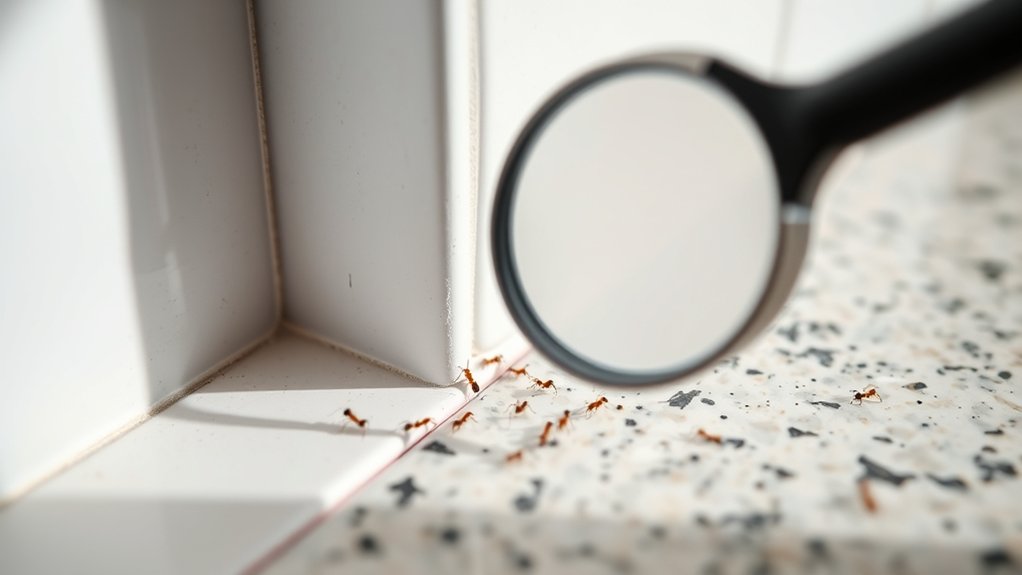
Before you treat the ants, follow their trail to find where they’re entering your kitchen. Watch their movement for several minutes, then trace the line backward toward its source. This ant trail identification process can reveal gaps near baseboards, windows, doors, cabinets, pipes, or utility openings.
> Follow the ant trail backward to uncover hidden entry points near baseboards, windows, doors, pipes, and utility openings.
Don’t disturb the ants while you observe them. Sudden movement may scatter the trail and make the entry route harder to locate.
Next, perform a careful entry point inspection. Use a flashlight to examine cracks, loose caulk, wall seams, and spaces around plumbing or electrical lines. Check both indoor and outdoor sides of likely openings when possible.
Mark each location with removable tape so you can treat and seal it later. If the trail disappears, place a small piece of paper nearby and recheck the area after a short interval.
Follow multiple trails if you see them, since ants may use more than one entrance into your kitchen.
Remove Food and Water Sources
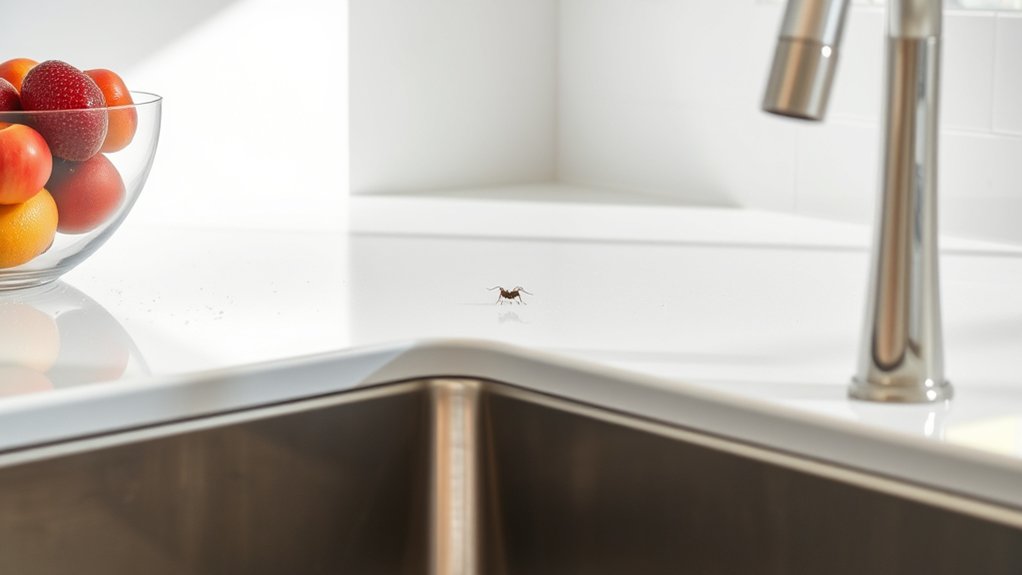
Once you’ve identified likely entry points, remove the food and water that keep ants returning to your kitchen. Start with Food storage: seal sugar, cereal, flour, pet food, and snacks in airtight containers. Don’t leave fruit, bread, or dirty dishes on counters overnight.
Wipe crumbs from tables, sweep the floor, and clean spills immediately, especially sticky juice or syrup. Empty your trash regularly, and use a bin with a tight-fitting lid.
Next, focus on Water elimination. Dry the sink, counters, and dish rack after use. Repair leaking faucets, pipes, or refrigerator lines, and check beneath the sink for dampness.
Don’t leave pet-water bowls out longer than necessary. Refill them on a schedule and wipe nearby splashes. Keep sponges and towels dry between uses, since ants may seek moisture in them.
Store produce properly, rinse recyclables, and maintain a clean, dry kitchen daily. Removing these resources makes your kitchen far less attractive to returning ants.
Erase Ant Trails With Soapy Water
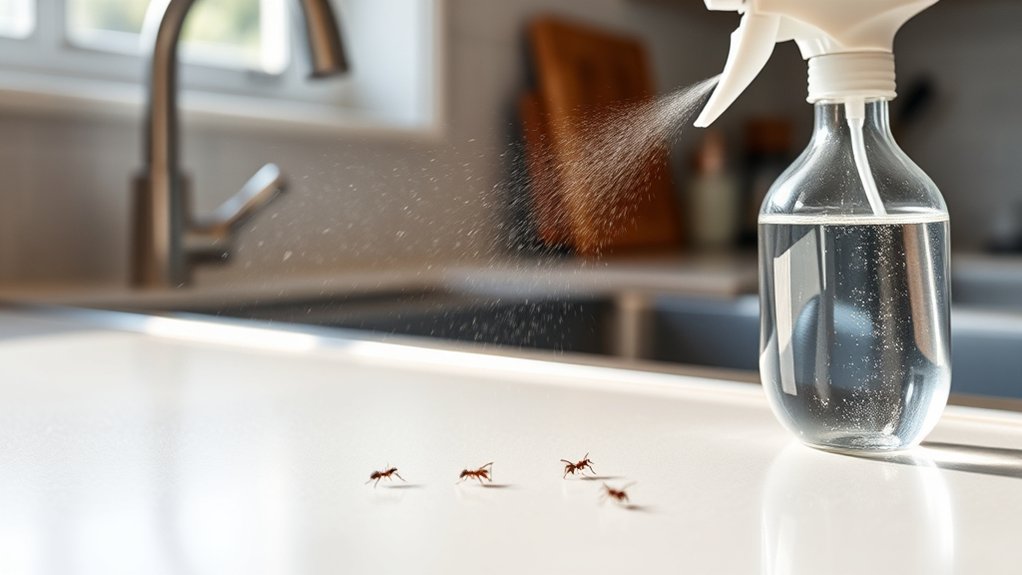
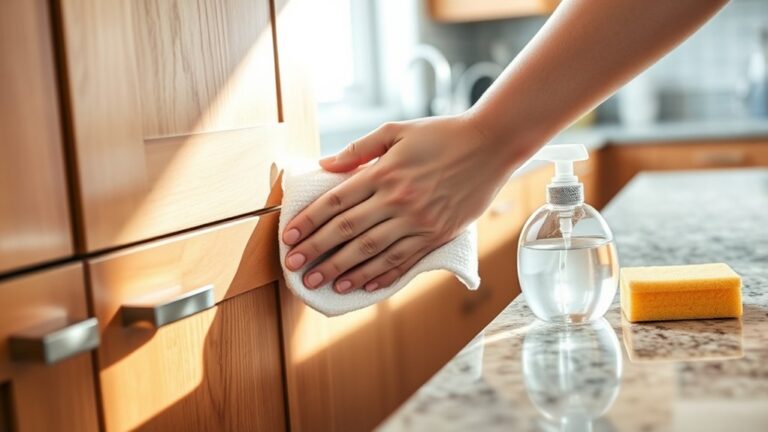
Erase visible ant trails with soapy water as soon as you spot them. Mix a teaspoon of liquid dish soap with a cup of warm water, then pour the solution into a spray bottle. Spray the trail, surrounding counter, backsplash, and entry points.
Erase ant trails promptly with soapy water, spraying counters, backsplashes, and entry points to remove scent cues and discourage repeat traffic.
Wipe each area thoroughly with a clean cloth to remove both ants and the scent chemicals they follow. Repeat the process whenever a trail reappears, especially near sinks, windows, doors, or wall cracks.
Use a fresh cloth and rinse food-preparation surfaces afterward. Don’t combine dish soap with bleach or other cleaners, since dangerous fumes can result.
Check hidden edges and corners, because even a small residue can guide more ants inside. Soapy water works as a cleaning step, while Natural repellents such as diluted vinegar may help discourage repeat traffic.
You can also place Homemade traps nearby to monitor activity, but keep your focus on removing trails and sealing the paths ants use to enter.
Use Ant Baits Safely in the Kitchen
Place ant bait stations along active routes, such as beneath the sink or beside a wall, where children and pets can’t reach them. Choose enclosed stations with slow-acting bait, so worker ants carry it back to the colony. Don’t spray insecticide near the bait; repellent chemicals can stop ants from feeding.
Use these safety practices:
- Read and follow the product label carefully.
- Keep bait away from food, dishes, and preparation surfaces.
- Wash your hands after handling each station.
- Replace stations only as the label directs.
- Remove stations when activity ends.
Check the area daily, and clean spills immediately. If you see bait damage or suspect ingestion, contact a poison-control center or veterinarian promptly.
Don’t place homemade mixtures where anyone could touch or eat them. Natural remedies may seem gentler, but they aren’t automatically safe for kitchens, children, or pets.
DIY traps can also contaminate surfaces or attract more pests. Store unused bait in its original container, tightly closed, and follow local disposal instructions.
Seal Cracks and Entry Points
Seal cracks and entry points after cleaning ant trails, because ants often return through the same gaps. Inspect where countertops meet walls, around pipes, beneath cabinets, and near windows. Use a flashlight to spot thin openings, then wipe away crumbs and moisture before sealing them.
| Entry point | Best material | Quick action |
|---|---|---|
| Wall cracks | Acrylic caulk | Fill and smooth |
| Pipe gaps | Silicone sealant | Seal around edges |
Apply caulk to narrow cracks and silicone around plumbing, where movement or moisture could weaken ordinary filler. Replace damaged cabinet trim and repair loose baseboards, too.
Keep the sealant off food-contact surfaces, and follow its drying instructions before using the area.
Ants may nest near warm, damp gaps, so closing access points disrupts their route without spreading chemicals. This targeted Pest prevention also helps you identify an Ant habitat behind walls or under fixtures.
Wear gloves, ventilate the kitchen, and remove excess sealant immediately. Check your work from several angles to ensure you haven’t left a visible opening.
For larger structural gaps, contact a qualified professional.
Stop Ants From Coming Back
To stop ants from coming back, keep your kitchen dry, clean, and free of food residue. Wipe counters after meals, sweep crumbs promptly, and rinse sticky containers before placing them in the recycling bin.
Store sugar, cereal, pet food, and other attractants in airtight containers. Don’t leave dirty dishes, standing water, or damp towels overnight.
Use these practical ant prevention habits:
- Empty indoor trash regularly and clean the bin’s rim.
- Repair dripping faucets and dry sinks before bedtime.
- Feed pets on a schedule, then remove leftover food.
- Mop floors with soapy water to erase scent trails.
- Trim plants and remove organic debris near kitchen windows.
For stronger pest proofing techniques, inspect your kitchen routinely and maintain clean storage areas. Keep food sealed, wipe spills immediately, and wash reusable shopping bags if they carry groceries.
You’ll reduce the odors and moisture that invite ants inside. Consistency matters: a few minutes of daily cleanup can discourage scouting ants and help keep your kitchen ant-free without relying on repeated treatments.
Know When to Call Pest Control
If ants keep returning despite consistent cleaning, sealed food, and moisture control, it’s time to call a pest control professional. Repeated trails may signal a nearby nest, hidden entry points, or multiple colonies.
Persistent ant trails after cleaning may indicate hidden nests, entry points, or multiple colonies requiring professional pest control.
You should also seek help if you see winged ants, large numbers of workers, or ants emerging from walls, cabinets, or electrical outlets. These signs can reveal concerning ant behavior that household sprays may not solve.
A licensed technician can identify the species, locate nesting areas, and recommend targeted treatment. Ask about pest control options, including baits, crack-and-crevice treatments, exclusion work, and follow-up visits.
Don’t rely on random sprays, which can scatter colonies and make treatment harder. Choose a company with proper licensing, clear pricing, and kitchen-safe methods.
Before the visit, clean counters, store food securely, and note where and when you see ants. Follow the technician’s instructions, keep children and pets away from treated areas, and schedule any recommended inspections to prevent another infestation.
Frequently Asked Questions
Can Ants Contaminate Food Stored in Sealed Containers?
Yes, ants can contaminate food, even when you store it in sealed containers. If the seal is loose, damaged, or dirty, ants may enter and carry bacteria, allergens, or debris from their Ant habitat onto the food.
You shouldn’t eat food from compromised packaging; discard it instead. Inspect containers regularly, wipe spills, and keep lids tightly closed.
Proper storage reduces Food contamination and helps prevent future infestations in your kitchen.
Are Kitchen Ants Dangerous to Pets or Children?
Kitchen ants usually aren’t dangerous to pets or children, but they can contaminate food and occasionally bite or sting, depending on the species. Watch for Ant health concerns such as allergic reactions, vomiting, or skin irritation after contact.
For Child safety precautions, keep bait stations and insecticides out of reach, clean spills promptly, and store food securely. Don’t let children or pets eat ants or touch treated surfaces.
Contact a doctor or veterinarian if symptoms appear.
How Quickly Do Ant Baits Usually Work?
Ant baits usually take several days to two weeks to eliminate a colony. You’ll often see more ants initially because workers carry the bait back to their nest.
Ant bait effectiveness depends on the product, colony size, and whether ants share it with the queen. For best results, follow bait application timing instructions and place stations near trails.
Avoid spraying insecticide nearby. Replace dried or empty bait, and keep it inaccessible to children and pets.
What Types of Ants Commonly Infest Kitchens?
You’ll commonly find several ant species in kitchens: odorous house ants, pavement ants, carpenter ants, and pharaoh ants. Small trails, sweet smells, steady scouting—these clues reveal their foraging behaviors.
Odorous house ants follow sugary spills; pavement ants seek crumbs and grease; carpenter ants prefer damp wood; pharaoh ants often invade warm, humid areas. You’ll identify them more accurately by noting size, color, nesting locations, and activity patterns.
Can Professional Pest Control Eliminate an Entire Ant Colony?
Yes, professional pest control can often eliminate an entire ant colony, especially when technicians locate and treat its nest. They’ll identify the species, use targeted bait or treatments, and seal entry points to prevent reinfestation.
You can try DIY pest solutions, but they may only kill visible workers without reaching the queen. Effective ant control methods combine professional treatment, sanitation, moisture reduction, and follow-up inspections.
Choose a licensed provider for safer, longer-lasting results.
Conclusion
With these seven steps, you can send kitchen ants packing and reclaim your counters. Find their entry point, remove tempting crumbs and moisture, wipe away trails, and place baits safely where children and pets can’t reach them.
Seal cracks, keep surfaces clean, and stay alert for new activity. If the invasion persists, call a pest professional. There’s no need to reenact an endless tiny siege worthy of Sisyphus.
A clean, sealed kitchen helps keep ants from returning and is the best way to kill ants in the kitchen for good.