
How Much Does a New Kitchen Cost?
Planning a new kitchen can feel overwhelming, especially when you’re unsure how much to budget. You’re not alone—many homeowners struggle to balance their ideal design with the reality of installation costs, appliances, and unexpected extras.
A new kitchen typically costs £15,000–£50,000, depending on your room size, layout, materials, appliances, and installation requirements. You might spend £5,000–£10,000 on a basic kitchen, £10,000–£25,000 on a mid-range design, or £25,000-plus on premium cabinetry and finishes.
Keeping your existing layout, choosing durable mid-range materials, and comparing itemised quotes can reduce costs. Add 10–15% for unexpected expenses, and consider the main price factors and saving strategies below.
Key Takeaways
- A complete UK kitchen renovation typically costs between £15,000 and £50,000, depending on size, materials, labour, and complexity.
- Budget kitchens cost approximately £5,000–£10,000, mid-range kitchens £10,000–£25,000, and premium kitchens from £25,000 upwards.
- Installation commonly adds £2,000–£6,000, while appliances, flooring, lighting, plumbing, and waste removal may cost extra.
- Keeping the existing layout, choosing standard units, and refinishing sound cabinets can significantly reduce renovation costs.
- Set aside a 10–15% contingency fund for unexpected structural, electrical, plumbing, or preparation work.
What Does a New Kitchen Cost?
What does a new kitchen cost? You’ll typically spend between $15,000 and $50,000 for a complete renovation, though your choices can push the total higher or lower. Labor, cabinetry, worktops, flooring, lighting, plumbing, and electrical updates often account for most of the budget. Your kitchen’s size and current condition also influence the final price.
You can control costs by keeping the existing layout, repairing usable elements, and choosing practical finishes. If you move walls, relocate plumbing, or upgrade wiring, expect additional labor and installation expenses. Don’t forget smaller necessities, including handles, taps, sinks, splashbacks, and waste removal.
Your desired style affects spending, too. Custom Kitchen decor may require more design and fitting time than ready-made options. Likewise, appliance brands offer different price points, warranties, and efficiency ratings, so compare long-term value rather than focusing only on the purchase price.
Request several detailed quotes before committing, and reserve around ten percent for unexpected problems during the work.
How Much Do Kitchen Tiers Cost?
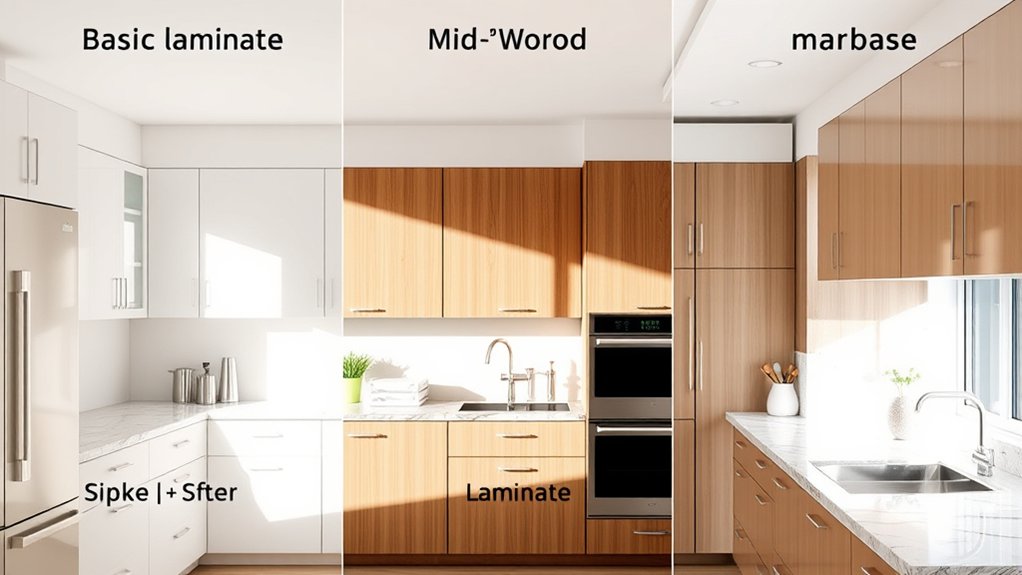
Kitchen tiers typically range from budget to mid-range and premium, with prices increasing as you choose better materials, custom cabinetry, specialist fittings, and more complex installation.
A budget kitchen may cost around £5,000–£10,000, making it suitable if you want a practical refresh with standard units and straightforward kitchen design.
A mid-range kitchen commonly costs £10,000–£25,000. You’ll gain more durable finishes, wider layout choices, improved storage, and greater flexibility with appliances and fittings.
This tier suits you if you want a noticeable upgrade without commissioning a fully bespoke room.
Premium kitchens often start at £25,000 and can exceed £50,000. You’ll pay for handmade cabinetry, luxury surfaces, integrated technology, distinctive detailing, and specialist craftsmanship.
Your location, room size, and structural requirements can shift these figures considerably. Current remodelling trends, such as open-plan layouts and large islands, may also increase costs.
Compare quotations carefully, define your priorities early, and choose the tier that matches your budget and long-term goals.
What Is Included in a Kitchen Budget?
Your kitchen budget should cover more than cabinets and worktops. Include appliances, flooring, lighting, plumbing, electrical work, delivery, installation, and waste removal. You’ll also need to account for design fees, surveys, permits, and any structural changes your room requires.
To build a realistic allowance, consider these four areas:
- Preparation: Include stripping out the old kitchen, disposing of rubble, and repairing walls or floors.
- Services: Allow for updated wiring, sockets, plumbing, ventilation, and lighting controls.
- Finishing touches: Budget for splashbacks, flooring, handles, taps, sinks, decorating, and final cleaning.
- Contingency: Reserve 10–15% for hidden damage, measurement changes, or unexpected labour.
Remember to price delivery and installation separately if your supplier doesn’t bundle them. Factor in kitchen organisation features, such as internal drawers, pull-out storage, and recycling systems.
You might also want appliance upgrades. Compare their energy ratings, warranties, and installation requirements before committing.
Clear inclusions prevent surprises and help you compare quotes fairly. Always confirm whether tax is included in every estimate.
How Much Do Kitchen Cabinets Cost?
Your cabinet costs will depend on the material you choose, from affordable laminate to premium hardwood. You’ll also want to compare stock cabinets with custom designs, which offer more flexibility but typically cost more. And don’t forget to include installation and labor fees when setting your budget.
Cabinet Material Costs
Cabinet material costs can range from about $2,000 for budget-friendly laminate or stock cabinets to more than $30,000 for custom solid-wood cabinetry. Your material choice affects durability, appearance, maintenance, and the total kitchen budget.
- Laminate: You’ll get an affordable, easy-clean surface in many colors and patterns, though edges may chip over time.
- Thermofoil: You can choose a smooth, seamless finish that resists stains but may peel near heat.
- Wood veneer: You’ll enjoy real-wood character at a lower price than solid lumber, with moderate care requirements.
- Solid wood: You’ll pay more for strength, repairability, and distinctive grain.
Eco friendly materials, such as bamboo or reclaimed wood, can reduce environmental impact while adding personality. Vintage cabinet styles may require specialized finishes or hardware, increasing material expenses.
Always compare samples, warranties, and maintenance needs before deciding.
Custom Versus Stock Cabinets
Beyond the material itself, the cabinet type you choose—stock, semi-custom, or fully custom—can substantially affect your kitchen budget. Stock cabinets come in standard sizes and limited finishes, making them the most affordable choice. They work well if your cooking space has common dimensions and you’re comfortable with fewer style options.
Semi-custom cabinets offer more door styles, colors, storage features, and size adjustments. You’ll pay more than you would for stock units, but you gain flexibility to coordinate your kitchen decor and improve how you use every cabinet.
Fully custom cabinets cost the most because they’re designed specifically for your layout, preferences, and storage needs. You can select unusual dimensions, specialized inserts, distinctive materials, and personalized details. Compare your priorities and budget before choosing the level of customization that best fits your kitchen.
Installation And Labor Fees
Installation and labor fees can add substantially to the cost of kitchen cabinets, especially when your layout requires demolition, adjustments, or custom fitting. You’ll typically pay for cabinet assembly, leveling, mounting, trim work, hardware installation, and cleanup.
A complicated Kitchen layout can increase hours, while different Design styles may require specialized techniques or finishing.
Before hiring a contractor, ask for an itemized estimate covering:
- Demolition and disposal of existing cabinets
- Cabinet installation, leveling, and anchoring
- Modifications for walls, floors, plumbing, or appliances
- Crown molding, panels, trim, and final adjustments
Get at least three written quotes, and confirm whether labor includes delivery, permits, and correcting hidden damage.
Stock cabinets usually install faster and cost less, whereas custom units demand precise fitting. Scheduling installation alongside countertop, electrical, and plumbing work can also prevent delays and duplicate service charges.
What Do Worktops and Islands Cost?
Worktops and islands can add considerably to your kitchen budget, with costs depending on the material, size, shape and edge detailing you choose. Laminate offers the most affordable route, while timber, quartz, granite and porcelain sit at progressively higher price points.
You’ll also pay more for thicker slabs, unusual layouts, waterfall ends, upstands, splashbacks and cut-outs for sinks or taps.
A small island with a simple worktop may cost a few hundred pounds, but a large, bespoke island can run into several thousand before installation.
Include templating, delivery, joining and fitting when you compare quotations, as these charges can notably affect the final total.
Your choice should balance durability, maintenance and appearance with your available budget. Coordinate the surface with your kitchen decor, but don’t assume premium appliance brands require an expensive worktop.
Ask suppliers for material samples, confirm warranties and check whether resealing or specialist care will create future costs. A clear specification helps prevent surprises.
How Much Do Kitchen Appliances Cost?
Kitchen appliances can cost from a few hundred pounds for basic models to several thousand for premium ranges, depending on the type, brand, energy rating and features you choose. Your overall budget depends on how many appliances you’re replacing and whether you choose freestanding or integrated models.
- Ovens: Allow £300–£1,500, with double ovens and induction options costing more.
- Hobs: Expect £150–£1,200, depending on gas, ceramic or induction technology.
- Fridges and freezers: Prices range from £250–£2,500, while American-style models cost more.
- Dishwashers: Budget £300–£1,200 for standard or premium integrated machines.
Eco-friendly designs can reduce running costs through lower energy and water consumption, although they may cost more initially. Smart technology, including app controls, remote diagnostics and automated cooking settings, also increases the purchase price.
You’ll save money by comparing warranties, energy ratings and retailer offers before buying. Consider replacing only outdated appliances rather than upgrading everything.
Measure each space carefully, check connection requirements and allow for delivery and installation charges when setting your final kitchen budget.
How Much Do Flooring, Lighting, and Plumbing Cost?
Flooring, lighting and plumbing can add several thousand pounds to a kitchen renovation, depending on the materials, layout and amount of installation required. Your choices will shape both the budget and the room’s practicality.
| Feature | Typical cost |
|---|---|
| Flooring | £500–£3,000 |
| Lighting | £300–£2,000 |
Your flooring options include vinyl, laminate, engineered wood, porcelain tile and natural stone. Vinyl usually costs least and handles spills well, while stone and premium wood raise material and preparation costs.
Measure the room carefully, and check whether the existing floor needs levelling.
Kitchen lighting may cost £300–£2,000, depending on whether you choose basic pendants, under-cabinet strips, recessed spotlights or layered controls.
You’ll get better value by planning positions before buying fittings.
Plumbing costs often range from £500 to £2,500. Moving a sink, dishwasher or washing machine increases the price because you’ll need longer water and waste connections.
Relocating pipes over a significant distance may also require access through walls or floors, adding to your overall budget. Always include suitable isolation valves and leak protection.
How Much Does Kitchen Installation Cost?
Professional kitchen installation typically costs £2,000–£6,000, depending on the room’s size, the number of units, and how much preparation is required. You’ll usually pay for assembling cabinets, fitting worktops, installing appliances, and connecting services.
Kitchen installation costs £2,000–£6,000, covering cabinet assembly, worktops, appliances, and service connections.
Labour rates vary by location and project complexity, so request several itemised quotes before choosing an installer.
Your kitchen design and renovation planning should allow time for:
- Removing your existing kitchen and disposing of waste.
- Assembling and securing cabinets, panels, and worktops.
- Fitting sinks, taps, appliances, and extractor equipment.
- Testing connections, adjusting doors, and completing snagging.
You’ll often pay extra for demolition, structural preparation, plastering, or correcting uneven walls and floors.
Confirm whether your quote includes delivery, waste removal, finishing work, and VAT. A project manager may charge separately, but coordinating trades can reduce delays and mistakes.
Book your installer after confirming measurements and product availability, and keep a contingency of around 10% for unexpected preparation work.
Clarify payment stages in writing, rather than paying the full amount upfront.
Which Features Make a Kitchen More Expensive?
A kitchen can become more expensive when you choose premium cabinet materials and finishes, high-end appliances, or upgraded fixtures. Custom layouts and specialty features can also increase labor and installation costs. By understanding which choices affect the price, you can create a more realistic budget.
Cabinet Materials and Finishes
Cabinet materials and finishes can considerably affect how much a new kitchen costs. You’ll usually pay less for laminate or thermofoil doors than for solid wood, plywood, or custom veneers. Your choice also shapes durability, appearance, and maintenance.
- Laminate: Affordable, versatile, and easy to clean, with many colors and patterns.
- Thermofoil: Smooth and moisture-resistant, though heat can damage its surface.
- Painted wood: Offers classic Kitchen decor appeal, but it may chip or require touch-ups.
- Natural wood: Provides distinctive grain and long-lasting value, especially with premium stains.
You’ll spend more when you choose custom sizing, intricate profiles, hand-applied finishes, or specialty hardware. Consider how each option supports your Storage solutions, including deep drawers and pull-outs.
A durable mid-range material often delivers the best balance between style, function, and budget. It can also help you avoid replacement costs later.
Premium Appliances and Fixtures
Appliance and fixture choices can raise your kitchen budget just as much as cabinet materials. During your kitchen renovation, you’ll pay more for professional-grade ranges, built-in refrigerators, quiet dishwashers, and smart appliances.
High-end faucets, deep sinks, pot fillers, and filtered-water taps also increase costs, especially when you choose premium finishes such as brass or matte black. Current design trends can make statement fixtures tempting, but prioritize features you’ll use daily.
| Upgrade | Cost impact |
|---|---|
| Pro range or built-in refrigerator | High |
| Designer faucet or pot filler | Moderate to high |
Energy efficiency, warranty coverage, installation requirements, and replacement parts affect long-term value. Compare performance ratings and service availability before buying.
You don’t need every luxury feature. Selecting two or three meaningful upgrades can create a polished kitchen without overwhelming your budget.
Custom Layouts and Features
Custom layouts and features can increase kitchen costs quickly because they often require more labor, materials, and structural changes. If you move plumbing, gas lines, walls, or electrical circuits, you’ll pay for permits and specialized installation.
Effective kitchen design can still make those upgrades worthwhile by improving comfort and resale appeal. Careful layout optimization helps you prioritize features that deliver the greatest benefit.
- Custom cabinetry: Made-to-measure doors, specialty finishes, and interior organizers cost more than stock units.
- Islands: Oversized islands may require new wiring, plumbing, seating support, or reinforced flooring.
- Structural changes: Removing walls or adding windows involves engineering, demolition, and repairs.
- Specialty features: Walk-in pantries, banquettes, pot fillers, and hidden appliances increase material and labor costs.
Before committing, ask your contractor for separate estimates. You can then compare convenience, appearance, and long-term value against your budget.
How Can You Reduce New Kitchen Costs?
You can reduce new kitchen costs by setting a firm budget, comparing quotes, and prioritizing upgrades that improve daily function. Start by separating must-haves from nice-to-have features, then postpone decorative extras if funds get tight.
Keep your existing layout when possible, because moving plumbing, gas lines, and electrical connections can quickly increase labor costs.
Maintain your existing kitchen layout when possible to avoid costly plumbing, gas, and electrical changes.
Choose durable, mid-range materials rather than premium brands, and compare prices from several suppliers. You might save by selecting ready-to-assemble cabinets, standard appliance sizes, and simple hardware.
Refinish sturdy cabinets instead of replacing them, and consider open shelving where it suits your storage needs.
Use these renovation tips to plan purchases carefully and avoid costly changes during construction. For affordable kitchen decor, refresh the space with paint, lighting, handles, rugs, or window treatments.
Finally, ask contractors for detailed, itemized quotes, confirm what each includes, and keep a contingency fund for unexpected repairs.
Frequently Asked Questions
How Long Does a New Kitchen Renovation Typically Take?
A new kitchen renovation typically takes six to twelve weeks once construction begins, though your project may finish sooner or take longer. You’ll spend time planning the kitchen layout, choosing materials, and finalizing appliance selection before work starts.
Demolition usually takes a few days, while electrical, plumbing, cabinetry, countertops, flooring, and finishing require several weeks.
Delays can arise from permits, backordered products, structural surprises, or contractor scheduling, so build in extra time.
Do I Need Planning Permission for a New Kitchen?
You usually don’t need planning permission for a new kitchen if you’re only replacing units, worktops, flooring, or appliances within your existing home. You may need approval if your project involves an extension, structural alterations, moving walls, changing windows, or converting another space.
Check local rules before work begins, especially in a listed building or conservation area. Plan your Kitchen layout and Appliance selection carefully, and confirm building regulations separately.
What Warranties Should I Expect From Kitchen Suppliers and Installers?
You should expect clear written warranties from both your kitchen supplier and installer. Appliance warranties typically last two to five years, although premium brands may offer longer cover; register each appliance promptly.
Material guarantees should cover cabinets, worktops, doors, and hardware against manufacturing defects, often for five to twenty-five years. Your installer should guarantee workmanship, commonly for one to two years.
Check exclusions, maintenance requirements, claim procedures, and whether guarantees transfer if you move.
How Can I Prepare My Home for a Kitchen Renovation?
Prepare your home by clearing cupboards, removing wall décor, and creating a temporary cooking area. Protect floors, furniture, and nearby rooms with dust sheets and plastic barriers.
Arrange secure storage for appliances and materials, and confirm access for deliveries and installers. Complete budget planning before work begins, including contingency funds for unexpected repairs.
Finalize material selection, measurements, colors, and finishes early. Disconnect utilities only through qualified professionals, and tell neighbors about noisy work.
When Is the Best Time of Year to Install a New Kitchen?
You’ll usually find the best time to install a new kitchen during late winter or early spring. Contractors often have greater availability, helping you secure your preferred schedule and potentially benefit from seasonal discounts.
Avoid periods surrounding major holidays, when suppliers and tradespeople may face holiday delays. If you’re renovating during summer, book several months ahead because demand rises.
Choose your timing based on contractor availability, material lead times, and your household’s needs.
Conclusion
A new kitchen can feel like a challenging expense, yet it can also become the heart of your home. You might compare sleek islands and premium worktops with practical cabinets, simple lighting, and careful budgeting.
The difference between overspending and saving often comes down to your choices, not your dreams. Plan your priorities, gather detailed quotes, and leave room for surprises.
With the right balance, you’ll create a beautiful, functional kitchen without letting the cost of a new kitchen overwhelm you.