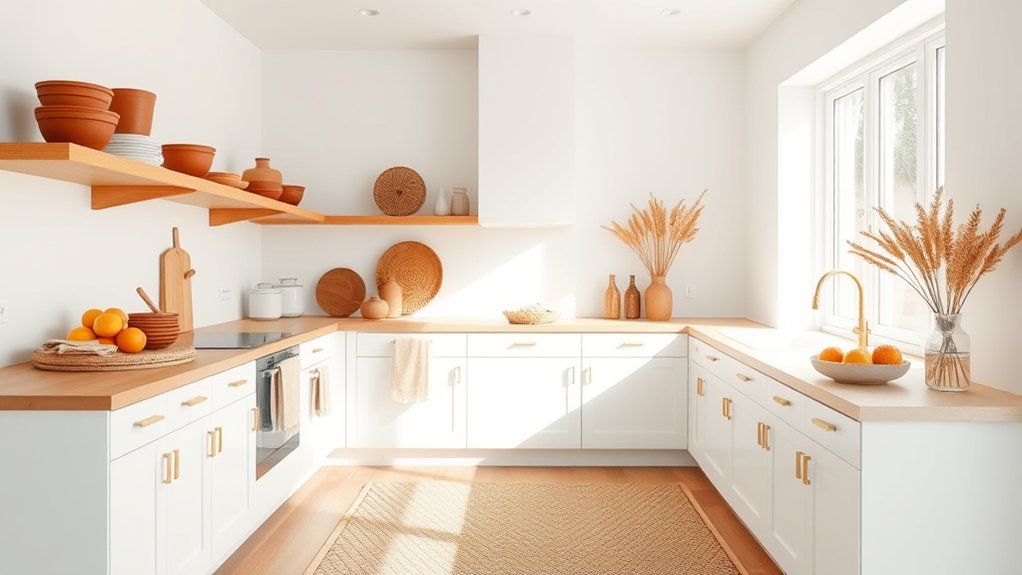
10 Ways to Warm Up a White Kitchen
A white kitchen can look bright and timeless, but sometimes it feels cold, flat, or lacking in personality. You’re not alone—many people struggle to make a white kitchen feel warm and welcoming without losing its clean, airy appeal.
Warm up your white kitchen with natural wood accents, woven runners, linen curtains, and earthy pottery. Add plants in ceramic or terracotta pots, then choose 2700K–3000K lighting for a softer glow.
Swap cool hardware for brass, bronze, or copper, and style open shelves with useful favorites. Consider gently veined counters, handmade tile, and warm neutral rugs.
Keep walls and upper cabinets light, using mirrors or glossy surfaces to reflect daylight. You’ll find even more inviting ideas below.
Key Takeaways
- Add natural wood through stools, shelves, cutting boards, or a butcher-block island to create warmth and visual contrast.
- Layer woven runners, linen towels, natural-fiber rugs, and earthy pottery for softness and texture.
- Use greenery in ceramic pots, terracotta containers, or woven baskets to bring life and natural color into the kitchen.
- Choose warm lighting between 2700K and 3000K, complemented by pendants, under-cabinet lights, and dimmers.
- Replace cool hardware with aged brass, bronze, or copper, and consider textured backsplashes or gently veined countertops.
Start With Natural Wood Accents
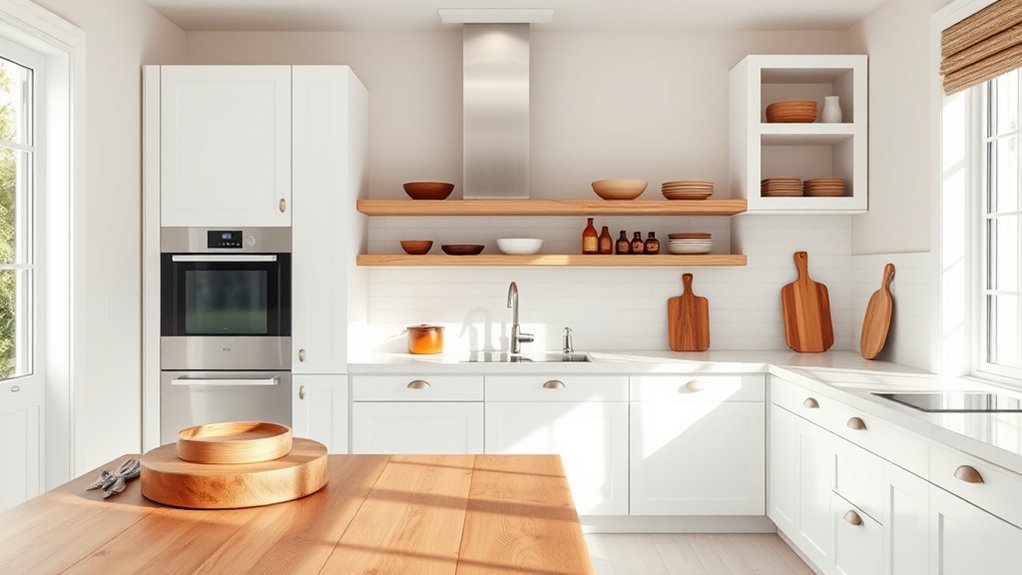
Natural wood accents instantly bring warmth and texture to a white kitchen. You can introduce this inviting contrast with a butcher-block island, oak stools, or open shelves that display your favorite dishes.
Wooden accents soften crisp cabinetry while adding depth without overwhelming the room. Choose finishes with visible grain to create Rustic charm, or select smooth, pale wood for a cleaner, contemporary feel.
You can also frame a window with simple timber trim, install a reclaimed-wood range hood, or add a cutting board that stays within easy reach. Repeat the same wood tone in two or three areas so the design feels intentional rather than scattered.
If your kitchen already has wood flooring, match its undertones instead of forcing an exact finish. Wooden accents work best when you balance them with white surfaces and restrained hardware.
With a few thoughtful choices, you’ll make the space feel grounded, welcoming, and naturally connected.
Layer Warm Kitchen Textiles
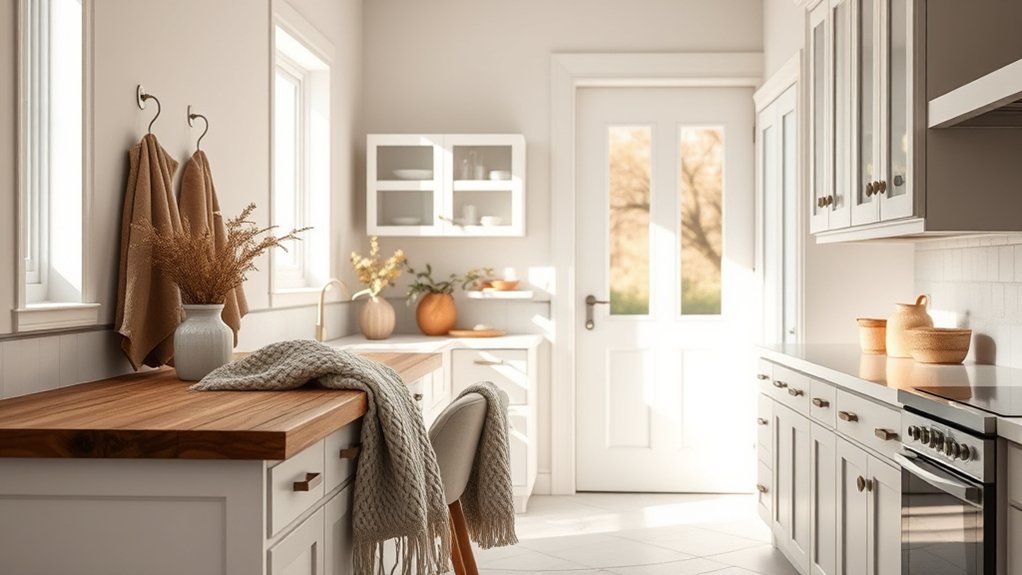
Layer a textured runner across the floor to soften your white kitchen and add warmth underfoot. You can also hang woven towels from a hook or oven handle for an easy touch of inviting texture. Together, these simple details create a cozier look without overwhelming the clean space.
Add Textured Runner
A textured runner is an easy way to soften a white kitchen while adding color and underfoot comfort. Choose a length that follows your cabinet line without blocking doors or creating a tripping hazard.
For narrow galley kitchens, center the runner between counters. In larger spaces, place one near the sink or island. Consider subtle stripes, geometric patterns, or faded motifs in clay, caramel, sage, or navy.
These shades warm crisp white cabinetry without overwhelming the room. Compare runner materials, including washable cotton, durable wool, flatweave jute, and cushioned recycled fibers.
Select a low-pile design for easier cleaning and smooth door clearance. Add a nonslip pad underneath to keep the runner secure, protect your flooring, and make standing during meal prep more comfortable.
Display Woven Towels
Woven towels add warmth and useful texture to a white kitchen without taking up counter space. Choose woven towels in cotton, linen, or soft terry cloth to introduce inviting fabric textures beside sleek cabinets and stone counters.
Hang one from your oven handle, or fold a pair over an open shelf for a relaxed, layered look. Select colors that complement your kitchen’s palette, such as oatmeal, rust, sage, or muted blue.
Stripes, checks, and subtle geometric patterns can add interest without overwhelming the room. Rotate towels seasonally to refresh the space and keep heavily used pieces clean.
For a polished display, coordinate their colors with your runner, pottery, or window treatments. Avoid overcrowding handles; leave enough room for each towel to hang neatly and dry properly.
Choose Warm Light Bulbs and Fixtures
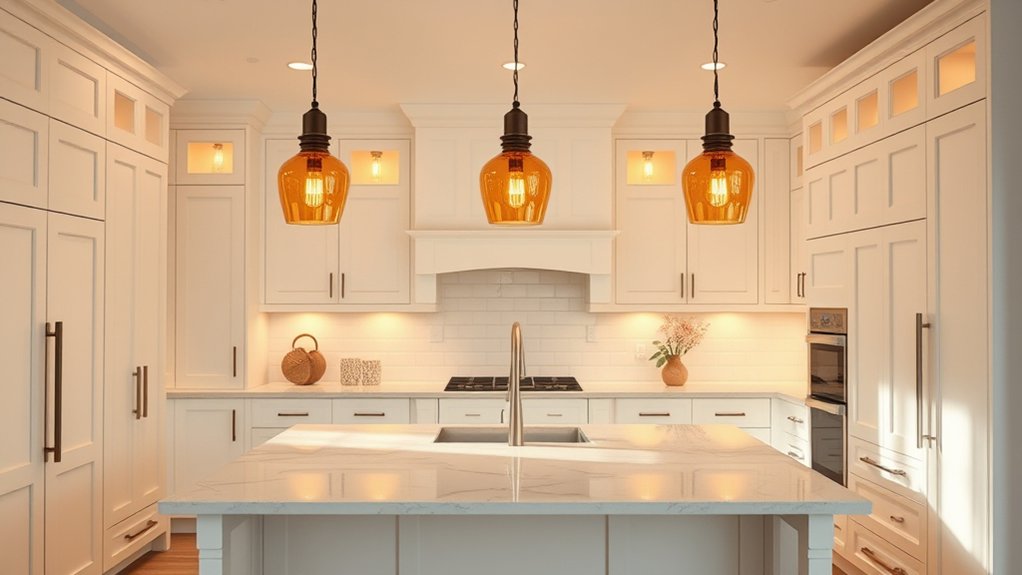
Warm lighting can make a white kitchen feel inviting rather than stark. Choose bulbs between 2700K and 3000K to add a soft, golden glow without making countertops look yellow.
You’ll create comfortable ambient lighting when you layer sources instead of relying on one harsh ceiling fixture. Install dimmable bulbs so you can brighten the room for food preparation and lower the intensity during relaxed meals.
Pay attention to fixture selection, too. Pendant lights over an island can focus warmth where you need it, while under-cabinet strips reduce shadows across work surfaces.
Pick shades made from frosted glass or fabric to diffuse glare, and use bulbs with a high color-rendering index so ingredients and finishes appear natural.
If your kitchen has several circuits, give each lighting zone its own switch. You’ll gain better control over brightness and avoid a flat, overly bright effect.
Always confirm that every bulb matches the fixture’s recommended wattage and base size.
Use Earthy Decor in Small Doses
Bring warmth to your white kitchen with natural textures like woven baskets, wood, and linen. Add earthy pottery, cutting boards, or a muted runner for a few cozy touches. This keeps the space inviting without taking away from its clean, airy feel.
Add Natural Textures
Natural textures can keep a white kitchen from feeling stark without overwhelming its clean design. Add a woven runner, rattan baskets, or a bamboo tray to introduce subtle visual interest.
Natural fibers, such as jute, cotton, and linen, soften hard surfaces while keeping the room’s palette light and airy. Choose one or two pieces rather than filling every counter and shelf, so your kitchen still feels open.
Organic materials bring gentle variation through grain, weave, and finish. Try a wood cutting board, a stone utensil holder, or a ceramic vase with a handmade shape.
Keep these additions functional whenever possible, letting their textures amplify everyday tasks. Look for earthy tones that complement your white cabinetry, but avoid collecting too many competing finishes.
A restrained mix will create warmth without making the space feel cluttered or overly styled.
Layer Warm Accents
Earthy accents can make a white kitchen feel more inviting without disrupting its clean look. Choose terracotta, olive, sand, or walnut through a few intentional details rather than filling every surface.
These cozy color palettes add depth while preserving your kitchen’s airy character. Try a clay vase, woven runner, wooden cutting boards, or amber glass canisters.
Then use ambient lighting techniques, such as a bronze pendant, warm bulbs, or under-cabinet strips, to soften the room after sunset. Keep finishes coordinated so each accent feels connected, not cluttered.
| Accent | Best placement | Effect |
|---|---|---|
| Terracotta vase | Open shelf | Adds grounded color |
| Walnut board | Countertop | Introduces warmth |
| Woven runner | Sink area | Softens hard surfaces |
Rotate seasonal pieces occasionally, and leave plenty of white space around them. You’ll create a welcoming kitchen that still feels crisp, modern, and thoughtfully styled.
Update Hardware With Warm Metals
Swap cool cabinet pulls and knobs for warm brass, bronze, or copper hardware to give a white kitchen instant depth. These metals break up an all-white palette and add a welcoming glow without requiring a full renovation.
Choose one finish for consistency, or combine related tones carefully for a collected look. Vintage finishes, such as aged brass or oil-rubbed bronze, bring character and soften sleek cabinetry.
If you prefer a cleaner style, select brushed metals that reflect light gently while hiding fingerprints better than polished options.
Match your hardware to your kitchen’s proportions. Oversized pulls can make large drawers feel intentional, while small knobs suit upper cabinets and compact doors.
Before installing anything, measure existing hole spacing to avoid unnecessary drilling and patching. Consider replacing faucet, lighting, and appliance details with coordinating warm metal accents, too.
You don’t need to match every piece exactly; repeating the undertone creates harmony. A simple hardware swap can make white cabinetry feel richer, more personal, and finished.
Add Greenery to Your White Kitchen
Once warm metal hardware adds depth, bring in greenery to make your white kitchen feel livelier and more inviting. Indoor plants soften crisp cabinetry, introduce natural color, and create a welcoming connection to the outdoors.
Choose herbs, trailing pothos, or a compact rubber plant according to your light and available counter space. Place them where you’ll notice their texture without blocking prep areas or crowding appliances.
| Greenery choice | Feeling it creates |
|---|---|
| Fresh herbs | Comfort and connection |
| Trailing vines | Relaxed movement |
| Leafy plants | Calm, natural warmth |
Use simple ceramic pots, woven baskets, or terracotta containers to complement your finishes. Vary heights and leaf shapes for a collected look, but keep the arrangement intentional.
Greenery accents can also brighten a window ledge or occupy an empty corner with effortless charm. Water plants consistently, wipe dusty leaves, and remove fading foliage so your kitchen stays fresh.
Even one healthy plant can make white surfaces feel less stark and more alive. Let nature’s color become the room’s easiest source of warmth.
Style Shelves With Useful Favorites
Style your open shelves with everyday essentials you reach for often, like mugs, bowls, and wooden utensils. Group pieces by color or texture to add warmth and keep everything easy to grab. This creates a display that feels both practical and personal.
Display Everyday Essentials
Open shelves can warm a white kitchen when you treat useful items as part of the décor. Start with the pieces you reach for every day, such as mugs, bowls, plates, and serving boards.
Arrange them in small, intentional groups so the shelves feel welcoming rather than crowded. Place your favorite coffee cups near the kettle to make a cozy breakfast routine feel inviting.
Stack colorful dinnerware where you can easily grab it for lunches and dinners. Add glass jars filled with coffee, tea, or grains to introduce texture while keeping staples visible.
Let a few wooden utensils, linen napkins, or woven baskets soften the clean backdrop. Keep labels facing forward, vary heights, and leave breathing room between groups.
Your shelves should make daily tasks easier while giving the kitchen warmth and personality.
Mix Function With Style
Choose useful favorites that add character to your shelves, such as a sculptural teapot, a well-used cutting board, or a colorful serving bowl. Arrange these pieces where you can reach them easily, letting daily tools double as decor.
Create color contrast with warm wood, deep blue, or terracotta against your white cabinets. You’ll make the kitchen feel layered without adding clutter.
- Stack favorite cookbooks beneath a small plant or ceramic jar.
- Display wooden utensils in a handsome crock for texture and convenience.
- Group stylish accessories with practical items, keeping each shelf balanced.
Vary heights and shapes to guide the eye, but leave breathing room around every object. Rotate seasonal pieces when you want a fresh look.
If an item rarely serves a purpose or brings you joy, store it elsewhere. This approach keeps your shelves inviting, personal, and useful every day.
Warm Up Counters and Backsplashes
Warm up a white kitchen with counters and backsplashes in natural, softly varied materials. Choose countertop materials that introduce gentle movement, such as honed soapstone, warm-veined quartzite, butcher block, or creamy marble.
Their subtle color shifts keep your white cabinetry from feeling stark without overwhelming the room. If you prefer low maintenance, select quartz with a muted stone pattern rather than a highly polished, dramatic finish.
Use backsplash designs to add texture and quiet contrast. Handmade ceramic tile brings slight variations in glaze and shape, while zellige tile catches light with an artisanal, irregular surface.
A slab backsplash in softly veined stone creates a calm, continuous backdrop and simplifies cleaning. You can also pair a wood counter with a pale tile backsplash for balanced warmth.
Keep grout close to the tile color to maintain a cohesive look, or choose a slightly darker shade to define the pattern. Sample every finish beside your cabinets before committing.
Lighting can change how each material appears throughout the day.
Soften White Walls and Floors
Soften white walls and floors with warm neutrals, natural textures, and subtle pattern. You can create a welcoming foundation without repainting or replacing every surface. Choose creamy beige, soft taupe, or pale clay for wall art, curtains, or a washable runner. These shades add gentle contrast while keeping your kitchen feeling fresh.
Layer tactile materials to make hard surfaces feel less stark:
- Hang woven shades or linen café curtains for relaxed texture.
- Place a jute, sisal, or vintage-style runner over white flooring.
- Add wood-framed prints, rattan accents, or ceramic pieces nearby.
You’ll create visual warmth by varying finishes, not by crowding the room. Select rugs with quiet geometric designs or delicate botanical motifs to introduce pattern without overwhelming your cabinetry.
Then personalize the walls with vibrant artwork, and repeat one or two hues through colorful accessories. Keep proportions balanced: a generously sized piece can anchor an empty wall, while smaller accents can connect the floor and furnishings. Choose durable, easy-clean textiles for everyday practicality.
Keep Warmth From Making the Kitchen Feel Dark
Let natural light lead the design so warm accents add comfort without making the kitchen feel dim. Keep upper cabinets, walls, and ceilings light to reflect daylight, then introduce warmth through wood stools, woven pendants, or terracotta accessories instead of covering every surface in deeper tones.
Let daylight set the tone, using light surfaces and warm accents to create comfort without making the kitchen feel dim.
Use Color contrast strategically: pair honey oak with crisp white, or balance brass hardware against pale cabinetry, so each accent stands out without weighing down the room.
Choose window treatments that filter glare while preserving brightness. Sheer linen curtains, woven shades, or top-down blinds can soften harsh sun without blocking it entirely.
Arrange mirrors, glossy tile, or reflective appliances across from windows to bounce light into darker corners. At night, layer under-cabinet strips, pendant lights, and dimmable ceiling fixtures with warm-white bulbs.
You’ll create a welcoming glow while keeping the kitchen visually open. Limit heavy rugs, dark backsplashes, and bulky furniture, especially near windows, where they can absorb valuable light.
Frequently Asked Questions
How Can I Warm up a White Kitchen on a Limited Budget?
You can warm up a white kitchen cheaply by adding color, texture, and softer lighting. Install warm-toned bulbs or affordable accent lighting beneath cabinets to create a cozy glow.
Add wooden cutting boards, woven baskets, and a colorful runner for natural warmth. Layer in textured accessories, such as linen towels, ceramic vases, and rattan trays.
Bring in herbs or small plants, and swap hardware for budget-friendly brass or matte-black options.
Which Paint Colors Complement a White Kitchen Without Overwhelming It?
Soft greige, warm taupe, and muted sage complement a white kitchen without overwhelming it. Coincidentally, these gentle shades work beautifully with natural wood, woven textures, and brushed metals.
Choose greige for a polished, balanced backdrop, taupe for cozy depth, or sage for a subtle organic note. Use accent walls sparingly, perhaps behind open shelving or a breakfast nook.
Add color accents through textiles, artwork, and ceramics, then keep surrounding tones light for harmony.
How Do I Warm up a White Kitchen Without Making Permanent Changes?
You can warm up a white kitchen without permanent changes by layering cozy textiles, such as washable runners, woven seat cushions, and linen towels in earthy shades. Add ambient lighting with plug-in sconces, rechargeable lamps, or warm-toned bulbs.
Display wooden cutting boards, rattan baskets, and ceramic pieces to introduce natural texture. Bring in herbs or flowers, and use removable art, peel-and-stick accents, and seasonal accessories to create inviting character without altering surfaces.
Can a White Kitchen Still Feel Warm in a Small Space?
Can a white kitchen still feel warm in a small space? Absolutely—you can create comfort without sacrificing brightness or room.
Add cozy textiles, such as a runner, washable café curtains, or soft seat cushions, to introduce texture underfoot and around seating.
Layer ambient lighting with warm bulbs, under-cabinet strips, and a small pendant to soften stark surfaces.
Choose wood cutting boards, woven baskets, and a few earthy accents to make the compact kitchen feel inviting.
How Often Should I Refresh Decorative Elements in a White Kitchen?
Refresh your decorative elements every few months, or whenever your kitchen starts feeling visually flat. Rotate Decorative accents—such as artwork, linens, stools, and countertop accessories—about three to four times yearly.
Use Seasonal updates to introduce warmth, color, and texture without overwhelming the white backdrop. You don’t need a complete makeover; simply swap a few pieces, edit clutter, and keep the space feeling fresh, personal, and inviting.
Conclusion
With a few thoughtful touches, you can turn a white kitchen from stark to inviting. Picture sunlight glinting off warm brass, wooden boards adding honey-colored grain, and linen towels softening crisp counters.
A glowing pendant, earthy pottery, and shelves filled with everyday favorites create a welcoming rhythm without overwhelming the room. Keep the palette light, but let texture and warmth lead.
Soon, your kitchen won’t just look beautiful. These ideas for warming up a white kitchen will make it feel like the heart of your home.