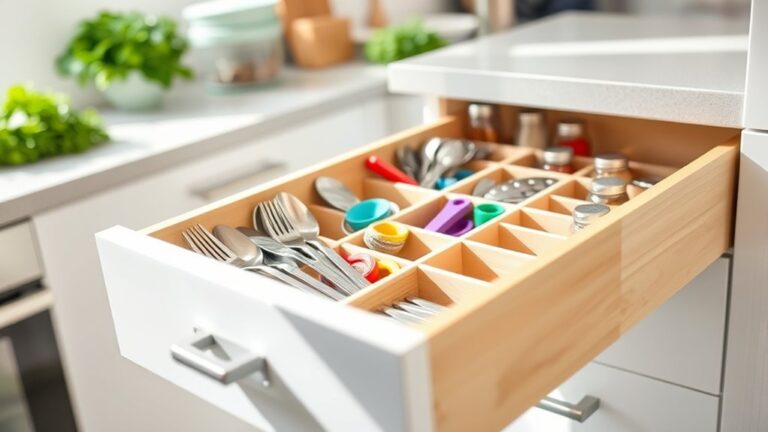

How Do You Spell Kitchen?
Struggling to remember how to spell kitchen? You’re not alone—many people mix up the letters, especially when writing quickly or relying only on pronunciation. This guide makes it simple.
You spell it kitchen: K-I-T-C-H-E-N. You pronounce it “KITCH-uhn,” with emphasis on the first syllable. To remember the spelling, focus on the tch pattern, as in “catch” and “match.”
Common mistakes include “kichen,” “kitchin,” and “kithcen,” often caused by writing too quickly or relying only on pronunciation.
A kitchen is a room where you prepare, cook, and store food. Keep exploring to uncover its uses, synonyms, plural form, and translations in other languages.
Key Takeaways
- The correct spelling is kitchen.
- It contains the letters k-i-t-c-h-e-n.
- Pronounce it “KITCH-uhn”: /ˈkɪtʃən/.
- Common misspellings include kichen, kitchin, and kithcen.
- The plural form is kitchens, without an apostrophe.
How Do You Spell Kitchen?
Understanding the word helps you describe your home clearly. You might search for kitchen design ideas when you want to improve cabinets, lighting, counters, or storage. You can also share cooking tips from your kitchen, including ways to organize ingredients, sharpen knives, or prepare meals efficiently.
When you use “kitchen” in a sentence, check that it fits the meaning. You can refer to one kitchen, several kitchens, or a kitchen area. Keep the spelling consistent whenever you write recipes, shopping lists, messages, or home improvement plans. This straightforward approach helps you communicate confidently and accurately.
Why Is Kitchen Easy to Misspell?

Although “kitchen” is a familiar word, it’s easy to misspell because its pronunciation doesn’t clearly reveal every letter. When you say it quickly, the middle “t” may sound faint, so you might leave it out or place it incorrectly.
The ending can also cause confusion: “-chen” sounds like “chən,” not like the spelling patterns you may expect from similar words.
Common spelling challenges include swapping the “t” and “c,” writing “kitchin,” or choosing “kichen” without the second consonant. You may also rely on the word’s sound and assume each pronounced syllable matches a separate letter.
That approach often fails with English words containing silent or softened sounds.
For useful pronunciation tips, say the word slowly in two parts: “kitch” and “en.” Notice the crisp “k” sound, the brief “t” after “i,” and the final “en.”
Then repeat it while visualizing K-I-T-C-H-E-N. This practice connects the sound sequence to the correct letter order and helps you avoid habitual errors.
What Does Kitchen Mean?
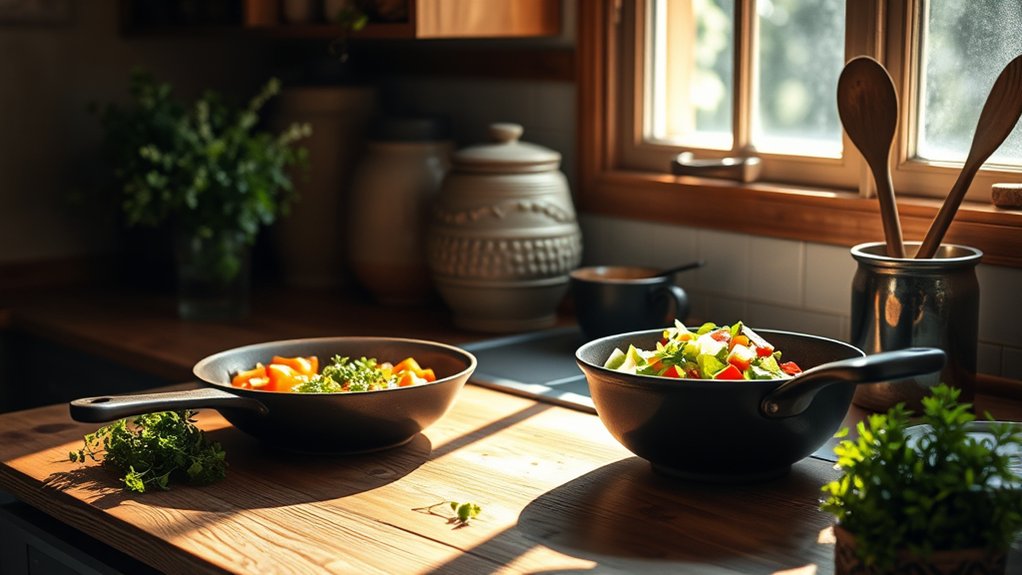
What does “kitchen” mean? A kitchen is the room or space where you prepare, cook, and sometimes store food. When you use this word, you usually mean more than cabinets, appliances, and counters. You’re describing a central part of daily life, where meals come together and people often gather.
Kitchen history shows that kitchens have changed with technology, culture, and household design. Early kitchens centered on open fires, while modern kitchens may include ovens, refrigerators, sinks, islands, and specialized tools.
Their layouts differ, but their purpose remains familiar: helping you transform ingredients into food.
In culinary terminology, “kitchen” can also describe a professional cooking operation, such as a restaurant kitchen or a hotel kitchen. You might hear related terms such as galley kitchen, commercial kitchen, or test kitchen.
Understanding the meaning helps you recognize how context shapes the word. Whether you’re discussing a home or workplace, “kitchen” identifies a place connected with food preparation.
How Do You Pronounce It?
How do you pronounce “kitchen”? Say it as KITCH-uhn, with emphasis on the first syllable. The opening sound rhymes with “itch,” while the second syllable sounds like “uhn,” not “chen.” Keep the pronunciation short and crisp: /ˈkɪtʃən/.
For useful pronunciation tips, start by saying “kit” and then add “chun” softly. Blend the sounds together without stressing the final syllable.
Your tongue should touch the ridge behind your upper teeth for the “t,” then move quickly into the “ch” sound. Practice slowly, then repeat the word at a natural speaking pace.
Touch the ridge behind your upper teeth for “t,” transition smoothly into “ch,” then practice slowly before speaking naturally.
You may notice regional pronunciation differences, especially in the vowel quality or the strength of the final syllable. These variations rarely prevent understanding, so you don’t need to copy one particular accent.
Listen to speakers in your area, compare their pronunciation with dictionary audio, and choose the version that feels natural while keeping the first syllable clearly stressed.
What Are Common Misspellings of Kitchen?
You may see “kitchen” misspelled as “kichen,” “kitchin,” or “kithcen.” To spell it correctly, remember the t after “ki” and the ch before “en.” Knowing these common mistakes can help you spell “kitchen” with confidence.
Common Kitchen Misspellings
Kitchen is commonly misspelled as “kichen,” “kitchin,” or “kithcen,” often because the middle letters are easy to rearrange or omit. You might also type “kichen,” dropping a letter, or “kitchn,” shortening the word too aggressively.
These errors often appear when you write quickly, rely on autocorrect, or hear the word without seeing it. You can reduce mistakes by slowing down and checking each letter before submitting a message, recipe, label, or search.
When you research kitchen organization tips, accurate spelling helps you find useful articles and storage products. The same applies when you look up cooking safety guidelines, where a small typing error can lead you toward incomplete results.
If a misspelling looks unfamiliar, compare it with trusted writing and notice which letters you accidentally moved, omitted, or repeated.
Correct Kitchen Spelling
The correct spelling is “kitchen,” with t-c-h in the middle and no extra letters.
You may accidentally write “kichen” by dropping the t, “kitchin” by replacing e with i, or “kitchhen” by adding an unnecessary h.
These errors often appear when you type quickly or rely on pronunciation, since the word’s middle sound can feel easy to overlook.
To remember it, picture the word in two parts: kit + chen.
Check your spelling before publishing Kitchen design ideas, labeling a renovation plan, or sharing cooking tips.
If you’re unsure, use a dictionary or spell-check tool, but confirm the suggested correction yourself.
Once you remember the t-c-h sequence, you’ll spell “kitchen” correctly in recipes, schoolwork, messages, and professional writing.
What Is the Plural of Kitchen?
- Your home might have two kitchens during a renovation.
- A restaurant may operate separate kitchens for different menus.
- A hotel can maintain many kitchens behind the scenes.
Remember that kitchens is the standard plural. You don’t need an apostrophe, extra letters, or a spelling change.
If you’re checking a sentence, focus only on quantity: one kitchen, but two or more kitchens. That distinction helps you write confidently and avoid common pluralization errors.
How Is Kitchen Used in a Sentence?
| Sentence | What it shows | Example |
|---|---|---|
| The kitchen smells wonderful. | Location or room | Dinner is cooking. |
| She cleaned the kitchen. | Direct object | You finished quickly. |
| Our kitchen has windows. | Possession | Light fills the room. |
You can place kitchen before another noun to clarify purpose, as in “kitchen safety tips” or “kitchen design ideas.” Capitalize it only when it begins a sentence or appears in a proper name.
Check whether your sentence needs “a,” “the,” or “your” before kitchen. This simple choice keeps your meaning precise and natural.
You’ll use the word effectively in instructions, descriptions, stories, and conversations.
What Are Kitchen Synonyms and Related Terms?
You’ll find several synonyms for “kitchen,” including cookhouse, galley, and kitchenette. Related terms like pantry, scullery, and cuisine refer to nearby spaces or broader cooking concepts. Knowing the differences makes it easier to choose the right word for each situation.
Kitchen Synonyms
Kitchen synonyms are words or phrases that describe a room or area where food is prepared, cooked, and sometimes stored. You might choose a synonym based on your home’s design, culture, or the space’s primary purpose. Common options include:
- Cookhouse: A simple term for a building or room used for cooking.
- Galley: A narrow kitchen, often found on ships, airplanes, or compact homes.
- Culinary workspace: A modern, descriptive phrase for an area dedicated to food preparation.
You’ll also hear terms such as kitchenette, cooking area, scullery, and pantry kitchen. Each word creates a slightly different image, so consider your audience before using one.
For example, “kitchenette” suggests a small setup, while “galley” emphasizes a narrow layout. When sharing Cooking tips or discussing Kitchen organization, choosing a precise synonym can help you describe the space clearly and naturally in conversation or writing.
Related Culinary Terms
Beyond synonyms for the room itself, related culinary terms describe the tasks, tools, and spaces connected with food preparation. When you investigate cooking vocabulary, you’ll encounter words such as pantry, galley, scullery, workstation, and prep area. Each term identifies a specific function or layout, helping you describe where and how you cook.
You’ll also see terms for culinary techniques, including sautéing, braising, roasting, whisking, and blanching. These words explain actions rather than places, so they make recipes easier to follow. Equipment terms, such as skillet, saucepan, colander, and cutting board, identify the tools you’ll use.
As you build your vocabulary, learn kitchen safety tips, too. Understand terms such as cross-contamination, food temperature, sanitize, and mise en place. Knowing these related expressions helps you communicate clearly, follow instructions, and work confidently in any kitchen.
How Is Kitchen Spelled in Other Languages?
How do you spell “kitchen” in other languages? You’ll uncover that each translation reflects local culture and pronunciation. Learning these words expands your Kitchen vocabulary and strengthens your language translation skills.
- Spanish: cocina
- French: cuisine
- Italian: cucina
In German, you’ll write Küche, including an umlaut that changes the vowel sound. Portuguese uses cozinha, while Dutch uses keuken.
In Japanese, “kitchen” commonly appears as キッチン (*kicchin*), a borrowed term written in katakana. Mandarin Chinese uses 厨房 (*chúfáng*), meaning a room for cooking. Arabic often uses مطبخ (*maṭbakh*).
As you compare these spellings, notice how accents, unfamiliar letters, and borrowed sounds shape each word.
You can also find regional variations: Spanish speakers may say cocina, while some English-speaking communities use “kitchen” alongside a local equivalent.
These examples help you recognize kitchen labels, recipes, and conversations when you encounter another language. They also show that one familiar place can have many written forms worldwide.
How to Remember the Spelling of Kitchen
Other spelling mnemonics can help, too. Imagine a chef shouting, “Kit! Chen!” as you enter the room.
When you’re unsure, remember the common pattern tch after a short vowel, as in “catch” or “match.” Practice briefly, and you’ll recall the correct spelling naturally.
Frequently Asked Questions
When Did the Word “Kitchen” First Enter the English Language?
You’ll find that “kitchen” entered English in the Middle English period, around the eleventh century, after arriving through Old French *kitchen* or *cuisine*-related forms from Latin *coquina*, meaning “cooking place.”
As you trace its history, you can see how cultural significance and culinary evolution shaped the word’s use. Earlier Old English used *cycene*, borrowed from Latin, which gradually developed into the modern spelling and pronunciation you recognize today.
Is “Kitchen” a Noun, Verb, or Adjective?
You can think of “kitchen” as a label on a room: it’s primarily a noun. You use it to name the place where you prepare and cook food.
It isn’t normally a verb or adjective in standard English, though informal speech may creatively use it as one. Its cultural significance appears in family traditions and shared meals.
Regional variations can influence what people call this space and its features.
What Is the Difference Between a Kitchen and a Kitchenette?
A kitchen is a full-sized room with ample counter space, cabinets, appliances, and often room for cooking and dining. A kitchenette is a smaller cooking area, usually equipped with limited counters, a compact refrigerator, microwave, and possibly a small sink or cooktop.
You’ll find kitchen design trends shaping both spaces, while kitchen cleaning tips help you keep either area organized, hygienic, and efficient, regardless of its size or layout.
Are There Famous Kitchens in Literature, Film, or History?
Yes, you’ll find famous kitchens across literature, film, and history. In literature, you might remember Mrs. Patmore’s bustling kitchen in *Downton Abbey* or the magical kitchen scenes in *Like Water for Chocolate*.
Films often spotlight Ratatouille’s Parisian kitchen, while history celebrates famous chef kitchens led by figures such as Julia Child and Auguste Escoffier. These spaces reveal culinary traditions, social change, creativity, and the demanding teamwork behind memorable meals and cultural identity.
How Has the Meaning of “Kitchen” Changed Over Time?
You can trace “kitchen” from a smoky hearth, like Cinderella’s cinders, to today’s sleek, connected workspace. Once, it mainly meant a service area where servants prepared food; over time, it became a household’s social center and a symbol of comfort, identity, and creativity.
Industrialization, migration, technology, and changing family roles shaped this culinary evolution. Through cultural interpretations, you’ll see the kitchen now represents tradition, status, community, and personal expression.
Conclusion
Now you know how to spell kitchen: K-I-T-C-H-E-N. Remember its sound, recognize its letters, and rehearse its order.
You can use *kitchen* confidently in sentences, connect it with related words, and compare its spelling across languages. When doubt appears, pause, picture the room, and write the word slowly.
You’ll spell kitchen correctly, pronounce it clearly, and use it naturally, whether you’re cooking, cleaning, planning, or describing this essential part of your home.