
How Much Is a Kitchen Remodel in 2027?
Planning a kitchen remodel can feel overwhelming, especially when you’re unsure how much to budget. You’re not alone—many homeowners struggle to balance their dream design with real-world costs. Understanding how much a kitchen remodel costs in 2027 can help you plan with confidence.
You can expect to spend about $25,000 to more than $150,000 on a kitchen remodel in 2027. A cosmetic refresh may cost $5,000–$15,000, while a midrange renovation typically runs $25,000–$60,000.
High-end projects cost $60,000–$150,000 or more. Your kitchen’s size, layout, materials, labor rates, permits, and structural changes will affect the final price.
Keep 10%–20% in reserve for surprises. The following cost factors can help you plan confidently.
Key Takeaways
- A kitchen remodel in 2027 may cost approximately $25,000 for modest updates and exceed $150,000 for high-end renovations.
- Cosmetic updates typically cost $5,000–$15,000, while midrange remodels generally range from $25,000–$60,000.
- High-end renovations cost $60,000–$150,000 or more, especially with custom cabinets, premium finishes, or luxury appliances.
- Moving plumbing, electrical systems, gas lines, or structural walls can significantly increase the project’s total cost.
- Set aside 10%–20% for unexpected repairs, and request itemized estimates covering labor, materials, permits, disposal, and timelines.
What Does a Kitchen Remodel Cost in 2027?
Kitchen remodel costs in 2027 will likely range from about $25,000 for a modest update to more than $150,000 for a high-end renovation. Your final price will depend on your kitchen’s size, layout, condition, location, and chosen finishes.
Labor rates, material availability, permit requirements, and contractor demand can also shift your budget. You’ll usually spend more when you move plumbing, electrical lines, walls, or gas connections rather than replacing surfaces in their existing locations.
Cabinets often influence your overall investment, while countertops, appliances, kitchen lighting, and flooring materials add to the total. You should also reserve roughly 10% to 20% for unexpected repairs, especially if you’re working in an older home.
Before requesting estimates, define your goals and measure the space. Get several detailed, written quotes that separate labor, materials, installation, disposal, and permits.
That comparison helps you understand your likely investment and prevents low initial bids from creating costly surprises later.
What Does Each Remodel Level Cost?
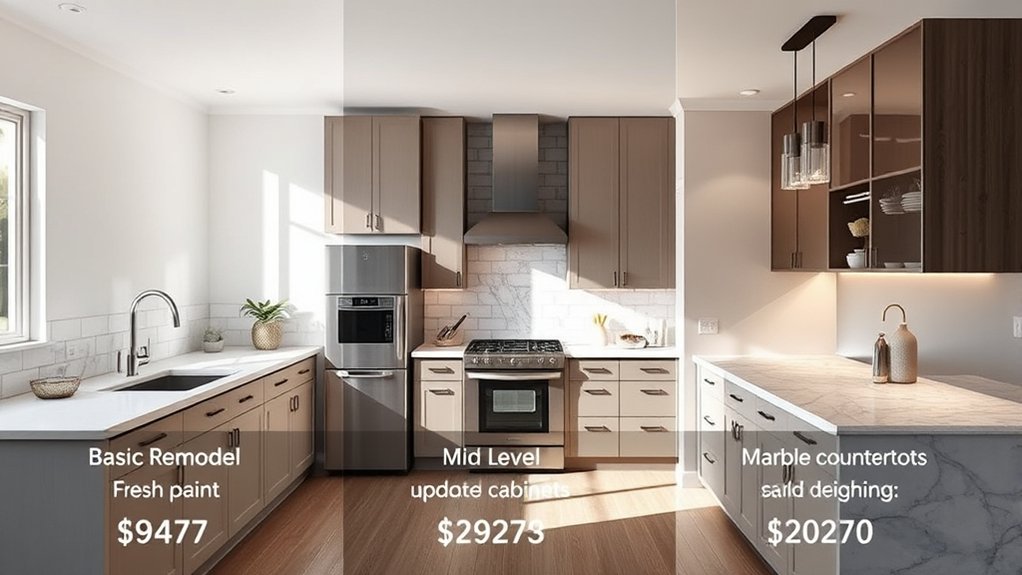
Your remodel level will largely determine how much you spend in 2027. A cosmetic update can refresh your kitchen without a major investment. A midrange remodel usually costs more because it includes better materials and upgraded features. If you choose a high-end renovation, plan for premium finishes, custom work, and the highest overall cost.
Cosmetic Update Costs
Cosmetic updates typically cost less than a full kitchen remodel because you’re revitalizing visible surfaces rather than changing the layout or major systems. In 2027, you’ll generally spend about $5,000 to $15,000, depending on your kitchen’s size, material choices, and local labor rates.
You might repaint cabinets, replace hardware, install a new backsplash, update lighting, or swap faucets. Refinishing existing cabinets usually costs less than replacing them, while decorative panels and open shelving can refresh the room without construction.
Your Kitchen decor choices, including rugs, bar stools, and window treatments, also affect the final total. If you replace appliances, compare Appliance brands carefully; a basic refrigerator or range keeps costs lower than premium models.
This level works best when your layout and infrastructure already suit you.
Midrange Remodel Costs
When surface-level improvements aren’t enough, a midrange remodel typically costs $25,000 to $60,000 in 2027. You’ll usually replace cabinets, countertops, appliances, and fixtures without changing the kitchen’s footprint.
Cabinet refacing or semi-custom replacements can control spending, while durable quartz or butcher-block counters add practical value. Your appliance choices, installation complexity, and local labor rates will shape the final bill.
Plan roughly $8,000 to $20,000 for cabinetry, $3,000 to $8,000 for countertops, and $5,000 to $12,000 for appliances.
Kitchen lighting upgrades, a new sink, faucet, backsplash, and ventilation may add several thousand dollars. Flooring materials, such as tile, luxury vinyl, or engineered wood, commonly cost $2,000 to $6,000 installed.
Set aside 10% to 15% for permits, repairs, and unexpected issues. This level improves function and appearance without luxury-level customization.
High-End Renovation Costs
A high-end kitchen renovation typically costs $60,000 to $150,000 or more in 2027, especially when you choose custom cabinetry, premium appliances, high-end surfaces, and complex design changes. At this level, you might reconfigure walls, upgrade plumbing and electrical systems, or add a large island with specialized storage.
Custom cabinets, integrated appliances, natural stone countertops, and professional-grade ranges can consume much of your budget. You’ll also pay more for skilled designers, licensed tradespeople, and detailed installation.
Thoughtful Kitchen lighting, including layered pendants, recessed fixtures, and under-cabinet illumination, improves both function and atmosphere. Flooring options such as hardwood, luxury tile, or patterned stone add character but increase material and labor costs.
Set aside 10% to 20% for unexpected structural repairs, permitting changes, and design revisions. Detailed planning helps you control costs without sacrificing your vision.
How Does Kitchen Size Affect Cost?
How Does Kitchen Size Affect Cost?
Kitchen size directly affects your 2027 remodel budget because larger spaces require more cabinets, countertops, flooring, lighting, and labor.
You’ll also spend more on demolition, installation, ventilation, and permits as the footprint grows. A compact kitchen may need fewer workdays, while a spacious layout can require additional circuits and longer runs for plumbing or gas.
| Kitchen size | Typical scope | Budget impact |
|---|---|---|
| Small | Limited surfaces and fixtures | Lowest |
| Medium | More work zones and lighting | Moderate |
| Large | Expanded systems and labor | Highest |
| Open-plan | Structural coordination may apply | Variable |
Measure your floor area and identify the walls, islands, and utility changes you’ll keep or modify.
Kitchen lighting costs can rise when you add multiple zones, recessed fixtures, pendants, or under-cabinet illumination.
Appliance brands also influence planning because larger models may require reinforced floors, wider clearances, or upgraded electrical capacity.
Compare your layout’s complexity, not just its square footage, before setting a realistic 2027 budget. Efficient design can help you control costs without sacrificing function, comfort, or visual impact.
What Do Cabinets, Counters, and Appliances Cost?
Cabinets, counters, and appliances often consume the largest share of your 2027 kitchen remodel budget, so compare materials, configurations, and performance before choosing specific products. Stock cabinets typically cost less than semi-custom or custom options, while solid wood, specialty finishes, and built-in storage increase your total.
You’ll also pay more for durable hardware and intricate door styles.
Countertop prices vary by square foot. Laminate offers an economical choice, while quartz, granite, porcelain, and premium solid surfaces cost more but can provide greater durability and style.
Include edge treatments, backsplashes, sink cutouts, sealing, and installation in your estimate.
Appliances can range from budget packages to high-end professional models. A refrigerator, range, dishwasher, and ventilation system may represent a significant portion of your spending, especially when you choose smart features or panel-ready designs.
Vintage fixtures can add character, but verify compatibility and restoration costs. Eco-friendly materials may cost more initially, yet they can reduce waste and support long-term value.
How Do Layout Changes Affect Remodel Cost?
Changing your kitchen’s layout can increase your 2027 remodel costs, especially if you need to move plumbing lines. Expanding the kitchen’s footprint may also add expenses for construction, flooring, electrical work, and permits.
Planning these changes early can help you create a more accurate budget and avoid unexpected costs.
Moving Plumbing Lines
Moving plumbing lines can considerably increase your 2027 kitchen remodel cost because relocating sinks, dishwashers, or gas appliances often requires new pipes, permits, and wall or floor repairs. You’ll typically pay more when fixtures move far from existing connections, especially across a room or to another wall.
Pipe rerouting may involve opening cabinets, drywall, subfloors, or ceilings, then restoring each surface after installation. Your contractor might also recommend plumbing upgrades, such as larger supply lines, improved shutoff valves, or a new drain configuration, to meet current codes.
Moving a gas range adds specialized labor, ventilation considerations, and inspection requirements. Ask for a detailed estimate that separates labor, materials, permits, repairs, and testing.
Keeping fixtures near existing lines can help you control costs without sacrificing your preferred workflow or appliance placement.
Expanding Kitchen Footprint
Expanding your kitchen’s footprint can raise your 2027 remodel cost considerably. It may involve removing walls, reinforcing structure, extending electrical and plumbing lines, and repairing adjacent floors or ceilings.
You’ll also pay more for permits, design revisions, insulation, drywall, and replacement flooring. Before committing, ask a contractor to verify whether the wall is load-bearing and assess your foundation, roofline, and utility capacity.
A larger room may improve workflow, but you’ll need additional cabinetry, countertops, Kitchen decor, and lighting fixtures.
| Layout change | Typical cost impact |
|---|---|
| Remove non-load-bearing wall | Moderate |
| Remove load-bearing wall | High |
| Extend plumbing | Moderate to high |
| Add square footage | High |
| Repair surrounding finishes | Variable |
Compare estimates that separate structural work from finishes. You can control spending by preserving appliance locations, choosing stock cabinets, and postponing decorative upgrades.
Always keep a contingency fund for hidden conditions.
What Does Kitchen Remodeling Labor Cost?
Kitchen remodeling labor typically accounts for 20% to 35% of your total project budget in 2027, depending on the kitchen’s size, design complexity, and local rates. You’ll usually pay separately for demolition, carpentry, plumbing, electrical work, installation, and finishing.
Labor usually represents 20% to 35% of a kitchen remodel, covering demolition, carpentry, plumbing, electrical work, installation, and finishing.
A straightforward cabinet replacement costs less labor than moving walls, rerouting utilities, or building custom storage.
Your contractor may price work hourly, by task, or as a percentage of materials. Ask for a detailed estimate that identifies crew size, hours, responsibilities, and cleanup.
Skilled specialists can cost more, but their precision helps prevent expensive rework.
Picture the labor involved:
- A demolition crew removes cabinets and hauls debris.
- A plumber relocates supply and drain lines.
- An electrician installs outlets and Kitchen lighting.
- A carpenter levels walls and fits cabinetry.
- An installer lays your chosen Flooring options.
Labor often rises when your design includes intricate tile, tight access, premium finishes, or a compressed schedule.
Compare several itemized bids before choosing a team, and confirm warranty coverage for workmanship.
How Much Do Kitchen Permits Cost?
Permits for a kitchen remodel typically cost $50 to $500 in 2027, though fees can exceed $1,000 when your project involves structural changes, new plumbing, or electrical upgrades. Your local building department sets the price, and you’ll usually pay when you submit plans.
Ask whether separate electrical, plumbing, mechanical, or demolition permits apply.
| Project scope | Typical permit cost |
|---|---|
| Cosmetic updates | $50–$150 |
| Cabinet or layout changes | $150–$500 |
| Plumbing or electrical work | $300–$1,000 |
| Structural alterations | $500–$1,500+ |
You may also pay plan-review, inspection, or expedited-processing fees. Before work begins, confirm requirements with your city or county, especially if your Kitchen design changes walls, windows, gas lines, or ventilation.
Your contractor can often handle applications, but you’re responsible for verifying that permits get approved and inspections get scheduled. Current remodeling trends don’t eliminate code requirements, so don’t skip permits to save money.
Unpermitted work can trigger fines, delays, corrective construction, or problems when you refinance or sell. Keep every approval and inspection record with your project documents.
Which Kitchen Upgrades Add Resale Value?
You can boost resale value with updated cabinets and modern hardware, giving your kitchen a fresh, appealing look. Energy-efficient appliances may also attract buyers while helping lower utility costs. Above all, focus on practical upgrades that improve everyday function and appeal to a wide range of homeowners.
Updated Cabinets and Hardware
Replacing dated cabinet doors, adding durable hardware, and improving storage can refresh your kitchen without the cost of a full layout change. You’ll create stronger resale appeal by choosing timeless cabinet styles, quality materials, and finishes that suit the home’s architecture.
Replace worn hinges, align doors, and install soft-close drawers for a more polished daily experience. Choose hardware finishes that coordinate with faucets and lighting without looking overly matched.
Picture the transformation:
- Shaker doors brightening a dim kitchen
- Brushed nickel pulls catching morning light
- Deep drawers hiding bulky cookware
- Glass-front uppers displaying favorite dishes
- Soft-close cabinets closing quietly
You don’t need custom cabinetry everywhere. Refacing existing boxes, adding organizers, and extending cabinets to the ceiling can deliver noticeable value.
Keep colors broadly appealing, and avoid highly personal trends that may limit buyer interest. A cohesive update can make your kitchen feel newer, more functional, and easier to sell.
Energy-Efficient Appliances
Energy-efficient appliances can add resale value by lowering utility bills and giving buyers confidence in the kitchen’s long-term operating costs.
When you remodel in 2027, choose ENERGY STAR refrigerators, dishwashers, induction ranges, and vent hoods with efficient motors. You’ll reduce energy and water use while creating a modern kitchen that attracts cost-conscious buyers.
Smart appliances can strengthen appeal when they offer useful features, such as energy monitoring, scheduling, leak detection, and remote diagnostics, rather than gimmicky extras.
Compare estimated annual operating costs instead of focusing only on purchase prices, and keep product documentation for future buyers.
Pair efficient equipment with eco-friendly materials, including durable recycled-content counters or low-VOC finishes, to present a cohesive upgrade.
Although premium models cost more upfront, their savings, performance, and marketability may improve your return on investment.
How Can You Lower Remodel Costs?
Several practical choices can help lower your 2027 kitchen remodel costs without sacrificing the result. Keep your existing layout whenever possible, since moving plumbing, gas lines, and electrical connections can quickly increase labor costs.
Reface sturdy cabinets instead of replacing them, and choose stock sizes for doors, drawers, and countertops. Compare materials carefully; attractive laminate, vinyl, and engineered surfaces can deliver style for less than premium alternatives.
- Paint dated cabinets soft white for a brighter, spacious look.
- Choose simple hardware with a polished, cohesive finish.
- Investigate durable Flooring options such as luxury vinyl or porcelain tile.
- Select open shelving instead of a few expensive upper cabinets.
- Refresh the room with affordable Kitchen accessories, including runners, stools, and lighting.
You can also shop seasonal sales, request multiple installation quotes, and bundle purchases through one supplier. Reuse functional appliances and fixtures rather than replacing them for appearance alone.
Make upgrades in phases if necessary, prioritizing changes that improve daily use and visual impact first. These choices help you create a polished kitchen while keeping spending under control.
How Do You Build a Remodel Budget?
After identifying ways to reduce expenses, build your remodel budget around the work your kitchen actually needs. List must-have updates first, such as cabinets, countertops, flooring, plumbing, electrical work, or appliances.
Then separate wants, including premium finishes and layout changes, so you can postpone them if costs rise.
Request itemized estimates from several contractors, and compare labor, materials, permits, disposal, and project timelines.
Your contractor selection can substantially affect the final price, so verify licensing, insurance, references, and change-order policies before signing.
During budget planning, divide your projected spending into categories and add a contingency reserve. Set aside 10% to 20% for hidden damage, material shortages, or design revisions.
Include sales tax, delivery fees, temporary kitchen expenses, and financing costs in your calculations.
Track every decision in one spreadsheet, update totals as quotes change, and approve upgrades only when your remaining reserve can cover them.
A realistic budget protects your priorities without sacrificing essential quality or safety.
Frequently Asked Questions
How Long Does a Kitchen Remodel Typically Take From Demolition to Completion?
You’ll typically spend six to twelve weeks completing a kitchen remodel from demolition through final installation. A straightforward update may take four to six weeks, while structural changes, custom cabinetry, permits, or supply delays can extend the timeline to three months or longer.
Plan your Budget considerations early, and finalize Design trends before construction begins. Clear decisions, available materials, and reliable contractors help you avoid surprises and keep your project moving steadily toward completion.
Should You Hire a General Contractor or Manage Subcontractors Yourself?
Hire a general contractor unless you have construction experience, ample time, and strong project-management skills. Like conducting an orchestra, you’ll coordinate schedules, permits, inspections, deliveries, and quality control when managing subcontractors yourself.
Those DIY challenges can quickly overwhelm you and create costly delays. Careful contractor selection matters: verify licenses, insurance, references, written estimates, and communication habits.
A qualified contractor typically reduces stress, improves coordination, and helps keep your kitchen remodel moving efficiently.
What Unexpected Problems Commonly Arise During Kitchen Renovations?
You’ll commonly uncover hidden water damage, outdated wiring, unsafe plumbing, uneven floors, or mold once demolition begins. Cabinets may reveal walls that aren’t square, while appliance sizes can conflict with existing layouts.
Permit delays, backordered materials, and contractor scheduling issues can extend your timeline. Protect your budget considerations with a contingency fund and verify measurements early.
Also, don’t let changing design trends trigger costly revisions after construction has started.
How Can You Keep Your Home Functional While the Kitchen Is Being Remodeled?
Create a temporary kitchen before demolition turns your cooking space into a dusty maze. Set up a microwave, toaster oven, refrigerator, coffee maker, and folding table in a nearby room. Store essentials in labeled bins, protect walkways, and keep a sink accessible for washing dishes.
Coordinate meals and deliveries while maintaining clear paths and safe electrical connections. Thoughtful Interior design and careful Budget planning will keep daily routines comfortable throughout construction.
What Warranties Should You Expect From Contractors and Product Manufacturers?
You should expect contractors to provide a workmanship warranty, commonly lasting one year, covering installation defects such as faulty cabinets, plumbing, or electrical work. Ask what the warranty coverage excludes, how you’ll report problems, and whether subcontractors receive the same protection.
Manufacturers typically offer product guarantees covering appliances, fixtures, cabinets, and surfaces for specific periods. Register products, save receipts, and request written terms before signing, so you’ll understand repair, replacement, and labor responsibilities.
Conclusion
A kitchen remodel in 2027 doesn’t have to drain your bank account. Whether you’re refreshing finishes or rebuilding the room’s bones, clear priorities can keep costs on track.
Think of your budget as a map: size, materials, layout changes, permits, and labor mark the turns. Choose upgrades that work hard and add value, then trim extras where they won’t matter.
With thoughtful planning, you’ll turn your kitchen into a beautiful, functional centerpiece without watching your savings disappear. Knowing how much a kitchen remodel costs in 2027 can help you plan with confidence.