How to Style Glass Kitchen Cabinets
Glass kitchen cabinets can look beautiful, but styling them without creating visual clutter can be tricky. You’re not alone—many people struggle to balance attractive displays with practical storage. The right arrangement can help your cabinets feel polished, organized, and easy to use.
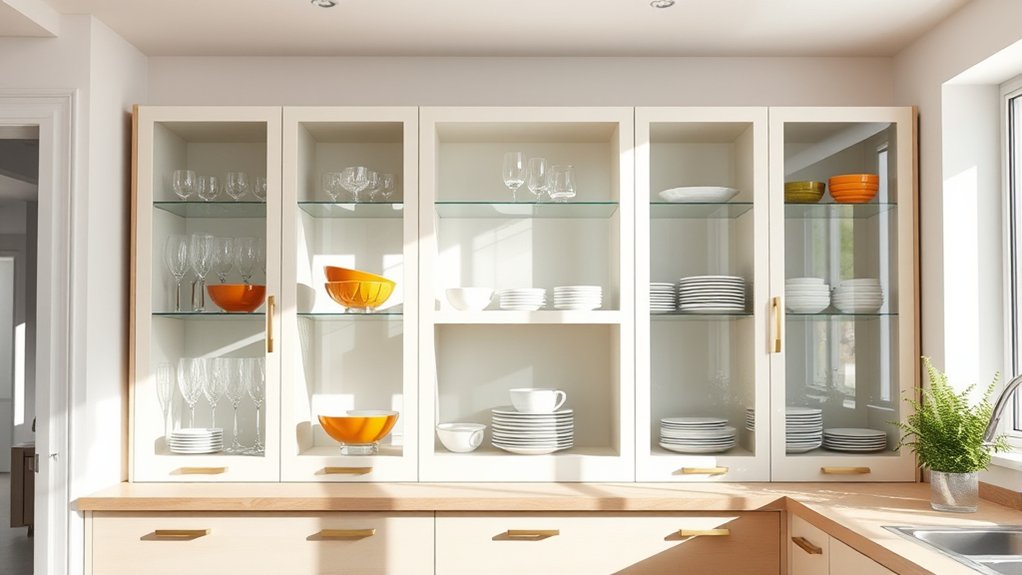
Style glass kitchen cabinets by giving each one a clear purpose, such as displaying ceramics, storing glassware, or organizing serving pieces. Choose a simple color palette and repeat complementary shades throughout your dishware.
Mix plates, bowls, baskets, and ceramics to add texture, while arranging taller items behind shorter ones. Keep everyday pieces accessible and leave open space to prevent clutter.
Add warm, dimmable lighting to highlight favorite items, and investigate more ways to create a polished, functional display.
Key Takeaways
- Empty and clean each cabinet first, then assess shelf height, lighting, proportions, and hardware before arranging items.
- Assign every cabinet a purpose and organize contents by kitchen zones, function, and frequency of use.
- Create visual balance by stacking dishes, varying neighboring heights, and placing larger pieces beneath smaller ones.
- Use a cohesive color palette, complementary textures, baskets, ceramics, and open spacing to create a collected display.
- Install warm, dimmable lighting and limit shelf contents to coordinated pieces that remain attractive and easy to access.
Start Styling Your Glass Kitchen Cabinets
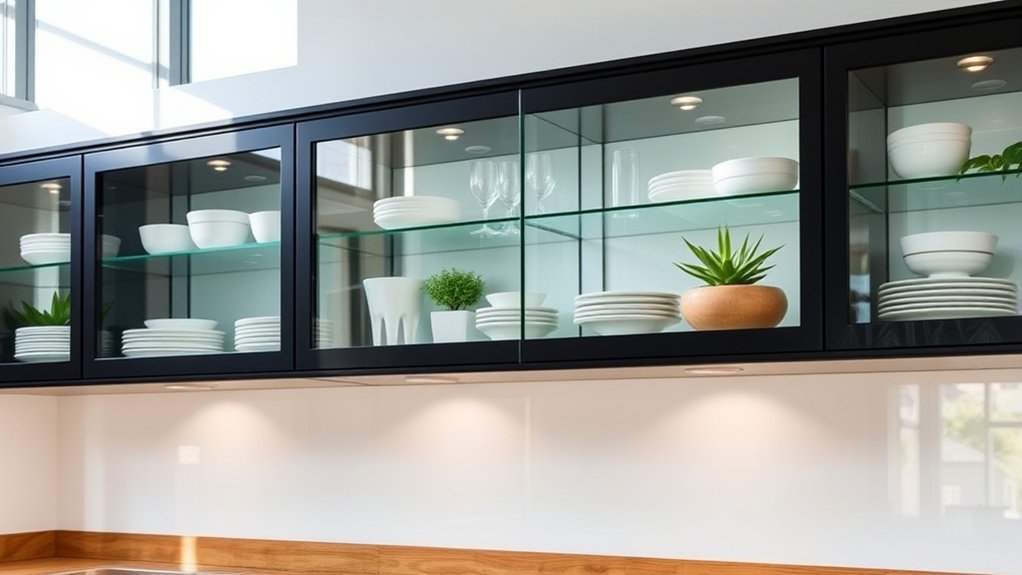
Before you arrange anything, decide what you want your glass kitchen cabinets to communicate—an airy, organized feel, a display of favorite dishes, or a touch of color.
Then empty one cabinet and evaluate its shelves, lighting, and proportions. You’ll style more successfully when you work with the cabinet’s structure instead of overcrowding it.
Group similar pieces, such as everyday plates, serving bowls, or clear glasses, and leave enough space around each stack for the display to breathe.
Place taller items toward the back and shorter pieces in front, keeping frequently used dishes within easy reach. Vary shapes and heights subtly to create rhythm without making the cabinet look busy.
Before loading the shelves, complete any needed Glass cleaning so fingerprints and dust don’t distract from your arrangement.
Check hinges, handles, and Decorative hardware, replacing loose or dated pieces if necessary. Finally, step back, view the cabinet from across the room, and edit anything that feels excessive.
Choose Colors for Items Behind Glass Doors
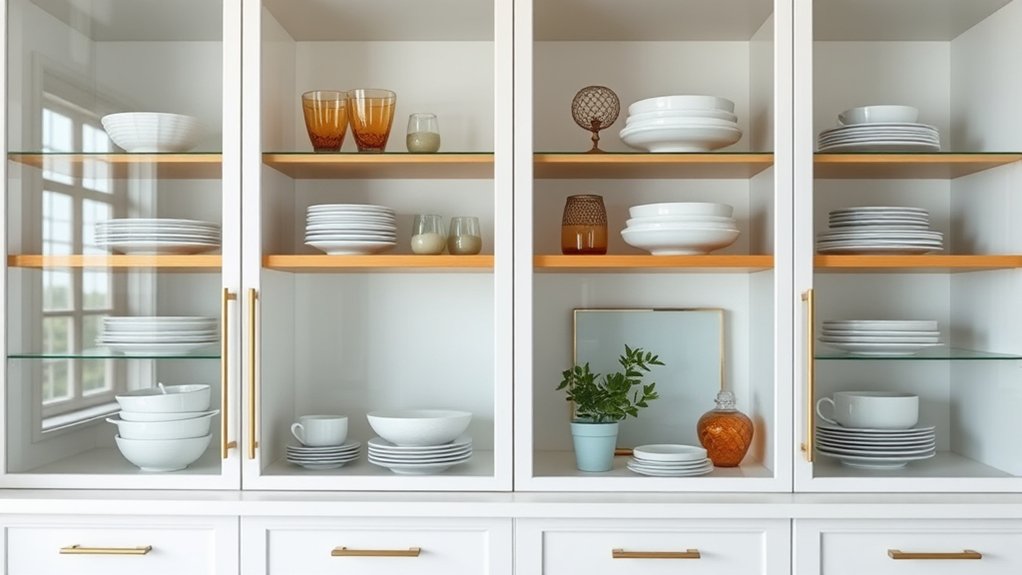
Choose a simple color story for the items behind your glass doors, such as crisp white with natural wood, soft neutrals with muted blue, or one bold accent against a quiet backdrop. Repeat two or three related shades so your display looks collected rather than chaotic.
Choose two or three related shades behind your glass doors to create a collected, cohesive display instead of visual clutter.
Use plates, bowls, jars, and pitchers to distribute color across each shelf. Keep the strongest hue at eye level for emphasis.
Consider color psychology when selecting your palette. Warm terracotta and yellow can make the kitchen feel welcoming, while blue and green create a calmer impression.
If your cabinets include glass tinting, check samples in daylight and evening light because tinted panes can alter whites and soften bright colors. Match your display to nearby finishes, but don’t copy every cabinet or countertop tone.
Add a small contrasting detail, such as black pottery or brass, to sharpen the arrangement without overwhelming the glass-fronted doors or making the kitchen feel visually busy overall.
Assign Each Cabinet a Clear Purpose
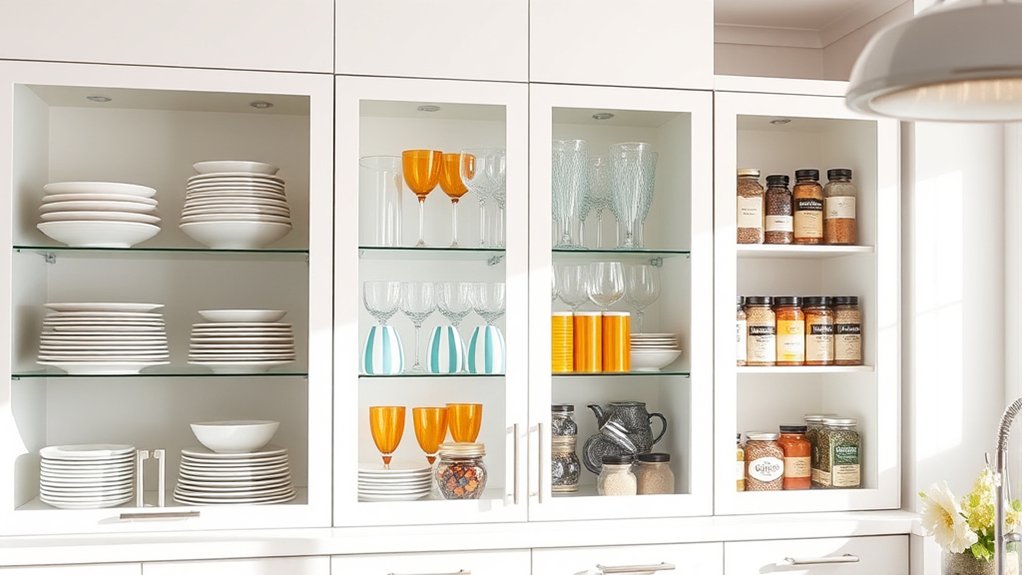
Once your color story is set, give each glass-front cabinet a clear purpose, such as displaying everyday dishes, storing glassware, or showcasing serving pieces. Assign one function per cabinet so you’ll know what belongs where and can maintain an orderly look.
Place frequently used items at eye level, keeping less-accessed pieces in higher or lower sections. Reserve a narrow cabinet for bar tools, a wider one for platters, or a small section for linens if the layout allows.
Group related items by use rather than spreading them throughout the kitchen. This makes setting the table faster and prevents visual clutter.
Use cabinet lighting to highlight focal areas and improve visibility when you’re reaching for something. Coordinate decorative hardware with your kitchen’s finishes, but choose pulls and knobs that feel comfortable for daily use.
Add simple labels inside doors if multiple household members share storage. Reassess each cabinet seasonally as your routines change, and relocate items when their purpose no longer fits.
Choose Dishware That Looks Curated
Choose dishware in complementary colors and textures to create a cohesive, intentional display. Mix finishes thoughtfully, but keep the overall palette controlled. Showcase your favorite everyday pieces so your cabinets feel curated while still remaining practical.
Coordinate Colors and Textures
A coordinated mix of colors and textures makes glass-front cabinets look intentional rather than crowded. Start with a simple palette of two or three complementary tones, then repeat those shades across plates, bowls, and serving pieces.
Color harmony keeps the arrangement calm, while a small accent color adds energy without creating visual noise. Build texture contrast by combining smooth porcelain, lightly ridged stoneware, clear glass, or woven details.
Keep finishes related, such as warm creams with natural terracotta or cool whites with soft gray ceramics. Vary shapes and surface patterns, but avoid placing too many bold elements together.
Step back as you arrange each shelf, checking whether the colors flow from one level to the next. If the display feels busy, remove one competing hue or texture.
Display Favorite Everyday Pieces
Select everyday dishware you genuinely use, but limit the display to pieces with a consistent shape, color, or finish. Arrange matching plates in neat stacks, then position bowls, mugs, and serving pieces nearby for easy access.
Vary height by standing a few plates upright behind shorter items, creating a balanced arrangement without making the cabinet look crowded. Leave small gaps between groups so each piece can breathe and the glass doors won’t reveal visual clutter.
Add one or two decorative accents, such as a small vase or wooden board, to introduce warmth without distracting from your dishware. Use lighting thoughtfully by installing warm interior lights or aiming nearby fixtures toward the cabinet to highlight favorite pieces.
Rotate seasonal colors occasionally, but keep your everyday collection cohesive, practical, and inviting. Your cabinet should look polished while supporting daily routines.
Organize Cabinets by Kitchen Zone
Organize your glass cabinets by kitchen zone. Keep prep, cooking, and serving essentials near the areas where you use them most.
Group items by function so you can find what you need quickly while keeping the display tidy. Label each cabinet clearly to make the system easy to follow.
Group by Work Zones
Divide your glass-front cabinets by work zone so each area supports the tasks you perform there. Let each cabinet’s placement guide its visual arrangement, creating a polished flow without making the kitchen feel overplanned.
Coordinate your lighting design with these zones, using focused illumination to highlight glass doors and nearby surfaces. Thoughtful material selection also helps each area feel connected while adding contrast through texture and finish.
- Frame the prep zone with glass cabinets that echo your countertop tones.
- Give the cooking zone a strong focal point through balanced spacing and symmetry.
- Use the serving zone to display coordinated pieces near the table or island.
- Keep the cleanup zone visually calm with simple, consistent cabinet styling.
Repeat colors, metals, or wood tones across zones to unify the room. You’ll create a purposeful layout that feels effortless, refined, and easy to maintain.
Store Items by Function
Store items by function within each kitchen zone so your glass cabinets support how you work. Keep everyday plates, bowls, and glasses near the dishwasher or dining area, making unloading and setting the table faster.
Place mugs, tea, coffee, and sweeteners beside your kettle or coffee maker. Near the prep zone, arrange mixing bowls, measuring cups, and frequently used utensils together.
Reserve cabinets by the cooktop for spices, oils, and attractive cookware that can handle gentle heat exposure. In the serving zone, display platters, pitchers, and serving pieces at eye level for easy access.
Use color psychology to create a calm, cohesive look by grouping similar hues or balancing bright accents with neutral ceramics. Choose storage solutions such as risers, shelf inserts, and turntables to maximize visibility without overcrowding each cabinet.
Label Each Cabinet Clearly
Clear labels make your kitchen zones easier to maintain, especially when several cabinets hold similar items. With thoughtful cabinet labeling, you’ll guide everyone toward the right storage spot while keeping your glass fronts visually polished.
Choose small, consistent tags that complement your hardware and kitchen palette. Place them along the lower corner of each pane, where they’re easy to read without covering your display.
- Use “Mugs,” “Plates,” or “Baking” for quick recognition.
- Match glass door labels in font, size, and finish.
- Group related cabinets under broader zones, such as “Coffee.”
- Replace labels whenever your storage system changes.
You can choose removable vinyl, etched decals, or slim metal plaques, depending on your style. Keep wording short and avoid overcrowding the glass.
Clear zones reduce searching, simplify restocking, and help your kitchen look intentionally organized every day.
Stack Pieces to Add Height
Stacking plates, bowls, or serving pieces inside glass cabinets draws the eye upward and makes the display feel more intentional. Use vertical stacking to build orderly columns that fill unused space without making shelves look crowded.
Place larger, flatter pieces at the bottom, then add smaller items above them for stability and balance. You can stack matching plates, group shallow serving platters, or layer cutting boards behind a short row of dishes.
Keep each pile low enough to remove an item easily. A beautiful arrangement shouldn’t become inconvenient.
Vary the heights of neighboring stacks so your eye moves across the cabinet rather than stopping at one level. For an extra lift, place a small riser beneath a selected group, or top a tall arrangement with decorative finials that suit your kitchen’s style.
Leave a little breathing room around every stack, and check the display from across the room before adjusting its proportions. Avoid overloading shelves, since excessive weight can strain hardware or glass.
Add Texture With Baskets and Ceramics
Baskets and ceramics add tactile contrast to a glass cabinet, balancing the smooth surfaces of plates and glassware with woven fibers and hand-finished shapes. Use Decorative baskets to soften hard lines while concealing small linens or rarely used serving tools.
Choose open, shallow designs so their texture remains visible without making the cabinet look crowded.
Choose open, shallow baskets and ceramics to showcase texture while keeping the cabinet feeling light, balanced, and uncluttered.
Layer in Ceramic accents with varied finishes, such as matte stoneware, subtly speckled pottery, or glazed pieces with organic edges. Keep the palette cohesive by repeating one or two cabinet colors, then introduce texture through shape and surface rather than excessive contrast.
- Select baskets in natural fibers, including seagrass, rattan, or willow.
- Pair rough pottery with one polished ceramic for balanced interest.
- Leave breathing room around each textured piece.
- Use matching tones to create a calm, collected appearance.
Place heavier baskets on lower shelves, where they’ll feel grounded, and reserve eye-level space for distinctive ceramic forms. You’ll create depth without overwhelming the cabinet’s transparency or sacrificing its purposeful, refined appearance.
Mix Everyday Pieces With Display Items
Mix everyday dishes with a few display pieces so your glass cabinets feel useful rather than staged. Keep frequently used plates, bowls, and glasses on the lower shelves, where you can reach them easily. Then, arrange special serving pieces, patterned dishes, or heirloom cups at eye level for visual interest.
Create small groupings instead of lining up every item in a rigid row. For example, place a stack of white plates beside a colorful pitcher and two coordinating mugs. Repeat one color throughout the cabinet to connect practical pieces with decorative accents. Leave a little open space around each grouping so the contents remain easy to see and remove.
You can also rotate seasonal items without disturbing your daily essentials. Use trays to contain smaller pieces, and keep matching sets together for a tidy appearance. When planning the arrangement, consider lighting techniques that preserve clear views and highlight favorite pieces without making the cabinet feel crowded.
Light Your Glass Kitchen Cabinets
Once you’ve arranged everyday dishes and display pieces, use lighting to make the cabinet’s contents easier to see and more inviting. Start with warm, low-voltage LED strips beneath each shelf. They’ll cast an even glow without producing much heat, protecting delicate finishes and reducing energy use.
> Illuminate cabinet contents with warm, low-voltage LED strips for an inviting glow that protects delicate finishes and saves energy.
Choose dimmable fixtures so you can shift from bright task lighting to a softer evening mood.
Consider these lighting techniques:
- Install slim, concealed strips along the cabinet’s front edges for balanced illumination.
- Add puck lights beneath upper shelves to highlight special serving pieces.
- Use glass shelves with integrated LEDs for a floating, contemporary effect.
- Match the bulb’s color temperature to nearby kitchen lighting for a cohesive look.
Hide cords inside the cabinet frame, and place switches where you can reach them easily. Coordinate the light’s finish with your cabinet hardware. Brushed brass, matte black, and polished nickel each create a distinct accent.
Test the illumination at night before securing the fixtures. Make sure every shelf receives comfortable, glare-free light without overpowering the room’s overall atmosphere.
Keep Glass Cabinets From Looking Cluttered
To keep glass cabinets from looking cluttered, limit each shelf to a few coordinated pieces with enough space between them to let the display breathe. Choose one focal item, such as a patterned bowl or sculptural vase, then arrange smaller pieces around it.
Group dishes by color, material, or function to create a deliberate, cohesive look. Keep everyday items accessible, but store mismatched mugs, chipped pieces, and rarely used servingware elsewhere.
Vary heights without stacking everything into tall piles, and leave some shelves partially open for visual rest. You can also repeat one accent color throughout the cabinet to connect the arrangement with your kitchen.
Use Decorative hardware sparingly; simple pulls won’t compete with the display. Interior lighting should highlight your best pieces rather than expose every inch of storage.
Step back occasionally and remove anything that feels unnecessary. If the cabinet still looks busy, edit by category until each item earns its place.
Frequently Asked Questions
How Do You Clean Glass Cabinet Doors Without Leaving Streaks?
Spray glass cleaner onto a microfiber cloth, not directly onto the door, to prevent drips and residue. Wipe in overlapping horizontal strokes, then dry with a clean, lint-free cloth using vertical strokes.
For stubborn spots, use diluted white vinegar, but avoid harsh abrasives. Clean edges and handles separately, where grime collects.
If your doors have Frosted finishes or Decorative etching, use mild soap and water, and don’t scrub aggressively.
What Type of Glass Is Best for Kitchen Cabinet Doors?
Tempered clear glass usually works best for kitchen cabinet doors because it’s strong, safe, and showcases your dishes. Choose frosted glass when you want to hide clutter while still letting in light.
Tinted glass adds color and reduces visibility, making it useful for a distinctive look or darker storage areas. Avoid ordinary glass, which can shatter easily.
Consider textured or laminated options if you need extra privacy, durability, or a decorative finish.
Can Glass Cabinet Doors Be Replaced Without Changing the Entire Cabinet?
Yes, you can replace glass cabinet doors without changing the entire cabinet. Picture your kitchen getting a quick facelift while its sturdy bones stay in place.
A professional can remove the existing door, measure its opening, and install new glass in the same frame. If the cabinet frame remains sound, you’ll usually need only glass replacement, new clips, or updated molding.
Confirm the hinges, measurements, and glass thickness before ordering to guarantee a perfect fit.
How Much Does Installing Glass Kitchen Cabinet Doors Typically Cost?
You’ll typically pay $150–$400 per glass cabinet door, including materials and labor, or roughly $1,000–$3,000 for a standard kitchen. Your final price depends on glass type, frame style, door size, hardware, and local labor rates.
Cost breakdown: Glass often costs $50–$200, while installation adds $75–$200 per door.
Installation tips: Measure carefully, confirm hinge compatibility, and request several quotes. You’ll save by reusing existing frames and hardware.
Are Glass Kitchen Cabinets Durable and Safe for Households With Children?
Yes, glass kitchen cabinets can be durable and safe for households with children when you choose the right materials and hardware.
Select tempered safety glass, which resists heat and impacts better than standard glass and crumbles into smaller pieces if broken.
Add childproof features, such as secure latches, soft-close hinges, and anchored cabinets.
Keep heavy or breakable items out of reach, inspect panels regularly, and replace any glass showing chips or cracks promptly.
Conclusion
With a little planning, you can style glass kitchen cabinets to look beautiful and work harder. Give each cabinet a purpose, group items by color or zone, and mix practical pieces with textured accents.
Keep displays edited, then add lighting to highlight your favorite details. Since people form a first impression in just seven seconds, your glass kitchen cabinets deserve thoughtful styling.
Step back, remove anything distracting, and let your kitchen’s personality shine through every pane.