How to Unclog a Kitchen Sink With a Disposal in 3 Steps
A clogged kitchen sink with a disposal can bring meal prep to a frustrating halt, especially when standing water and unpleasant odors start piling up. You’re not alone—many homeowners struggle with this common problem. The good news is that a few safe steps can often get your sink draining again.
To unclog a kitchen sink with a disposal, first cut power at the switch or breaker and never reach inside. Remove visible debris with tongs, then press the reset button only after the motor cools.
Next, plunge the sink with the second basin sealed, or remove the trap with a bucket underneath. Reassemble fittings snugly and flush with hot water and dish soap.
If backups or leaks continue, you’ll find helpful next steps below.
Key Takeaways
- Turn off and unplug the disposal or switch off its circuit breaker before inspecting or clearing the sink.
- Remove visible debris safely with tongs or pliers, never placing your hand inside the disposal.
- Seal the second basin, cover the drain with a plunger, and pump firmly 10–15 times.
- If plunging fails, place a bucket underneath and remove the drain trap to inspect and clear debris.
- Reassemble fittings snugly, then flush with hot water while avoiding boiling water in PVC plumbing.
Turn Off and Check the Garbage Disposal
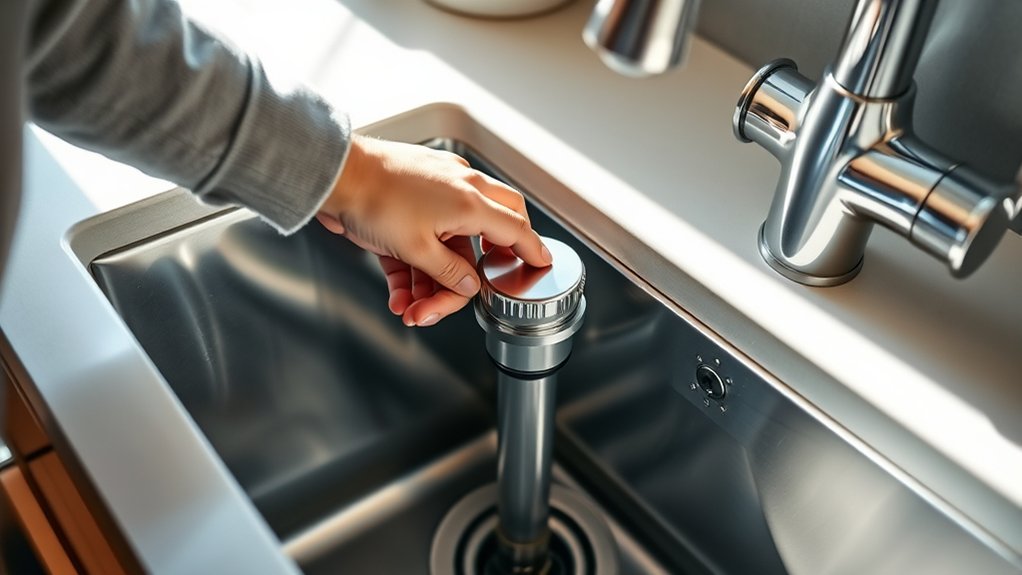
Before trying anything else, turn off the garbage disposal and unplug it or switch off its circuit breaker. This protects you from accidental activation while you inspect the unit.
Never put your hand inside the drain, even when the disposal appears inactive. Use a flashlight to look for visible objects near the opening, and remove only loose material with long-handled tongs or pliers.
Check whether the disposal makes a humming sound, remains silent, or shows signs of leaking when you briefly restore power from a safe position.
If it hums without spinning, switch it off immediately and cut power again. The motor may be jammed or overheated.
Press the reset button on the bottom of the unit only after the power is off. Then allow the motor to cool.
Regular disposal maintenance helps prevent recurring sink problems. Follow these safety precautions every time, and consult the manufacturer’s instructions or a qualified plumber if the unit smells burned, leaks, or won’t reset.
Clear the Clog With a Plunger or Wrench
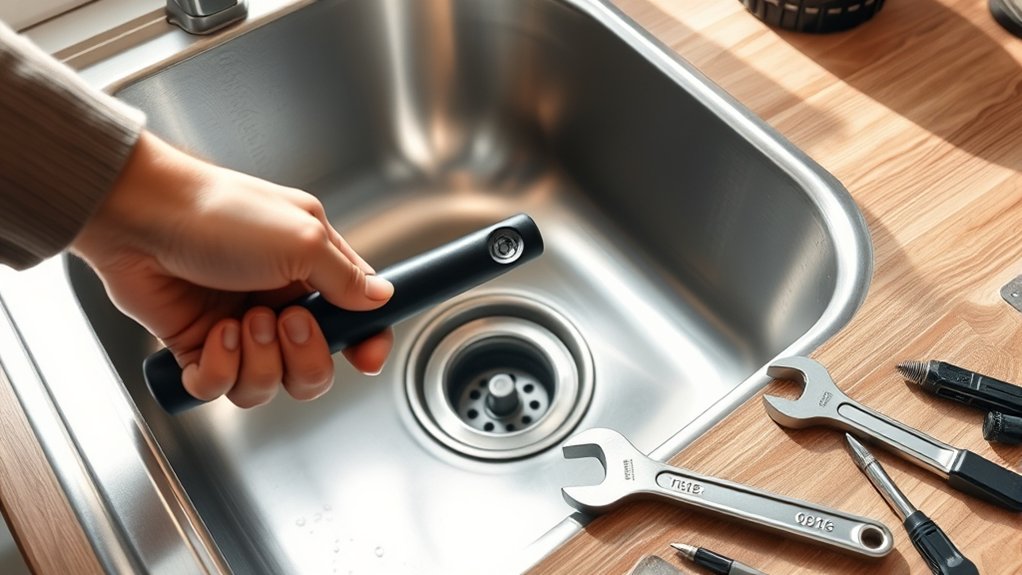
Once the disposal is off and the drain is safe, place a sink plunger over the opening and add enough water to cover its cup. Seal any second basin with a stopper or wet cloth. Push the plunger down firmly, then pull it up sharply, repeating 10 to 15 times without breaking the seal.
Plunge firmly with a sealed cup, using repeated strokes to loosen food and grease near the disposal.
These Plunger techniques can loosen food and grease trapped near the disposal. Lift the plunger and check whether the water drains.
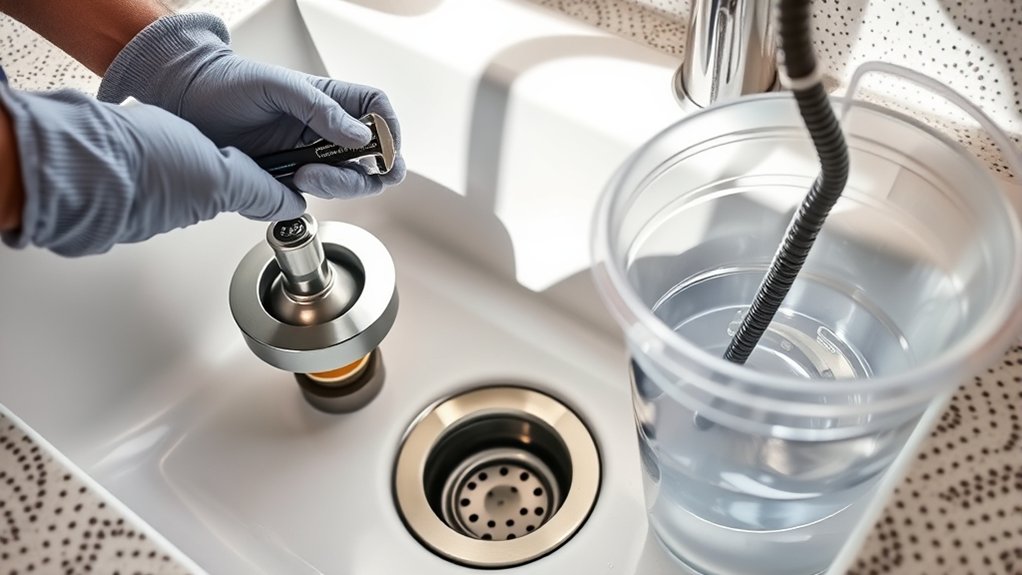
If it doesn’t, remove the disposal’s knockout plug or drain trap only if you can access it safely. Put a bucket beneath the trap before loosening each slip nut.
Use a pipe Wrench for stubborn connections, turning counterclockwise while supporting the pipes. Remove the trap and inspect it for debris, then clear the blockage with a brush or gloved hand.
Reassemble the fittings snugly, but don’t overtighten them. Keep the disposal powered off throughout this process.
Flush the Kitchen Sink and Prevent Clogs
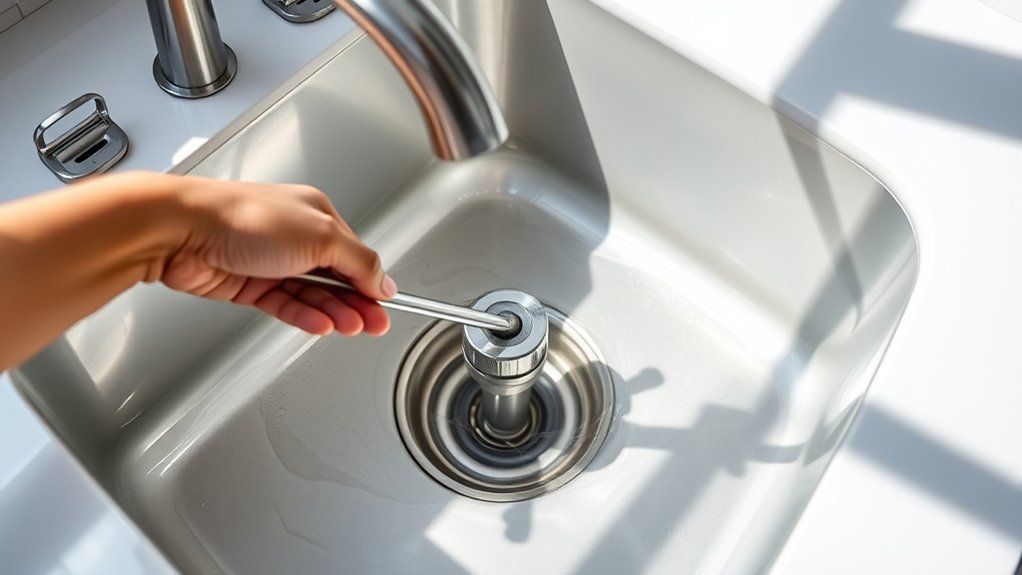
After reassembling the drain, run hot water for several minutes to flush away loosened grease and debris. Add a small squirt of dish soap while the disposal runs, then switch to cold water for a minute to solidify and move remaining grease through the line. Don’t pour boiling water into a sealed, PVC-lined system, and never reach into the disposal.
Use this simple routine to picture your prevention plan:
| Task | Timing |
|---|---|
| Run cold water with scraps | Every use |
| Grind ice and citrus peels | Monthly |
| Clean the splash guard | Weekly |
For dependable drain maintenance, scrape plates into the trash and avoid fibrous scraps, coffee grounds, eggshells, and cooking oil. Run the disposal only with strong water flow.
If draining slows, stop adding waste and use a plunger before buildup hardens. Schedule a pipe inspection when you notice recurring backups, gurgling, foul odors, or leaks beneath the sink.
A professional can find grease deposits, damaged fittings, or deeper blockages before they become an emergency. Keep the trap area dry and check connections after every repair.
Frequently Asked Questions
Can I Use Chemical Drain Cleaners in a Sink With a Garbage Disposal?
No, you shouldn’t use chemical drain cleaners in a sink with a garbage disposal. Harsh chemicals can damage the disposal, corrode pipes, create toxic fumes, and splash back when you inspect or repair the clog.
Instead, turn off power, remove visible debris safely, and try a plunger or plumber’s snake. Use enzyme-based chemical alternatives only if the product specifically allows disposals.
Regular disposal maintenance helps prevent recurring blockages and odors.
How Much Does Professional Garbage Disposal Unclogging Typically Cost?
You’ll typically pay $100–$300 for professional garbage disposal unclogging, though severe blockages, access problems, or replacement needs can raise the bill. Think of it like calling a tow truck: you’re paying for expertise, tools, and often an emergency visit, not just minutes on-site.
Cost estimates vary by location and timing. Ask service providers whether inspection, labor, parts, disposal removal, and after-hours fees appear separately before approving work.
When Should I Replace My Garbage Disposal Instead of Unclogging It?
Replace your garbage disposal when it leaks from the housing, makes grinding noises, smells persistently foul, trips breakers repeatedly, or fails after resetting and clearing jams. You should also consider replacement if repairs approach half the cost of a new unit or your disposal has exceeded its typical lifespan of 8–15 years.
Regular disposal maintenance can extend its service life, but severe corrosion, cracked components, or recurring clogs usually justify installing a new disposal instead.
Can a Clogged Disposal Damage My Dishwasher or Kitchen Plumbing?
Yes, a clogged disposal can strain your dishwasher and kitchen plumbing. Backed-up water may flow into the dishwasher through the shared drain connection, causing dirty water, odors, or slow draining.
Excess pressure can also stress pipes, seals, and connections, increasing leak risks. Stop running both appliances, remove standing water safely, and clear the blockage promptly.
Regular disposal maintenance helps prevent recurring clogs. If water still backs up, call a licensed plumber.
What Safety Gear Should I Wear While Troubleshooting a Garbage Disposal?
First things first: wear Protective gloves and Safety goggles when troubleshooting a garbage disposal. They’ll shield your hands from sharp debris, splashing water, and cleaning chemicals.
Choose snug, cut-resistant gloves that won’t slip, and use sealed goggles rather than ordinary glasses. Wear closed-toe, nonslip shoes, too, to stay steady around spills.
Before reaching near the opening, disconnect power or switch off the breaker. Better safe than sorry. Never put your hand inside.
Conclusion
With these simple steps, you can unclog a kitchen sink with a disposal and get it draining smoothly again. First, turn off the power and check for obvious blockages.
Next, plunge carefully or use a wrench to free stubborn debris—never reach into the disposal. Finally, flush the drain with hot water and practice smart disposal habits.
Skip grease, fibrous scraps, and coffee grounds, and your sink should stay clear, clean, and clog-free. These tips can help you unclog a kitchen sink with a disposal safely and effectively.