How to Spell Kitchen Correctly
Struggling to spell kitchen correctly? You’re not alone—many people hesitate over the middle letters or forget how the word ends. This quick guide will help you remember the correct spelling with confidence.
You spell kitchen K-I-T-C-H-E-N. It has seven letters and sounds like “kit-chen,” with emphasis on the first syllable.
To remember it, separate the word into kit and chen, then focus on the middle tch and ending -en. Don’t start with “c,” add an extra “t,” or change the final letters.
British and American English use the same spelling.
Practice writing and saying it aloud, and you’ll soon master its meaning and everyday use.
Key Takeaways
- Spell kitchen as K-I-T-C-H-E-N.
- Remember the word has seven letters, not six.
- Break it into two parts: “kit” + “chen.”
- Pay attention to the middle “tch” and the ending “-en.”
- The spelling is identical in British and American English.
How Do You Spell “Kitchen”?
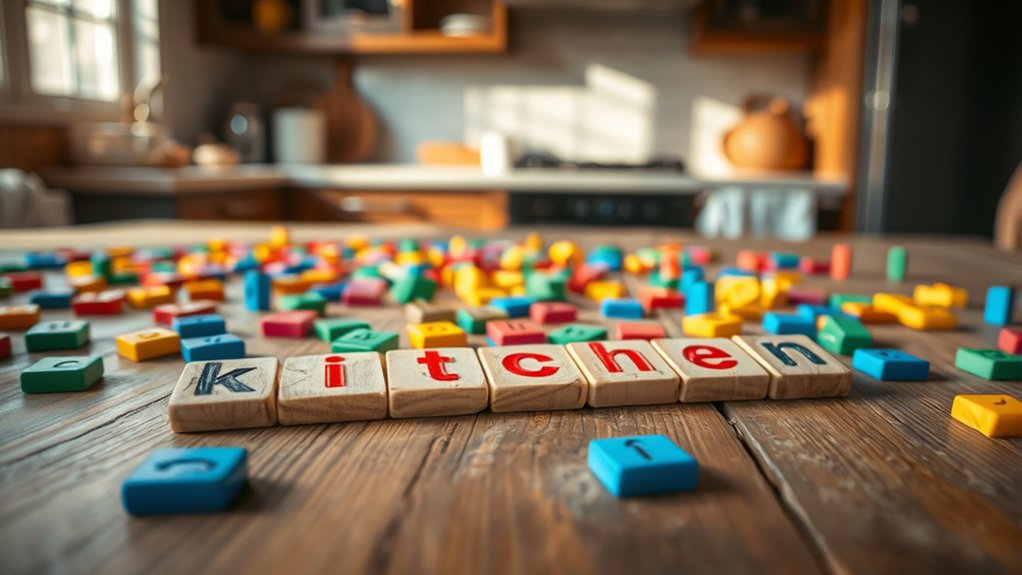
For useful cooking tips, keep your instructions just as clear. Write, “Chop the vegetables in the kitchen,” and readers will recognize both the action and the location.
Don’t add an extra “t,” omit the “h,” or replace the ending with “-chen” alone. Type K-I-T-C-H-E-N whenever you need the standard English spelling.
Use it whether you’re writing a recipe, shopping list, email, or home-improvement article. That simple sequence keeps your writing accurate and polished.
What Letters Are in “Kitchen”?
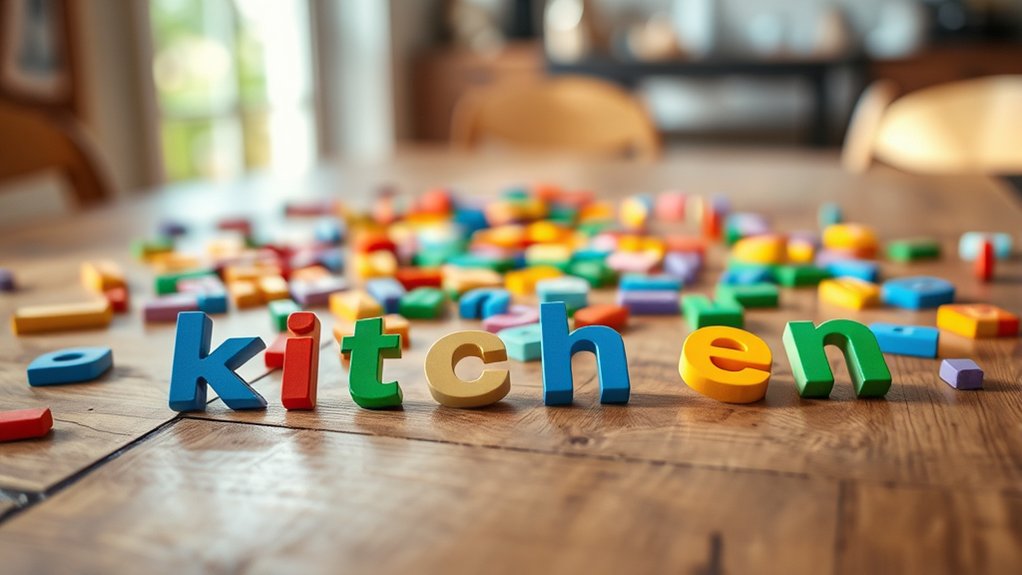
You can spell “kitchen” with seven letters: K, I, T, C, H, E, and N. Keep them in this order to avoid common mistakes. Next, you’ll review each letter and its correct position.
Kitchen Letter Breakdown
The word “kitchen” has seven letters: K, I, T, C, H, E, and N. You can examine each character individually without changing the word’s meaning.
Notice the mix of consonants and vowels, which makes the word easy to divide into spoken parts. Focus on recognition rather than memorizing unrelated terms.
- K begins the word with a crisp sound.
- I supplies the first vowel.
- T adds a firm middle consonant.
- C, H, E, and N complete the remaining letters.
As you study spelling, connect “kitchen” with familiar topics such as Cooking techniques and kitchen organization.
Writing the word several times can help you identify its seven characters quickly. You’ll also benefit from saying it aloud while looking at the letters.
Keep your attention on the individual characters and their sounds, not on sentence examples or letter order.
Correct Letter Order
You can remember this spelling by grouping the word into sounds: kit and chen. This approach helps you connect pronunciation with familiar spelling patterns.
Say each part slowly, then combine them without changing the order. You’ll recognize the word in sentences such as “The kitchen is clean.”
Writing it several times can also help you recall the sequence when you need it. Pay attention to every letter as you practice.
Common Spelling Mistakes
- Begin with k, not c.
- Place t after i.
- Follow t with c-h.
- Finish with e-n.
You can remember “kitchen” by pronouncing each syllable slowly: kit-chen. If you’re unsure, type the word into a dictionary or spell-check tool.
Regular practice will help you recognize and avoid these mistakes.
How Do You Pronounce “Kitchen”?
How do you pronounce “kitchen”? Say it as KITCH-uhn, with emphasis on the first syllable. The initial sound matches “kit,” while the second syllable sounds like “un,” not “chen.” Keep the pronunciation short and smooth: /ˈkɪtʃən/.
To practice, break the word into two parts: “kitch” and “ən.” Then blend them without adding an extra vowel or stressing the final syllable.
Break “kitchen” into “kitch” and “ən,” then blend the sounds smoothly without stressing the final syllable.
You shouldn’t say “kit-CHEN,” “KITCH-ee-un,” or “KITCH-en” with a sharply pronounced ending. In everyday speech, the unstressed second syllable becomes softer, so the word flows naturally.
You can repeat “kitchen” in a sentence, such as, “You’ll find the pan in the kitchen.” Listening to native speakers can help you copy the rhythm.
Whether you’re discussing Cooking techniques or kitchen organization, pronounce the word clearly and confidently. Check a reputable dictionary for an audio example if you’re uncertain.
Record yourself to compare your pronunciation with the model. Practice slowly, then increase your speaking speed.
What Does “Kitchen” Mean?
When you hear the word “kitchen,” you’re probably thinking of a room where food is prepared and cooked. Kitchens are also used for storing ingredients, washing dishes, and sharing meals. In the next section, you’ll explore the word’s definition and learn more about how kitchens fit into daily life.
Definition Of Kitchen
A kitchen is a room or designated area where you prepare, cook, and sometimes store food. When you use the word “kitchen,” you mean a place organized for food-related tasks, not a particular style or size.
Its purpose guides how you arrange tools, ingredients, and work surfaces. Your kitchen design may reflect your habits, culture, available space, and preferences.
Culinary equipment, such as knives, pans, an oven, or a refrigerator, helps you complete different tasks efficiently. The term can describe a basic cooking area or a highly equipped workspace.
A kitchen typically supports these activities:
- Preparing ingredients
- Cooking meals
- Storing food
- Cleaning cooking tools
Understanding this definition helps you spell “kitchen” correctly and use it accurately. You can then recognize the word whenever you describe food preparation, cooking routines, or kitchen-related products.
Kitchen As A Room
The word “kitchen” refers to a room or designated space where you prepare, cook, and store food. When you picture a kitchen, imagine more than cabinets and appliances. You’re describing a functional part of a home, whether it’s a compact corner, an open-plan area, or a separate room.
Your kitchen’s layout can support movement between essential work zones, including preparation, cooking, and cleanup. Its surfaces, storage, lighting, and fixtures help you organize the space and work comfortably.
You might choose features that suit your preferred Cooking techniques, from baking to sautéing, without defining the room by a single task. Modern Kitchen design trends often emphasize flexible layouts, natural light, and efficient storage.
In this sense, “kitchen” names both a physical room and the thoughtfully arranged space surrounding your food preparation.
Common Kitchen Uses
Kitchens serve several everyday purposes beyond cooking meals. You use this space to prepare ingredients, store food, wash dishes, and gather with family or friends.
Your kitchen may also support homework, quick conversations, meal planning, and household routines. By practicing different cooking techniques, you can bake, sauté, steam, roast, or blend ingredients efficiently.
Good kitchen organization helps you find tools, protect food, and keep work surfaces ready. Common uses include:
- Preparing breakfast, lunch, and dinner
- Washing and storing dishes
- Organizing groceries and pantry supplies
- Sharing meals and socializing
You might use your kitchen for simple tasks, such as making coffee, packing lunches, or filling water bottles.
Although appliances and layouts vary, the room’s central purpose remains practical: it helps you manage food, supplies, and daily activities.
Understanding these uses also clarifies what “kitchen” means in everyday writing and conversation.
How Do You Use “Kitchen” in a Sentence?
Use “kitchen” with articles and possessive words when needed. Say “a kitchen” when you mention any kitchen, “the kitchen” when you mean a specific one, and “my kitchen” when it belongs to you.
The word can also modify another noun, as in “kitchen table,” “kitchen sink,” or “kitchen design.” Keep the sentence’s meaning clear by placing “kitchen” near the action or object it describes.
With these patterns, you’ll use the word naturally in everyday writing and conversation.
What Are Common Misspellings of “Kitchen”?
You might spell “kitchen” incorrectly as “kichen,” “kitchin,” or “kitcen.” To avoid these common mistakes, remember the correct sequence: k-i-t-c-h-e-n. Give your writing a quick proofread, and you’ll catch errors easily.
Common Spelling Errors
What are the most common misspellings of “kitchen”? You may accidentally write “kichen,” dropping the second “t,” or “kitchin,” replacing the final “e” with “i.” Other errors include “kitchan,” “kichen,” and “kicthen,” where letters shift or disappear.
These mistakes often occur because you pronounce the word quickly or type it without checking. Don’t confuse spelling errors with words related to Cooking techniques or Kitchen safety; context doesn’t change the word’s spelling.
- Kichen: missing the second “t”
- Kitchin: incorrect final vowel
- Kitchan: wrong ending sound
- Kicthen: misplaced letters
Recognizing these frequent errors helps you notice them in recipes, labels, schoolwork, and messages. You’ll also avoid making your instructions, notes, or searches harder for others to understand.
Focus on identifying the error itself rather than changing the sentence around it.
Correct Spelling Tips
To spell kitchen correctly, remember the pattern k-i-t-c-h-e-n: it has two consonants after the initial “ki,” a ch sound in the middle, and ends with -en. Common misspellings include “kichen,” which drops the t, “kitchin,” which replaces e with i, and “kitchan,” which uses the wrong final vowel.
You can avoid these errors by breaking the word into sounds: kit-chen. Then, write it several times or connect it with familiar phrases, such as “Cooking techniques” or “Kitchen organization.”
Don’t confuse kitchen with “chicken”; the latter begins with ch, while kitchen begins with ki. When proofreading, check the middle tch and the ending -en.
These quick checks will help you spell the word confidently in every context.
How Can You Remember the “-Tchen” Ending?
Use these pronunciation tips and reminders:
> Pronunciation tips and reminders can make tricky words easier to spell and remember.
- Picture a cooking kit inside your kitchen.
- Write kit, then attach chen.
- Say “kit-chen” quietly as you spell.
- Check that t appears directly before ch.
You can reinforce the pattern by writing kitchen three times while saying each part aloud. Then cover the word and spell it from memory.
If you make a mistake, rewrite only the ending: -tchen. This focused practice builds accuracy without requiring you to memorize the whole word repeatedly.
Keep the image of a kit in mind whenever you write the word.
Does British English Spell “Kitchen” Differently?
You might hear regional language differences in pronunciation, vocabulary, or local expressions, yet those differences don’t change how you spell kitchen. Whether you’re writing about a home room, a restaurant workspace, or kitchen equipment, use the same six-letter form.
Context can affect related terms, but it doesn’t alter this word’s standard spelling. As a result, you can confidently write kitchen for British and American readers without adding or removing any letters.
How Can You Practice Spelling “Kitchen”?
Use short, regular practice sessions rather than one long review. Connect the word with familiar phrases, such as “clean kitchen,” “Cooking techniques,” or “kitchen organization.”
Practice “kitchen” regularly by connecting it with familiar phrases like “clean kitchen” and “kitchen organization.”
Writing these phrases helps you remember the spelling in meaningful contexts.
Try these activities:
- Copy kitchen five times, then cover it and rewrite it.
- Spell it aloud while tapping each sound.
- Write a sentence using kitchen and check every letter.
- Keep a small word card where you’ll see it daily.
You can also type the word in a note, arrange its letters with tiles, or ask someone to dictate it.
When you make a mistake, compare your version with the correct form, identify the missed letter, and repeat the word accurately.
Can You Pass This Kitchen Spelling Quiz?
Ready to test yourself? Take this quick kitchen spelling quiz and see whether you can spell “kitchen” correctly every time. Write the word three times without looking, then choose the correct option: kitchen, kichen, or kitcen.
The first answer is right because “kitchen” includes the letters k-i-t-c-h-e-n.
Next, complete this sentence: “Please clean the ___ after cooking.” You should choose “kitchen.”
Finally, spell the word aloud, saying each sound slowly. If you miss one answer, don’t worry. Write the word again, divide it into manageable parts, and check your spelling carefully.
Correct spelling helps you follow recipes, label supplies, and communicate clearly about cooking safety. It also supports kitchen organization when you create lists, signs, or storage labels.
Keep practicing until the correct pattern feels natural. Can you spell “kitchen” from memory now? If so, you’ve passed this simple quiz and strengthened your everyday writing skills.
Frequently Asked Questions
Can “Kitchen” Be Used as a Verb?
Yes, you can use “kitchen” as a verb, but it’s uncommon and informal. You might say someone “kitchens” a space when they equip or convert it into a kitchen, especially in construction or design discussions.
In cooking terminology, however, people usually choose clearer verbs such as “cook,” “prepare,” or “cater.” Culinary slang may use “kitchen” creatively, but standard writing should explain your meaning or select a more precise verb instead.
Are There Synonyms for the Word “Kitchen”?
You can use several synonyms for “kitchen,” depending on your meaning. For a room where you prepare food, try “cookhouse,” “galley,” or “culinary area.”
In cooking terminology and culinary vocabulary, “kitchen” may also refer to a restaurant’s food-preparation department or its staff.
If you mean a cooking style, use “cuisine,” as in Italian cuisine or home cuisine. Choose the synonym that best matches your context and audience.
What Is the Origin of the Word “Kitchen”?
You’ll find that “kitchen” traces back to the Old English *cycene*, borrowed from the Latin *coquina*, meaning a cooking place. Its historical evolution continued through Middle English *kichene* before reaching today’s spelling.
As you study culinary terminology, you’ll notice related forms in other languages, including French *cuisine* and German *Küche*. The word originally described a room for preparing food, but its meaning now includes equipment, staff, and culinary operations.
How Do You Spell “Kitchen” in Other Languages?
You can spell “kitchen” differently across languages: Spanish uses *cocina*, French uses *cuisine*, Italian uses *cucina*, German uses *Küche*, Portuguese uses *cozinha*, and Japanese uses *daidokoro* (台所).
As you investigate cultural kitchen differences, notice that each term reflects local history and usage. Culinary kitchen terminology may also vary by region, so you’ll sometimes find multiple words for cooking spaces, professional kitchens, or household kitchens within one language.
Why Is “Kitchen” Pronounced Differently From Its Spelling?
“Kitchen” sounds different from its spelling because English carries centuries of linguistic baggage, like a suitcase packed with old sounds. You pronounce it “KITCH-un,” although its letters suggest every sound should ring clearly.
Over time, speech simplified while spelling stayed mostly frozen. Historical spelling variations helped shape its written form, and regional pronunciation differences may slightly alter the vowels or rhythm.
You’ll find this mismatch throughout English, where pronunciation often changes faster than spelling.
Conclusion
Now you can spell kitchen with confidence: K-I-T-C-H-E-N. Think of each letter as a stepping stone leading to the heart of your home, where meals, memories, and conversations come together.
When you write, pronounce, or use “kitchen” in a sentence, you’re opening a familiar door. Keep practicing until the word feels natural.
With every correct spelling, you’ll turn a small language challenge into a warm, welcoming light. Remember, spelling kitchen correctly makes everyday writing easier and more confident.