How to Get Rid of Cockroaches in the Kitchen
Seeing cockroaches in your kitchen can be stressful and frustrating, especially when you’re trying to keep your home clean. You’re not alone—many people struggle with finding the right solution.
In this guide, we’ll cover how to get rid of cockroaches in the kitchen and highlight products that can help.
To get rid of cockroaches in your kitchen, remove crumbs, spills, clutter, standing water, and accessible food. Clean beneath appliances, seal pantry items, and empty trash regularly.
Place labeled sticky traps to track activity, then use several enclosed bait stations along walls, under sinks, and behind appliances.
Seal cracks around pipes, cabinets, baseboards, doors, and vents. Use sprays sparingly and follow the label.
If activity persists or appears during daylight, contact pest control for targeted treatment and prevention steps.
Key Takeaways
- Confirm cockroach activity using sightings, droppings, egg cases, shed skins, odors, and sticky traps placed near hiding areas.
- Remove food, water, grease, clutter, and crumbs. Store food airtight, clean appliances, empty trash, and repair leaks promptly.
- Apply gel baits or bait stations along walls, beneath appliances, inside cabinets, and near plumbing. Follow all safety instructions.
- Seal cracks around pipes, cabinets, baseboards, vents, and doors with caulk, foam, screens, or door sweeps.
- Contact a licensed pest professional if activity persists, appears during daylight, spreads across rooms, or involves recurring egg cases.
Confirm You Have Cockroaches
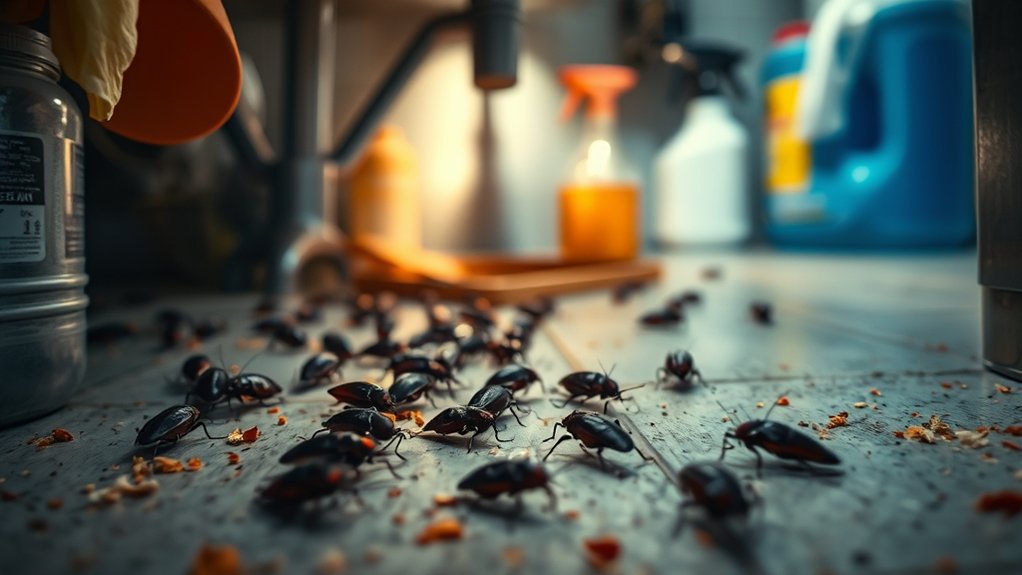
Before you treat your kitchen, confirm that cockroaches are the problem. Start with pest identification by looking for signs that match cockroach behavior.
Confirm cockroaches before treating your kitchen by identifying their behavior and signs accurately.
You may notice live or dead insects, especially at night, when cockroaches become active. Their oval bodies, long antennae, and rapid movement can help you distinguish them from beetles or other kitchen pests.
Check droppings, which often resemble black pepper or coffee grounds. Look for shed skins, egg cases, or a musty odor.
Take clear photos of any insect or evidence you find. Then compare them with reliable pest-control resources or ask a licensed professional for confirmation.
Don’t rely on one sign alone, since crumbs, stains, and other insects can cause confusion. Correct identification matters because different pests require different treatments.
Once you’ve confirmed cockroaches, choose a control method suited to your kitchen and household, including any children or pets. Avoid applying chemicals until you know what you’re treating.
Inspect Common Cockroach Hiding Spots
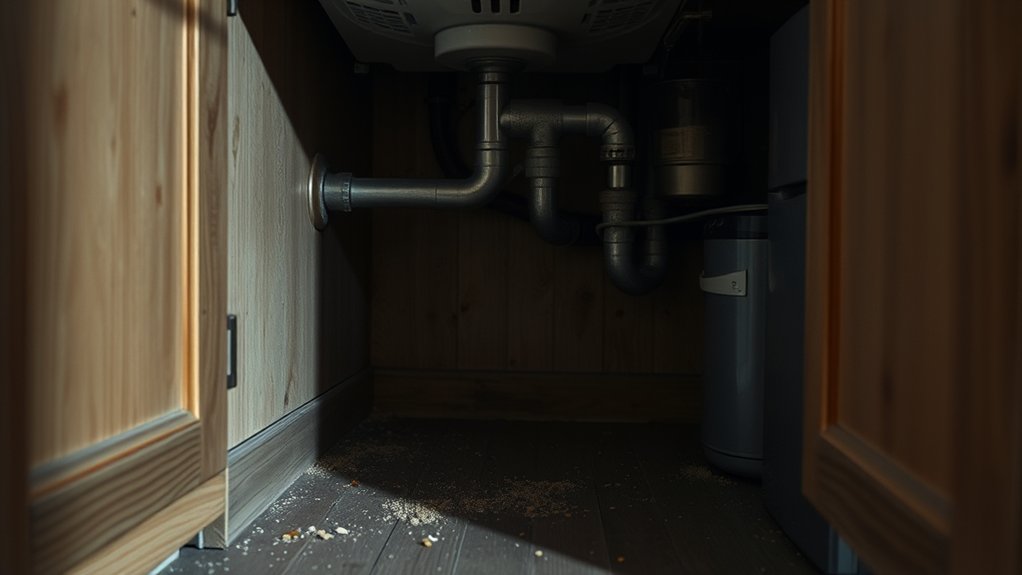
Inspect dark, damp areas such as under sinks, behind appliances, and inside cabinets. Also check cracks and crevices along baseboards, walls, and countertops, since cockroaches often hide there. Keep an eye out for droppings, egg cases, or live insects, and make a note of anything you find.
Check Dark, Damp Areas
Cockroaches often hide in dark, damp spots, so check beneath sinks, behind appliances, inside cabinet corners, and around leaky pipes. Use a flashlight to inspect these areas carefully, looking for droppings, shed skins, egg cases, or a musty odor.
Move stored items temporarily so you can see dark corners where pests may remain undisturbed. Pay special attention to moisture beneath the sink, near the dishwasher, and around the refrigerator’s drip pan.
Wipe condensation, repair dripping fixtures, and dry wet surfaces promptly. Check nearby utility rooms, laundry areas, and damp basements, since roaches may travel from these locations into your kitchen.
Keep cardboard, paper bags, and clutter off the floor, and empty neglected containers that could hold moisture. Recheck these spots regularly, especially after cleaning or plumbing problems.
Examine Cracks and Crevices
Look closely at narrow cracks and crevices where roaches can squeeze out of sight, including gaps along baseboards, cabinet joints, drawer tracks, and wall openings around pipes. Use a flashlight during your crevice inspection, and move appliances or remove drawers when necessary.
Watch for droppings, shed skins, egg cases, grease marks, or a musty odor, which can reveal hidden activity. Check beneath sinks, behind the refrigerator, around plumbing, and inside cabinet corners.
Vacuum debris from these spaces, then clean surfaces with soapy water. After everything dries, begin crack sealing with caulk suited to the material.
Fill gaps around pipes, repair loose joints, and replace damaged weather stripping. Don’t block ventilation openings or seal areas containing active wiring.
Recheck treated spots regularly, because new gaps can provide fresh entry points.
Remove Food, Water, and Clutter
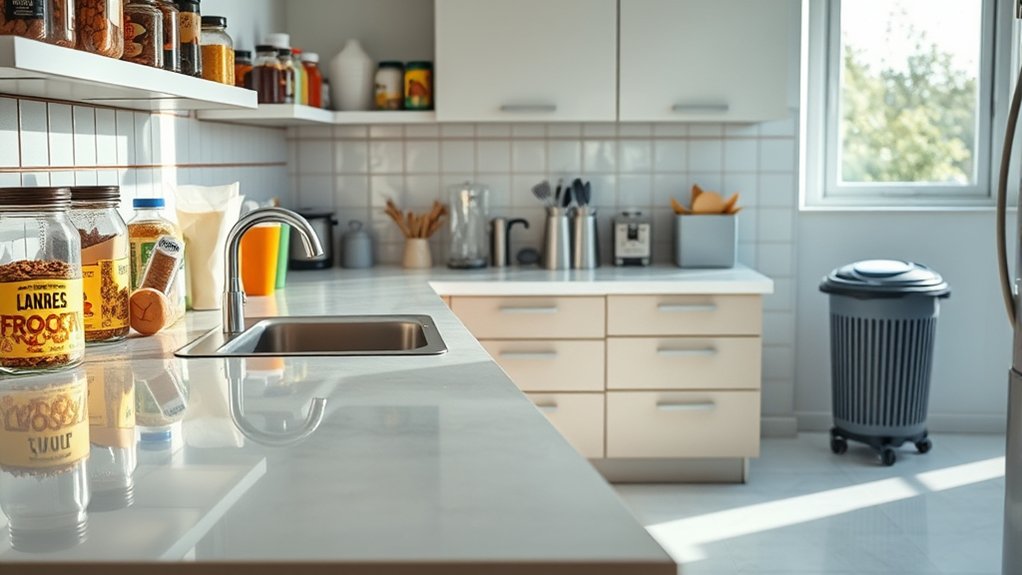
Start by removing anything that gives cockroaches food, water, or hiding places. Seal pantry goods in airtight containers, and don’t leave pet food in bowls overnight. Food storage matters because cardboard boxes and open bags can provide easy access.
Take out trash regularly, tie bags securely, and rinse recyclable containers before placing them in the bin.
- Store cereal, flour, sugar, and snacks in sealed containers.
- Wipe up spills immediately and keep sinks dry after use.
- Repair dripping faucets and empty standing water from dishes.
- Remove grocery bags, newspapers, and unused boxes promptly.
- Organize cabinets so you can spot activity quickly.
For effective clutter removal, clear piles from floors, counters, and cabinet corners. Cockroaches hide in undisturbed stacks, so give them fewer sheltered areas.
Keep produce covered, clean crumbs from plates, and avoid leaving dirty dishes overnight. Check stored items before bringing them into your kitchen, especially boxes from garages or delivery areas.
These simple changes limit access to essentials and make future monitoring easier. Don’t give pests opportunities to settle in.
Deep-Clean Surfaces and Appliances
Now scrub food preparation areas to remove crumbs, spills, and residue that can attract cockroaches. Degrease kitchen appliances, including stovetops and microwaves, and clean the seals around your refrigerator, where grime can build up. Be sure to check cracks, corners, and the spaces beneath appliances, too.
Clean Food Preparation Areas
Why give cockroaches easy access to crumbs and grease? Clean food preparation areas after every meal to remove what attracts them. Wipe counters, cutting boards, and tables with warm, soapy water, then dry them completely.
Don’t leave damp cloths or sponges overnight; launder or replace them regularly.
- Sweep crumbs from floors and corners.
- Empty food scraps into a sealed bin.
- Wash reusable grocery bags often.
- Keep pet bowls clean and dry.
- Inspect cabinets for spills and residue.
Practice careful Food storage by transferring opened ingredients into pest proof containers. Clean beneath small countertop items and check wall edges for hidden crumbs.
Keep fresh produce washed and contained, and remove cardboard packaging that can harbor pests. A tidy preparation area makes cockroaches less likely to find food, water, or shelter.
Repeat this routine daily, especially after cooking, to maintain a consistently uninviting kitchen environment.
Degrease Kitchen Appliances
Grease and food residue on appliances can give cockroaches both nourishment and hiding places, so wipe stovetops, range hoods, microwaves, and refrigerator seals with a degreasing cleaner. Unplug appliances before cleaning, and follow each manufacturer’s instructions.
Remove burner grates, knobs, drip trays, and removable filters so you can wash hidden surfaces with hot, soapy water. Use a toothbrush or narrow brush to loosen grease buildup around seams, vents, handles, and control panels.
Dry every part completely before replacing it, because moisture can also attract pests. Don’t spray cleaner into electrical openings; apply it to a cloth instead.
Include this routine in your appliance maintenance schedule, checking behind and beneath equipment for crumbs, spills, droppings, or egg cases. Seal gaps around cords and pipes, and repair damaged seals promptly to eliminate hiding spots.
Place Cockroach Baits Correctly
Place cockroach baits along walls, beneath appliances, and inside cabinets where you’ve seen roaches or droppings. Focus your bait placement on dark, sheltered routes rather than open countertops.
Roaches usually travel beside edges, so keep each station flush against a wall or corner. Your trap positioning should follow their likely paths without blocking cabinet doors or interfering with food preparation.
- Use several small bait stations instead of one large pile.
- Keep bait away from children, pets, dishes, and utensils.
- Place stations near plumbing gaps, hinges, and appliance motors.
- Don’t put bait beside sprays, cleaners, or strong-smelling products.
- Replace stations according to the label’s instructions.
Choose a product labeled for indoor cockroach control, and read every safety direction before placing it. Don’t disturb stations unnecessarily after installation, because roaches need time to feed and carry the bait back to hiding areas.
Seal food and wipe crumbs away, but leave the bait accessible. Follow the manufacturer’s quantity and location guidance for safe, effective results.
Set Traps to Monitor Activity
Set sticky traps along walls, beneath appliances, and inside cabinets to track where cockroaches are most active. Choose flat traps with a strong adhesive surface, and place them where you’ve noticed droppings, smears, or live insects.
Keep traps away from standing water and heavy food debris so they remain effective and easy to inspect.
Label each trap with its location and installation date. Check your monitoring devices daily at first, then every few days as activity declines.
Record how many cockroaches you find and their sizes; this information can reveal entry routes and hiding areas. Replace full, dusty, or damp traps promptly.
Don’t move every trap at once. Leave successful placements in position while adding others nearby to map movement.
Although bait stations can help control an infestation, traps primarily show you where to focus cleaning, sealing, and other control efforts.
Wear gloves when handling used traps, and discard them in a sealed bag.
Use Sprays Safely and Sparingly
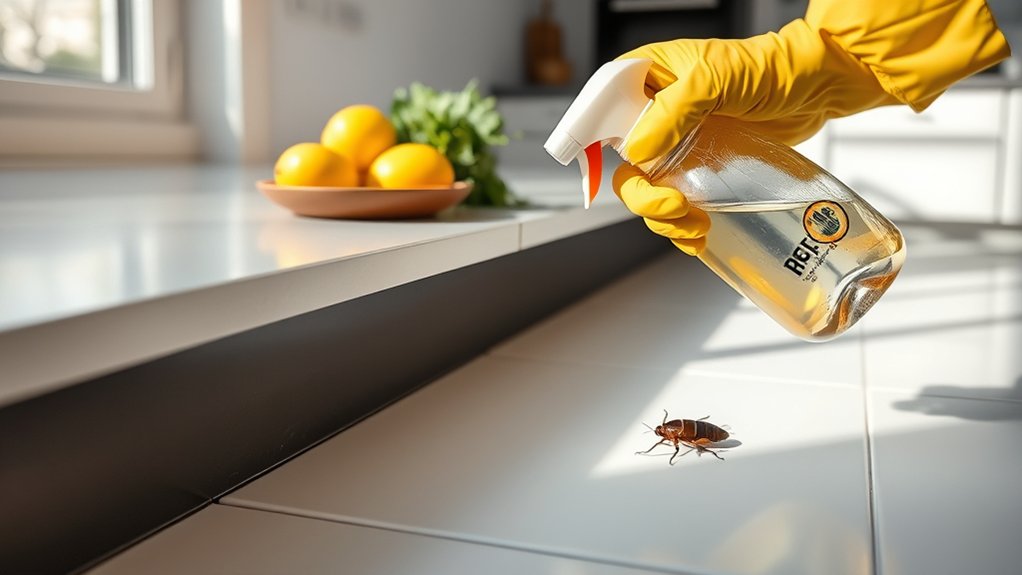
Use cockroach sprays only for quick, targeted control when traps or bait aren’t enough. Choose a product labeled for indoor kitchen use, and read every direction before applying it.
Keep children, pets, dishes, utensils, and food away from the treatment area. Open windows if the label allows, and never mix products or spray near flames.
- Apply a light treatment directly to cracks, corners, or cockroach hiding spots.
- Leave treated surfaces undisturbed for the label’s recommended time.
- Wash food-contact surfaces before preparing meals.
- Store sprays in their original containers, out of children’s reach.
- Dispose of empty containers according to local instructions.
Don’t fog the kitchen or repeatedly saturate surfaces. More chemical won’t necessarily improve control.
Avoid spraying traps, bait stations, or areas where you’ve placed food-based attractants.
Natural repellents may complement your plan, but they rarely eliminate an infestation alone. Use DIY sprays cautiously, since homemade mixtures can irritate skin, damage finishes, or create unsafe fumes.
If activity continues, contact a licensed pest professional.
Seal Kitchen Gaps and Entry Points
Once the kitchen is clean and treated, seal the gaps that let cockroaches enter or hide. Inspect beneath sinks, around pipes, behind appliances, and along baseboards.
Look for cracks, loose trim, and openings around cabinets, windows, and doors. These common entry points give pests easy access to food, water, and shelter.
Inspect cracks, loose trim, and openings around cabinets, windows, and doors to block pests from reaching food, water, and shelter.
Use caulk to close narrow cracks along walls, countertops, backsplashes, and cabinet seams. Apply expanding foam around larger openings near plumbing, but follow the product’s directions and keep it away from heat sources.
Install door sweeps and replace worn weather stripping to block gaps under exterior doors. Cover vents and drains with properly fitted screens when appropriate, ensuring they don’t restrict airflow or drainage.
After sealing the gaps, check your work regularly. Cockroaches may exploit newly formed cracks or chew through weak materials.
Keep stored items away from walls so you can spot openings quickly. Repair damaged seals as soon as you notice them.
Know When to Call Pest Control
If cockroaches keep appearing after you’ve cleaned, sealed gaps, and used targeted treatments, it’s time to call a licensed pest control professional. Ongoing activity may indicate a hidden nest, widespread infestation, or access point you haven’t identified.
A trained technician can inspect your kitchen, determine the species, and recommend appropriate Pest control options.
Consider professional help when:
- You see cockroaches during daylight hours.
- You find droppings, egg cases, or shed skins repeatedly.
- Cockroaches appear in several rooms.
- Store-bought products haven’t reduced activity.
- Someone in your household has asthma or chemical sensitivities.
Before treatment, ask about the products used, preparation requirements, pet and child safety, and follow-up visits.
Don’t combine multiple insecticides or apply extra product. Misuse can increase health risks without solving the infestation.
Professional extermination may involve baiting, targeted applications, monitoring, or several visits, depending on the severity.
Share where and when you’ve noticed cockroaches, and provide details about previous treatments. Prompt expert intervention can address the problem more safely and thoroughly than repeated DIY attempts.
Prevent Cockroaches From Returning
Keeping cockroaches away requires consistent habits after treatment. Clean spills and crumbs immediately, and don’t leave dirty dishes overnight. Wipe counters, sweep floors, and vacuum corners regularly to remove food particles and egg cases.
Use airtight containers for food storage, including pet food, cereal, and snacks. Empty trash often, keep lids tightly closed, and rinse recyclable containers before placing them in the bin.
Fix leaking faucets and pipes, then dry sinks and counters before bed. Cockroaches need moisture, so don’t leave standing water in dishes or appliances.
Inspect boxes, grocery bags, and used appliances before bringing them inside. Seal cracks around cabinets, baseboards, pipes, and doors with caulk, and install door sweeps where needed.
Monitor hidden areas with sticky traps, especially beneath sinks and behind appliances. Replace traps regularly and act quickly if you see activity.
Rotate approved bait products when appropriate to reduce pest resistance, and follow every label instruction. Schedule follow-up inspections if sightings continue.
Frequently Asked Questions
How Long Does It Take to Completely Eliminate a Cockroach Infestation?
Your infestation duration usually ranges from two to eight weeks, depending on how severe it is, the species involved, and your treatment method. You may notice fewer cockroaches within several days, but complete eradication takes consistent baiting, sanitation, and follow-up treatments.
A professional can often shorten the eradication timeline, though heavy infestations may require multiple visits. Keep monitoring for at least a month after sightings stop because hidden egg cases can hatch later.
Are Cockroaches Dangerous to Children, Pets, or People With Allergies?
Yes, cockroaches can endanger children, pets, and people with allergies. One roach can carry bacteria across dozens of surfaces, leaving an invisible trail through your home.
Their droppings, shed skins, and saliva may trigger asthma, sneezing, rashes, or breathing problems, especially in sensitive children. Pets can become ill after eating contaminated insects or bait.
Learn cockroach behavior, remove food and water, and use targeted pest control methods safely around children and animals.
Can Cockroaches Survive in Kitchen Appliances?
Yes, cockroaches can survive inside kitchen appliances, especially warm, dark units with crumbs, grease, or moisture. You’ll often find them near motors, control panels, refrigerators, microwaves, dishwashers, and coffee makers.
These infestation hotspots can lead to appliance contamination and spread bacteria across food-contact surfaces. Unplug the appliance before inspecting it, clean spills promptly, seal nearby cracks, and contact a licensed pest professional if you spot droppings, egg cases, or live roaches.
Why Do Cockroaches Appear More Often at Night?
Cockroaches appear more often at night because they’re primarily nocturnal and avoid light, noise, and human activity. Their cockroach behavior includes hiding during the day, then emerging to search for food, water, and shelter after dark.
You’ll notice them more when your kitchen becomes quiet, especially near sinks, appliances, trash, and crumbs. Seeing them regularly at night may indicate a larger infestation, since daytime sightings often signal overcrowding or disrupted hiding places.
What Should Renters Do if Their Landlord Ignores a Cockroach Problem?
Don’t let your landlord sweep the problem under the rug. Document every sighting, photograph the infestation, and report it in writing with dates and requested repairs.
Landlord responsibilities often include maintaining habitable, pest-free housing, though local rules vary. If your landlord ignores you, contact your local housing or health department.
Tenant remedies may include repair-and-deduct, rent withholding, lease termination, or court action, but check local law before taking any step.
Conclusion
You can get rid of kitchen cockroaches by combining cleanliness, targeted baits, careful sealing, and patience. Don’t rely on sprays alone, and call a licensed professional if the infestation persists or spreads.
Prevention matters: cockroaches can survive for about a month without food, so eliminating water, crumbs, grease, and hiding places is essential. Keep monitoring after treatment, store food securely, repair leaks, and maintain a clean, clutter-free kitchen to get rid of cockroaches in the kitchen and keep them from returning.