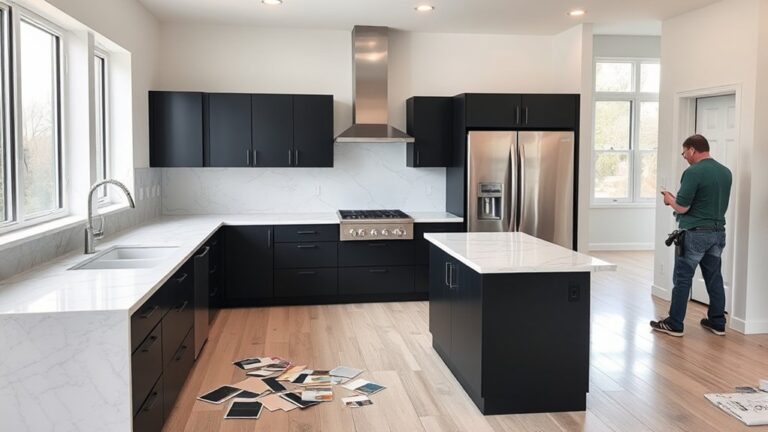
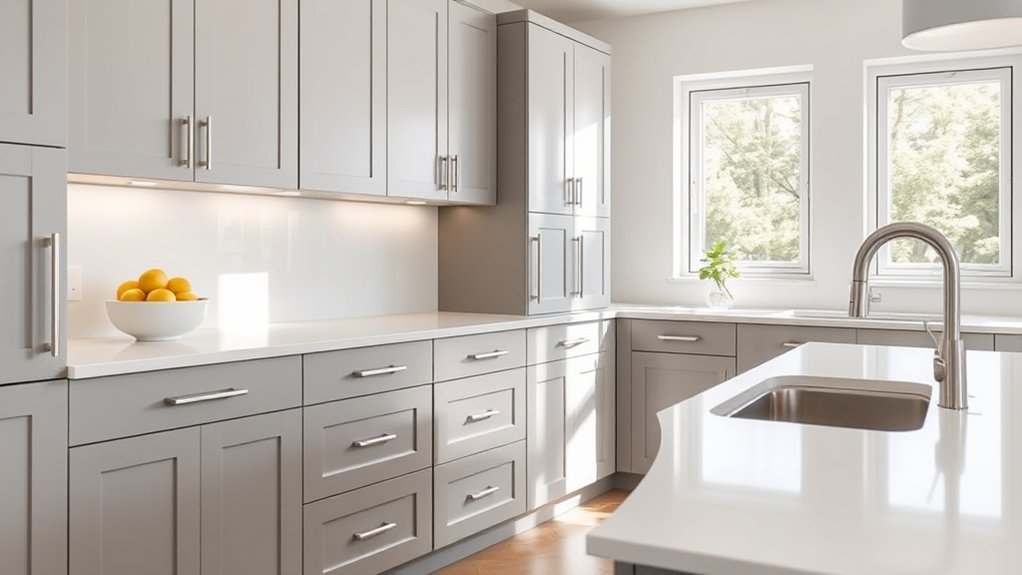
How Much Do New Kitchen Cabinets Cost?
Choosing new kitchen cabinets can feel overwhelming, especially when you’re trying to balance style, storage, and cost. You’re not alone—many homeowners struggle to understand how much they should budget.
So, how much do new kitchen cabinets cost?
New kitchen cabinets typically cost $4,000 to $15,000 installed. You’ll pay about $100–$300 per linear foot for stock cabinets, $150–$670 for semi-custom options, and $500–$1,200 or more for custom designs.
Your total depends on materials, finishes, hardware, layout, installation, delivery, and added storage features.
Budget another 10%–20% for unexpected expenses, plus possible demolition, plumbing, electrical, and trim costs.
Keep exploring to see which cabinet type best fits your kitchen and budget.
Key Takeaways
- New kitchen cabinets typically cost $4,000–$15,000 installed, depending on kitchen size, materials, and design complexity.
- Stock cabinets cost about $100–$300 per linear foot and offer the most affordable, standard-size options.
- Semi-custom cabinets cost roughly $150–$670 per linear foot, providing more flexibility in sizes, finishes, and storage.
- Custom cabinets start around $500 per linear foot and can exceed $50,000 for large or highly detailed kitchens.
- Budget separately for installation, delivery, demolition, hardware, trim, taxes, and a 10%–20% contingency.
How Much Do New Kitchen Cabinets Cost?
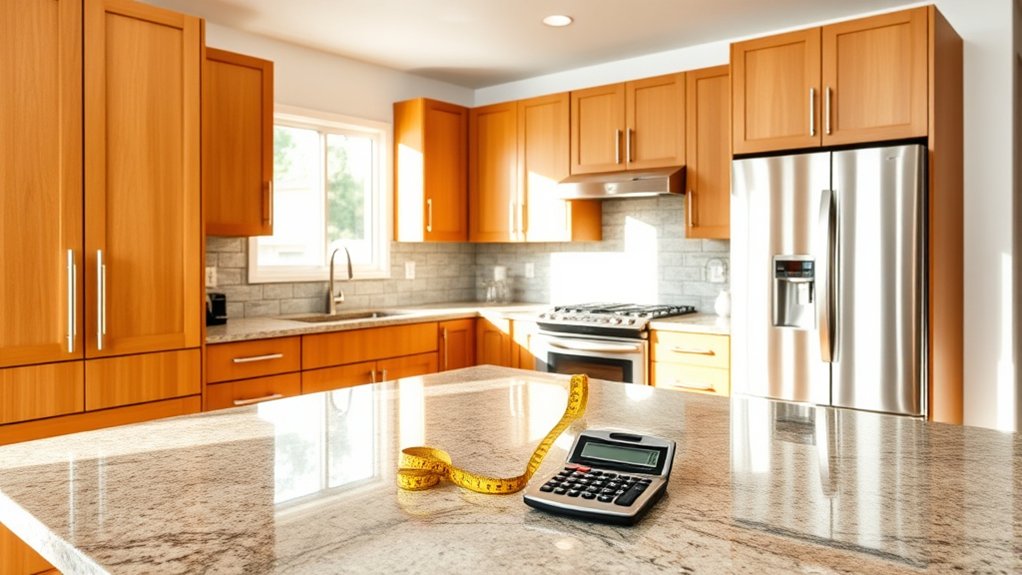
New kitchen cabinets typically cost $4,000 to $15,000, including materials and installation, though prices vary based on cabinet type, size, layout, and finish. You’ll usually pay less for stock cabinets, while semi-custom and custom options cost more because they offer broader sizing and design flexibility.
Your kitchen layout strongly affects the total price. A compact space with a straightforward arrangement generally costs less than a large kitchen with extensive cabinetry, islands, or unusual dimensions.
Cabinet materials also influence your budget. Laminate and thermofoil options often provide affordable durability, while solid wood, plywood, and premium veneers typically increase costs.
Don’t overlook cabinet finishes when comparing estimates. Painted, stained, glazed, and specialty finishes can shift the price, particularly when you select labor-intensive or high-end treatments.
To set a realistic budget, measure your space, identify your preferred cabinet category, and compare prices from several local professionals. You’ll make better decisions when you prioritize your storage needs, style preferences, and available spending limit.
What’s Included in a Cabinet Price?
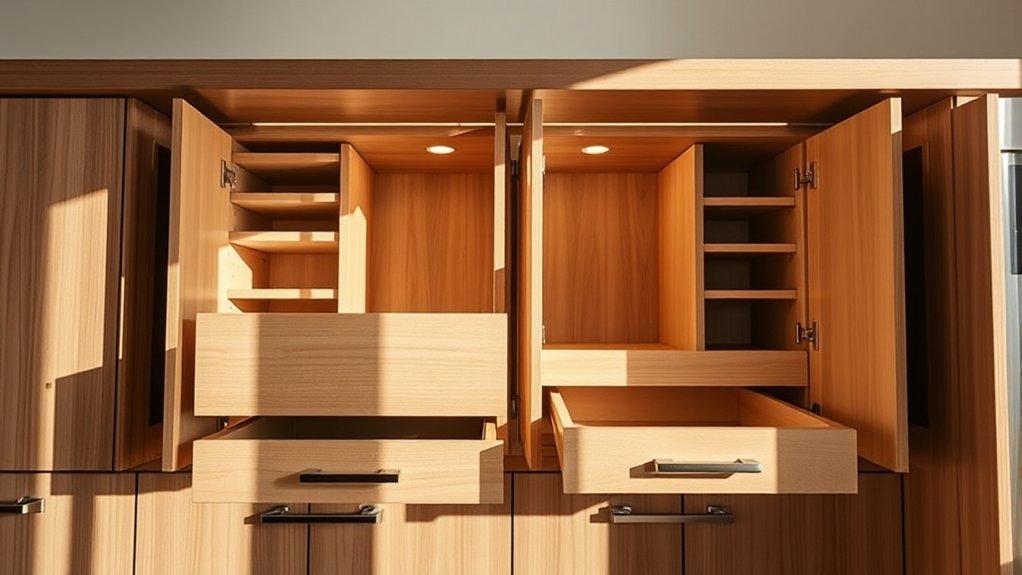
Cabinet pricing typically includes the cabinet boxes, doors, drawer fronts, shelves, and basic hardware, while installation may appear as a separate charge. Your quote may also cover standard cabinet finishes, hinges, and drawer glides, but you should confirm each detail before signing.
Cabinet pricing often covers basic components and finishes, but installation, upgrades, and certain hardware may cost extra.
Ask whether the price includes:
- Interior shelves and supports
- Soft-close hinges or drawer glides
- Knobs, pulls, or other cabinet hardware
- Finished end panels and toe kicks
- Delivery, assembly, and installation
You’ll often pay extra for upgrades, such as custom organizers, specialty storage, decorative panels, premium finishes, or modified cabinet dimensions.
Some estimates include fillers, moldings, and trim; others list them separately. Review the scope carefully so you can compare quotes accurately.
You should also check whether the contractor includes removal and disposal of existing cabinets, countertop coordination, and adjustments needed during installation.
Clarify taxes, delivery fees, and labor charges, too. A detailed written estimate helps you understand what you’re buying and prevents unexpected costs as your project moves forward.
Stock Cabinets: What Do They Cost?
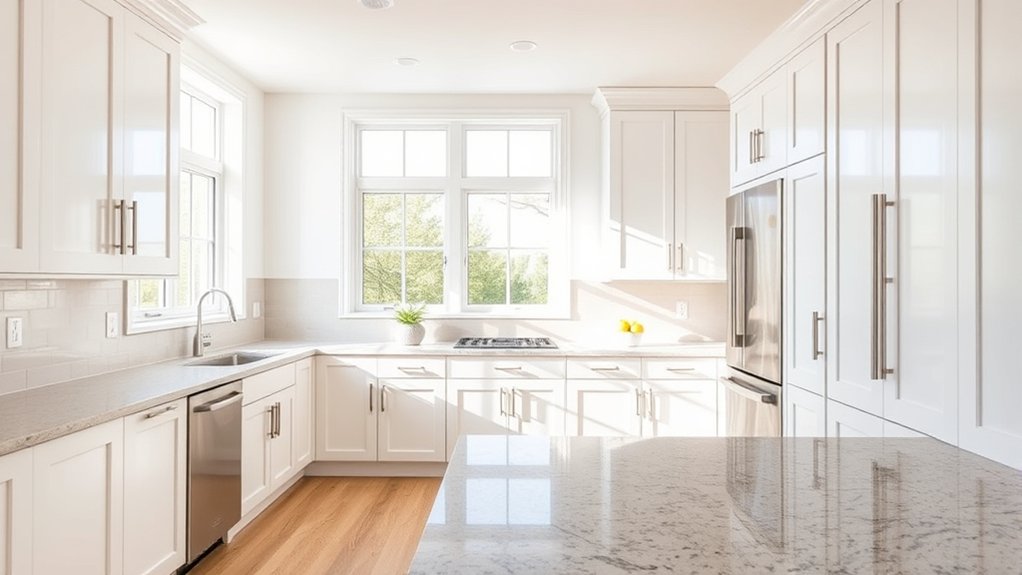
You’ll typically pay less for stock cabinets because manufacturers make them in standard sizes and finishes. Your total cost will depend on the materials, number of cabinets, hardware, delivery, and installation. Consider all these factors when setting a realistic budget for your kitchen.
Stock Cabinet Pricing
Stock cabinets typically cost $100 to $300 per linear foot, making them the most budget-friendly option for a kitchen remodel. You’ll find these premanufactured cabinets in standard sizes, styles, and finishes, so they’re easy to order and install.
A smaller kitchen may require fewer linear feet, while a larger layout needs more cabinets.
Your stock-cabinet budget can cover:
- Basic wall and base cabinets
- Standard doors and drawer fronts
- Common finishes, such as white or oak
- Simple handles and knobs
- Professional delivery and installation
You’ll usually pay separately for countertops, sinks, faucets, and labor. Plan your total project budget carefully, especially if you also want appliance upgrades or improved kitchen lighting.
Stock cabinets work well when you want a clean, functional design without custom construction. Compare cabinet packages and measure your space accurately before ordering to avoid purchasing too many or too few units.
Cost Factors
Several factors affect the final price of stock cabinets beyond the $100 to $300 per linear foot base cost. Your kitchen’s size determines how many cabinets you’ll need, while layout changes can increase labor and installation costs.
Choose standard finishes and simple hardware to keep expenses lower. Upgraded doors, soft-close hinges, pullout shelves, and specialty organizers add convenience but raise the total.
You’ll also pay more for crown molding, trim, fillers, panels, and matching end pieces, especially when walls aren’t square. Delivery charges and removal of your old cabinets may appear separately on your estimate.
Consider how your selections complement your kitchen decor, and budget for cabinet maintenance, such as cleaning products, touch-up supplies, and occasional hardware replacement. Comparing detailed quotes helps you spot hidden fees and control costs.
Semi-Custom Cabinets: What Do They Cost?
Semi-custom kitchen cabinets typically cost about $150 to $670 per linear foot, or roughly $15,000 to $30,000 for a standard kitchen, including installation. You’ll choose from a manufacturer’s cabinet sizes, layouts, door styles, and finishes, then adjust select features for a more personalized fit than stock cabinets.
Your final price depends on several choices:
Several factors influence your final semi-custom cabinet cost, from finishes and hardware to materials, storage features, and installation services.
- Cabinet finishing, including paint, stain, or specialty treatments
- Hardware selection, such as knobs, pulls, and hinges
- Wood species or engineered materials
- Interior organizers, drawers, and soft-close mechanisms
- Delivery, removal, and installation fees
Semi-custom cabinets usually offer more design flexibility without the extensive planning and longer production time associated with fully individualized cabinetry.
You can often modify dimensions, add decorative details, or select upgraded storage accessories while keeping the project within a predictable budget.
Ask your contractor whether the estimate includes measurements, design services, delivery, installation, and cleanup.
Comparing itemized quotes helps you spot omitted costs and choose upgrades that improve daily use without overspending.
Custom Cabinets: What Do They Cost?
Custom cabinets usually cost more because they’re designed, built, and finished specifically for your space. In this guide, you’ll learn the typical price range for custom cabinets and the factors that can raise or lower your total cost. That way, you can create a realistic budget for your kitchen project.
Custom Cabinet Price Range
For a fully personalized kitchen, expect custom cabinets to cost about $500–$1,200 or more per linear foot, including materials and construction. For a 25-linear-foot kitchen, that equals roughly $12,500–$30,000 before installation and related services.
Your final quote reflects the cabinet design and the level of personalization you choose. Custom work gives you made-to-order sizing, finishes, and storage instead of standard options.
Typical custom cabinet price ranges include:
- Small kitchens: $10,000–$18,000
- Average kitchens: $15,000–$30,000
- Large kitchens: $25,000–$50,000+
- Premium installations: $50,000–$100,000+
- Cabinet accessories: $500–$5,000+
Use these figures as planning estimates, not guarantees. Request a detailed written proposal so you can compare cabinetry, delivery, and installation charges accurately.
A designer can also help you match your budget to your priorities and preferred style.
Factors Affecting Custom Costs
Several factors can raise or lower your custom cabinet costs, including the wood species, finish, door style, hardware, storage accessories, cabinet dimensions, and installation complexity. You’ll typically pay more for premium hardwoods, hand-applied finishes, intricate doors, and specialty hardware.
Built-in features, such as pull-out shelves, spice racks, drawer organizers, and trash centers, also increase the price because they require additional materials and labor.
Your kitchen layout affects cost, too. Unusual angles, tight corners, tall ceilings, and extensive wall-to-wall cabinetry demand more precise measurements and construction.
Appliance integration can add expense when you choose custom panels, refrigerator surrounds, appliance garages, or cabinetry designed around unusual equipment. Installation becomes costlier when installers must modify walls, floors, plumbing, or electrical connections.
Larger, deeper, or *distinctively* shaped cabinets generally require more materials and specialized craftsmanship.
Budgeting For Custom Cabinets
Because so many design choices affect the final price, you’ll want a detailed budget before ordering custom cabinets. Start by measuring your space and requesting itemized estimates from several cabinetmakers.
Include installation, delivery, demolition, and taxes, not just the cabinet boxes. Then reserve 10% to 20% for unexpected changes or upgrades.
Your budget should account for:
- Wood species and construction quality
- Door styles and interior accessories
- Cabinet finishes, stains, or paint
- Decorative hardware and specialty storage
- Installation, trim, and related labor
Ask whether each quote includes fillers, panels, crown molding, and finishing work.
You can control costs by choosing standard dimensions, limiting elaborate details, or upgrading only high-use areas. Don’t sacrifice construction quality for appearance alone; durable materials can protect your investment.
Before signing, confirm the payment schedule, warranty, project timeline, and change-order fees in writing.
How Much Does Cabinet Installation Cost?
Cabinet installation typically costs $2,000 to $6,000, though your total may vary based on the kitchen’s size, cabinet type, layout complexity, and local labor rates. You’ll usually pay either a flat project fee or $50 to $150 per hour for professional labor.
Your installer may charge more for removing old cabinets, repairing walls, leveling floors, or modifying plumbing and electrical connections. A complex layout with corners, islands, fillers, or tall units also takes longer to install.
Ask whether the estimate includes delivery, assembly, trim, hardware, cleanup, and disposal so you can compare quotes accurately.
Coordinate installation with your kitchen lighting plans, especially when cabinets include under-cabinet fixtures or require new wiring.
Appliance integration can add labor when installers must create precise openings, secure panels, or adjust surrounding cabinets.
Before work begins, confirm measurements, access requirements, the schedule, and warranty coverage. Keeping appliances and fixtures on-site helps your installer achieve a proper fit and avoid delays.
Which Cabinet Materials Cost More?
Material choice considerably affects your cabinet budget. If you want affordable cabinets, thermofoil and laminate usually cost less than wood because manufacturers produce them efficiently. Their finishes can mimic paint or grain, though they may not match solid wood’s Cabinet durability.
Thermofoil and laminate offer budget-friendly finishes, while wood provides greater durability and a more traditional appearance.
Midrange options include maple, oak, and birch. You’ll pay more for these hardwoods, but they offer dependable strength, repairability, and a classic appearance.
Cherry and walnut typically cost more because they’re premium hardwoods with distinctive color and grain. Custom exotic woods can raise prices even further.
- Laminate: Typically the lowest-cost choice
- Thermofoil: Affordable and easy to clean
- Oak, maple, or birch: Midrange hardwood options
- Cherry or walnut: Premium, higher-priced woods
- Bamboo or reclaimed wood: Eco friendly materials with variable pricing
Your priorities matter when comparing materials. If you’re balancing appearance, longevity, and price, ask your cabinet professional for samples and construction details.
What Extra Cabinet Costs Should You Budget For?
Beyond the cabinets themselves, you’ll need to budget for installation, delivery, hardware upgrades, trim, and possible modifications to plumbing or electrical systems. Installation often includes removing old cabinets, leveling walls, securing boxes, and adjusting doors, so ask whether each service appears in your estimate.
Delivery charges may vary by distance, access, and the number of cabinets ordered.
You’ll also pay for cabinet hardware, such as knobs, pulls, hinges, and soft-close drawer mechanisms, unless your quote includes them.
Crown molding, light rails, end panels, toe-kicks, and decorative fillers can add costs, especially when your layout requires custom sizing. If you choose Eco friendly options, including low-VOC finishes or sustainably sourced wood, expect material prices to differ.
Plumbing work may cover moving a sink or dishwasher, while electrical costs can include relocating outlets, switches, or lighting.
Set aside a contingency of 10% to 20% for hidden damage, uneven walls, or measurements that require adjustments during installation.
How Can You Lower Cabinet Costs?
You can lower cabinet costs by comparing different materials and choosing stock cabinets instead of custom designs. Reusing your existing hardware can help reduce expenses, too. With these choices, you can create a functional kitchen while staying within your budget.
Compare Material Options
Comparing cabinet materials can lower your total kitchen renovation cost without sacrificing style or function. Consider durability, appearance, and cabinet maintenance before choosing. Your kitchen layout may determine which surfaces withstand moisture, heat, and daily wear best.
- Laminate offers an affordable, easy-to-clean finish in many colors and patterns.
- Thermofoil resists stains and moisture, though excessive heat can damage its surface.
- Veneer provides real-wood appearance at a lower price than solid hardwood.
- MDF delivers a smooth, paint-ready surface for contemporary or traditional designs.
- Solid wood offers strength and repairability but typically costs more.
Compare samples in your lighting, and ask how each option handles scratches, humidity, and cleaning products. A slightly higher upfront price may reduce repairs and replacement costs over time.
Choose the material that balances your budget with the performance your cooking habits require.
Choose Stock Cabinets
Once you’ve selected a material that fits your needs, choose stock cabinets to keep labor and manufacturing costs down. Manufacturers produce these standard-size units in large quantities, so you’ll typically pay less and receive them sooner than custom or semi-custom options.
Measure your kitchen carefully before ordering, since stock cabinets offer fewer size and layout choices. You can still create an efficient design by combining standard widths, fillers, and organizers.
For example, add pullout shelves to improve pantry organization without ordering a custom cabinet. Likewise, plan cabinet lighting around standard cabinet dimensions, using affordable under-cabinet fixtures to brighten work areas.
Compare prices from several retailers, and ask about sales, delivery fees, and assembly costs. Choosing a simple door style and finish can reduce the total further while keeping your kitchen attractive and functional.
Reuse Existing Hardware
Reuse existing cabinet hardware to lower replacement costs without sacrificing function. Before ordering new doors or drawers, remove your knobs, pulls, hinges, and drawer slides carefully. Check each piece for damage, measure mounting holes, and confirm the hardware matches your new cabinet design.
Cleaning and polishing can refresh its appearance, while replacement screws may restore a secure fit. These simple Reuse techniques help you avoid buying a complete hardware set.
- Photograph each item before removal.
- Label pieces by cabinet location.
- Test hinges and slides for smooth movement.
- Replace worn screws or bent components.
- Store hardware safely during installation.
You can still budget for targeted Hardware upgrades, such as modern pulls or soft-close hinges, instead of replacing everything. Ask your installer whether existing components will fit, since incompatible parts could increase labor costs.
Reusing quality hardware keeps your kitchen renovation practical and affordable.
How Can You Build a Cabinet Budget?
Building a cabinet budget starts with measuring your space and identifying your priorities. Record wall lengths, ceiling height, window locations, plumbing, and electrical points before requesting estimates. Then decide which features matter most, such as deep drawers, a pantry, or custom storage. Your choices will shape the final price.
Separate your budget into cabinets, installation, hardware, countertops, and potential upgrades. Include costs for demolition, delivery, permits, and finishing work, since these expenses can surprise you. Set aside 10% to 20% for unexpected problems, especially in older kitchens.
Plan appliance placement early so your cabinet layout accommodates clearances, ventilation, and connections without costly revisions. Include lighting design in your plan, since under-cabinet fixtures may require wiring or modified cabinet bottoms.
Compare stock, semi-custom, and custom options, and request detailed quotes from multiple contractors. Review each estimate carefully, confirm what’s included, and avoid choosing a bid based solely on the lowest price. A realistic budget helps you balance appearance, function, and long-term value.
Frequently Asked Questions
How Long Do New Kitchen Cabinets Typically Last?
New kitchen cabinets typically last 15 to 25 years, though you can extend their lifespan with proper care. Cabinet material durability matters: solid wood and high-quality plywood usually outlast particleboard or laminate.
You’ll also protect your investment by controlling moisture, tightening hardware, and avoiding harsh cleaners. Check appliance compatibility before installation, since heat, steam, or poorly fitted appliances can cause damage.
With routine maintenance, you’ll keep cabinets attractive and functional for decades.
How Should You Clean and Maintain Kitchen Cabinets?
You’ll find that a quick wipe today can prevent stubborn grime tomorrow. For effective Cleaning techniques, dust your cabinets weekly, then wipe surfaces with a soft cloth and mild dish soap diluted in warm water. Dry them immediately to prevent moisture damage.
Avoid abrasive sponges, harsh chemicals, and soaking wood. Follow these Maintenance tips: clean spills promptly, check loose hinges, tighten hardware, and apply manufacturer-approved polish occasionally to preserve the finish.
Can Existing Kitchen Cabinets Be Refaced Instead of Replaced?
Yes, you can reface existing kitchen cabinets instead of replacing them if their boxes remain sturdy and the layout works well. Cabinet refacing replaces doors, drawer fronts, and exposed surfaces while preserving the framework.
You’ll typically spend less and finish faster than with new cabinetry, making it a useful cost comparison. Refacing also reduces waste, but it won’t fix water damage, poor storage, or inconvenient configurations.
Ask a professional to inspect your cabinets first.
What Cabinet Styles Work Best for Different Kitchen Layouts?
Your kitchen’s shape should guide your cabinet style: think function first, beauty second. For galley layouts, choose sleek, flat-panel doors to keep sightlines open.
L-shaped kitchens suit versatile Shaker cabinets, while U-shaped spaces benefit from light finishes and glass doors that prevent heaviness.
In open plans, transitional styles create flow. Consider cabinet material options and custom versus stock choices to match storage needs, traffic patterns, and your design personality without overwhelming the room.
Do New Cabinets Increase a Home’s Resale Value?
Yes, new cabinets can increase your home’s resale value, especially when they improve storage, appearance, and functionality. You’ll see the strongest return when you choose durable finishes and a cabinet material that suits local buyer preferences.
Keep your budget balanced, since installation costs can reduce your return. Replace damaged or outdated cabinets, but avoid highly personalized designs.
A professional installation and cohesive kitchen style can make your home more appealing to prospective buyers.
Conclusion
New kitchen cabinets can transform your space, but your final bill depends on cabinet type, materials, size, installation, and extras. Stock cabinets usually cost less, while semi-custom and custom options offer more flexibility at higher prices.
Notably, cabinets often account for roughly 25% to 40% of a kitchen remodel budget, more than many homeowners expect. Set your priorities, compare quotes, and reserve money for hardware, delivery, installation, and unexpected adjustments before you order.
Understanding how much new kitchen cabinets cost can help you plan your budget and avoid surprises.