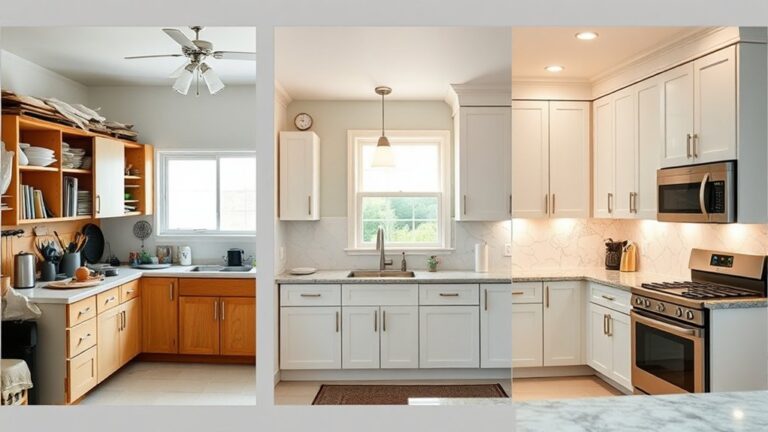
How Much Does a Kitchen Renovation Cost in 2027?
Planning a kitchen renovation can feel overwhelming, especially when you’re trying to balance your dream design with a realistic budget. You’re not alone—many homeowners struggle to estimate costs and prepare for unexpected expenses.
In 2027, you’ll typically spend $10,000–$25,000 on a small kitchen update, $25,000–$75,000 on a midrange remodel, or more than $75,000 on a large, high-end renovation.
Cabinets, countertops, appliances, flooring, plumbing, electrical work, labor, and permits drive your final price.
Plan to reserve another 10%–20% for hidden damage, delays, or changes.
Your location, materials, layout, and project complexity will also affect costs, as the following breakdown explains in more detail.
Key Takeaways
- In 2027, a kitchen renovation may cost $10,000–$25,000 for small updates, $25,000–$75,000 for midrange projects, and over $75,000 for large renovations.
- Cabinets typically cost $5,000–$50,000, while countertops range from $2,000–$12,000, depending on materials and customization.
- Appliances and fixtures generally add $4,000–$18,000, with premium, smart, and energy-efficient models increasing costs.
- Labor commonly adds 20%–35% of the project budget, especially when changing layouts or moving plumbing and electrical systems.
- Reserve 10%–20% for permits, hidden damage, material delays, design changes, and other unexpected expenses.
What Does a Kitchen Renovation Cost in 2027?
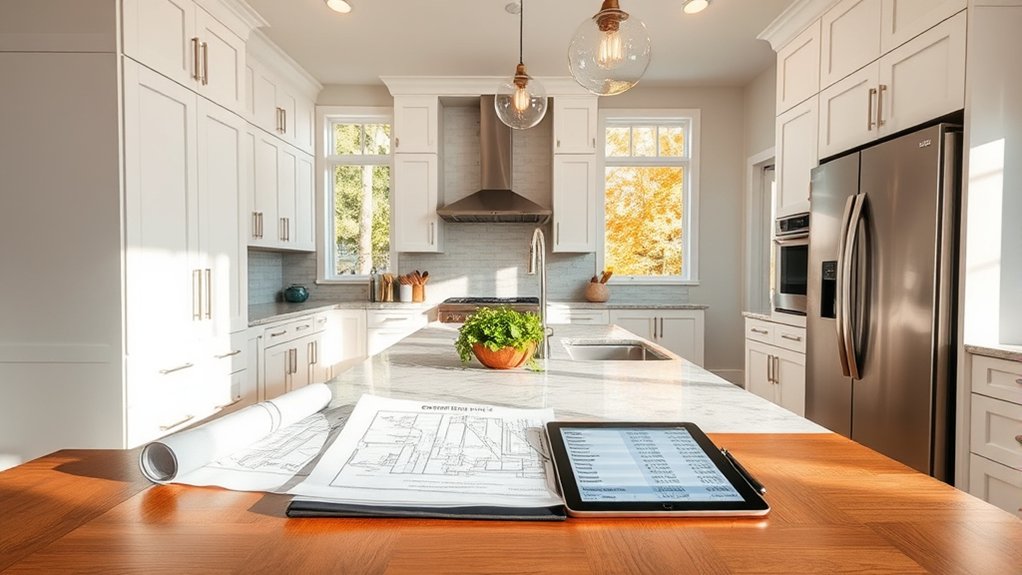
Planning a kitchen renovation in 2027 will likely cost between $25,000 and $75,000 for a mid-range project, while a high-end remodel can exceed $100,000. Your final price depends on material choices, labor rates, design complexity, and regional conditions.
You’ll usually spend the budget across cabinetry, countertops, flooring, plumbing, electrical work, and installation. Custom cabinets, natural stone, premium hardware, and structural changes can raise costs quickly.
You should also reserve 10% to 20% for unexpected repairs, permit changes, or delayed materials.
Energy-efficient appliances may cost more initially, but they can reduce utility bills over time. Review appliance warranties before buying, since coverage varies for parts, labor, and accidental damage.
Include kitchen lighting in your early plans, because under-cabinet fixtures, recessed lights, and rewiring may require additional electrical work.
Before signing a contract, request detailed estimates, confirm labor inclusions, and compare payment schedules. You’ll protect your budget by choosing priorities first and postponing upgrades that don’t improve daily function.
Kitchen Renovation Costs by Project Size
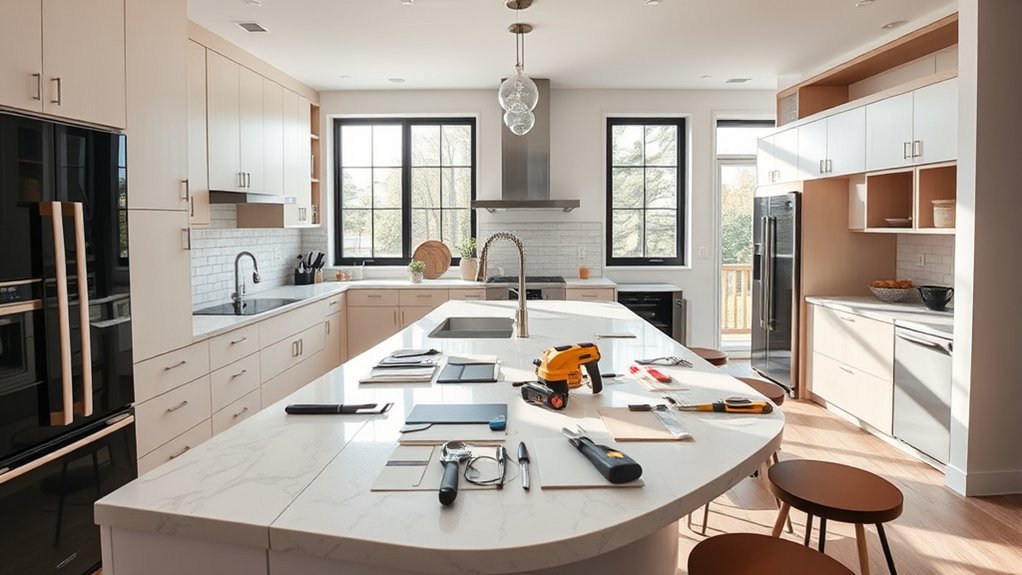
Kitchen renovation costs vary by project size, with a small update often costing $10,000 to $25,000, a mid-size remodel ranging from $25,000 to $75,000, and a large or full-scale renovation exceeding $75,000. Your final price depends on the rooms affected, materials required, and labor involved.
Kitchen renovation costs typically range from $10,000 for small updates to over $75,000 for full-scale remodels.
A small project might refresh cabinet fronts, replace countertops, update lighting, or install new hardware without changing the layout. You’ll typically face fewer permits and a shorter renovation timeline.
A mid-size remodel may include new cabinets, flooring, appliances, plumbing fixtures, and modest layout adjustments, increasing both labor and installation time.
A large renovation can involve structural changes, wall removal, custom cabinetry, new electrical and plumbing systems, upgraded ventilation, and extensive flooring work.
Your Kitchen design choices can significantly affect the scope, especially when you move appliances or add an island. Before work begins, ask contractors for itemized estimates so you can compare project requirements, labor, materials, permits, and expected completion dates accurately.
Budget, Midrange, and Luxury Kitchen Renovations
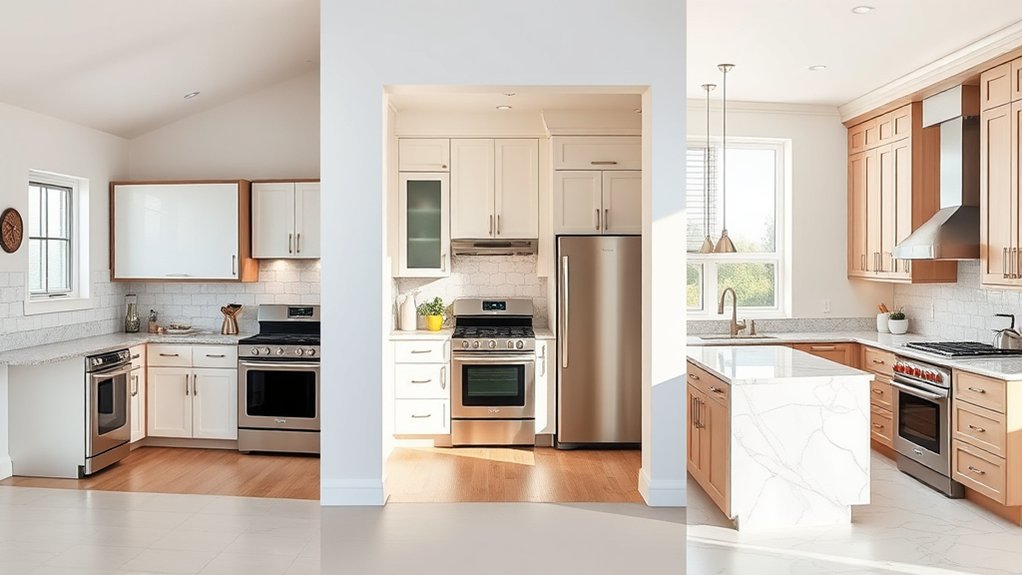
Your renovation budget will shape the materials, features, and overall design you choose for your kitchen in 2027. A budget-friendly renovation keeps costs down with targeted updates, while a midrange project offers a balance of quality and value. If you’re planning a luxury renovation, you can expect to invest in premium materials, custom features, and high-end appliances, which will increase the overall cost considerably.
Budget Renovation Costs
What will your kitchen renovation cost in 2027? For a budget project, you’ll typically spend $10,000–$20,000, depending on your kitchen layout, location, and material choices.
Keeping existing plumbing, cabinets, and appliances in place helps control labor costs. Choose stock cabinets, laminate counters, affordable fixtures, and durable vinyl flooring for practical savings.
Your renovation timeline may run four to eight weeks, although permits or backordered products can add time.
| Upgrade area | Budget choice | Typical savings |
|---|---|---|
| Cabinets | Stock or refaced | $3,000–$8,000 |
| Countertops | Laminate | $1,000–$3,000 |
| Flooring | Vinyl or laminate | $500–$2,000 |
Set aside 10%–15% for surprises, such as outdated wiring or hidden water damage.
You can also reduce expenses by painting yourself, comparing contractor quotes, and scheduling work during slower seasons. Focus on improvements that increase function without changing the footprint.
Midrange And Luxury Costs
If you’re planning more than a cosmetic update, a midrange renovation typically costs $25,000–$50,000, while a luxury kitchen can exceed $75,000. With a midrange project, you can replace cabinets, install durable countertops, upgrade appliances, improve lighting, and reconfigure limited storage.
Labor, permits, plumbing, electrical work, and your location will influence the final price.
A luxury renovation gives you greater design freedom and premium finishes. You might choose custom cabinetry, natural stone, professional-grade appliances, an oversized island, heated flooring, or a dedicated pantry.
Smart technology, such as connected ovens, touchless faucets, and automated lighting, can increase convenience and costs. Eco friendly materials may also raise upfront expenses, though they can reduce waste and energy use.
Request itemized estimates, maintain a contingency fund of 10%–20%, and prioritize features that improve how you’ll use the kitchen.
How Much Each Renovation Category Costs
Start by pricing cabinets and storage, since they often set the overall direction for your kitchen budget. Then, factor in countertops and surfaces, whose costs depend on the material, size, and installation requirements. Finally, appliances and fixtures can increase your total based on their features, quality, and energy efficiency.
Cabinets and Storage
Cabinets and storage can account for a significant portion of your 2027 kitchen renovation budget, with costs varying by material, layout, customization, and installation. You’ll typically choose among:
- Stock cabinets: $5,000–$12,000 installed.
- Semi-custom cabinets: $12,000–$25,000 installed.
- Custom cabinetry: $25,000–$50,000 or more.
- Storage upgrades: $1,000–$6,000 for organizers, pullouts, and inserts.
Your layout affects labor because complex corners, islands, and relocated appliances require additional fitting.
Durable plywood boxes and hardwood fronts cost more than particleboard, but they can withstand daily use longer.
You can control spending by combining stock units with a few custom features, such as a pantry wall or specialized drawer bank.
Reserve room for hardware, trim, filler panels, and decorative accents. Coordinate cabinet placement with kitchen lighting so doors, drawers, and task areas remain easy to access and well illuminated.
Countertops and Surfaces
Countertops and surface materials typically cost $2,000–$8,000 installed in a 2027 kitchen renovation, though premium stone, oversized islands, and complex edges can push the total above $12,000. Your final price depends on material, thickness, layout, and installation requirements.
Laminate remains the budget-friendly choice, while quartz, granite, porcelain, and sintered stone offer greater durability at higher prices. Solid-surface materials provide seamless designs and easier repairs, and butcher block adds warmth but needs regular sealing.
Eco friendly materials, including recycled glass, paper composite, and reclaimed wood, can fit sustainable designs without automatically exceeding your budget.
You’ll also pay more for waterfall edges, integrated sinks, backsplashes, cutouts, and unusual shapes. Smart technology can add sensors or embedded charging features, so include electrical work and customization in your estimate.
Appliances and Fixtures
Appliances and fixtures typically account for $4,000–$18,000 of a 2027 kitchen renovation, depending on whether you choose basic, midrange, or professional-grade products. You’ll spend more on induction ranges, panel-ready refrigerators, smart ovens, and commercial-style ventilation.
Sinks, faucets, garbage disposals, and lighting add another layer of cost, especially when plumbing or electrical lines need relocation.
- Basic package: $4,000–$7,000 for standard appliances and durable fixtures.
- Midrange package: $7,000–$12,000 for upgraded finishes and energy-efficient models.
- Premium package: $12,000–$18,000 for luxury appliances and custom fixtures.
- Labor and upkeep: Budget $1,000–$3,000 for fixture installation and connections.
You should also plan for appliance maintenance, including filter replacement, servicing, and warranty coverage. Compare operating costs, installation requirements, and repair access before you buy.
Coordinating deliveries with your contractor helps prevent storage fees, delays, and costly cabinet modifications.
How Much Labor Adds to the Total
Labor often adds 20% to 35% to your total kitchen renovation cost in 2027, depending on the project’s complexity and local rates. You’ll pay for demolition, site preparation, installation, electrical work, plumbing, finishing, and project coordination.
Labor typically adds 20% to 35% to kitchen renovation costs, covering demolition, installation, utilities, finishing, and project coordination.
A simple refresh may stay near the lower end, while moving walls, rerouting utilities, or upgrading wiring can push labor higher.
Your location also matters. Contractors in major cities typically charge more because wages, insurance, permits, and operating expenses cost more.
You should request itemized quotes that separate labor from materials, then confirm whether disposal, cleanup, inspections, and change orders are included.
Kitchen lighting can require additional electrical labor, especially when you add recessed fixtures, under-cabinet lights, or new circuits. Flooring options may affect preparation time and installation difficulty, but you’ll want to evaluate those material costs separately.
To control labor expenses, finalize your layout early, bundle related tasks, and avoid changes after work begins. Always verify licensing, insurance, references, and payment milestones before hiring.
Cabinet, Countertop, and Flooring Costs
The cabinet material you choose will influence both your kitchen’s style and your renovation costs in 2027. You’ll also want to compare countertop options, from budget-friendly laminate to premium stone, as well as flooring prices. Since these finishes can add up quickly, they may have a significant impact on your overall budget.
Cabinet Material Costs
Cabinet material costs can shape your 2027 kitchen renovation budget. Prices vary by material, construction quality, finish, and layout.
You’ll typically compare these options:
- Particleboard: The most affordable choice, though moisture can damage it over time.
- Medium-density fiberboard (MDF): Smooth and paint-friendly, with moderate material durability.
- Plywood: Strong, moisture-resistant, and often worth the added cost for heavily used kitchens.
- Solid wood: Premium-priced, repairable, and available in numerous grains and finishes.
Your selected cabinet styles also affect labor and hardware costs. Stock cabinets generally cost less than semi-custom or fully custom designs.
Inset doors and specialty storage can also increase the total. Ask contractors whether quotes include delivery, installation, hinges, drawer slides, and finishing.
Comparing warranties and construction methods helps you balance appearance, longevity, and resale value before committing to your 2027 renovation.
Countertop and Flooring Prices
Countertop and flooring prices can profoundly influence your 2027 kitchen renovation budget, depending on the materials, square footage, installation requirements, and finish you choose. For countertops, laminate may cost $20–$50 per square foot installed, while quartz, granite, or premium porcelain can reach $70–$150.
Account for edge profiles, sink cutouts, and backsplash designs when comparing quotes.
Flooring typically ranges from $5–$15 per square foot installed for luxury vinyl or tile, while hardwood and specialty stone may cost $12–$30. Your subfloor might need repairs before installation, adding to the total.
Choose durable, water-resistant materials if you cook frequently or have children. Coordinate colors with your cabinets, kitchen lighting, and appliances to create a cohesive design.
Request itemized estimates so you can compare material, labor, delivery, and disposal charges accurately.
Appliance, Plumbing, and Electrical Costs
Appliances, plumbing, and electrical work can account for a significant share of a 2027 kitchen renovation budget, especially if you’re upgrading major systems rather than simply replacing fixtures. Your choices affect both upfront costs and long-term utility bills.
- Appliances: Budget for refrigerators, ranges, dishwashers, and ventilation systems. Appliance efficiency can reduce energy use, but high-efficiency models often cost more initially.
- Plumbing: Allow for sink, dishwasher, and refrigerator connections. Plumbing upgrades may require new supply lines, shutoff valves, drainage, or relocated pipes.
- Electrical: Plan for dedicated circuits for induction cooktops, wall ovens, microwaves, and dishwashers. You may also need additional outlets and under-cabinet lighting.
- Labor: Installation charges vary by appliance complexity, accessibility, and local rates. Coordinate trades so connections are completed before cabinets and finishes cover them.
Compare models by operating costs, warranties, dimensions, and installation requirements. Confirm that your existing systems can support selected equipment before ordering.
Bundling compatible appliance deliveries and installation may also simplify scheduling and help you control total spending.
Permits and Unexpected Renovation Expenses
Permits and unexpected expenses can push your 2027 kitchen renovation over budget, so check local requirements before work begins and reserve a contingency fund of about 10% to 20%.
Plan for permits and unexpected expenses by confirming local requirements and setting aside a 10%–20% renovation contingency fund.
Your city or county may require permits for structural changes, plumbing, electrical work, gas lines, or ventilation. Permit fees vary, and inspections can add days to your renovation timeline.
Ask your contractor which applications they’ll handle and whether separate trade permits apply.
Once demolition starts, hidden damage can surface behind walls or beneath floors. Outdated wiring, leaking pipes, mold, uneven subfloors, and inadequate framing may require immediate repairs.
Material substitutions can also raise costs if your chosen finishes become unavailable. Even eco-friendly materials might carry higher prices, special-order fees, or longer delivery windows.
Include potential design revisions, disposal charges, temporary cooking arrangements, and code-mandated upgrades in your contingency planning.
Keep written change orders and invoices so you can track added costs and understand exactly where your budget goes.
How to Reduce Kitchen Renovation Costs
How can you reduce kitchen renovation costs in 2027? Start by protecting what still works. Refinishing sound cabinets, preserving your layout, and repairing appliances can save more than replacing everything. Compare materials by durability, not appearance alone, and choose attractive alternatives to premium finishes.
- Reuse strategically: Keep cabinet boxes, existing plumbing, and usable hardware whenever possible.
- Shop smart: Request several quotes, compare warranties, and purchase standard-size fixtures during sales.
- Prioritize upgrades: Invest in changes that improve daily function, such as durable countertops or efficient storage.
- Simplify design: Limit custom millwork, decorative details, and complex installations that increase labor costs.
Follow cooking trends selectively rather than rebuilding around every short-lived style. You’ll get greater value from timeless finishes and flexible features.
For kitchen lighting, combine affordable recessed fixtures with under-cabinet strips instead of specifying expensive integrated systems throughout the room.
Handle simple preparation and painting yourself if you can, but leave electrical, plumbing, and structural work to qualified professionals.
Reusing materials also reduces disposal fees and keeps your renovation more sustainable.
How to Build a Realistic 2027 Budget
Once you’ve identified where to save, build your 2027 kitchen budget around realistic project costs rather than a single headline estimate. Start by listing labor, cabinets, appliances, countertops, flooring, lighting, plumbing, permits, delivery, and disposal.
Request at least three current quotes, and confirm whether each includes installation, taxes, and cleanup.
Next, separate essential work from upgrades. Your Kitchen design may require electrical changes, structural repairs, or ventilation improvements that basic estimates overlook.
Ask contractors to inspect the space before they price the work. Then compare detailed bids instead of choosing the lowest total.
Set aside 15% to 20% for unexpected expenses, especially in older homes. Create a payment schedule tied to measurable milestones, and avoid paying the full amount upfront.
Finally, connect your budget to your Renovation timeline. Temporary housing, meal costs, storage, and delays can increase spending, so include those expenses before construction begins.
Review your budget weekly and adjust it whenever scope, prices, or timing changes.
Frequently Asked Questions
Can I Renovate My Kitchen in Stages While Keeping It Functional?
Yes, you can renovate your kitchen in stages while keeping it functional. Start with renovation planning that prioritizes essential improvements, such as plumbing, electrical work, or flooring.
Then schedule disruptive projects during periods when you can use a temporary kitchen elsewhere. Your remodeling timeline should account for material deliveries, contractor availability, and inspection delays.
Complete one zone at a time, maintain a working sink and cooking area, and protect finished surfaces from construction dust and damage.
How Long Does a Typical Kitchen Renovation Take From Planning to Completion?
A typical kitchen renovation takes eight to twelve weeks from planning to completion, though complex projects may stretch longer. Think of it as building a bridge: each phase must connect securely before you move forward.
Allow two to four weeks for design, permits, and Budget planning; then spend one to three weeks on Material selection and ordering.
Demolition, construction, installation, inspections, and final adjustments usually require four to eight additional weeks, depending on scope and delays.
Should I Hire a General Contractor, Designer, or Manage the Renovation Myself?
You should hire a general contractor if you want one professional managing trades, permits, scheduling, and quality control. Add a designer when you need help with layout, materials, or cohesive style.
Manage the project yourself only if you have renovation experience, substantial time, and strong organization. During budget planning, compare total costs, timelines, and responsibilities.
Careful contractor selection protects your investment, reduces delays, and helps prevent expensive mistakes throughout the renovation process.
What Kitchen Renovation Trends Are Expected to Be Popular in 2027?
In 2027, you’ll likely see kitchens become smarter, calmer, and more sustainable. Smart appliances will streamline cooking through voice controls, energy monitoring, and personalized settings.
Minimalist design will remain popular, emphasizing clean lines, hidden storage, and uncluttered surfaces. You’ll also find warmer natural materials, earthy colors, multifunctional islands, and durable recycled surfaces.
As technology meets comfort, your kitchen can feel less like a showroom and more like the welcoming heart of your home.
How Can I Choose Sustainable and Durable Materials for My Kitchen Renovation?
Choose eco-friendly materials by checking recycled content, responsible sourcing, low-VOC finishes, and credible certifications such as FSC or Cradle to Cradle. Prioritize long-lasting surfaces, including quartz, recycled glass, sealed natural stone, and durable hardwood, to reduce replacements and waste.
Compare warranties, maintenance requirements, repairability, and lifecycle impact before buying. You’ll also want local suppliers, efficient packaging, and timeless designs that won’t encourage premature remodeling or unnecessary disposal.
Conclusion
A 2027 kitchen renovation can feel like a thrilling upgrade or an expensive surprise. You’ll trade dated cabinets for clean lines, but you’ll also trade savings for skilled labor, permits, and unexpected repairs.
Set a realistic budget before demolition begins, compare quotes, and reserve 10%–20% for surprises. With thoughtful choices, you don’t have to choose between style and control.
You can create a beautiful, functional kitchen while keeping your finances and future plans firmly on track. Knowing how much a kitchen renovation costs in 2027 can help you make confident decisions from the start.