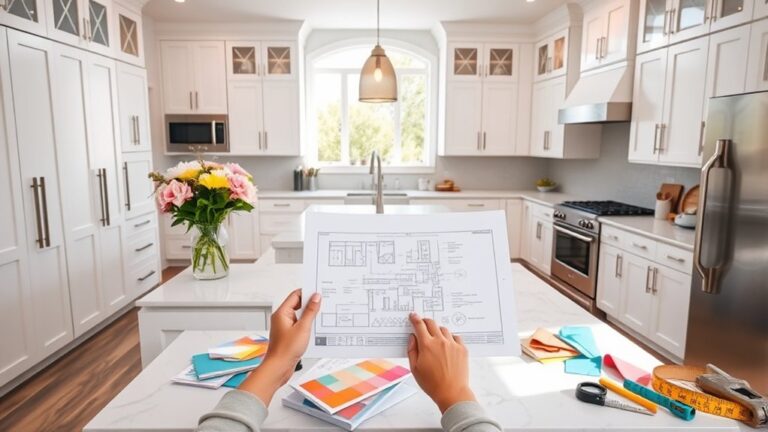
How to Measure Kitchen Cabinet Doors in 5 Steps
Measuring kitchen cabinet doors can feel surprisingly tricky, especially when a small mistake leads to doors that don’t fit. You’re not alone—many homeowners struggle with overlays, hinges, and uneven openings. This guide makes learning how to measure kitchen cabinet doors simple and manageable.
To measure kitchen cabinet doors, first measure each opening and check for squareness, obstructions, and frame condition. Next, record the existing door’s width, height, and thickness at several points.
Choose full overlay, half overlay, or inset based on the frame and desired clearance. Confirm hinge location, swing direction, door style, and hardware needs.
Finally, recheck every measurement, use the smallest usable dimensions, and verify manufacturer requirements before ordering. The steps below explain each detail clearly.
Key Takeaways
- Measure each cabinet opening’s width and height at multiple points. Check for squareness, obstructions, and uneven edges.
- Remove the existing door when possible. Then measure its width, height, and thickness at several locations.
- Determine whether replacement doors will be inset, half overlay, or full overlay. Account for the required clearances.
- Record hinge locations, swing direction, hinge type, door style, material, and any unusual features.
- Recheck the smallest usable measurements, label every door clearly, and confirm manufacturer requirements before ordering.
Measure Your Cabinet Openings First
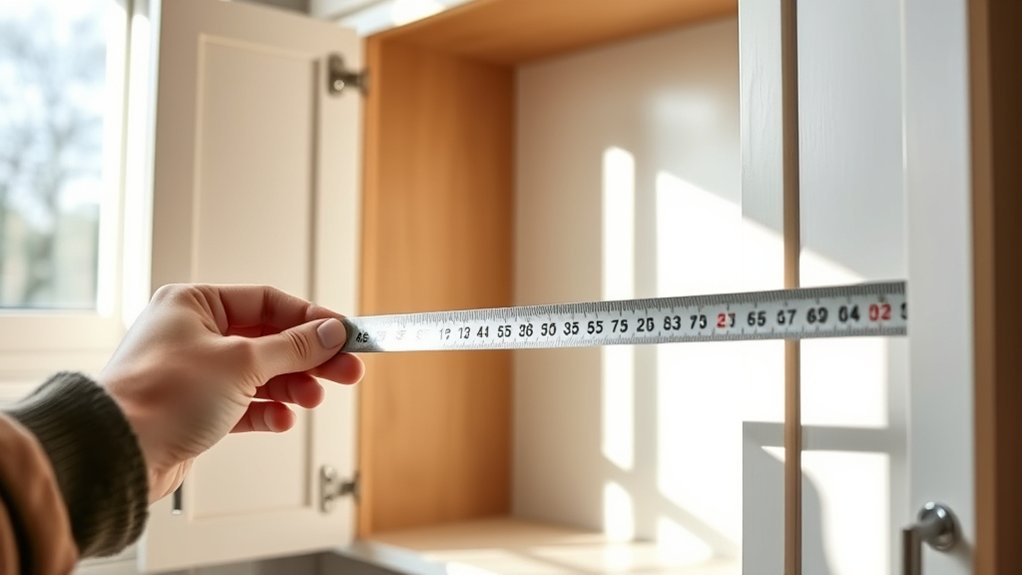
Before measuring the doors, measure each cabinet opening to establish the correct dimensions. Open the cabinet and inspect the frame, hinges, and surrounding surfaces.
Confirm that the opening is square by checking whether the corners meet cleanly and the sides appear parallel. Look for uneven edges, warped frames, or obstructions that could affect door placement.
Decide how the replacement door will relate to the frame. An inset door fits inside the opening, while an overlay door covers part or all of the face frame.
Your choice affects the required door size, hinge placement, and clearance. Check nearby doors and drawers to maintain consistent spacing and alignment.
Also note the cabinet’s condition and style. If you’ll refresh the cabinet paint, identify areas needing preparation before installation.
Review hardware options, such as concealed or surface-mounted hinges, to ensure they suit the frame. Keep this information organized before taking door-specific measurements.
Record Door Width, Height, and Thickness
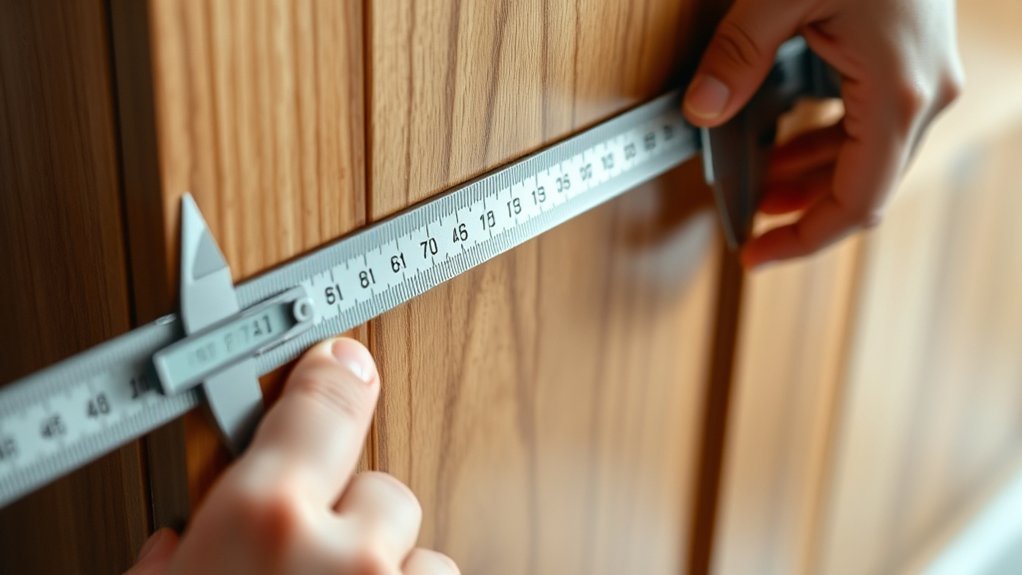
With the opening and door style identified, measure the existing door itself. Remove it if possible, then place it on a flat surface.
Measure its width from the left edge to the right edge, keeping your tape straight. Measure the height from the top edge to the bottom edge.
Take each measurement at several points to check for variation, especially if the door looks warped. Record the largest accurate measurement only when the door’s edges remain square. Otherwise, note every difference for review.
Measure thickness at the edge, not across the face. Check several locations because paint, veneer, or previous repairs can change the reading.
Write measurements in a consistent format, such as width × height × thickness, and label each door by cabinet location.
Note hinge alignment and the door swing so you can match replacement hardware and orientation later. Photograph the measuring setup and mark unusual features, including bevels, cutouts, or uneven edges, before storing your notes safely.
Choose Full, Half, or Inset Overlay
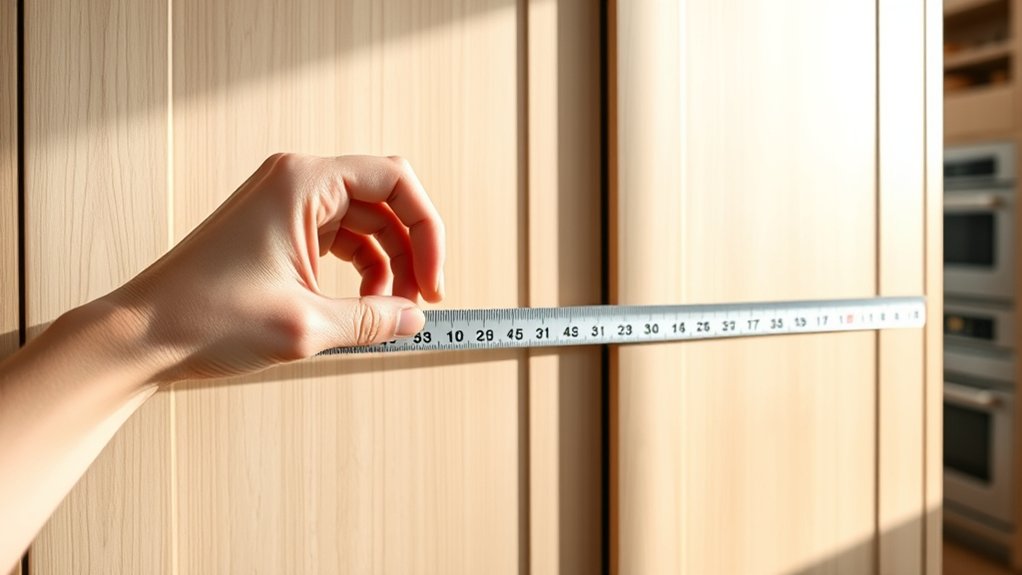
Identify how the door sits against the cabinet frame: a full-overlay door covers nearly all of the face frame, a half-overlay door covers part of it while leaving more frame visible, and an inset door fits inside the opening. Choose the overlay that matches your cabinet’s construction and the look you want.
Full overlay creates a streamlined appearance with minimal gaps between doors. Half overlay offers a more traditional layout and exposes more of the frame. Inset doors provide a flush, furniture-like finish but require accurate measurements because the door must fit within the opening.
Check nearby doors to confirm the existing overlay before ordering replacements. Measure the visible frame around each opening, and note whether the cabinet uses a face frame or frameless construction.
Cabinet materials can affect the finished appearance, especially when wood grain or painted edges remain visible. Also consider how decorative hardware will sit on the door and whether the selected overlay leaves enough clearance for comfortable use.
Confirm Hinge Placement and Door Style
Confirm where the hinges sit and which way the door swings before recording its final dimensions. Stand facing the cabinet and note whether the hinges are on the left or right. Record whether the door opens toward you, away from you, or uses a specialized mechanism.
This information helps you order a replacement with the correct drilling pattern and clearance. Identify the hinge types currently installed, such as concealed, surface-mounted, pivot, or European hinges.
Concealed hinges often require precise cup-hole locations, while visible hinges may attach directly to the door’s edge or face. Don’t assume a new hinge will fit existing holes.
Next, identify the door style: slab, raised-panel, recessed-panel, or glass-front. Note the edge profile and frame construction, since these features affect hinge placement.
Also consider door materials, including solid wood, plywood, MDF, laminate, or glass. Each material may require compatible hardware and support. Record these details alongside your chosen overlay style.
Double-Check Every Measurement Before Ordering
Once you’ve recorded the hinge placement, door style, and overlay, check every measurement again before ordering. Compare your notes with the cabinet opening, measuring width, height, and depth at several points.
> Double-check hinge placement, door style, overlay, and cabinet dimensions at multiple points before ordering.
Walls and frames aren’t always perfectly square, so record the smallest usable dimensions and note any irregularities.
Confirm whether your measurements describe the opening or the existing door. Check your overlay calculations, hinge-side clearance, and the gap between neighboring doors and drawers.
If you’re replacing multiple doors, label each measurement clearly so you won’t mix up sizes.
Review the manufacturer’s measuring guidelines before submitting your order. Specifications can vary according to cabinet material, construction, and hardware options.
Verify the selected thickness, edge profile, finish, and hinge bore requirements, too. Have someone independently compare your figures against the doors you need.
A final review can catch a reversed dimension, misplaced decimal, or incorrect quantity. Once everything matches, save your measurements and order confirmation for reference.
Frequently Asked Questions
Can I Measure Cabinet Doors Without Removing Them?
Yes, you can measure cabinet doors without removing them. Open each door, then measure its height and width from edge to edge, keeping your tape measure straight.
Record thickness, overlay, hinge placement, and the gap between neighboring doors. Measure every door separately, since sizes may vary.
For accurate replacements, check Design aesthetics and Material durability, because your chosen style and material affect fit, weight, and long-term performance. Double-check measurements before ordering.
What Tools Are Best for Measuring Kitchen Cabinet Doors Accurately?
Use a steel tape measure, a 12-inch combination square, a pencil, and graph paper to measure kitchen cabinet doors accurately. A digital caliper helps when you need precise hinge or overlay measurements.
For reliable Measuring techniques, measure each door’s height, width, and thickness at least twice, recording the smallest result. Check level and square with the combination square.
Avoid common measurement mistakes by keeping the tape straight and accounting for edge banding.
How Do I Measure Replacement Doors for Oddly Shaped Cabinets?
Measure the existing opening, not just the old door, when ordering replacements for oddly shaped cabinets. Trace the door or opening onto cardboard, marking hinges, corners, curves, and grain direction.
Record multiple dimensions, including widths, heights, diagonals, and angles. These irregular measurements help prevent gaps.
For custom shapes, make a full-size template and label its top, front, and hinge sides. Send the template and measurements to your cabinetmaker for verification before production begins.
Should I Measure Cabinet Drawers Separately From Doors?
Yes, you should measure cabinet drawers separately from doors because their dimensions and mounting styles often differ. Measure each drawer front’s width, height, and thickness, recording drawer dimensions individually, especially if sizes vary.
Don’t assume matching doors and drawers share measurements. Check whether you’re replacing only the front or the entire drawer box, then confirm overlay, inset, and clearance requirements.
Label every measurement clearly to avoid ordering mistakes during installation.
When Should I Hire a Professional to Measure My Cabinet Doors?
About 60% of kitchen remodeling mistakes involve inaccurate measurements, so hire professional assistance when your doors have unusual shapes, hidden hinges, uneven frames, or tight clearances. You’ll also benefit from help if you’re ordering many replacement doors, coordinating custom finishes, or feel uncertain about reading dimensions.
DIY measurement works for straightforward, standard-sized cabinets, but a professional can verify every opening, identify installation issues, and reduce costly ordering errors before production begins.
Conclusion
Once you’ve measured your cabinet openings, recorded each door’s width, height, and thickness, and chosen the right overlay, confirm your hinge placement and door style.
Then, double-check every number before ordering. A careful review can prevent costly mistakes and ensure your replacement doors fit as smoothly as a key in a lock.
Take your time, compare your notes against the cabinets, and you’ll order your kitchen cabinet doors with confidence, knowing they’ll look polished and perform properly for years.