
How to Get Rid of Kitchen Gnats in 3 Steps
Kitchen gnats can quickly turn a clean, comfortable space into a frustrating nuisance. If you’re struggling to keep them away, you’re not alone—many people deal with these tiny pests around fruit, drains, and trash.
This guide shares practical ways to get rid of kitchen gnats and keep them from coming back.
Get rid of kitchen gnats in three steps. First, discard overripe fruit, seal food, clean spills, rinse recyclables, and empty trash regularly.
Next, scrub drains, garbage-disposal splash guards, and overflow holes with hot, soapy water, repeating for several days. Also remove damp plant debris and standing water.
Finally, repair gaps in screens and doors, keep sinks dry, and use traps to catch stragglers. Keep monitoring weekly, and you’ll find additional prevention tips below.
Key Takeaways
- Remove overripe fruit, clean spills, rinse recyclables, and empty trash or compost promptly.
- Scrub drains, garbage disposals, splash guards, and overflow holes to eliminate breeding sites.
- Set vinegar traps to catch adult gnats while continuing sanitation for several days.
- Store food sealed or refrigerated, keep sinks dry, and remove damp sponges and standing water.
- Repair gaps in screens and doors, then monitor weekly for renewed activity.
Remove Fruit, Spills, and Gnat Attractants

Start by removing anything that attracts gnats, including overripe fruit, sugary spills, and food scraps. Inspect your counters, table, pantry, and floor for hidden food particles.
Remove overripe fruit, sugary spills, and hidden food scraps to eliminate the odors and food sources that attract gnats.
Throw away fruit that’s soft, leaking, or fermenting, and check nearby produce for signs of decay. Improve your fruit storage by keeping ripe items in the refrigerator or sealed containers.
Store bananas, tomatoes, and other produce away from exposed scraps, and empty your fruit bowl regularly.
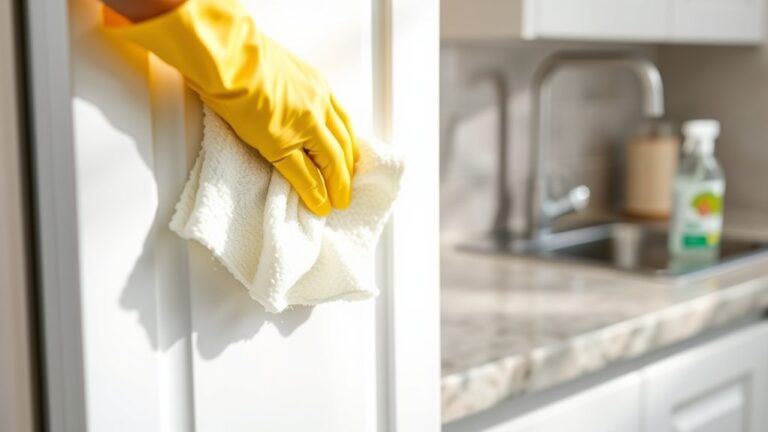
Handle spill cleanup immediately. Wipe juice, soda, wine, syrup, and other sweet liquids from counters, cabinet fronts, appliances, and floors.
Use warm, soapy water to remove sticky residue rather than simply drying the surface. Clean crumbs from cutting boards, toaster trays, and beneath small appliances.
Keep trash closed, remove food waste frequently, and rinse empty cans or bottles before recycling them. Feed pets on a schedule, then pick up leftover food promptly.
These habits eliminate odors and food sources that keep gnats returning.
Clean Drains and Eliminate Breeding Sites

Check kitchen drains for the damp, organic residue where gnats can breed. Remove the stopper and scrub its underside, drain walls, and nearby surfaces with a stiff brush and hot, soapy water.
Flush the opening thoroughly, then clean the Garbage disposal, including its splash guard, where food particles often hide. Don’t rely on a quick rinse; trapped sludge can keep attracting gnats.
| Breeding site | What you should do |
|---|---|
| Drain opening | Scrub residue away |
| Stopper | Wash both sides |
| Garbage disposal | Brush the splash guard |
| Overflow hole | Flush with hot water |
Empty and wash the sink strainer daily while you’re dealing with an infestation. Inspect damp areas beneath the sink, wiping away leaks and food debris that support larvae.
Check saucers beneath Indoor plants, too; standing water and decaying material can sustain gnats. Remove dead leaves, clean each saucer, and let the soil surface dry between waterings.
Repeat drain cleaning for several days to remove fresh residue and interrupt the breeding cycle. Wear gloves, and never mix cleaning chemicals.
Block Kitchen Gnats From Returning
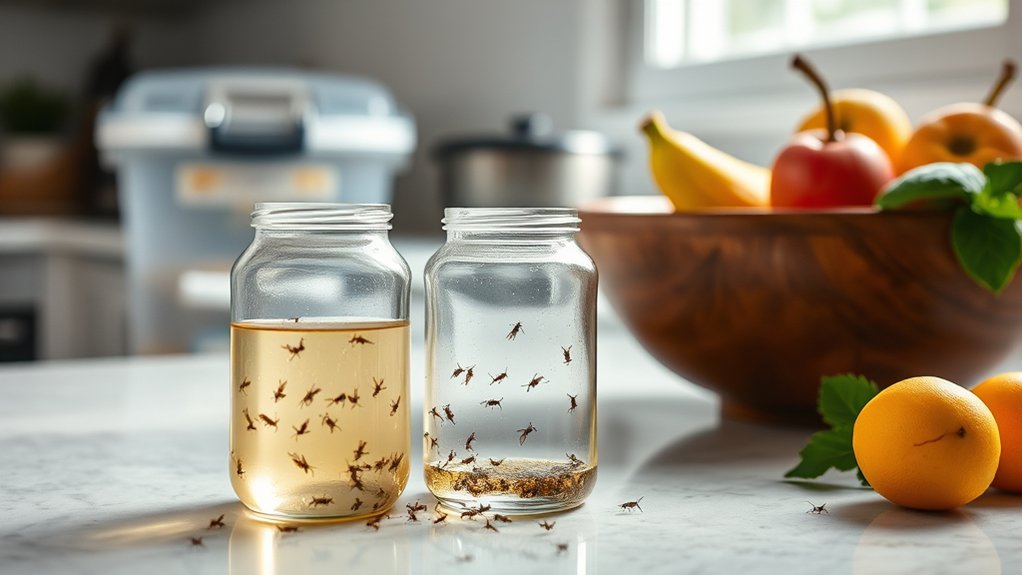
Once you’ve removed breeding sites, prevent kitchen gnats from returning by keeping food, moisture, and organic residue under control. Store fruit, vegetables, and pantry goods in sealed containers or the refrigerator.
Prevent kitchen gnats by storing food properly and controlling moisture and organic residue.
Wipe spills immediately, rinse recyclables, and empty compost and trash bins frequently. Don’t leave dirty dishes, damp sponges, or standing water near the sink.
Check windows, screens, and doors for gaps, then repair them so adult gnats can’t enter. Keep produce bowls clean, and discard overripe items before they attract pests.
Dry sink areas after use, and clean crumbs from countertops, cabinets, and appliance edges.
Continue gnat trapping for several days after activity stops. Traps help catch stragglers and reveal whether an unnoticed source remains.
You can also place natural repellents, such as basil, mint, or citrus peels, near entry points and food-storage areas. Replace them regularly, and monitor your kitchen weekly to catch renewed activity before an infestation develops.
Keep drains clean and dry whenever possible.
Frequently Asked Questions
Are Kitchen Gnats Harmful to Humans or Pets?
Kitchen gnats usually aren’t harmful to you or your pets, but they can contaminate food and surfaces with bacteria. You’ll rarely experience bites or disease transmission from common fungus gnats, fruit flies, or drain flies.
Still, large infestations may affect indoor air quality and signal unsanitary conditions. Understanding gnat breeding habits helps you remove overripe produce, standing moisture, and drain buildup, reducing exposure and protecting everyone in your home.
How Can I Identify the Type of Gnat Infesting My Kitchen?
Identify the insect by its appearance, behavior, and breeding site. Fruit flies have tan bodies, red eyes, and hover around ripening produce. Fungus gnats look slender, dark, and mosquito-like, often near damp houseplant soil.
Drain flies have fuzzy, moth-like wings and gather near sinks. Notice gnat breeding habits: moisture, fermenting food, or organic buildup. Comparing these traits with common gnat species helps you pinpoint the infestation and choose the right control method.
How Long Does It Take to Completely Eliminate Kitchen Gnats?
You won’t eliminate every kitchen gnat overnight, but you can usually control an infestation within several days and eradicate it in two to three weeks.
Remove breeding sources, clean drains, discard overripe produce, and seal food. Place DIY traps near activity and refresh them daily.
Natural repellents may discourage adults but won’t destroy larvae. Continue monitoring for another week after sightings stop, because hidden eggs can hatch later.
When Should I Call a Professional Pest Control Service?
Call a professional pest control service when gnats persist after one to two weeks of cleaning, DIY traps, and natural repellents, or when their numbers keep increasing. You should also seek help if you can’t locate the breeding source, notice gnats throughout your home, or suspect plumbing problems.
A licensed technician can identify the species, find hidden breeding areas, and recommend targeted treatment. Contact professionals sooner if children, pets, or food-safety concerns complicate treatment.
Can Kitchen Gnats Infest Other Rooms Besides the Kitchen?
Yes, kitchen gnats can spread to other rooms, especially wherever you leave ripe produce, damp soil, standing water, or sugary spills. Check bathrooms, laundry areas, houseplants, and pet-feeding stations for breeding sources.
For effective Fruit fly prevention, refrigerate produce, clean drains, empty trash, and fix leaks. Gnat trap effectiveness improves when you place traps near activity while removing competing food sources.
Call a professional if the infestation persists or expands despite your efforts.
Conclusion
With these three steps, you can get rid of kitchen gnats and keep them from coming back. Remove ripe fruit and spills, scrub drains, and seal cracks around windows and doors.
Don’t underestimate small improvements: the EPA estimates that fixing household leaks can save about 10% on water bills. Dry, clean areas also give gnats fewer places to breed.
Stay consistent for several days, and you’ll break their life cycle, protect your food, and enjoy a fresher kitchen.