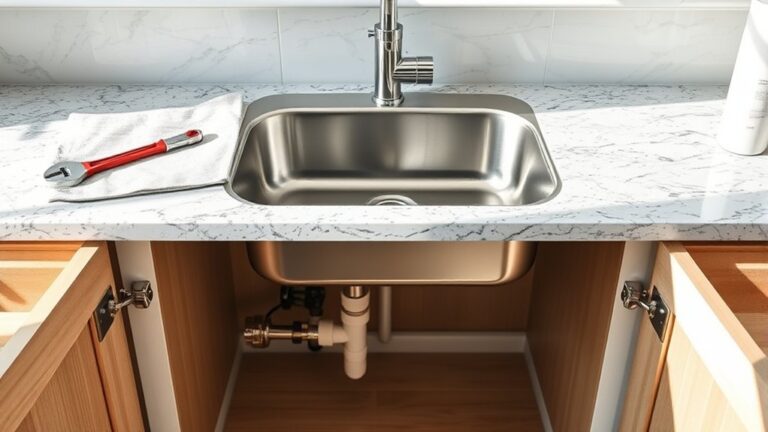
How to Snake a Kitchen Sink in 3 Steps
A clogged kitchen sink can bring meal prep and cleanup to a frustrating stop. You’re not alone—many people struggle with slow or blocked drains and want a quick, reliable solution. The right drain snake can make the job easier, so this guide explains how to snake a kitchen sink in three simple steps.
To snake a kitchen sink in three steps, first clear the cabinet, place a bucket under the P-trap, protect the area with towels, and wear gloves.
Next, remove the stopper or strainer, feed a drain snake into the opening, and turn it clockwise while pushing gently.
Pull out debris and repeat if needed.
Finally, run hot water, check drainage, and inspect for leaks.
Keep exploring for extra tips to prevent future clogs.
Key Takeaways
- Clear the sink area, remove the stopper or strainer, and place a bucket beneath the P-trap.
- Feed the drain snake into the opening while turning the handle clockwise.
- Push through resistance, rotating and pulling the cable to break up or retrieve the clog.
- Withdraw the snake slowly, wiping away debris, then repeat if the drain remains blocked.
- Run hot water and inspect for proper drainage and leaks around the trap and connections.
Gather Tools and Protect the Sink Area
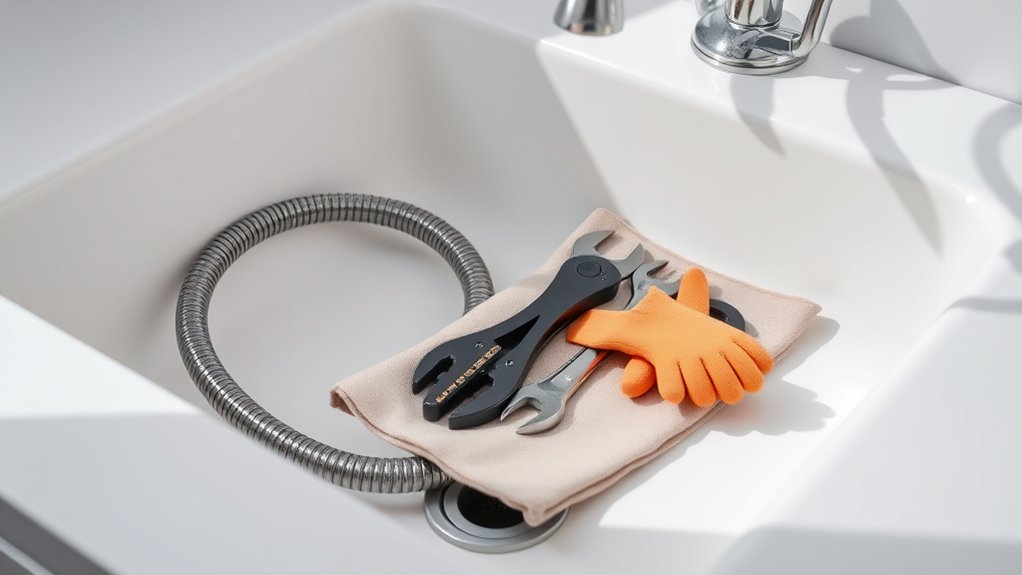
Before you begin, gather a sink plunger, bucket, adjustable wrench, channel-lock pliers, a drain snake, towels, and rubber gloves. Set these tools within reach so you won’t leave water or an open drain unattended.
Remove dishes, sponges, and countertop appliances from the work area, then clear the cabinet beneath the sink. Place the bucket directly under the P-trap to catch residual water if you need to disconnect it later.
Clear the sink area, empty the cabinet below, and position a bucket beneath the P-trap before beginning.
Spread towels around the cabinet floor and sink base to protect wood, catch splashes, and improve traction. Wear rubber gloves as basic Safety precautions, especially when handling stagnant water or drain residue.
Keep Cleaning supplies nearby, including disinfectant, paper towels, and a trash bag, but don’t pour chemicals into the drain before snaking it. Chemical drain cleaners can splash during later work and may damage plumbing or irritate your skin.
Open a window or switch on ventilation, and keep children and pets away from the workspace.
Clear the Clog With a Drain Snake
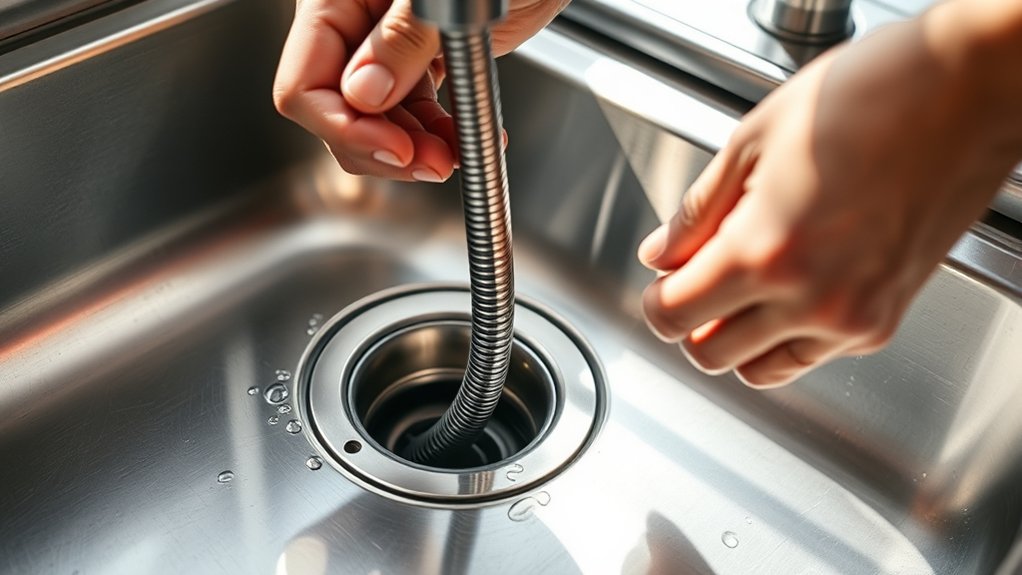
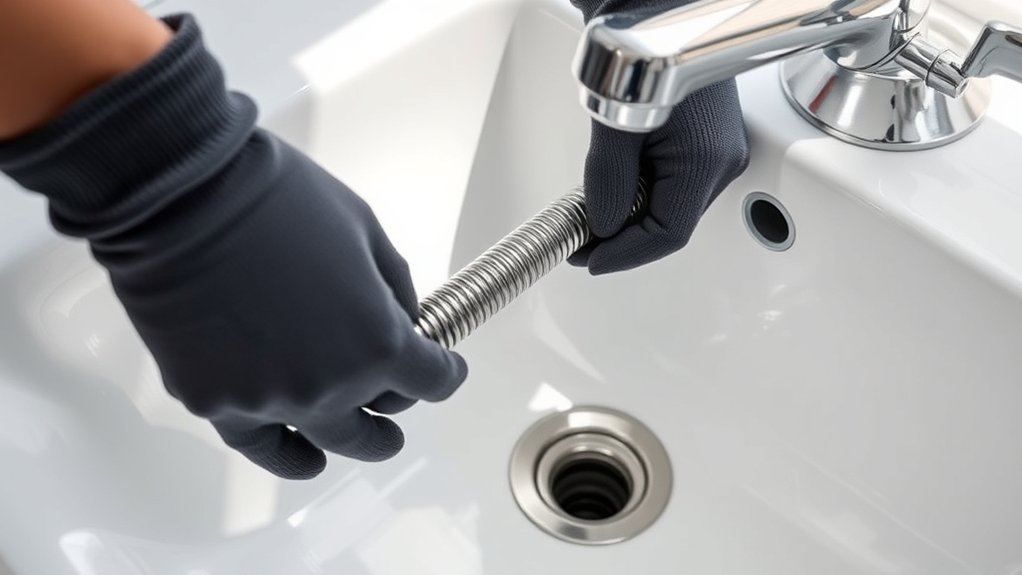
How do you know where to start? Remove the sink’s stopper or strainer to expose the drain opening. Feed the drain snake’s cable into the pipe, turning its handle clockwise as you push. Keep the cable moving steadily; forcing it can damage the trap or bend the tool.
- Advance the cable until you feel resistance, which usually marks the clog.
- Rotate the handle firmly to let the auger head break through or grip the blockage.
- Push and pull the snake several times, twisting as you work it through the obstruction.
- Retract the cable slowly while continuing to turn the handle, bringing debris back toward the opening.
Wipe the cable as you withdraw it, and discard the material instead of rinsing it back down. Repeat the process if resistance remains.
These drain cleaning techniques support practical plumbing maintenance and help you clear stubborn buildup without relying immediately on harsh chemical cleaners or unnecessary disassembly beneath the sink.
Test the Sink Drain and Prevent New Clogs
Once you’ve removed the blockage, run hot water down the drain for a few minutes to test the flow. Watch for slow draining, gurgling, or water backing up.
If problems remain, snake the line again or call a professional before reconnecting the trap.
| Check | Action |
|---|---|
| Flow | Run hot water |
| Leaks | Inspect connections |
| Odor | Flush the drain |
| Debris | Clean the strainer |
Let the faucet run while you check beneath the sink for leaks. Tighten slip-joint nuts by hand, then add a small turn with pliers if necessary.
Replace the trap washer if water still escapes.
Prevent new clogs with simple pipe maintenance. Use a sink strainer to catch food, coffee grounds, and grease.
Scrape dishes into the trash, and never pour oil, paint, or chemicals down the drain. Flush the sink weekly with hot water and a little dish soap.
Don’t rely on harsh chemical cleaners, which can damage pipes and create hazards during future snaking.
If recurring backups affect multiple fixtures, schedule a sewage inspection. A deeper blockage or damaged line may require professional equipment.
Keep the drain clear, and test it monthly.
Frequently Asked Questions
Can I Snake a Kitchen Sink With a Garbage Disposal Attached?
Yes, you can snake a kitchen sink with a garbage disposal attached, but you’ll need to work carefully. Turn off power to the disposal, then remove standing water.
Feed the drain snake through the sink’s drain opening, avoiding force that could damage the disposal or trap. If you encounter a stubborn drain obstruction, stop and check the trap or disposal inlet.
Never run the disposal while snaking, and call a plumber if resistance continues.
Should I Call a Plumber if Snaking the Drain Does Not Work?
Yes, you should call a plumber if snaking the drain doesn’t work. Persistent clogs may indicate a deeper blockage, damaged pipe, tree-root intrusion, or sewer-line problem.
You can try basic DIY tips, such as removing visible debris, flushing with hot water, or checking the trap, but don’t force plumbing tools through resistance.
Stop if water backs up, leaks appear, or odors worsen. A licensed plumber can diagnose the issue safely and prevent costly damage.
How Much Does Professional Kitchen Sink Drain Cleaning Typically Cost?
Professional kitchen sink drain cleaning typically costs $100–$300, depending on your location, clog severity, accessibility, and whether the plumber uses a hand auger, drain machine, or hydro jetting. You’ll often pay more for emergency, weekend, or after-hours service.
For a useful cost comparison, request several itemized estimates before approving work. Ask whether the price includes diagnosis, cleanup, and service warranties, and confirm any potential additional charges upfront before scheduling.
Is Chemical Drain Cleaner Safe to Use After Snaking the Sink?
Chemical drain cleaner usually isn’t safe or necessary after snaking your sink. Snaking can leave cleaner trapped in the pipe, creating splash and fume hazards when you add more chemicals.
For chemical safety, flush thoroughly with plenty of water first, follow the product label, and never mix cleaners. Consider drain cleaner alternatives, such as hot water, dish soap, a plunger, or another careful snaking attempt.
Call a plumber if slow drainage persists or returns.
Can Snaking a Sink Damage Old or Fragile Plumbing Pipes?
Yes, snaking a sink can damage old or fragile plumbing pipes, especially if you force the cable, use excessive torque, or choose an oversized auger. You should recognize pipe fragility in corroded, galvanized, clay, or thin-walled lines.
To reduce pipe damage, feed the snake slowly, rotate gently, and stop when you meet unusual resistance. If the drain remains blocked, call a licensed plumber before worsening leaks, cracks, or collapsed piping.
Conclusion
With the right tools and a little patience, you can snake a kitchen sink in three simple steps. Protect the sink area, guide the drain snake through the pipe, and test the flow when you’re finished.
Think of the snake as a key releasing a stubborn bottleneck. Once water runs freely, prevent future clogs by catching food scraps, avoiding grease, and flushing the drain regularly.
You’ll save time, protect your plumbing, and keep cleanup moving smoothly.