How to Choose the Right Kitchen Sink
Choosing the right kitchen sink can feel surprisingly difficult. Many homeowners struggle to balance cabinet space, style, durability, and everyday functionality—but you’re not alone. This roundup will help you compare your options and find a sink that fits both your kitchen and your routine.
Choose the right kitchen sink by measuring your cabinet, countertop, plumbing space, and clearance first. Match the sink’s size, bowl depth, drain position, and mounting style to your setup.
Choose a single bowl for large cookware or a double bowl for separating tasks.
Compare stainless steel, granite composite, fireclay, and cast iron for durability and maintenance. Confirm faucet and drain compatibility, then budget for installation, accessories, and unexpected costs.
The following tips will help you avoid costly mistakes.
Key Takeaways
- Measure cabinet, countertop, plumbing, and clearance dimensions to ensure the sink fits properly.
- Choose a mounting style—drop-in, undermount, farmhouse, or integrated—that suits your countertop and installation requirements.
- Select a single- or double-bowl configuration based on cookware size, food preparation, and washing habits.
- Compare materials such as stainless steel, granite composite, fireclay, and cast iron for durability, maintenance, appearance, and weight.
- Include faucet compatibility, accessories, installation labor, plumbing modifications, warranty, and a 10–15% contingency in your budget.
Start With Your Sink Size and Cabinet Space
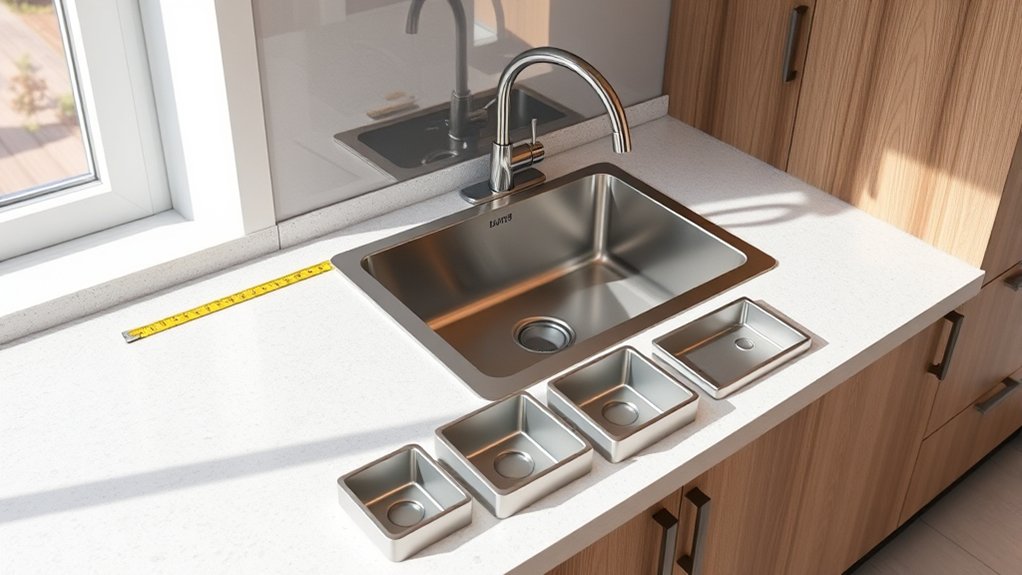
Before you choose a sink, measure the cabinet that will support it and note the available countertop space. Check the cabinet’s inside width, depth, and height, then compare those measurements with each sink’s required minimum cabinet size.
Measure your cabinet’s interior dimensions and countertop space before choosing a sink, then confirm its minimum cabinet requirements.
Leave enough room around the opening for a secure installation and comfortable food preparation.
Think about how you use your kitchen. A compact single-bowl sink can preserve counter space in a small room, while a larger bowl gives you room to wash cookware.
If you frequently separate rinsing from washing, consider a double-bowl model, but confirm that its width won’t overwhelm your work area. An undermount sink can create a clean connection with stone surfaces, while a top-mount style may suit a simpler renovation.
Choose a depth that matches your reach and storage needs. Deeper bowls hold more dishes, yet they can reduce usable cabinet space below.
Balance practicality, kitchen decor, and water efficiency by selecting a size that fits your routines without encouraging unnecessary water use.
Confirm Faucet, Drain, and Cabinet Compatibility
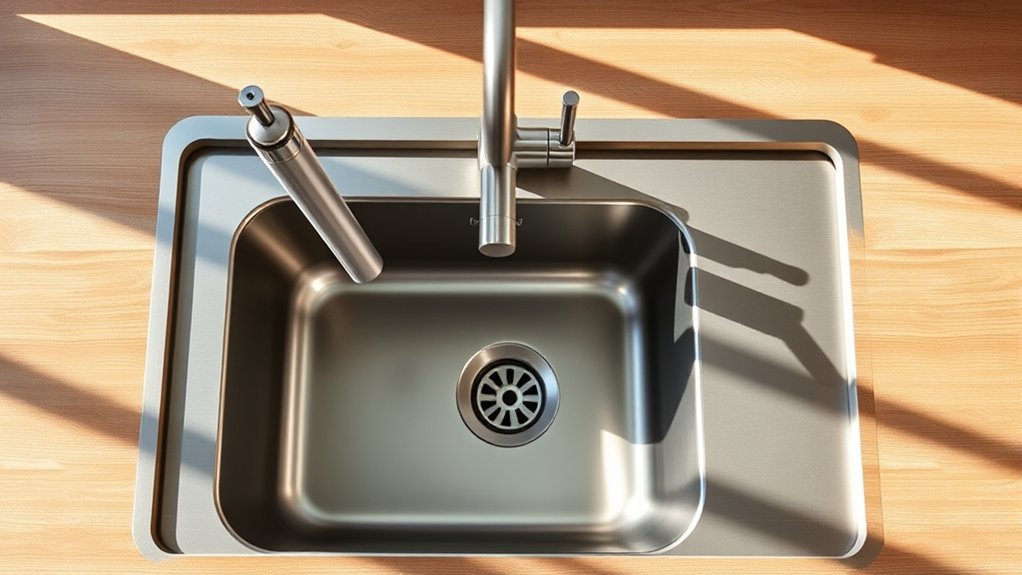
Confirm that your faucet fits the sink’s mounting holes or determine whether it requires countertop installation. Also, verify that the drain size matches your plumbing and that the sink fits your cabinet’s dimensions. Checking these details now can help you avoid installation problems later.
Check Faucet Mounting Options
Check how the sink’s faucet holes align with your preferred faucet, drain assembly, and cabinet layout. Then choose a mounting style that suits your installation and cleaning preferences.
A deck-mounted faucet sits directly on the sink or countertop, while a wall-mounted model requires compatible wall plumbing and careful positioning. If you’re replacing an existing sink, match the hole count and spacing to avoid unnecessary modifications.
Consider faucet height, too. A tall spout accommodates large pots, but it may splash in a shallow basin. A pull-down or pull-out sprayer can improve reach and control, provided its hose has room to move freely.
- Match single-, two-, or three-hole faucets.
- Check whether an escutcheon covers unused holes.
- Confirm the faucet’s reach suits your basin.
- Choose controls you can operate comfortably.
Review the manufacturer’s template before purchasing.
Verify Drain and Cabinet Fit
A sink must fit more than the countertop opening—it also needs compatible drain plumbing and enough cabinet space below. Measure the drain location, tailpiece length, and plumbing connections before you buy.
Check whether the basin’s drain aligns with your existing trap. Otherwise, you may need an adapter or professional plumbing work.
Confirm faucet-hole spacing and ensure the faucet’s reach suits the basin. Then measure cabinet clearance, including the sink’s depth, support rails, disposal, and water lines.
Don’t forget doors and drawers that could hit the bowl or plumbing.
| Check | What to verify |
|---|---|
| Drain compatibility | Drain position, trap alignment, and disposal space |
| Cabinet clearance | Bowl depth, rails, doors, and drawer movement |
Use the manufacturer’s template and installation specifications to confirm every dimension.
If measurements leave little tolerance, choose a shallower sink or consult an installer before ordering.
Set a Realistic Kitchen Sink Budget
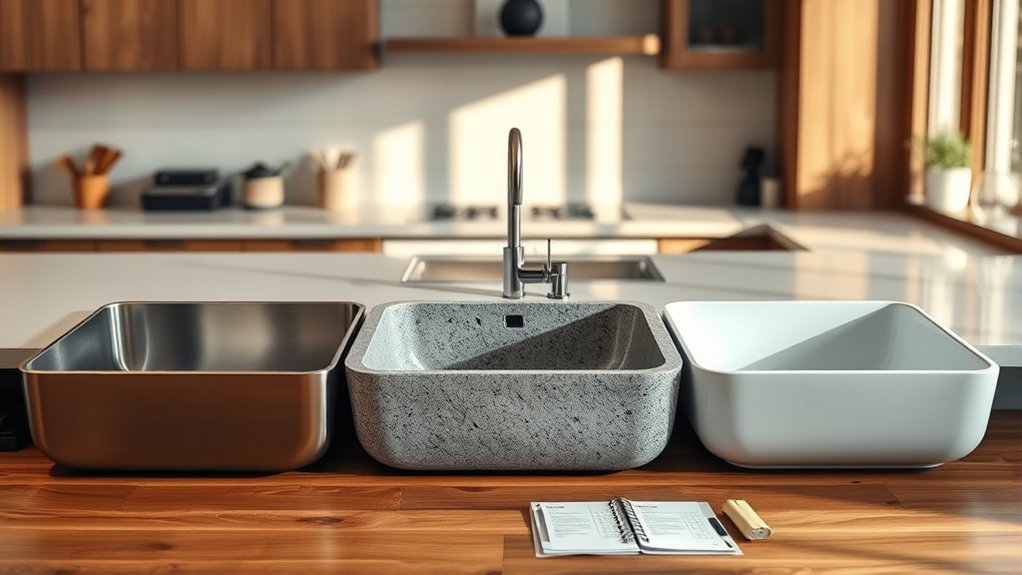
Set a realistic kitchen sink budget by accounting for more than the sink itself. Include installation, faucet changes, plumbing adjustments, cabinet modifications, and disposal fees.
Careful budget planning helps you avoid surprises and keeps your purchase aligned with your kitchen’s overall renovation costs.
Before you shop, decide how much you can spend comfortably, then reserve 10–15% for unexpected work.
Compare complete project estimates rather than judging sinks by their sticker prices alone. Your material selection affects cost, but don’t make that decision here; focus on the total financial picture and the features you genuinely need.
- Set a firm spending limit before visiting showrooms or browsing online.
- Request installation quotes that include labor, supplies, and cleanup.
- Check whether your faucet, drain, and accessories add separate costs.
- Keep a contingency fund for hidden damage or fitting changes.
Track each estimate in a simple worksheet. If one option stretches your budget, reduce extras before sacrificing essential durability, capacity, or proper installation.
A clear limit makes your final choice easier and more confident.
Choose the Best Kitchen Sink Material
Choose a material that fits your kitchen’s needs, style, and maintenance preferences. Stainless steel is durable and versatile, granite composite is strong and scratch-resistant, and fireclay ceramic brings timeless appeal. Compare these options to find the sink that works best for you.
Stainless Steel Durability
Stainless steel is one of the most durable kitchen sink materials, resisting rust, stains, heat, and everyday impacts. You’ll appreciate its resilience when washing heavy cookware or handling sharp utensils.
Choose a thicker gauge, such as 16 or 18, to reduce dents and vibration. A brushed finish can also hide minor scratches while supporting attractive Kitchen sink aesthetics.
For lasting performance, consider these practical details:
- Rinse food residue promptly to prevent discoloration.
- Use a soft sponge instead of abrasive pads.
- Dry the basin after use to limit water spots.
- Select quality insulation to reduce noise.
Proper installation protects the sink’s structure and helps maintain Water flow control, preventing standing water that can encourage buildup.
Although stainless steel can scratch, its surface doesn’t require sealing or special coatings. With simple care, you’ll get dependable service and a clean, modern appearance for years.
Granite Composite Strength
If you want a sink with a solid, stone-like feel, granite composite offers impressive strength and impact resistance. Made from crushed granite and durable resin, it handles heavy cookware, daily meal preparation, and accidental knocks without denting like thinner metals can.
Its substantial construction also reduces vibration, so you’ll notice less noise when water runs or dishes land inside. Look for a high-quality model with a dense, evenly finished surface to maximize granite durability and long-term performance.
Composite resilience helps the basin resist scratches, stains, and heat from ordinary cooking tasks, although you should still avoid dropping extremely heavy objects or placing hot pans directly inside.
Choose a deep, well-supported design, and you’ll get dependable strength with a refined, modern appearance that complements many kitchen styles and layouts.
Fireclay Ceramic Appeal
With its smooth glazed surface and handcrafted appearance, fireclay ceramic brings timeless appeal to the kitchen while giving you a spacious, durable basin.
You’ll appreciate how its bright finish reflects light and complements farmhouse, traditional, or modern cabinetry.
Fireclay durability helps the sink resist stains, scratches, heat, and everyday wear, though you should avoid dropping heavy cookware or using abrasive cleaners.
Its thick construction can also reduce noise while washing dishes. Consider these practical benefits:
- A ceramic aesthetic creates a clean, welcoming focal point.
- A deep bowl accommodates large pots and baking sheets.
- A nonporous glaze simplifies cleanup and resists odors.
- A wide apron-front design adds character and comfort.
Before choosing, confirm your cabinet supports the sink’s substantial weight and measure carefully for installation.
With proper care, fireclay ceramic gives you lasting performance and distinctive style.
Compare Drop-In and Undermount Sinks
Drop-in and undermount sinks differ mainly in how they meet the countertop. A drop-in sink rests on the counter, so its visible rim helps hide small cutout imperfections and simplifies replacement. An undermount sink attaches beneath the counter, creating a smooth surface you can wipe crumbs into, though installation requires a precise cutout and compatible countertop.
| Feature | Drop-in | Undermount |
|---|---|---|
| Installation | Easier; top-mounted | Professional; bottom-mounted |
| Cleaning | Rim can trap debris | Seamless sweeping |
| Countertop needs | Works with most materials | Needs solid, nonporous surfaces |
| Cost | Usually lower | Often higher |
Before choosing, review installation tips for your countertop material and cabinet support. Consider faucet placement, sink depth, and clearance beneath the basin.
Both options offer varied color options, but match the finish with your hardware and countertop. Choose drop-in if you value straightforward installation and flexibility. Choose undermount if you prefer a sleek edge and effortless cleanup.
Confirm measurements before ordering to avoid costly modifications.
Compare Sink Styles, Including Farmhouse Models
Which sink style suits your kitchen best? Your answer depends on your room’s character, cabinet layout, and cleaning habits. A farmhouse style sink extends across the cabinet front, creating a welcoming focal point with a deep, traditional appearance. Choose it when you want rustic charm and don’t mind modifying cabinetry for installation.
An apron-front sink can also suit contemporary spaces when you select crisp lines, stainless steel, or a matte finish. For a streamlined look, consider an integrated sink that blends into a solid-surface countertop. A bar or prep sink adds useful support near an island or entertaining area without dominating the room.
- Match the sink’s material to your countertop for a cohesive finish.
- Choose bold farmhouse detailing to warm a plain kitchen.
- Select clean edges when you prefer Modern design.
- Check cabinet dimensions before ordering any style.
Think about maintenance, visual balance, and installation requirements before committing. The best style complements your kitchen while supporting your daily routine.
Choose Between Single and Double Bowls
Choose a single bowl if you regularly wash large cookware or want uninterrupted space for food preparation. You’ll find the single bowl benefits especially useful when you rinse roasting pans, stack dishes, or need one continuous basin for messy tasks.
Its open design makes maneuvering easier and simplifies cleaning, since there’s no center divider to scrub around.
Choose a double bowl if you prefer separating tasks. You can soak dishes in one basin while rinsing produce or washing utensils in the other.
A divider also helps you keep clean and dirty items apart, making your routine feel more organized.
However, consider the double bowl drawbacks: each compartment offers less uninterrupted workspace, and large pots may not sit comfortably inside either side. You’ll also spend more time cleaning the divider and corners.
Think about how you wash, rinse, soak, and prep, then select the bowl arrangement that supports your preferred workflow. Both options can work well when matched to your daily habits.
Match Sink Size to Your Cooking Habits
Once you’ve selected a bowl layout, match the sink’s overall size to the way you cook. If you prepare large meals, wash oversized pans, or handle bulky produce, choose a wide, deep basin with enough clearance around it.
Frequent entertainers may appreciate extra capacity, while light cooks can save counter space with a compact model. Measure your cabinet, countertop, and available landing areas before deciding. A sink shouldn’t crowd prep zones or interrupt appliance access.
Consider how your habits affect daily comfort:
- Choose depth for stockpots, baking sheets, and tall cookware.
- Choose width for multiple ingredients, boards, and serving dishes.
- Reserve counter space for chopping, staging, and setting hot pans.
- Confirm the cabinet can support the sink and plumbing layout.
Your kitchen’s scale matters, too. A large sink can overwhelm a narrow room, while a small one may frustrate an active cook.
Review Color options alongside Installation techniques, since both can influence the sink’s visual balance and placement. Select dimensions that support your routine without sacrificing workspace.
Compare Cleaning and Maintenance Needs
Compare how each sink material handles everyday cleaning and which products you’ll need. Consider how well it resists stains, scratches, and other signs of wear. Then, think about the long-term maintenance required to keep your sink looking its best.
Compare Material Cleaning Needs
Different sink materials call for different cleaning routines, so factor maintenance into your decision.
Stainless steel usually needs mild soap, a soft cloth, and quick drying to maintain its finish. Fireclay cleans easily with nonabrasive products, while cast iron benefits from gentle washing and thorough drying.
Solid-surface sinks often require manufacturer-approved cleaners to protect their seamless appearance.
If you’re considering Eco friendly options, choose durable materials and concentrated, low-impact cleaners that reduce packaging and waste.
Modern design trends may favor textured or matte finishes, so confirm which products suit them before buying.
- Stainless steel: wash, rinse, and dry after use.
- Fireclay: use gentle detergent and a soft sponge.
- Cast iron: avoid harsh chemicals and standing water.
- Solid surface: follow care instructions for safe cleaning.
Match the material’s upkeep with your routine, available time, and preferred cleaning products.
Assess Stain And Scratch Resistance
When evaluating a kitchen sink, consider how well its material withstands stains and scratches during everyday use. Strong stain resistance helps prevent coffee, wine, tomato sauce, and hard-water marks from becoming noticeable or difficult to remove.
Nonporous surfaces, such as stainless steel, quartz composite, and fireclay, typically resist discoloration better than porous materials. Next, assess scratch resistance based on your habits.
If you’ll wash cast-iron cookware or slide heavy pans across the basin, choose a surface that handles impact and abrasion well. Stainless steel can develop fine scratches, while granite composite generally offers excellent scratch resistance.
Fireclay resists scratches but may chip if struck forcefully. Check product specifications, view samples under bright light, and consider how visible marks will be on your preferred finish and color.
Consider Long-Term Maintenance Requirements
Choose a sink that fits the amount of cleaning you’re willing to do over time. Compare materials, finishes, and basin designs before you commit. Stainless steel usually wipes clean easily, while porcelain may need gentler products to prevent chips and discoloration.
Composite sinks resist stains but can require regular rinsing to avoid mineral buildup. Consider how each option handles your daily habits, from washing greasy pans to leaving dishes overnight.
- Choose rounded corners that reduce trapped food and simplify wiping.
- Check whether the finish hides water spots and minor scratches.
- Select an ergonomic design that limits bending and reaching.
- Investigate Eco friendly options with durable, low-chemical care needs.
Ask about recommended cleaners and replacement parts, too. A sink requiring specialized products can increase costs and effort.
Prioritize simple maintenance, so your sink stays attractive, hygienic, and practical for years.
Avoid Common Kitchen Sink Buying Mistakes
Avoiding common kitchen sink buying mistakes starts with measuring your cabinet, countertop, and plumbing space before you shop. Confirm the sink’s dimensions, bowl depth, mounting style, and drain position match your existing setup.
Don’t choose a model based solely on appearance. Consider how you’ll use it daily. A deep single bowl may suit large cookware, while divided bowls can simplify multitasking.
Check the material carefully, since stainless steel, fireclay, granite composite, and cast iron require different care. Review the manufacturer’s warranty and verify that replacement parts remain available.
You shouldn’t overlook faucet compatibility, countertop thickness, or clearance beneath the cabinet. Also, budget for professional labor if the installation involves cutting stone or changing plumbing.
Compare Kitchen sink accessories before buying, including grids, strainers, cutting boards, and soap dispensers. Finally, follow reliable installation tips and confirm measurements with your installer.
Planning these details helps you avoid costly changes, frustrating leaks, and a sink that doesn’t fit your routine.
Frequently Asked Questions
How Deep Should a Kitchen Sink Be for Comfortable Everyday Use?
Choose a kitchen sink 8 to 10 inches deep for comfortable everyday use. You’ll gain enough space for washing pots without bending excessively or splashing water.
If you frequently clean large cookware, consider a 9- to 10-inch basin. Shorter users may prefer 8 inches.
Compare material options, since thick fireclay or composite can reduce interior capacity. Follow installation tips carefully, ensuring proper cabinet clearance and counter support before selecting a deeper sink for your kitchen.
Can a Kitchen Sink Reduce Noise From Running Water and Garbage Disposals?
Yes, your kitchen sink can reduce noise from running water and garbage disposals. Choose a thick, sturdy basin with soundproofing materials, such as rubber pads, foam insulation, or undercoating.
Composite granite and heavy-gauge stainless steel often absorb vibrations better than thin metal. Apply noise reduction techniques by insulating the cabinet walls, securing plumbing, and installing an anti-vibration disposal mount.
You’ll notice quieter operation when the sink and disposal fit tightly and properly.
Are Workstation Sinks Worth Considering for Meal Preparation and Cleanup?
Yes, workstation sinks are worth considering because your sink can double as a prep station. You’ll gain integrated ledges for cutting boards, colanders, and drying racks, which streamline meal preparation and cleanup while saving counter space.
Look for durable materials, adequate depth, and customizable options that match your routines. You’ll also improve your kitchen’s aesthetic appeal, though accessories can add cost and require careful cleaning.
How Can I Prevent Scratches, Stains, and Discoloration Around My Sink?
Prevent scratches, stains, and discoloration by using a soft sponge, mild dish soap, and warm water after each use. Your Cleaning tips should include drying the basin and wiping spills promptly, especially coffee, tea, and acidic foods.
Choose Material choices such as fireclay, quartz composite, or brushed stainless steel, which resist everyday wear. Don’t use steel wool, harsh bleach, or abrasive powders.
Add a protective grid and clean around the faucet regularly.
What Sink Accessories Improve Organization and Efficiency at the Kitchen Workstation?
You’ll hit the ground running with the right accessories: a fitted drying rack, roll-up mat, and colander expand workspace while keeping dishes moving efficiently. Sink accessories such as a cutting board, sponge caddy, soap dispenser, and drain strainer reduce clutter and simplify cleanup.
Organization tools, including adjustable dividers, under-sink bins, and pullout trays, keep supplies visible and accessible. Choose rust-resistant, dishwasher-safe materials, and match each accessory to your sink’s dimensions.
Conclusion
Choosing the right kitchen sink doesn’t have to feel like selecting the crown jewel of your home. Measure your cabinet, check faucet and drain compatibility, set a sensible budget, and choose a durable material and style that fits your routine.
Consider bowl size, installation, cleaning, and maintenance before buying. Avoiding common mistakes now can save you from daily splashes, awkward washing, and countertop chaos later.
Pick wisely, and your sink will work harder than a kitchen superhero. With these tips, choosing the right kitchen sink becomes a simpler and more confident decision.