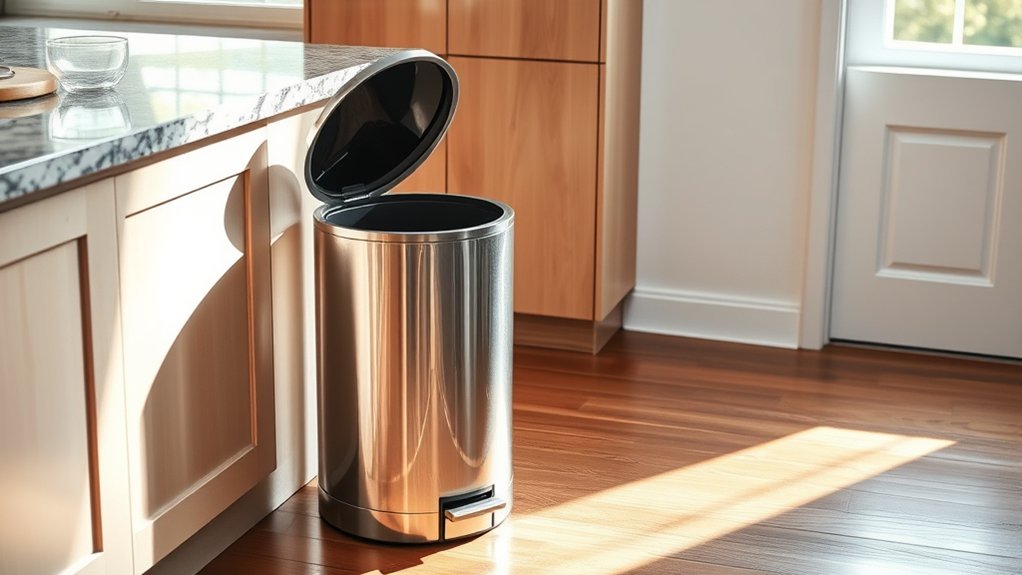
How Many Gallons Is a Kitchen Trash Can?
Overflowing bags, confusing size labels, and liners that never seem to fit can make choosing a kitchen trash can frustrating. You’re not alone—many people struggle to find the right capacity for their space and daily waste.
So, how many gallons is a kitchen trash can?
Most kitchen trash cans hold 10 to 13 gallons, with 13 gallons serving as the common standard for many households. You’ll also find compact 4-to-7-gallon cans for apartments and larger 14-to-20-gallon models for busy kitchens or bigger families.
Choose your size based on daily waste, available space, and how often you’ll empty it. Check the can’s dimensions, not just its gallon rating, and match it with a properly sized liner.
More guidance follows on sizes, bags, and measuring capacity.
Key Takeaways
- Most kitchen trash cans hold 10 to 13 gallons, with 13 gallons being the most common standard size.
- Small kitchen cans typically hold 4 to 7 gallons and suit apartments, bathrooms, or limited spaces.
- Medium cans range from 8 to 10 gallons, while larger models hold approximately 14 to 20 gallons.
- A can’s ideal capacity depends on household size, waste production, available space, and recycling or composting habits.
- A 10-gallon can usually uses a 13-gallon trash bag for adequate rim coverage and easy tying.
How Many Gallons Is a Kitchen Trash Can?
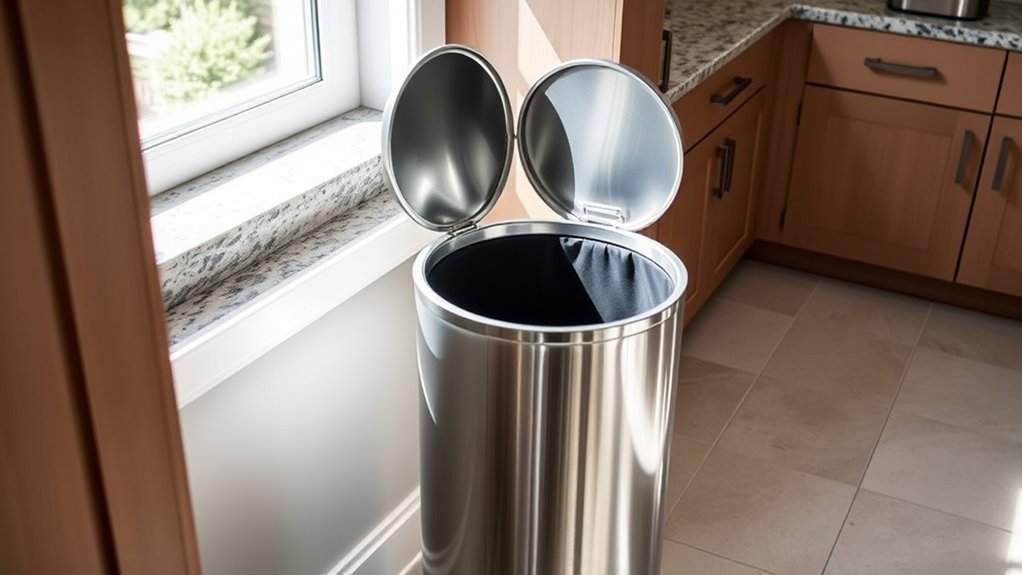
A typical kitchen trash can holds 10 to 13 gallons, which is enough for most households’ daily waste without taking up too much floor space. If you cook often, share your home with several people, or prefer fewer trips outside, you might need greater capacity.
However, your ideal volume depends on how much waste you produce and how frequently you empty the can.
Choose a trash can size based on your household’s waste output and how often you plan to empty it.
Before choosing a model, consider your waste-sorting habits. You may use a recycling bin for bottles, cans, and cardboard, reducing the amount placed in your main can.
A compost container can also divert food scraps, coffee grounds, and other organic material. These separate containers may let you choose a smaller kitchen trash can while keeping your disposal routine organized.
Measure your available area, then check the can’s usable capacity rather than relying only on its exterior dimensions.
A liner that fits securely, a lid that contains odors, and convenient access can make everyday use easier without increasing the gallon capacity.
What Are the Common Kitchen Trash Can Sizes?
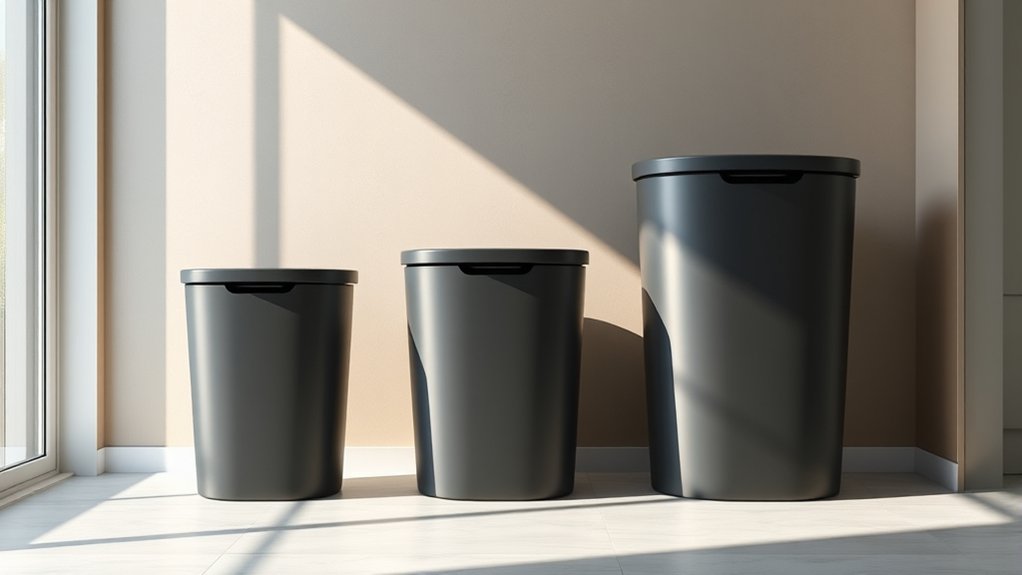
Kitchen trash cans commonly come in 4–7, 8–10, 10–13, and 14–20 gallon sizes. Each range suits different household routines, so choose based on your cooking frequency, available floor space, and how often you want to empty the container.
A 4–7 gallon can works well for low-waste kitchens or rooms with limited cabinet clearance. The 8–10 gallon range offers a practical middle ground for smaller households.
Many families choose 10–13 gallon cans because they hold several days of everyday food packaging and scraps without requiring constant trips outside. The 14–20 gallon range provides extra capacity for busy kitchens, larger households, or less frequent disposal.
You can also select separate bins for recycling options, compost, and landfill waste. Look for features such as removable liners, secure lids, foot pedals, and slim profiles.
If sustainability matters to you, consider containers made with eco friendly materials, including recycled plastic, bamboo, or stainless steel. Check each product’s dimensions and usable capacity before buying, since shapes affect how efficiently it fits your kitchen.
How Big Is a Small Kitchen Trash Can?
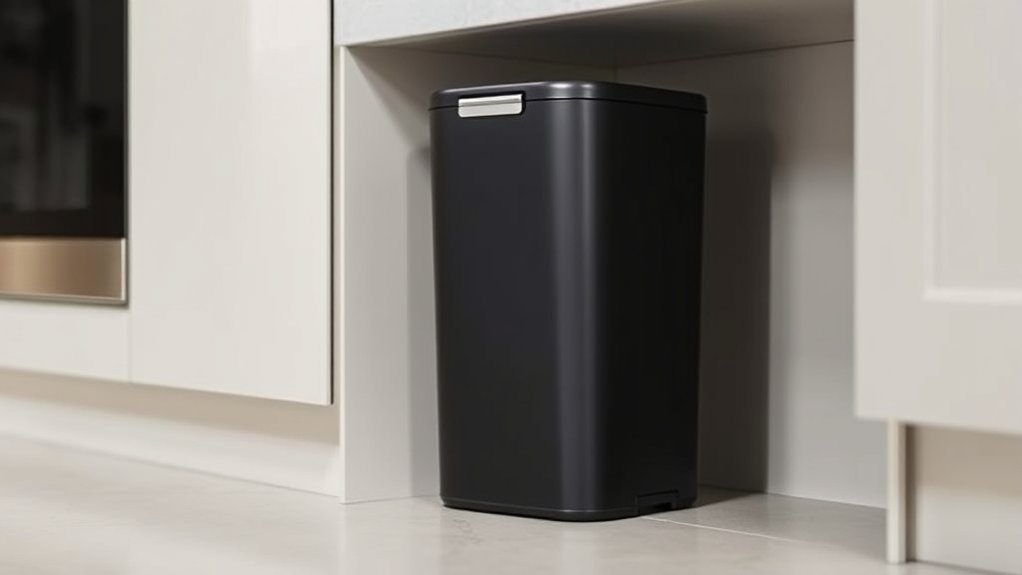
Small kitchen trash cans typically hold 4–7 gallons, making them a practical choice for apartments, compact kitchens, or households that produce little waste. You’ll usually find them about 18–24 inches tall, with a narrow footprint that fits beside a cabinet, under a counter, or in a pantry.
Their smaller capacity means you’ll need to empty the liner more often, especially if you cook frequently or compost separately.
When choosing one, measure your available floor and cabinet clearance first. A slim, rectangular design can maximize tight spaces, while a round model may fit better in an open corner.
Consider the lid, too: a pedal-operated top keeps your hands free, and a secure closure helps contain odors. Match the finish to your kitchen decor, whether you prefer stainless steel, matte black, or a colorful accent.
Comparing trash can materials also matters. Plastic keeps weight and cost low, while metal generally offers greater durability and a more polished appearance.
What Is a 10-Gallon Kitchen Trash Can Like?
If 4–7 gallons feels too limiting, a 10-gallon kitchen trash can gives you more room without taking up the space of a commercial bin. You can use it for a busy household, frequent cooking, or bulky packaging that quickly fills a smaller container.
Its taller or wider design usually fits neatly beside a counter, island, or pantry, though you’ll want to measure your available floor space first.
Look for a sturdy lid if you need to contain odors, pets, or curious children. A hands-free pedal can also make cleanup more convenient when your hands are full.
Depending on the model, you may find separate recycling options, removable liners, or a slim profile for tight areas.
If sustainability matters to you, choose a can made with eco friendly materials, such as recycled plastic or durable stainless steel. You’ll get useful extra capacity while keeping everyday waste manageable and your kitchen organized.
Why Is 13 Gallons the Standard Size?
A 13-gallon kitchen trash can is the standard size because it balances everyday capacity with a manageable footprint. For you, it holds several days of household waste without taking over valuable floor space.
Its dimensions also fit common cabinet gaps, pantry corners, and pull-out drawers, making installation and replacement simple.
This size works well with widely available 13-gallon liners, so you won’t need to hunt for specialty bags or deal with poor-fitting edges.
Manufacturers offer numerous shapes, lid styles, and trash can materials, from lightweight plastic to durable stainless steel. You can choose a model that matches your kitchen while keeping cleanup convenient.
A 13-gallon bin also supports practical sorting habits. You can use separate containers for recycling or compost without making your main waste bin awkwardly large.
If you’re trying to reduce waste, eco friendly options, such as recycled plastic or reusable liners, let you make a more sustainable choice while preserving the familiar capacity and convenient footprint you rely on daily.
Who Needs an 18- to 20-Gallon Kitchen Trash Can?
An 18- to 20-gallon kitchen trash can suits large households, frequent cooks, or anyone who generates bulky waste such as food packaging and takeout containers. You’ll appreciate the extra capacity if you prepare several meals daily, host gatherings, or regularly discard oversized cartons and empty packages.
This size also helps when your kitchen lacks room for separate waste stations, letting you combine more trash before taking the bag outside.
You may need this capacity if your recycling bin or compost container handles only selected materials, leaving substantial non-recyclable waste behind. A larger can can reduce overflow, torn bags, and awkwardly compressed garbage.
It’s especially useful for households with children, pets, or home-based activities that create steady refuse throughout the day.
Choose a durable model with a secure lid and smooth interior so you can manage heavier loads without leaks or lingering odors. However, guarantee you have enough floor space to open and remove it comfortably.
Which Trash Can Size Fits Your Household?
Choosing the right trash can size depends on your household size, cooking habits, available space, and pickup schedule. For one or two people, a 10- to 13-gallon can usually handles daily kitchen waste without frequent emptying.
A three- or four-person household may need a 16- to 20-gallon model, especially if you cook often or buy packaged foods. Larger families, frequent entertainers, or homes with infrequent collection benefit from 20 gallons or more.
Consider how you sort waste before choosing one container. Recycling options can reduce the amount going into your main trash can, while a separate compost bin keeps food scraps out of the garbage.
Review Compost bin sizes to match your food-waste volume and available collection service. If you empty trash several times weekly, choose a smaller can to limit odors.
If pickup occurs weekly, choose greater capacity. Your ideal size should fit your routine, not simply match your household count. Track your waste for a week, then select the smallest size that meets your needs.
How Do Dimensions Affect Kitchen Can Capacity?
Can dimensions determine capacity as much as gallon ratings do? Yes, because height, width, and depth shape how much waste you can store and where you can place the container.
A tall, narrow can may hold the same gallons as a short, wide model, yet each uses your kitchen differently. You’ll often find a slim design fits beside a cabinet, while a broader can sits more securely under a counter or on an open wall.
Check the opening, too. A wider mouth makes disposal easier, while extra height can increase capacity without consuming much floor space.
However, a very tall can may feel awkward beneath low counters, and a deep one can become difficult to reach into. Dimensions also influence weight, balance, and cleaning access.
When comparing models, consider material durability and aesthetic options alongside capacity. Choose proportions that match your available space, daily habits, and kitchen layout, not just the printed gallon rating.
What Size Bag Fits Your Kitchen Trash Can?
The right bag size depends on your can’s gallon capacity and dimensions. For a typical 10-gallon kitchen trash can, choose a 13-gallon bag to leave enough room for tying and overhang. A 12-gallon can usually needs a 13- to 16-gallon liner, while a 20-gallon model often fits a 20- to 30-gallon bag.
Check the bag’s width and length, not just its labeled capacity. The liner should reach the bottom, cover the rim, and provide several inches of extra material.
If you use a tall, narrow can, select a bag designed for that shape. For a wide can, choose a broader liner to prevent stretching and tearing.
Drawstring bags make removal easier, especially when your bin gets full. For Eco friendly disposal, consider compostable or recycled-content liners when suitable.
Keep separate liners for Recycling bins, and follow your local program’s requirements before placing recyclables inside bags. Testing one liner prevents waste and ensures a secure fit.
How Do You Measure a Kitchen Trash Can’s Capacity?
To measure your kitchen trash can’s capacity, measure its inside height, width, and depth in inches, then multiply those dimensions and divide by 231 to convert cubic inches to gallons. Measure the usable interior, not the lid, rim, or any space occupied by a removable bucket.
For a round can, measure the inside diameter, divide it by two to find the radius, and use this formula: 3.14 × radius × radius × height ÷ 231.
Because many cans taper, measure the top and bottom widths, then use their average for a closer estimate. You can also fill the container with one-gallon jugs or quart containers and count how many fit.
Compare your result with bag labels, since manufacturers typically round capacity. If you’re separating household waste, measure your recycling bin options and compost bin choices the same way.
Leave some headspace so liners fit securely and the lid closes without forcing it.
Frequently Asked Questions
How Often Should You Clean and Sanitize Your Kitchen Trash Can?
Clean and sanitize your kitchen trash can at least once a week, and immediately after leaks, spills, or strong odors. Empty it before it overflows, then rinse the container, scrub it with hot, soapy water, and apply a household disinfectant according to its label.
Let it dry completely before replacing the liner. During hot weather or frequent use, increase your cleaning schedule to twice weekly for better odor control and hygiene.
What Features Help Prevent Kitchen Trash Can Odors?
Ironically, the best-smelling kitchen trash can is the one designed to fight the trash inside it. Choose a model with a tight, gasketed lid, an activated-carbon filter, and hands-free operation to limit odor escapes.
Removable, washable liners simplify cleaning, while an odor-control compartment can hold baking soda or deodorizing packs. For freshness maintenance, select a smooth, leak-resistant interior and regularly empty the can before food waste overwhelms its defenses.
Are Hands-Free Kitchen Trash Cans Worth the Extra Cost?
Yes, hands-free kitchen trash cans can justify their higher price if you value convenience, cleanliness, and accessibility. Motion sensors let you open the lid without touching it, reducing contact with germs and odors.
You’ll also find eco friendly options with rechargeable batteries, durable materials, and energy-saving features. However, cheaper models may malfunction or require frequent battery replacements.
Choose one if busy cooking, limited mobility, or hygiene concerns make touchless disposal especially valuable daily.
How Can You Keep Trash Bags From Slipping Inside the Can?
You can stop trash bags from slipping by matching the liner to your can, but the theory that any “standard” bag fits isn’t true. Check your can’s dimensions and use Trash bag sizing charts rather than relying only on gallon ratings.
Can liner compatibility matters: choose a snug drawstring or elastic-edge liner, fold excess material over the rim, and secure it beneath the lid. A liner clamp or removable ring adds extra holding power.
What Materials Are Easiest to Clean for Kitchen Trash Cans?
Stainless steel and smooth plastic are the easiest kitchen trash-can materials to clean. Stainless steel offers strong Material durability, resists odors, and lets you wipe spills quickly with soap and water. Plastic costs less, weighs less, and handles rinsing easily, though it can absorb smells or stain over time.
Choose a removable inner bucket and smooth surfaces, then use simple Cleaning methods: empty, rinse, disinfect, and dry thoroughly to prevent buildup.
Conclusion
Choosing the right kitchen trash can comes down to your household’s habits, available space, and preferred bag size. For most homes, a 13-gallon can offers the best balance of capacity and convenience, while smaller cans suit apartments or light waste producers.
Here’s an interesting statistic: the average American generates about 4.9 pounds of trash daily. Measuring your can and matching its dimensions to your bags will help you avoid overflow, wasted space, and frustrating liner fit.
In conclusion, choosing the right kitchen trash can size, especially a 13-gallon kitchen trash can, makes everyday waste management easier and more convenient.