Where Is Hell’s Kitchen Located?
Trying to understand where Hell’s Kitchen is can be confusing, especially if you’re unfamiliar with Manhattan’s neighborhoods. You’re not alone—many visitors struggle to place it on the map.
Hell’s Kitchen sits on Manhattan’s West Side, stretching roughly from West 34th to West 59th Streets between Eighth Avenue and the Hudson River. You’ll find it directly west of Times Square, north of Chelsea, and near Hudson Yards, Midtown, and Columbus Circle.
The neighborhood includes Ninth, Tenth, and Eleventh Avenues, with convenient subway access through Port Authority and nearby stations. Its industrial past and lively modern character make it a distinctive part of Manhattan, as you’ll soon uncover.
Key Takeaways
- Hell’s Kitchen is a Manhattan neighborhood on New York City’s West Side.
- It generally extends from West 34th to West 59th streets.
- Eighth Avenue forms its eastern boundary, while the Hudson River borders it to the west.
- The neighborhood lies west of Times Square and north of Chelsea.
- Hell’s Kitchen is near Hudson Yards, Columbus Circle, Midtown, and the Upper West Side.
Where Is Hell’s Kitchen Located?

Hell’s Kitchen is a neighborhood on Manhattan’s West Side in New York City, stretching roughly from 34th to 59th streets and from Eighth Avenue to the Hudson River. When you visit, you’ll find a lively area between Midtown’s busy commercial core and the Hudson River waterfront.
Discover Hell’s Kitchen, a lively Manhattan neighborhood nestled between Midtown’s energy and the Hudson River waterfront.
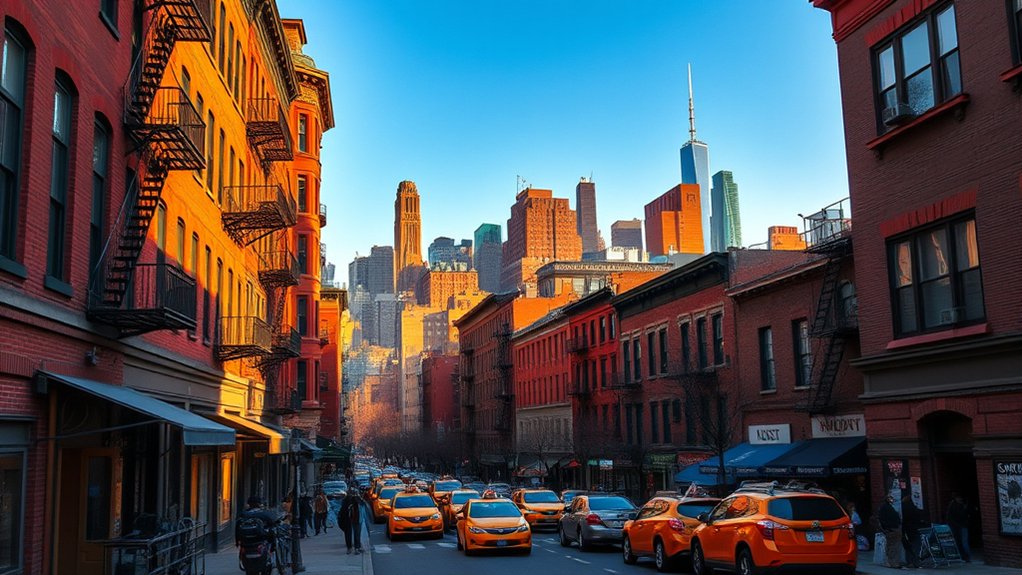
Its location puts you near Broadway theaters, major transportation hubs, office towers, and scenic parks, making it convenient for sightseeing or exploring on foot. You can experience the neighborhood’s distinctive character along Ninth and Tenth avenues, where longtime businesses stand beside newer restaurants, bars, and apartment buildings.
Cultural landmarks, including nearby theaters and performance venues, add to its appeal without defining its entire identity. Local cuisine ranges from classic diners and casual pizzerias to international restaurants serving Korean, Thai, Mexican, and Italian dishes.
You’ll also notice a mix of residential streets and energetic avenues, giving Hell’s Kitchen an urban atmosphere that feels both central and distinctly neighborhood-oriented.
What Are Hell’s Kitchen’s Boundaries?

To understand Hell’s Kitchen, start with its eastern boundary along Eighth Avenue and its western edge by the Hudson River. Its northern and southern limits complete the picture, helping define the neighborhood’s full extent. Taken together, these boundaries show where Hell’s Kitchen begins and ends.
Eastern Boundary: Eighth Avenue
On the east, Hell’s Kitchen generally reaches Eighth Avenue, where the neighborhood gives way to Midtown’s Theater District and nearby commercial corridors. As you explore this edge, you’ll notice a quick shift from residential side streets to busy avenues, theaters, hotels, and office buildings.
Eighth Avenue serves as a practical reference point, although the exact boundary can vary depending on the map or local perspective. You can cross the avenue and still find restaurants, bars, and entertainment, but the atmosphere becomes more strongly connected to Midtown.
Before crossing, you’ll experience Hell’s Kitchen’s distinctive culinary scene, from casual diners to international restaurants. After dark, the area also puts you near major nightlife hotspots, making Eighth Avenue an easy landmark for locating the neighborhood’s eastern limit.
Western Boundary: Hudson River
Heading west from Eighth Avenue, Hell’s Kitchen extends toward the Hudson River, which forms its broad western boundary. As you venture into this edge, you’ll see how the waterfront shapes the neighborhood’s identity and daily life.
Public piers, riverfront paths, and open views create a distinct contrast with the dense streets inland. Recent urban development has added residential buildings, offices, parks, and recreation spaces along the shoreline, transforming former industrial areas while preserving public access.
You can also find cultural landmarks nearby, including the Intrepid Sea, Air & Space Museum, which anchors the waterfront’s tourist appeal. The river remains more than a geographic limit: it connects Hell’s Kitchen to Manhattan’s broader waterfront network and offers residents and visitors space to walk, relax, and take in sunsets.
Northern and Southern Limits
Hell’s Kitchen generally stretches from West 34th Street north to West 59th Street, with its boundaries blending into Hudson Yards below and the Upper West Side near Columbus Circle above. As you delve into, you’ll notice that the neighborhood’s edges feel fluid rather than sharply marked.
The southern limit near West 34th Street brings you to rail yards, skyscrapers, and Hudson Yards’ modern plazas. Walking north, you’ll find Hell’s Kitchen gradually meeting Midtown West and the Columbus Circle area near West 59th Street.
Along the way, you can picture:
- Busy avenues lined with theaters and apartment buildings.
- Historical landmarks tucked among renovated warehouses.
- Restaurants serving Local cuisine beside international favorites.
Street signs, changing architecture, and restaurant clusters help you recognize where Hell’s Kitchen begins and ends, even when no official marker appears.
Where Is Hell’s Kitchen on a Map?
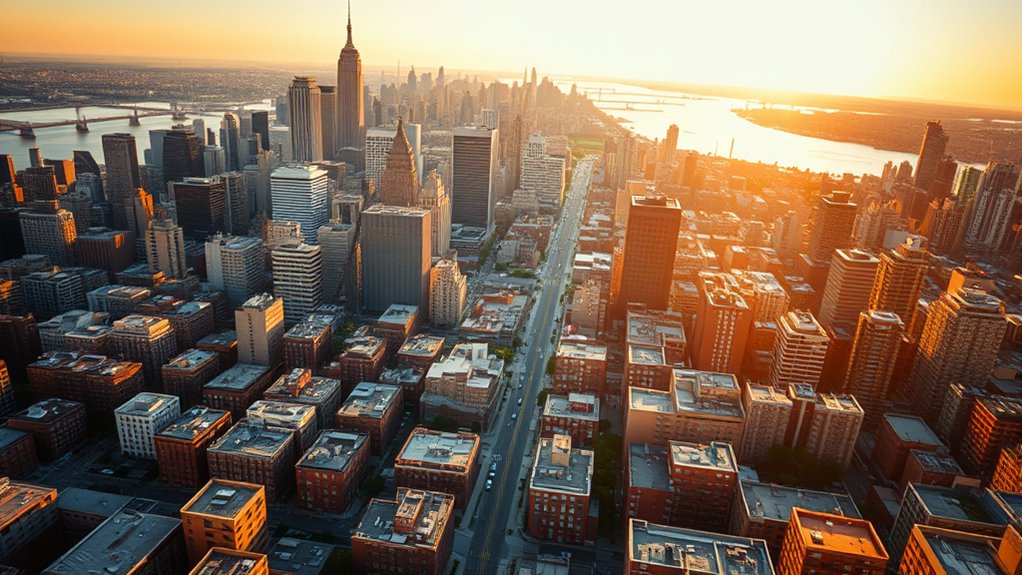
Located on the west side of Midtown Manhattan, Hell’s Kitchen stretches roughly from Eighth Avenue to the Hudson River and from 34th Street to 59th Street. On a map, you’ll find it directly west of Times Square and north of Chelsea.
Its streets follow Manhattan’s familiar grid, so you can locate the neighborhood quickly using numbered avenues and cross streets.
| Map feature | What you’ll see |
|---|---|
| Eastern edge | Eighth Avenue |
| Western edge | Hudson River |
Look for Ninth, Tenth, and Eleventh Avenues running north to south. West 42nd Street serves as a useful reference point, while West 57th Street helps you identify the northern section.
Digital maps label the area clearly, although boundaries can vary by source. You can also recognize Hell’s Kitchen through nearby transit stations, theaters, restaurants, and waterfront routes.
Historical landmarks and cultural events add recognizable points of interest, making the neighborhood easier to discover on foot or by subway. Viewing a street map helps you understand its compact, rectangular layout.
Which Neighborhoods Border Hell’s Kitchen?
Hell’s Kitchen borders several well-known Manhattan neighborhoods: Midtown to the south, Times Square and the Theater District to the east, Columbus Circle and the Upper West Side to the north, and Hudson Yards and Chelsea to the southwest. As you delve into these edges, you’ll notice each area brings a distinct rhythm and personality.
> Explore Hell’s Kitchen’s borders, where Midtown energy, Upper West Side calm, and Hudson Yards modernity create a dynamic urban tapestry.
- Midtown and Times Square: Towering offices, bright signs, theaters, and constant foot traffic create an energetic eastern and southern boundary.
- Columbus Circle and the Upper West Side: You’ll find calmer avenues, cultural venues, leafy public spaces, and residential streets near the northern edge.
- Hudson Yards and Chelsea: Modern skyscrapers, galleries, restaurants, and waterfront access shape the neighborhood’s southwestern surroundings.
This mix gives Hell’s Kitchen a lively neighborhood culture, where commuters, performers, residents, and visitors share the same urban setting.
You can also sample local eateries representing many cuisines, then walk toward nearby districts for museums, shopping, nightlife, or river views.
Because these borders blend rather than stop abruptly, you’ll experience a gradual change in atmosphere as you move between communities.
What Streets Define Hell’s Kitchen?
Hell’s Kitchen stretches from Eighth Avenue on the east to the Hudson River on the west. These boundaries give you a clear sense of the neighborhood’s width. Now, let’s look at how its streets shape the area.
Eastern Boundary: Eighth Avenue
Eighth Avenue generally forms Hell’s Kitchen’s eastern boundary, separating the neighborhood from Midtown and the Theater District farther east. As you walk along this busy corridor, you’ll notice the atmosphere shift: office towers, theaters, and commercial crowds gradually give way to Hell’s Kitchen’s restaurants, apartment buildings, and lively side streets.
The avenue also helps you picture the neighborhood’s location on a map.
- Landmarks: You can spot historical landmarks near the avenue, reflecting the area’s changing urban story.
- Cultural influences: You’ll encounter global cuisine, performance venues, and storefronts shaped by generations of newcomers.
- Street life: Subway entrances, taxis, and pedestrians create a fast-moving eastern gateway.
Although Eighth Avenue feels urban and crowded, it remains an easy reference point. Use it to orient yourself as you delve into Hell’s Kitchen westward, without confusing the neighborhood with Midtown’s core.
Western Edge: Hudson River
From Eighth Avenue, the neighborhood extends west to the Hudson River, which forms Hell’s Kitchen’s natural edge. As you walk toward the waterfront, you’ll cross numbered avenues and streets that lead from busy commercial blocks to piers, parks, and Riverside views.
Eleventh and Twelfth Avenues mark the area’s western corridor, while the riverfront defines its clearest physical boundary. You can investigate Hudson River Park, where promenades and recreation spaces replace the factories, rail yards, and working docks that once shaped this shoreline.
Historical landmarks, including remnants of the West Side rail infrastructure, help you picture that industrial past. Today, restaurants, theaters, residential towers, and public art reflect Cultural influences from across New York.
The river also gives you an open western horizon, distinguishing Hell’s Kitchen from inland Midtown.
How Far Is Hell’s Kitchen From Times Square?
How far is Hell’s Kitchen from Times Square? You’re only about half a mile away, depending on where you start and finish. From the neighborhood’s eastern edge near Eighth Avenue, you can reach Times Square in roughly 10–15 minutes on foot. The walk feels short because busy streets, theaters, and bright signs quickly connect the two destinations.
Hell’s Kitchen is about half a mile from Times Square, making it an easy 10–15-minute walk.
- Starting point: Near Ninth Avenue, you’ll cover closer to 0.8 miles, usually taking 15–20 minutes.
- Midtown connection: Along 42nd Street, you’ll pass offices, hotels, and entrances to major subway stations.
- Neighborhood atmosphere: As you move west, crowds thin, storefronts become more local, and Hell’s Kitchen’s culinary scene comes into view.
This proximity makes it easy for you to combine Times Square’s entertainment with Hell’s Kitchen’s restaurants and bars. You can also spot historic landmarks near the boundary, including theaters and distinctive prewar buildings.
Since distances vary by block, check your exact destination before setting out, especially during crowded evening hours or theater rushes.
How Do You Get to Hell’s Kitchen?
You can get to Hell’s Kitchen by taking several subway lines, including the A, C, E, 1, 2, 3, 7, N, Q, R, and W trains. Buses running along 8th, 9th, 10th, and 11th Avenues are another convenient option. If you’re already nearby, you can also walk from Times Square or other Midtown landmarks.
Subway Routes
To reach Hell’s Kitchen by subway, take the A, C, or E train to 42nd Street–Port Authority, the neighborhood’s main subway stop. From there, walk west along busy 42nd Street or north toward the theater district and Restaurant Row.
Several nearby stations broaden your options:
- Exit at 50th Street on the A, C, or E line, then walk west toward Ninth and Tenth avenues.
- Take the 1, 2, or 3 train to 42nd Street–Times Square, then head northwest through crowded streets.
- Use the 7 train to 34th Street–Hudson Yards for the neighborhood’s southern edge.
Subway station accessibility varies by entrance, so check elevator information before traveling. Ongoing underground transit expansion may improve connections, but routes and station access can change.
Always confirm current MTA service updates before departure.
Bus Connections
City buses offer several convenient ways to reach Hell’s Kitchen, especially from Midtown, the Upper West Side, and nearby Hudson Yards. You can use crosstown and north-south bus routes to approach Ninth, Tenth, and Eleventh avenues.
Check MTA updates before leaving, since construction or traffic can change schedules. Major transit hubs, including Port Authority Bus Terminal and Columbus Circle, provide useful transfer points.
| Transit hub | Helpful connections |
|---|---|
| Port Authority | M42, M50, M34 |
| Columbus Circle | M5, M7, M11 |
| Hudson Yards | M34, M42 |
| Times Square | M7, M20, M42 |
Pay your fare with OMNY or a MetroCard, and confirm the stop nearest your destination in the MTA app. Express buses may help from farther neighborhoods, but local service gives you more stop choices within Hell’s Kitchen.
Real-time arrival tools can also help you compare routes and avoid long waits.
Walking Directions
Walking to Hell’s Kitchen is easiest from Midtown landmarks such as Times Square, Columbus Circle, or Hudson Yards. From Times Square, head west along 42nd Street, then turn north or south into the neighborhood’s lively avenues.
From Columbus Circle, walk south on Eighth Avenue for about 15 minutes. Hudson Yards offers a convenient eastern starting point; follow 34th Street or 10th Avenue north.
- From Times Square: Watch theaters fade into restaurants, bars, and apartment buildings as you walk west.
- From Columbus Circle: Follow broad sidewalks past historical landmarks and quieter brownstones near the park.
- From Hudson Yards: Notice modern towers blending with older storefronts and cultural influences from around the world.
Wear comfortable shoes, watch traffic at busy intersections, and use a map for your exact destination. You’ll quickly experience Hell’s Kitchen’s energetic streetscape.
What Is Hell’s Kitchen Known For Today?
Today, Hell’s Kitchen is known for its lively mix of Broadway theaters, restaurants, bars, and LGBTQ+ nightlife. As you delve into the neighborhood, you’ll find a strong theater presence, with venues near Eighth Avenue and nearby Broadway stages attracting performers and audiences throughout the year.
Its dining scene also stands out. You can choose from local eateries serving everything from classic New York comfort food to international dishes, often within a few blocks.
Hell’s Kitchen’s bars range from relaxed pubs and cocktail lounges to energetic late-night spots, giving the area a social, urban character. You’ll also notice street art on building walls, construction barriers, and tucked-away corners, adding color to its busy streets.
The neighborhood’s LGBTQ+ identity remains especially visible around Ninth Avenue and its surrounding blocks, where inclusive businesses and community spaces help shape local culture.
Today, Hell’s Kitchen blends entertainment, dining, nightlife, and creative expression in a distinctly Manhattan setting for residents and workers alike.
Is Hell’s Kitchen Worth Visiting?
Yes, Hell’s Kitchen is worth visiting if you want Broadway energy, diverse restaurants, lively bars, and a strong LGBTQ+ presence in one walkable Manhattan neighborhood. You can easily pair a show with dinner, drinks, and an evening stroll without relying heavily on taxis.
- Sample local cuisine at casual diners, international restaurants, and polished eateries along Ninth and Tenth avenues.
- Uncover nightlife hotspots where cocktail lounges, queer bars, music venues, and friendly neighborhood pubs keep the streets lively after dark.
- Walk toward the Hudson River for open views, breezes, and a calmer contrast to the neighborhood’s busy blocks.
You’ll find plenty to do whether you’re planning a date, meeting friends, or exploring Manhattan alone. Hell’s Kitchen also gives you convenient access to Times Square, Central Park, and nearby cultural attractions.
Visit with comfortable shoes and an appetite, then let your interests shape the day. The neighborhood’s variety makes it easy to enjoy without following a strict itinerary or spending every minute in crowded tourist zones.
How Has Hell’s Kitchen Changed Over Time?
Hell’s Kitchen has changed from a working-class waterfront district into one of Manhattan’s most popular dining, theater, and nightlife areas. As you navigate its streets, you’ll notice how its historic development shaped the neighborhood’s identity.
Once known for factories, rail yards, slaughterhouses, and crowded tenements, the area served workers and immigrants living near the Hudson River and Midtown businesses.
During the late twentieth century, new development gradually replaced industrial spaces and improved housing conditions. The opening of nearby office towers, hotels, restaurants, and Broadway attractions brought more visitors and investment.
You can still find traces of the old neighborhood in longtime bars, row houses, and local businesses, but luxury apartments and rising rents have transformed daily life.
These demographic shifts changed who lives and works here. While longtime residents and family-owned establishments remain, wealthier renters, professionals, tourists, and theatergoers now share the neighborhood.
Today, you’ll experience a lively community balancing its gritty past with modern Manhattan energy and continuing change.
Frequently Asked Questions
Why Is Hell’s Kitchen Called Hell’s Kitchen?
You’ll find that Hell’s Kitchen earned its dramatic name through several colorful stories rather than one proven explanation. Historical origins often point to nineteenth-century poverty, rough tenements, and violent street gangs, which made the neighborhood seem as dangerous as hell itself.
One notorious building or gang leader may have inspired the phrase, too. Over time, the name endured, even as restaurants, theaters, and famous landmarks transformed the area into a popular Manhattan destination.
What Types of Restaurants Are Popular in Hell’s Kitchen?
You’ll find culinary diversity at Hell’s Kitchen restaurants, where global flavors share the spotlight. You can sample Italian trattorias, Japanese sushi, Thai noodles, Indian curries, Mexican tacos, and classic American diners.
The neighborhood’s street food scene also attracts you with food trucks, casual takeout, and late-night bites. As the saying goes, variety is the spice of life.
You won’t struggle to uncover affordable meals, upscale dining, or pre-theater options within a few blocks.
Is Hell’s Kitchen Safe for Tourists and Residents?
Yes, you’ll generally find Hell’s Kitchen safe for tourists and residents, especially on busy streets and during daylight. Still, you should use normal city precautions: secure your belongings, stay aware at night, and choose well-lit routes.
Urban development has improved public spaces and neighborhood activity, while crime statistics can vary by block and change over time. Check current local reports, trust your instincts, and contact authorities if something feels wrong during your visit.
What Subway Lines Serve Hell’s Kitchen?
You’ll find Hell’s Kitchen served mainly by the A, C, E, and 7 subway lines, like spokes feeding a busy wheel. The A, C, and E stop at 42nd Street–Port Authority, while the 7 serves 34th Street–Hudson Yards. Depending on your destination, you can also use the 1, 2, 3, N, Q, R, W, or S nearby. Check the current subway fare and station accessibility before traveling.
Are There Hotels and Accommodations in Hell’s Kitchen?
Yes, you’ll find plenty of hotels and accommodations in Hell’s Kitchen, from luxury properties near Ninth Avenue to budget-friendly hostels and furnished apartments. You can choose a convenient base near Broadway theaters, restaurants, and subway connections.
During your stay, discover historical landmarks such as the Intrepid Sea, Air & Space Museum, then experience the neighborhood’s local art scene through galleries, performances, and independent creative spaces. Booking early helps secure better rates and availability.
Conclusion
Whether you’re exploring its boundaries, steering through nearby streets, or arriving by subway, you’ll find Hell’s Kitchen in Midtown Manhattan, west of Times Square. The neighborhood’s restaurants, theaters, nightlife, and waterfront parks make it worth visiting.
As you walk through its changing streets, you’ll see old character blending with new development like two eras sharing one table. From its gritty past to its lively present, Hell’s Kitchen offers you an unforgettable taste of New York City, making it a must-visit destination in Midtown Manhattan.