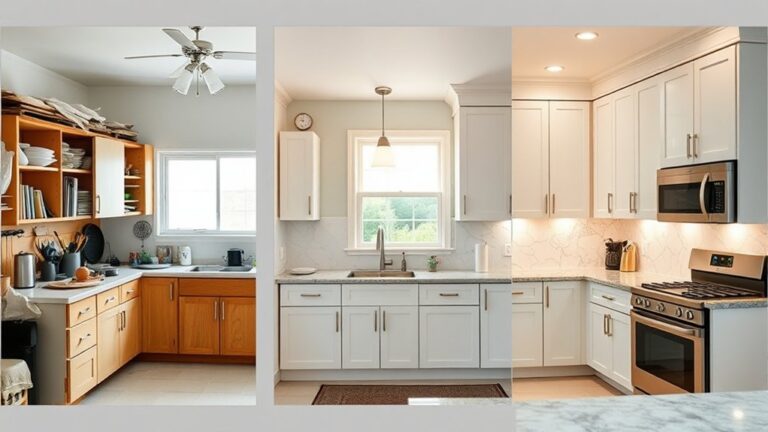
How to Measure a Kitchen Sink in 3 Steps
Choosing the right sink can be frustrating when you’re unsure how much space you have—many homeowners struggle with inaccurate measurements and costly installation surprises. Learning how to measure a kitchen sink helps you shop confidently and find an option that fits your cabinet, countertop, and plumbing setup.
To measure a kitchen sink in three steps, first inspect the cabinet and countertop opening for obstructions, supports, plumbing, and faucet clearance. Next, record the opening’s width and length, drain location, backsplash space, and take labeled photos or sketches.
Finally, measure the sink’s depth from the countertop to the basin’s lowest point and identify its mounting style, such as undermount or drop-in. Compare every measurement with the manufacturer’s specifications before ordering.
You’ll find additional installation tips below.
Key Takeaways
- Measure the existing countertop opening’s width, length, and front-to-back clearance separately.
- Measure cabinet interior width, depth, and height to confirm the basin and plumbing will fit.
- Measure sink depth from the countertop surface to the lowest basin point, including the rim.
- Identify the mounting style and record drain placement, faucet clearance, and nearby backsplash or supports.
- Compare every measurement with the manufacturer’s specifications before ordering or scheduling installation.
Measure the Cabinet and Countertop Opening
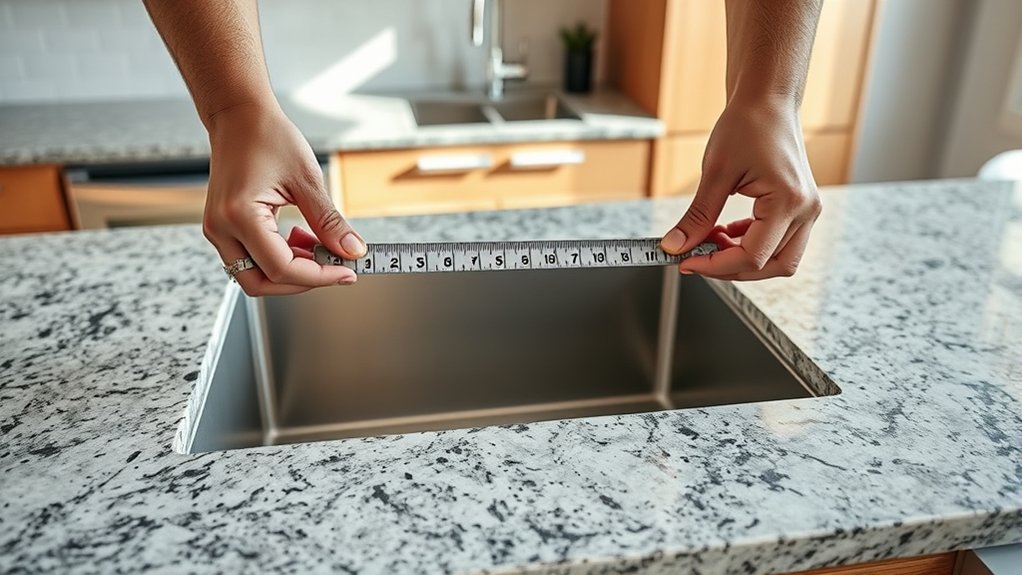
Before measuring the sink, check the cabinet and countertop opening to make certain they can accommodate it. Open the cabinet doors and inspect the interior for braces, plumbing, drawers, or other obstructions.
> Inspect the cabinet and countertop opening for obstructions before measuring to ensure the sink will fit properly.
You’ll need enough room beneath the countertop for the basin, clips, and supply lines. Confirm that the cabinet’s width exceeds the sink’s required minimum cabinet size, especially for a deep or farmhouse model.
Next, examine the countertop area around the existing cutout or planned installation location. Check the available front-to-back space and verify that the sink won’t interfere with the backsplash or cabinet frame.
Leave sufficient faucet clearance behind the sink for the faucet base, handles, soap dispenser, or filtration tap. Also consider drain placement below the basin, since pipes must align without colliding with shelves or structural supports.
If you’re replacing a sink, confirm that the new rim or mounting system suits the countertop material and opening style before proceeding.
Record Your Kitchen Sink Measurements

Record each measurement immediately so you don’t have to rely on memory later. Use a notebook, phone, or printable worksheet, and label every figure clearly. Note the cabinet and countertop opening measurements separately, recording length and width in the same units. Write each value in a consistent format, such as width × length, to prevent confusion when you compare sink options.
Add practical notes beside the numbers. Mark the faucet clearance available behind the opening, including any space needed for a backsplash, soap dispenser, or other accessories. Sketch the opening from above, then indicate the drain location and any nearby plumbing that could affect your choice.
Include the locations of clips, supports, seams, or obstructions you observed during measuring. Take several photos and name them according to their views, such as “front,” “left,” or “plumbing.” Before shopping, review your notes and verify unclear measurements so you can share accurate information with a retailer or installer.
Measure Depth and Identify the Mounting Style

With your measurements and notes in hand, measure the sink’s depth from the countertop surface to the lowest point of the basin, including any rim or flange that will sit below the counter. Check the cabinet below to confirm it can accommodate this depth without interfering with shelves, plumbing, or a disposal.
Measure sink depth to the basin’s lowest point, then confirm the cabinet accommodates it without interfering with shelving, plumbing, or disposal.
Next, identify the mounting style. An undermount sink attaches beneath the countertop, while a drop-in sink rests on top with a visible rim. A farmhouse sink extends over the cabinet’s front, and an integrated sink forms part of the countertop.
Note the style because installation requirements and countertop cutouts differ. Also verify faucet clearance around the rear rim, especially if you’ll install a faucet there.
Finally, record drain placement and measure its distance from the cabinet walls. Centered, offset, or multiple drains can affect plumbing connections and storage.
Compare every measurement with the manufacturer’s specifications before ordering.
Frequently Asked Questions
Can I Replace My Kitchen Sink Without Replacing the Countertop?
Yes, you can replace your kitchen sink without replacing the countertop, provided the new sink fits the existing cutout and mounting style. Check countertop compatibility, including dimensions, rim shape, cabinet clearance, and faucet-hole placement.
For helpful sink installation tips, shut off the water, disconnect the plumbing, protect the counter, and dry-fit the basin before applying sealant. An undermount replacement may require professional help, especially with stone countertops, while drop-in models usually install more easily.
How Often Should I Measure My Sink for Maintenance or Replacement?
You should check your sink’s dimensions whenever you notice leaks, shifting, cracks, rust, drainage problems, or countertop changes.
For routine maintenance, confirm measurements every two to three years, especially if you’re planning upgrades or replacing plumbing.
Your measurement frequency doesn’t need to be frequent because sink dimensions rarely change, but accurate records help you choose compatible replacements.
Measure length, width, depth, cabinet clearance, and faucet-hole spacing before ordering a new sink or accessories.
What Tools Are Needed to Measure a Kitchen Sink Accurately?
You’ll need a tape measure, ruler, pencil, notepad, and flashlight for accurate measurements. Think of your sink like a puzzle piece: even a tiny mismatch can prevent it from fitting the countertop.
Use measuring tools to record length, width, depth, and corner radius. A straightedge helps check rim alignment, while a level confirms positioning.
Write each result twice. These accurate measurements can save you costly replacement mistakes later.
Can a Professional Measure and Install My Kitchen Sink?
Yes, you can hire a professional to measure and install your kitchen sink. A professional checks your cabinet dimensions, countertop opening, plumbing connections, and sink specifications to guarantee measurement accuracy.
They’ll recommend suitable options, identify potential problems, and complete the work safely. Professional sink installation can prevent leaks, countertop damage, and costly adjustments.
You’ll also save time and gain confidence that your new sink fits securely and functions properly for years.
How Do I Choose a Sink Material After Taking Measurements?
Choose a sink material by balancing your style, budget, and daily kitchen demands. Material options include stainless steel, porcelain, granite composite, fireclay, and copper.
Compare durability considerations such as resistance to scratches, stains, heat, dents, and chips. Stainless steel offers easy maintenance, while composite resists damage and reduces noise.
Fireclay looks classic but can chip. Consider cleaning requirements, color, installation type, and whether the material complements your countertops and faucet.
Conclusion
With these three steps, you can measure your kitchen sink confidently and avoid costly surprises. First, check the cabinet and countertop opening. Next, record the sink’s length and width carefully.
Finally, measure its depth and identify whether it’s drop-in, undermount, or another style. Take your time and double-check every number before shopping.
Accurate measurements are the key to a smooth installation, helping you choose a kitchen sink that fits beautifully and works perfectly in your kitchen.