
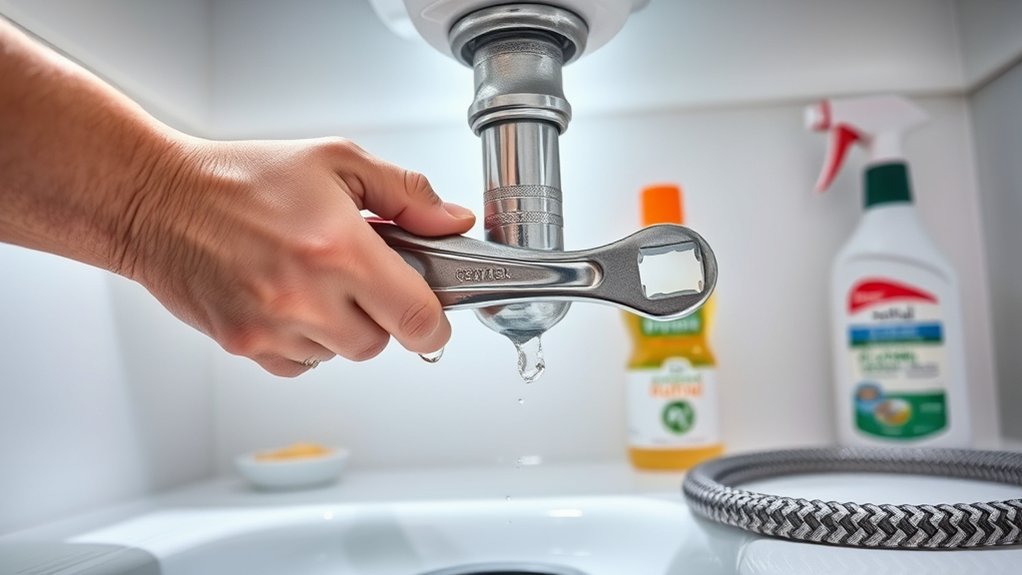
How to Unclog a Kitchen Sink Drain in 5 Steps
A clogged kitchen sink can bring meal prep and cleanup to a frustrating halt, and you’re not alone—many people struggle with slow or blocked drains. The good news is that learning how to unclog a kitchen sink drain can help you handle the problem quickly and get your sink flowing again.
To unclog a kitchen sink drain in five steps, shut off the faucet, remove standing water and reachable debris, and clean the stopper. Next, plunge the drain firmly while sealing any second basin.
If the clog remains, place a bucket underneath, remove and rinse the P-trap, then replace damaged washers.
For stubborn blockages, feed in a drain snake and pull out debris.
Finish by flushing with hot water and prevent future clogs with a strainer and proper grease disposal. More helpful details follow below.
Key Takeaways
- Shut off the faucet, remove standing water and debris, and clean the drain opening and stopper.
- Seal the second basin, then plunge the clogged drain firmly 10–15 times.
- Remove the P-trap over a bucket, clean out buildup, inspect washers, and reinstall it securely.
- For persistent clogs, feed a drain snake into the pipe while turning it clockwise.
- Flush with hot water and prevent future blockages using a strainer and proper grease disposal.
Turn Off the Water and Remove Debris
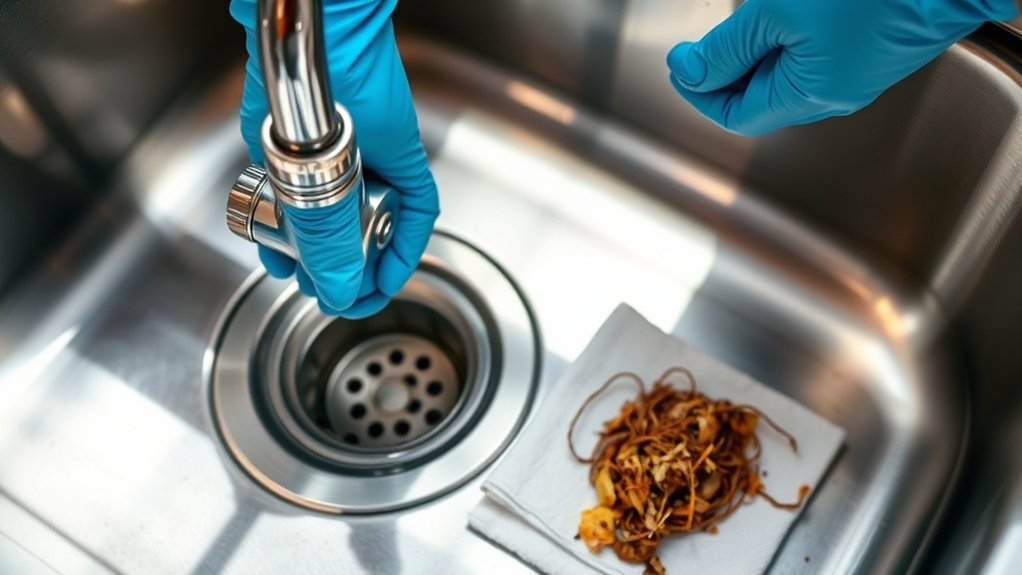
Before you begin, turn off the faucet and remove any dishes, standing water, and visible food scraps from the sink. This first step supports Water safety by limiting spills and keeping contaminated water away from your hands and nearby surfaces.
Put on rubber gloves, especially if the water looks dirty or contains grease. Scoop standing water into a bucket with a cup, then pour it into a toilet or another drain that works properly. Don’t splash, and keep the bucket steady as you work.
Next, inspect the drain opening and lift out reachable scraps with a paper towel, spoon, or disposable tool. Remove the stopper or strainer if it comes out easily, and clean away trapped sludge.
Avoid pushing debris deeper into the pipe. This simple Debris prevention step helps keep loosened material from creating another blockage later. Place removed waste in the trash rather than washing it back down, and wipe the sink basin clean before continuing.
Plunge the Kitchen Sink Drain
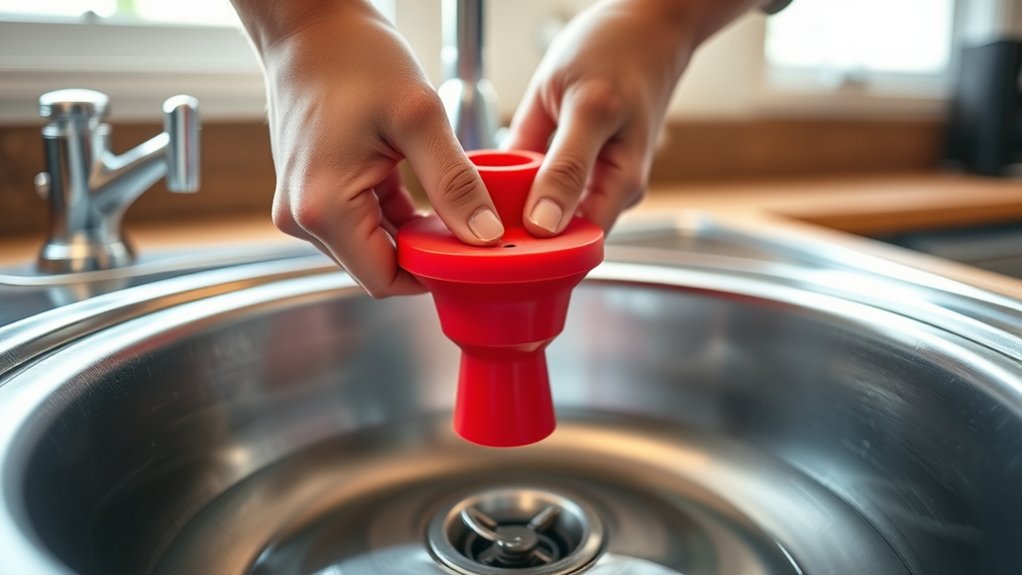
Place a cup plunger over the drain, adding enough water to cover its rubber rim if the sink is dry. Press the cup firmly against the opening to create a tight seal.
Cover the drain with a cup plunger, adding water if needed, and press firmly to create a tight seal.
If your sink has two basins, plug the second drain with a wet cloth or stopper so pressure won’t escape. Hold the plunger upright, then push down and pull up sharply 10 to 15 times without breaking the seal.
Keep your movements steady rather than forcing the handle, which can damage some Sink materials or loosen fittings. Lift the plunger and check whether water drains freely.
Repeat the plunging cycle several times if necessary, adding more water when the seal weakens. Use suitable Plumbing tools, including a cup plunger with an intact rubber cup.
Once the water flows normally, run hot tap water for a few minutes to flush loosened residue through the drain. Avoid chemical cleaners, which can harm surfaces and pipes.
Remove and Clean the P-Trap
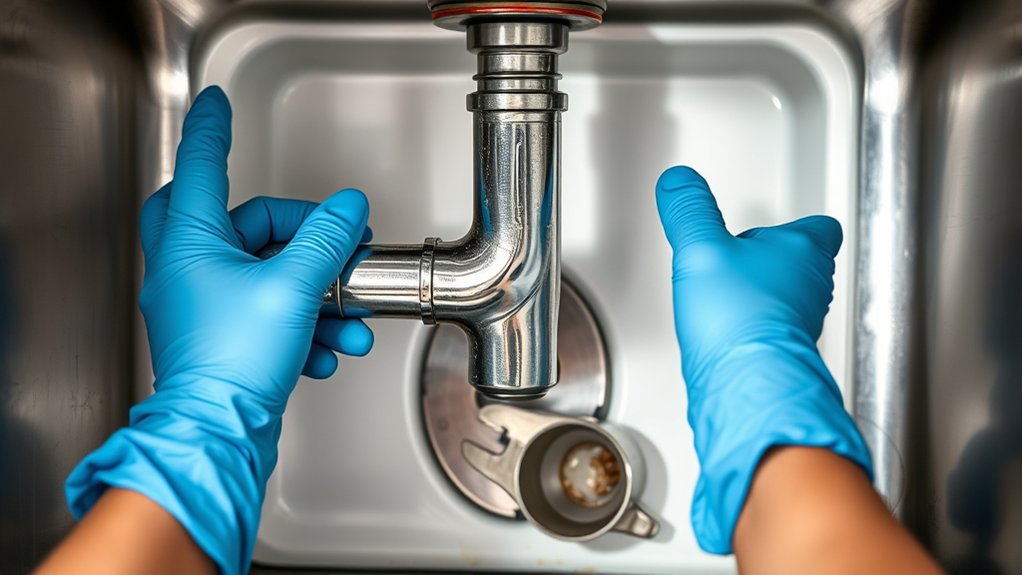
If plunging doesn’t clear the blockage, remove the P-trap beneath the sink to reach trapped debris directly. Place a bucket beneath the trap to catch standing water, then loosen the slip nuts by hand or with adjustable pliers. Support the trap as you disconnect it, and keep track of each washer’s position.
Empty the trap into the bucket and rinse it thoroughly with warm water. Use an old brush to scrub away grease and food particles, checking the curved section for buildup. Wipe the tailpiece and drainpipe openings, but don’t force objects deep into the plumbing.
Inspect the washers for cracks or flattening, and replace damaged parts before reassembly. Reconnect the trap, ensuring every washer sits correctly and each slip nut threads evenly.
Tighten the connections firmly without overtightening. Run water and check for leaks. Regular P-trap maintenance prevents recurring clogs, while trap replacement may be necessary if the fitting remains cracked or corroded.
Use a Drain Snake for Stubborn Clogs
When the clog remains after cleaning the P-trap, feed a hand-crank drain snake into the drainpipe to reach deeper blockages. Remove the drain stopper, then insert the cable slowly while turning the handle clockwise.
When you feel resistance, rotate the snake and push gently to break through or hook the obstruction. Pull the cable out occasionally to clear debris, and repeat until it moves freely.
Gather these items before you begin:
- Hand-crank drain snake
- Bucket
- Rubber gloves
- Adjustable pliers
Run hot water through the drain to test the flow, but stop if water backs up. If the snake won’t pass, don’t force it; you could damage the pipe or push the clog deeper.
Chemical drain cleaners can harm plumbing and create dangerous splashes, so avoid them, especially after using Baking soda techniques or other products.
If the blockage persists, or multiple fixtures drain slowly, contact a licensed plumber for professional diagnosis and removal.
Prevent Future Kitchen Sink Blockages
Prevent future kitchen sink blockages by keeping food scraps, grease, coffee grounds, and fibrous peels out of the drain. Scrape plates into the trash or compost before rinsing them, and use a fine-mesh strainer to catch small particles. Empty the strainer regularly so debris doesn’t wash through.
Never pour cooking oil, butter, or oily sauces down the sink. Let them cool, transfer them to a container, and discard them properly. Run hot water with dish soap after washing greasy cookware to help move residue through the pipes, but don’t rely on boiling water to dissolve heavy buildup.
For routine pipe maintenance, flush the drain weekly with hot tap water and clean the stopper and trap when grime accumulates. Avoid harsh chemical cleaners, which can damage pipes and create safety hazards.
This simple clog prevention routine reduces buildup and keeps water flowing freely. If drainage slows, address it promptly before a minor restriction becomes a stubborn blockage.
Frequently Asked Questions
Can Baking Soda and Vinegar Safely Unclog a Kitchen Sink Drain?
Yes, you can safely try baking soda and vinegar as Natural remedies for a mildly clogged kitchen sink. Remove standing water, pour half a cup of baking soda into the drain, then add half a cup of vinegar. Cover the opening, wait 15 minutes, and flush with hot water.
These DIY techniques won’t dissolve serious blockages, and you shouldn’t mix them with chemical cleaners. Stop if water remains backed up or odors appear.
When Should I Call a Professional Plumber for a Clogged Kitchen Sink?
Call a professional plumber when basic plunger techniques and a DIY snake don’t clear your kitchen sink, or when the clog returns repeatedly.
You should also call immediately if water backs up into other fixtures, sewage odors appear, pipes leak, or you suspect a damaged or collapsed line.
Avoid chemical cleaners before professional service, since they can create hazardous fumes and injure anyone working on the drain.
A plumber can diagnose and fix the underlying problem safely.
How Much Does Professional Kitchen Sink Drain Cleaning Typically Cost?
You’ll usually pay $100–$300 for professional kitchen sink drain cleaning, though severe blockages, emergency visits, or damaged pipes can raise the bill to $500 or more. Ask for an itemized estimate before work begins.
Compare costs among local plumbers, and confirm whether the quote includes inspection, snaking, hydro-jetting, and cleanup. Also ask about service warranties, since reputable companies may guarantee their work for a limited period and explain additional charges clearly.
Can a Garbage Disposal Cause Recurring Kitchen Sink Clogs?
Yes, your garbage disposal can cause recurring kitchen sink clogs, especially when you overload it, grind fibrous foods, or let grease and starchy scraps enter the drain. Dull blades, poor water flow, or trapped debris can worsen drain blockages.
Run cold water while operating the disposal, feed scraps gradually, and avoid grease, coffee grounds, bones, and stringy produce. If clogs continue, you should have a plumber inspect the disposal, trap, and drain line for deeper problems.
Are Chemical Drain Cleaners Safe for Kitchen Sink Pipes?
Chemical drain cleaners aren’t entirely safe for kitchen sink pipes. Chemical reactions can generate heat, corrode metal, weaken plastic, and cause pipe damage, especially if you use products repeatedly or mix different cleaners. You shouldn’t combine them with bleach, vinegar, or another drain opener.
Instead, try a plunger, drain snake, or professional service first. If you use a cleaner, follow its label exactly, wear protection, ventilate the room, and never plunge afterward.
Conclusion
You’ve cleared the clogged kitchen sink drain, but don’t wait for the next slow drain to remind you. Wipe away grease, catch food scraps, and flush the pipes with hot water regularly.
These small habits can prevent major kitchen headaches and save you an emergency call when you’re already hosting dinner. If water still won’t flow after plunging, cleaning the P-trap, and snaking the line, contact a professional before a small blockage causes costly water damage.