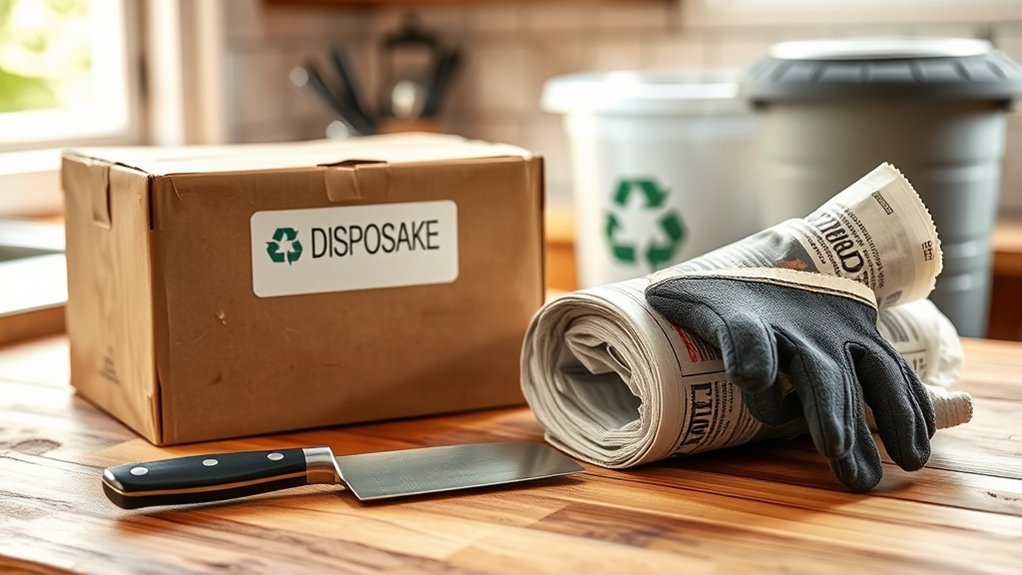
How to Dispose of Old Kitchen Knives in 5 Steps
Old kitchen knives can be difficult to dispose of safely. If you’re unsure whether to recycle, donate, or throw one away, you’re not alone—many people struggle with this. This guide explains how to dispose of old kitchen knives safely and responsibly.
Inspect the knife for cracks, rust, bent blades, loose rivets, or a slipping handle, and reuse or donate it if it’s still safe. Clean and dry it carefully, then secure any intact loose parts.
Wrap the blade in thick cardboard, add protective padding, and tape it shut. Label the package “Sharp Knife: Handle With Care,” place it in a rigid container, and check local recycling or hazardous-waste rules before disposal.
More details follow to help you handle it safely.
Key Takeaways
- Inspect the knife for damage and decide whether sharpening, reuse, donation, or disposal is most appropriate.
- Contact local recycling centers, transfer stations, or hazardous-waste programs to confirm accepted disposal methods.
- Clean and dry the knife carefully, avoiding direct contact with the sharp edge.
- Wrap the blade in thick cardboard and additional protective material, securing everything with strong tape.
- Label the package clearly, place it in a rigid container, and store it safely away from children until disposal.
Check Whether the Kitchen Knife Can Be Reused
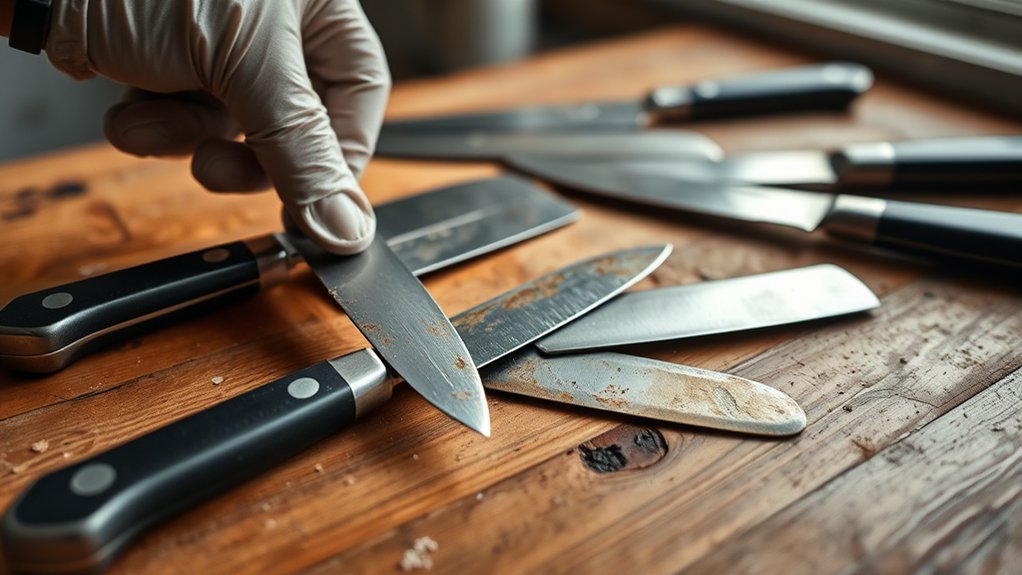
Before disposing of an old kitchen knife, check whether it can be reused. Examine the blade, handle, and rivets under good lighting.
If the blade remains straight and the handle feels secure, you may be able to sharpen it and continue using it. A professional sharpener can restore a dull edge without changing the knife’s balance.
Watch for serious damage, including cracks, loose parts, deep rust, bent blades, or a handle that slips when wet. Don’t use a knife with these problems, because metal safety starts with preventing unexpected breaks and cuts.
Also consider whether the knife suits your needs. An unwanted but sound knife might serve as a backup or help with nonfood tasks.
If you can’t reuse it yourself, set it aside while you review local recycling guidelines and household rules. These instructions may explain how to identify the knife’s materials and whether its condition affects later handling.
Keep your assessment focused on usability before making any disposal decision.
Choose a Safe Disposal or Recycling Option
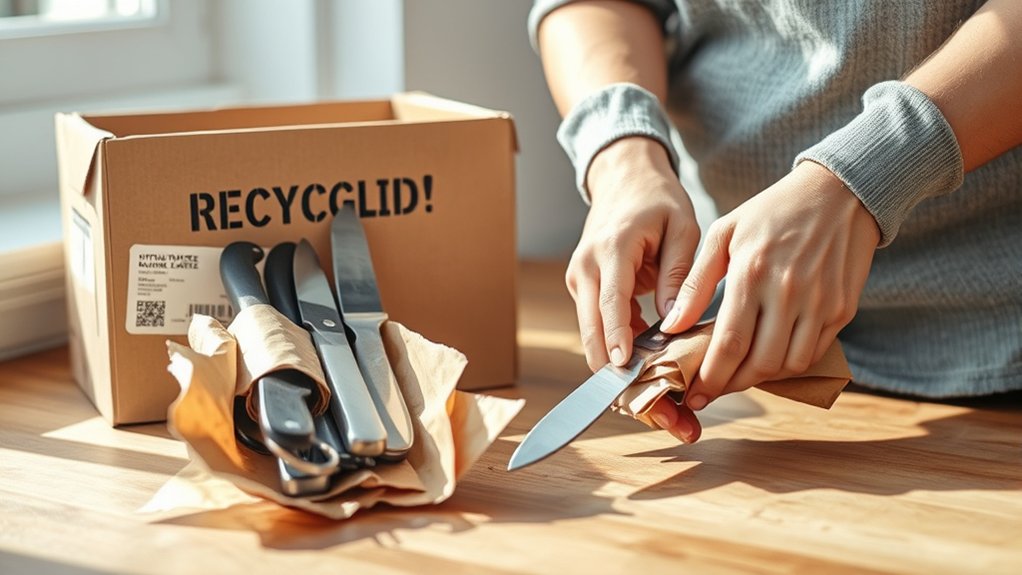
Choose a disposal option based on the knife’s condition and your local rules. If it’s still usable, donate it to a community kitchen, shelter, culinary program, or thrift store that accepts kitchen tools.
> Donate usable knives to accepting community organizations, shelters, culinary programs, or thrift stores after confirming their policies.
Ask first, since some organizations can’t take sharp items.
For a damaged or unwanted knife, contact your municipal recycling center and ask whether it accepts scrap metal or kitchen cutlery. Don’t place a knife in curbside recycling unless your provider specifically permits it.
Many recycling facilities require drop-off delivery or have special collection events.
If recycling isn’t available, follow your area’s waste guidelines for sharp metal. A transfer station or household hazardous-waste program may provide the safest route.
Search your city’s website or call the sanitation department for current instructions.
You can also ask a local cutlery shop about take-back programs. Sharpening techniques and Knife storage safety won’t solve disposal needs, but they can help you decide whether replacement or donation makes sense.
Clean, Dry, and Secure Loose Parts
Once you’ve selected a disposal or recycling option, clean the knife to remove food residue, grease, and other debris. Wash the handle and blade with warm, soapy water, unless the manufacturer’s instructions require a different method.
Keep your fingers away from the edge, and use a sponge or cloth rather than scrubbing directly with your hand. If the knife has removable screws, guards, or other loose parts, clean each piece separately and check for cracks, rust, or damage.
Don’t attempt knife sharpening before disposal; a sharper edge increases handling risks without providing a benefit. Rinse away soap, then dry every surface completely with a clean towel.
Moisture can encourage rust and leave parts slippery, making cutting safety more difficult during handling. Reattach any pieces that belong together, but don’t force damaged components into place.
Set the clean knife and its parts on a stable, dry surface while you prepare the next disposal step. Keep children and pets away from this area.
Wrap the Kitchen Knife Blade Securely
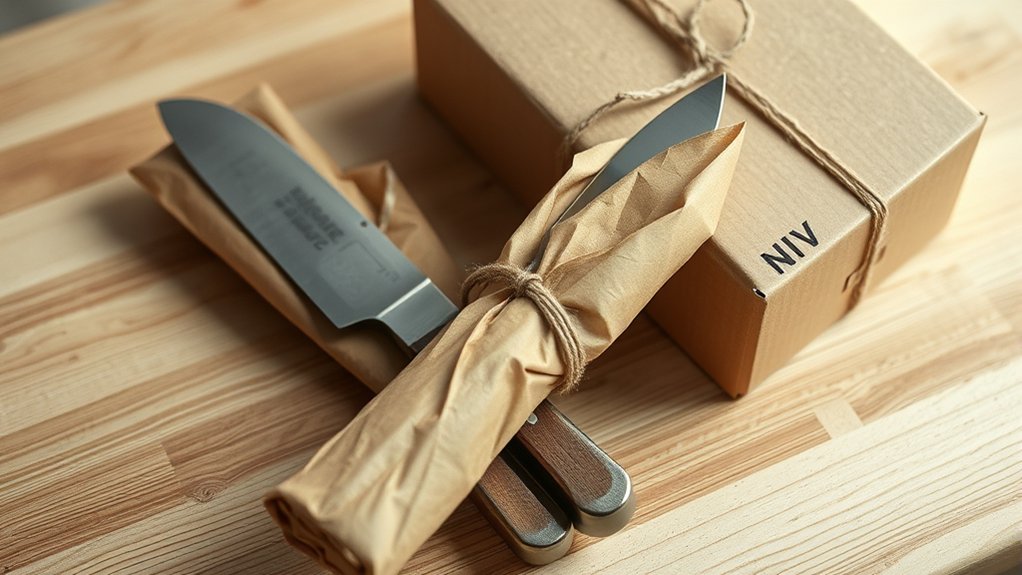
Wrap the blade in several layers of thick cardboard, making sure the material extends beyond the tip and edge. Fold the cardboard tightly around the blade, then secure it with strong tape.
Don’t press your fingers near the cutting edge while you work. Keep the handle exposed only if it helps you control the knife safely during wrapping.
For added blade safety, cover the cardboard with a second protective layer, such as bubble wrap, a folded towel, or several sheets of newspaper. Use enough material to cushion the point and prevent the edge from cutting through.
Check every seam and corner for gaps, exposed metal, or loose tape. If the knife has a sharp point, add a small cardboard cap before applying the outer layer.
Test the finished wrap gently by pressing around it, not by squeezing the blade area. Your wrapping techniques should create a firm, smooth barrier that stays intact during handling and prevents accidental contact with the blade.
Label and Place the Wrapped Knife Safely
After securing the blade, label the package clearly with “Sharp Knife—Handle With Care” so anyone handling it knows what’s inside. Add “Do Not Open” and your intended disposal method if helpful. Use waterproof tape or a permanent marker, and make sure the warning remains visible from every side.
Place the wrapped knife in a rigid cardboard box or another sturdy container, not a thin bag. Keep the point and edges away from the container’s surfaces, then fill empty space with crumpled paper so the knife can’t shift. Seal the box securely with strong packing tape.
Store the package temporarily in a dry, inaccessible spot, away from children and pets. Don’t put it in recycling unless your local program specifically accepts knives. Contact a household hazardous-waste facility, scrap-metal center, or retailer offering take-back service.
If you’re considering blade sharpening or handle replacement instead, keep the knife labeled and secured until a professional can assess it safely.
Frequently Asked Questions
Can Kitchen Knives Be Donated to Local Charities or Community Organizations?
Yes, you can donate kitchen knives to some local charities or community organizations, but call first to confirm their policies. Many shelters, culinary schools, community kitchens, and thrift stores accept usable knives when you wrap and transport them safely.
Look for knife donation programs or other community reuse options through neighborhood groups and food-rescue organizations. Don’t donate rusty, broken, or dangerously damaged blades; recycle or dispose of those according to local rules.
Are There Legal Restrictions on Transporting Old Kitchen Knives?
Yes, legal restrictions may apply when you transport old kitchen knives, and the details can vary by location. Before you leave, check local transportation regulations, especially if you’re crossing state or national borders.
Secure each knife in cardboard, wrap it, and place it inside a sturdy container so blades can’t move or cause injury. Don’t carry knives openly or within easy reach.
When uncertain, contact local law enforcement or a transportation authority for guidance.
How Should Antique or Collectible Kitchen Knives Be Handled?
For antique or collectible kitchen knives, prioritize Antique preservation and Collectible care over disposal. You should avoid sharpening, polishing, or removing patina, since those actions can reduce historical and monetary value.
Handle each knife with clean, dry hands, then wrap it in acid-free tissue and store it in a dry, stable environment. Keep blades secured, document markings and condition, and consult a qualified appraiser before selling, transporting, donating, or discarding anything.
Can Knife Handles and Blades Be Recycled Separately?
Yes, you can often recycle knife handles and blades separately, but check your local facility’s rules first. Knife handle recycling depends on the material: place clean plastic or wood handles in accepted streams, or reuse them when possible.
For metal blades, consider Blade disposal options through a scrap-metal center or household hazardous-waste program. Wrap blades securely, label them clearly, and never put loose knives in recycling bins, where they can injure workers.
What Should Restaurants Do With Large Quantities of Old Kitchen Knives?
Restaurants should contact a commercial metal recycler or licensed waste contractor for large quantities of old kitchen knives. Ask whether they accept stainless steel blades and separate handles.
Before transport, wrap each knife securely, place blades in rigid, clearly labeled containers, and follow workplace safety precautions. Don’t place loose knives in ordinary bins.
Consider knife sharpening first if some remain usable, then donate or redistribute them through approved culinary organizations.
Conclusion
By taking a few careful steps, you can dispose of old kitchen knives without putting anyone at risk. First, see whether you can reuse or donate the knife; recycling or disposal should be your last resort.
In fact, more than 80% of household waste can potentially be recycled or reused, according to the EPA. Clean, dry, wrap, label, and place your knife securely so sanitation workers and others won’t get hurt.
Following these steps will help you dispose of old kitchen knives safely and responsibly.